

If you've ever walked into a high-end boutique hotel lobby or admired the exterior of a modern home with a warm, earthy facade, there's a good chance you were looking at Bali Stone. This natural material has skyrocketed in popularity over the past decade, loved for its unique blend of rustic charm and timeless elegance. But here's the thing: not all Bali Stone is created equal. Just like wine or wood, it comes in different grades—and understanding those grades is key to picking the perfect fit for your project, whether you're revamping a kitchen backsplash or designing an entire commercial plaza.
You might be wondering, "Why does grading even matter?" Let's put it this way: imagine ordering a "premium" coffee and getting a bitter, burnt cup. Disappointing, right? The same logic applies to Bali Stone. A higher grade might mean smoother installation, longer durability, or a more consistent look—all factors that can make or break your project's success. On the flip side, a lower grade isn't necessarily "bad"; it might just be better suited for a project where character and cost-savings matter more than uniformity. Today, we're breaking down everything you need to know about Bali Stone grades, from what defines them to how to match the right grade to your specific needs.
First off, let's clarify: Bali Stone grading isn't some strict, universal system set by a single organization. Instead, it's a way for suppliers and manufacturers to categorize stones based on natural characteristics and quality benchmarks that matter for installation and performance. Think of it like grading apples: a "Grade A" apple is crisp, blemish-free, and uniform in size, while a "Grade B" might have a few spots but still tastes great. Similarly, Bali Stone grades help you quickly gauge what to expect from a batch—without having to inspect every single slab.
At its core, grading boils down to how consistent, durable, and visually "clean" the stone is. But here's the catch: natural stone is, well, natural. No two slabs are identical, and that's part of its beauty. Grading doesn't aim to eliminate variation—it just helps you understand how much variation to expect, and whether that variation works for your project.
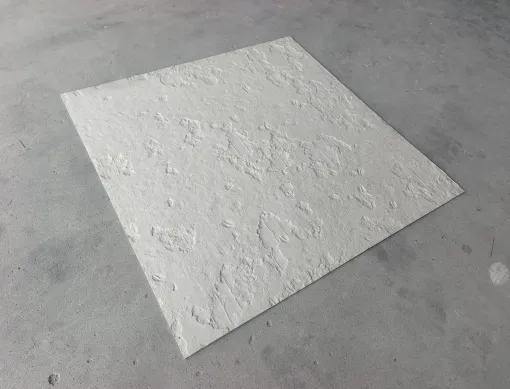
To really get a handle on grades, let's break down the factors that suppliers use to categorize Bali Stone. These are the details that separate a premium slab from a standard one, and they'll directly impact how the stone looks, feels, and holds up over time.
Bali Stone is known for its warm, earthy hues—think soft beiges, terracottas, and muted greens. But within those color families, there can be a lot of variation. Premium-grade stone will have minimal color variation across slabs. For example, if you order 10 slabs of "Sandy Beige" premium Bali Stone, they'll all look like they came from the same quarry section, with only subtle differences in tone. Standard grade might have more noticeable shifts—maybe one slab is a touch lighter, another has a faint pinkish tint—and economy grade could have significant variation, with some slabs leaning more yellow or gray.
Why does this matter? If you're installing Bali Stone on a large, continuous wall (say, in a luxury living room), color consistency helps create a cohesive, polished look. But if you're using it for a garden path, those color variations might add rustic charm—so economy grade could actually be the better choice.
Bali Stone's texture is another big selling point—it can range from smooth and honed to rough and pitted, with natural veining, fossils, or "pockmarks" (small holes formed by gas bubbles during formation). Premium grades will have uniform texture patterns . For instance, if the stone is advertised as "Honed with Fine Veining," premium slabs will have veins that are evenly distributed and consistent in thickness. Standard grade might have veins that are thicker in some areas or sparser in others, and economy grade could have irregular pitting or uneven honing (some areas smoother, some rougher).
This is where comparing to other materials helps. If you've ever worked with rough granite stone , you know it's prized for its bold, irregular texture—but Bali Stone often aims for a softer, more consistent look. So texture uniformity is a bigger factor here than it might be for, say, a rugged granite.
Not all Bali Stone is created equal when it comes to standing up to wear and tear. Premium grades are typically less porous (meaning they absorb less water) and have fewer natural cracks or fissures. This makes them ideal for areas like kitchen countertops or bathroom walls, where moisture and daily use are common. Standard grade might have slightly higher porosity, so it will need more frequent sealing, while economy grade could be more porous and prone to chipping—better suited for low-traffic, indoor areas or outdoor projects where weathering adds character.
When it comes to installation, how straight the edges are and how consistent the thickness is can make a big difference. Premium Bali Stone slabs are cut with precision, so edges are straight, and thickness (usually 2cm or 3cm) is uniform across the slab. This makes installation smoother—no gaps between tiles, no need for excessive shimming. Standard grade might have slight variations in thickness (maybe 2cm ± 0.2cm) and minor edge irregularities, which a skilled installer can work around. Economy grade could have more noticeable thickness differences and uneven edges, requiring extra time and materials to install neatly.
Now that we know what factors go into grading, let's map them to the three most common grade categories you'll encounter: Premium, Standard, and Economy. Think of these as a spectrum—each has its place, depending on your project goals, budget, and aesthetic preferences.
| Grade | Color Consistency | Texture Uniformity | Durability | Best For | Price Range* |
|---|---|---|---|---|---|
| Premium | 90-95% consistent; minimal variation | Even texture; uniform veining/pitting | High; low porosity, few fissures | Luxury interiors, focal walls, countertops | $15-$25/sq ft |
| Standard | 75-85% consistent; subtle variation | Mostly uniform; occasional irregularities | Medium; moderate porosity, minor fissures | Mid-range commercial, residential walls/floors | $8-$14/sq ft |
| Economy | 60-70% consistent; noticeable variation | Varied texture; uneven veining/pitting | Low to medium; higher porosity, more fissures | Outdoor paths, garden walls, budget projects | $4-$7/sq ft |
*Prices are approximate and vary by supplier, region, and slab size.
Premium Bali Stone is what designers dream of for high-end projects. It's the stone you'll see in luxury hotels, celebrity homes, and boutique restaurants where aesthetics are non-negotiable. With 90-95% color consistency, every slab feels like a sibling to the next—close enough to create a seamless look, but with just enough natural variation to avoid feeling "fake." The texture is uniform, too: if it's honed, it's smooth across the entire surface; if it's rustic, the pitting is evenly distributed, like nature's own confetti.
Durability-wise, premium grade is a workhorse. Its low porosity means it resists stains and water damage, making it perfect for kitchen countertops (hello, wine spills!) or bathroom walls. And because the edges are precision-cut, installation is a breeze—no struggling to line up uneven tiles or fill unsightly gaps. The only downside? The price tag. At $15-$25 per square foot, it's an investment, but one that pays off in longevity and visual impact.
Standard grade Bali Stone is the unsung hero of the bunch. It strikes a balance between quality and affordability, making it the go-to for most residential and mid-range commercial projects. With 75-85% color consistency, you'll notice subtle differences between slabs—maybe one is a shade lighter, another has a slightly more pronounced vein—but nothing jarring. These variations add character without overwhelming the space.
Texture-wise, standard grade might have an occasional "oops" moment—a slightly rougher patch here, a missing pit there—but these are minor and often unnoticeable once installed. Durability is solid for most indoor uses: it's porous enough to need sealing every 1-2 years (especially in kitchens/bathrooms), but not so porous that it's high-maintenance. Price-wise, it's budget-friendly at $8-$14 per square foot, making it accessible for homeowners and small businesses alike. Think coffee shops, offices, or family homes where you want quality without breaking the bank.
Economy grade Bali Stone is all about embracing imperfection—and that's not a bad thing. With 60-70% color consistency, you'll get slabs that range in hue, sometimes dramatically. One might be a warm terracotta, the next a soft beige, the next a hint of gray. The texture is equally varied: pitting can be uneven, veining might be thick in some areas and thin in others, and edges might have slight "waviness."
But here's the secret: these "flaws" are often what make economy grade so appealing. For outdoor projects like garden paths, retaining walls, or patio floors, that variation adds rustic, cottage-like charm. It looks lived-in, like it's been there for decades (even if it's new). Durability is decent for low-traffic outdoor areas, though it's more porous, so it will need sealing if exposed to heavy rain. At $4-$7 per square foot, it's the most budget-friendly option—perfect for DIYers or projects where cost is a top priority.
Now that you know the grades, let's talk about which one is right for your project. It's not just about budget— it's about matching the stone's characteristics to how the space will be used and what look you're going for. Here's a quick guide to help you decide:
If you're designing a focal wall in a master bedroom, a backsplash in a high-end kitchen, or a fireplace surround that will be the centerpiece of your living room, Premium Grade is the way to go. Its consistency and polish will elevate the space, making it feel intentional and luxurious. Pair it with sleek fixtures and neutral decor to let the stone shine—you won't regret the investment.
Cafes, boutique offices, and retail stores often opt for Standard Grade . It offers enough uniformity to look professional, but the subtle variations add warmth and personality—exactly what you want to make customers feel welcome. For example, a coffee shop with Standard Grade Bali Stone walls will have a cozy, earthy vibe without feeling too "staged." It's also durable enough to handle daily foot traffic and the occasional spilled latte.
For garden paths, outdoor patios, or retaining walls, Economy Grade is a star. Its natural variation mimics the look of aged stone, blending seamlessly with plants and greenery. Plus, since outdoor spaces are meant to feel a bit wild and untamed, the color and texture differences only enhance that vibe. Just be sure to seal it if you live in a rainy climate—economy grade's higher porosity means it can absorb water, which can lead to cracking in freezing temperatures.
Sometimes, Bali Stone might not be the right fit—and that's okay! For example, if you want a wood-like look but need the durability of stone, wood grain board (a type of MCM flexible stone) could be a better option. It mimics the texture of wood but is water-resistant and low-maintenance, ideal for bathrooms or outdoor decks. Bali Stone, on the other hand, offers a timeless, organic feel that's hard to replicate with synthetic materials. It's all about balancing your aesthetic goals with practical needs.
Okay, so you've decided on a grade—now how do you make sure the supplier is giving you what you paid for? Don't just take their word for it; inspect the stone yourself (or ask for detailed photos if you can't visit in person). Here are a few pro tricks:
Before we wrap up, let's debunk a few myths that might be clouding your judgment:
Not true! If you're going for a rustic, cottage-core look in your backyard, Premium Grade's uniformity might feel too "perfect." Economy grade's variation could be exactly what you need to achieve that cozy, lived-in vibe. Better is subjective—it depends on your project's goals.
Economy grade isn't "low quality"—it's just more variable. It's still natural stone, and when used in the right context (like outdoor paths), it's plenty durable. The term "economy" refers to cost and consistency, not structural integrity.
Nope! One supplier's "Premium" might be another's "Standard." That's why it's crucial to ask for samples and clarify grading criteria (e.g., "What percentage color consistency do you consider Premium?"). Don't assume—always verify.
Bali Stone is a beautiful, versatile material that can transform any space—but to get the most out of it, you need to understand its grades. Whether you opt for Premium, Standard, or Economy, remember that each grade has its own superpower: Premium for polish, Standard for balance, and Economy for charm. By matching the grade to your project's needs, you'll not only save money but also create a space that feels authentic and intentional.
So go ahead—explore samples, ask questions, and don't be afraid to embrace a little variation. After all, the best part of natural stone is its imperfection. And with the right grade, those imperfections will become the very thing that makes your project unforgettable.
Recommend Products












