


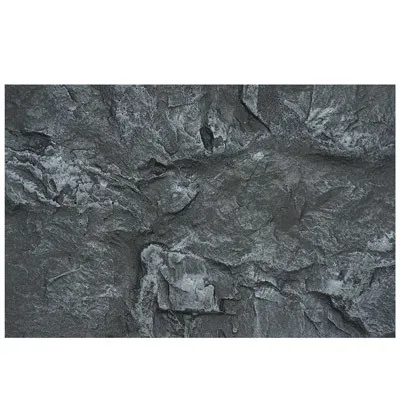
In the world of architecture and design, the quest for the perfect material is a timeless pursuit. We search for something that captures our aesthetic vision, stands up to the rigors of time and weather, and ideally, does so without costing the Earth—both literally and financially. It's a tall order. We dream of the raw, majestic beauty of natural stone, the sleek modernity of polished concrete, and the warm, inviting nature of aged wood. But what if we could have the best attributes of all these, engineered into a single, revolutionary material?
This is where the conversation turns to innovative new surfaces, and one name that's creating a significant buzz is Boulder Slab, particularly in its captivating Vintage Silver finish. This isn't just another tile or panel. It's the physical manifestation of cutting-edge material science, a product born from a deep understanding of natural elements and a commitment to sustainable innovation. As a leader in providing one-stop solutions for building materials, COLORIA GROUP has been at the forefront of this evolution, channeling decades of industry experience into developing products that don't just decorate spaces, but transform them.
This article is a deep dive into the world of Boulder Slab (Vintage Silver). We'll journey from the microscopic level, exploring the science that gives it its unique properties, to the grand scale of architectural design, where it's making a powerful visual statement. We'll deconstruct its composition, evaluate its performance, and celebrate its immense design potential. Prepare to rethink what you know about decorative surfaces.
Part 1: The Science Behind the Slab - The MCM Revolution
To truly appreciate Boulder Slab, we first need to understand the groundbreaking technology that underpins it: MCM, or Modified Cementitious Material. The name might sound technical, but the concept is beautifully simple and rooted in nature. Imagine taking the basic building blocks of the earth—natural stone powder, clay, sand, and other mineral components—and re-engineering them in a way that's far more efficient and environmentally friendly than nature's own slow, high-pressure process.
What Exactly is MCM?
At its core, MCM is a composite material. The "Modified" part of its name is key. Unlike traditional cement that relies on a high-energy chemical reaction to cure and harden, or ceramic tiles that must be fired in kilns at over 1200°C, MCM technology uses a unique, low-temperature curing process. Natural ingredients are mixed with a minimal amount of water and proprietary binders, then shaped in molds and cured at a low heat.
This process has profound implications. Firstly, its energy consumption is a tiny fraction of that used for producing ceramics or quarrying and processing natural stone. This results in a significantly lower carbon footprint, making it a genuinely green building material. Secondly, the raw materials are abundant and can include recycled components, further enhancing its sustainability credentials. COLORIA GROUP has perfected this process, turning what seems like simple alchemy into a precise science, ensuring every slab has consistent quality, durability, and beauty. The Boulder Slab is a premier example from their celebrated **MCM Big Slab Board Series**, showcasing the technology's ability to create large, impressive panels that mimic natural materials with uncanny accuracy.
The result is a material that is paradoxical in the best way possible. It's as tough as stone but remarkably lightweight. It can be rigid like a slab or, in other formulations, surprisingly pliable. It's impermeable to water but allows walls to "breathe." It's a testament to innovation, where science has learned from nature and, in some ways, improved upon it for the specific demands of modern construction.
MCM vs. Traditional Materials: A Head-to-Head Comparison
Talk is one thing, but how does an MCM product like Boulder Slab actually stack up against the materials we're all familiar with? Let's break it down in a comparative table.
| Feature | MCM (e.g., Boulder Slab) | Natural Stone (Granite/Marble) | Porcelain/Ceramic Tile | Architectural Concrete |
|---|---|---|---|---|
| Weight | Extremely lightweight (approx. 4-8 kg/m²) | Very heavy (approx. 50-80 kg/m² for 2cm thick) | Moderately heavy (approx. 15-25 kg/m²) | Extremely heavy (requires significant structural support) |
| Thickness | Very thin (typically 2.5mm - 7mm) | Thick (typically 20mm - 30mm) | Moderately thin (typically 8mm - 12mm) | Very thick (structural element) |
| Flexibility | Can have a degree of flexibility, allowing application on curved surfaces. | Zero flexibility; completely rigid and brittle. | Zero flexibility; rigid and brittle. | Zero flexibility. |
| Eco-Friendliness | Excellent: low-energy production, uses natural/recycled materials, low transport emissions. | Poor: high-energy quarrying and processing, heavy transport, finite resource. | Poor: very high-energy firing process (kilns), significant CO2 emissions. | Poor: cement production is one of the largest sources of industrial CO2 emissions. |
| Installation | Fast and easy; cut with a utility knife or grinder, applied with adhesive. Low dust, low noise. | Complex and labor-intensive; requires heavy machinery, wet cutting, specialized crews. | Moderately complex; requires wet cutting, grouting, and specialized labor. | Very complex; involves formwork, rebar, and extensive curing time. |
| Water Resistance | Excellent; water absorption is extremely low (<0.1%). | Varies; some stones are porous and require sealing. | Excellent (especially porcelain). | Porous; requires sealing and waterproofing membranes. |
| Fire Rating | Excellent (typically Class A, non-combustible). | Excellent (non-combustible). | Excellent (non-combustible). | Excellent (non-combustible). |
| Design Versatility | Almost unlimited; can replicate stone, wood, metal, brick, or create unique designs. | Limited to what nature provides; each piece is unique but pattern choice is restricted. | High; many printed designs available, but can look repetitive. Grout lines are unavoidable. | Limited to textures and forms created by framework. |
Part 2: The "Vintage Silver" Finish - Art Meets Technology
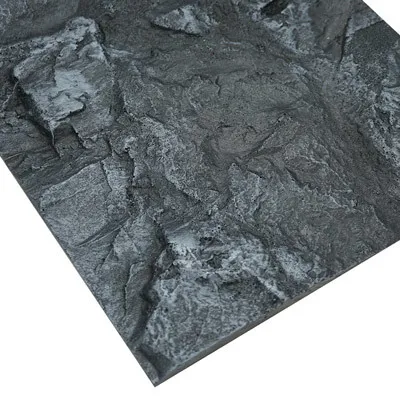
Now that we understand the robust scientific foundation of Boulder Slab, let's turn our attention to its soul: the Vintage Silver finish. This is where engineering excellence blossoms into aesthetic poetry. The name "Vintage Silver" itself evokes a sense of depth and character. It's not a flat, uniform grey. It's a dynamic surface that plays with light, revealing subtle metallic sheens, nuanced tonal shifts, and a texture that feels both ancient and modern at the same time.
So, how is this sophisticated finish achieved? It's not a paint, a laminate, or a coating that can peel or fade. The color and texture are integral to the material itself. During the MCM manufacturing process, natural mineral pigments are mixed into the material slurry. This ensures that the color runs through the entire thickness of the slab. Even if it gets scratched or chipped—which is difficult to do, given its durability—the color underneath is the same. This is a monumental advantage over surface-printed materials.
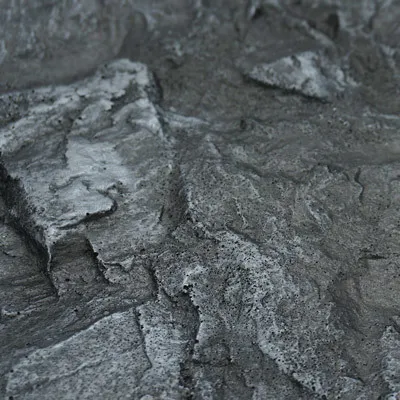
The texture is born from the molding process. Molds created from high-definition scans of real, weathered boulders, slate, or even aged industrial metals are used to impart a hyper-realistic surface relief. The "Vintage Silver" finish specifically captures the essence of a stone that has been gently burnished by the elements over centuries, or perhaps a sheet of metal that has acquired a noble patina. This ability to replicate and even artistically enhance natural textures is a hallmark of advanced MCM technology. It opens up a world of creative possibilities, moving beyond simple imitation into the realm of curated design. This same principle of custom formation is what allows for the incredible intricacy found in the **MCM 3D Printing Series**, where complex, bespoke patterns can be realized for truly unique feature walls and artistic installations.
Part 3: Performance and Practicality - Why Architects and Builders Choose It
A material can be the most beautiful in the world, but if it's not practical, it remains a concept, not a solution. This is where Boulder Slab truly shines, offering a suite of performance benefits that solve real-world construction challenges. For architects, engineers, and builders, these practical advantages are just as compelling as its visual appeal.
Incredibly Lightweight & Thin
This is arguably the most significant game-changer. A typical Boulder Slab panel weighs around 5-6 kg per square meter and is only a few millimeters thick. Compare that to a 2cm thick slab of granite, which can weigh over 50 kg for the same area. This drastic weight reduction has cascading benefits. For new constructions, it means less structural reinforcement is needed, saving on steel and concrete costs. For renovation projects, it's a dream come true. Old buildings can be given a stunning new façade without requiring costly and invasive structural upgrades. It also dramatically simplifies logistics: more material can be shipped per truck, and panels can often be carried by hand on-site, reducing the need for heavy cranes.
Exceptional Durability and Resilience
Despite its light weight, Boulder Slab is remarkably tough. Its composition gives it a high resistance to impact and abrasion, making it suitable for high-traffic areas. Furthermore, its performance across different climates is outstanding. It is UV-resistant, meaning the Vintage Silver color won't fade or yellow under intense sunlight, a critical factor for exterior facades in sunny regions like the Middle East, where COLORIA GROUP supports projects through its agency in Saudi Arabia. It also excels in freeze-thaw cycles, as its low water absorption prevents moisture from getting trapped inside, expanding, and causing cracks—a common failure point for concrete and some natural stones in colder climates. Add to this a Class A1 fire rating (the highest possible, meaning it is non-combustible and will not contribute to a fire), and you have a material that offers profound peace of mind.
Flexibility and Versatility
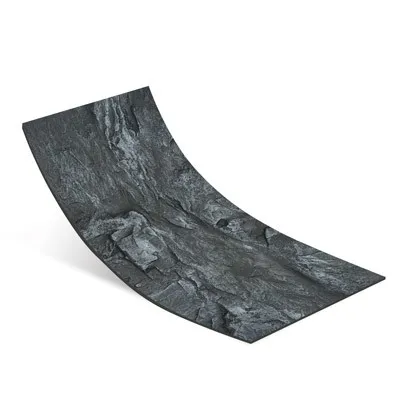
Here's another 'magic' property of MCM. While the "Slab" in Boulder Slab denotes a rigid panel, the underlying technology allows for a spectrum of flexibility. The rigid slabs themselves can be manufactured with a slight give, but the true potential is shown in other products from the same family. For projects that require cladding on sweeping curves, dramatic arches, or cylindrical columns, traditional rigid materials are a nightmare, requiring countless custom cuts. But a related product, **MCM Flexible Stone**, can be bent on-site to conform perfectly to these shapes. This showcases the incredible versatility of the core technology. Boulder Slab gives you the monolithic look of stone, while its sister products solve the problem of curved surfaces, allowing designers to create fluid, organic forms without compromise.
Boulder Slab (Vintage Silver) at a Glance: Technical Data
For the technically minded, here's a summary of the key performance metrics that define this exceptional material.
| Property | Specification | Benefit |
|---|---|---|
| Standard Dimensions | e.g., 1200x2400mm (Varies by product line) | Large format allows for fewer joints and a seamless, monolithic appearance. |
| Thickness | 3mm - 7mm | Lightweight, easy to handle, minimal wall buildup. |
| Weight | Approx. 5-8 kg/m² | Reduces structural load, simplifies transportation and installation. |
| Fire Rating | EN 13501-1: Class A1 or A2 | Non-combustible, highest level of fire safety for building materials. |
| Water Absorption | < 0.1% (by weight) | Highly waterproof, suitable for wet areas and exteriors; prevents frost damage. |
| Flexural Strength | High (e.g., >10 MPa) | Resistant to bending and breaking during transport and installation. |
| Freeze-Thaw Resistance | Passes 100+ cycles with no cracking or damage | Excellent durability in cold climates with frequent temperature swings. |
| UV Resistance | High-grade; minimal color change over time | Color integrity is maintained even in direct, harsh sunlight. |
| Chemical Resistance | Resistant to common acids, alkalis, and pollutants | Easy to clean and maintain; resists staining from pollution in urban environments. |
Part 4: Design Appeal - Bringing Spaces to Life
With a firm grasp on the science and performance, we can now fully embrace the most exciting aspect of Boulder Slab (Vintage Silver): its power to transform a space. This is where the material transcends its technical specifications and becomes a tool for creative expression.
Exterior Applications: Redefining the Façade
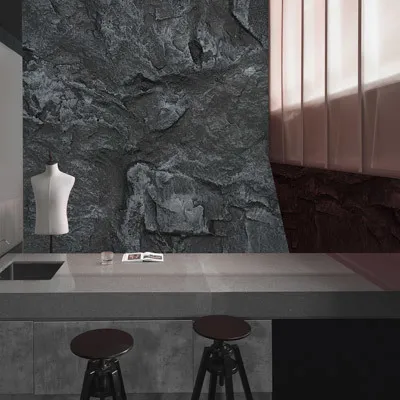
On a building's exterior, the Vintage Silver slab makes a bold, sophisticated statement. The large-format panels create a sleek, contemporary skin, minimizing grout lines that can often make a building look busy or dated. The subtle, metallic luster of the Vintage Silver finish interacts beautifully with natural light, changing its character throughout the day. In the morning sun, it can appear bright and crisp; in the soft light of dusk, it takes on a deeper, more dramatic tone. It can be used to clad an entire high-rise, giving it a monolithic, sculptural quality, or as an accent on a luxury residence to highlight architectural features like entryways, cantilevers, or feature walls.
Interior Applications: A Canvas for Ambiance
Brought indoors, Boulder Slab (Vintage Silver) offers endless possibilities for creating atmosphere and style.
-
Feature Walls: Imagine a living room where the wall behind the entertainment center is a seamless expanse of Vintage Silver. It provides a stunning, textured backdrop that is both dramatic and understated, making it the perfect focal point. Its Class A fire rating also makes it an ideal, non-combustible material for fireplace surrounds, creating a chic, modern hearth.
-
Kitchens & Bathrooms: In wet areas, its performance is as impressive as its looks. As a kitchen backsplash, it offers a seamless, grout-free surface that is incredibly easy to wipe clean. In a bathroom, it can be used to create a floor-to-ceiling shower enclosure that feels like it was carved from a single piece of stone, delivering a spa-like sense of luxury and permanence.
-
Commercial & Hospitality Spaces: The durability and sophisticated aesthetic of Vintage Silver make it perfect for commercial interiors. Picture it as the backdrop behind a hotel reception desk, as an accent wall in a high-end restaurant, or lining the walls of a boutique retail store. It instantly elevates the space, conveying a brand message of quality, modernity, and timeless style.
The Versatility of Vintage Silver
The beauty of the Vintage Silver colorway is its incredible versatility. As a complex neutral, it doesn't fight for attention but rather enhances everything around it. It pairs beautifully with the warmth of natural wood, the sharp black lines of modern metal fixtures, the clarity of glass, and the vibrant green of indoor plants. It can be the hero of a minimalist or industrial design scheme, or it can serve as a calming, textured counterpoint in a more eclectic or luxurious space. It bridges the gap between raw, natural elements and refined, man-made design, giving architects and interior designers a powerful tool to realize their vision.
Conclusion: The Future is Engineered
Boulder Slab in Vintage Silver is more than just a new product on the market. It represents a paradigm shift in how we think about building materials. It is the culmination of a journey that begins with a deep respect for nature and ends with a product perfected by human ingenuity. It proves that we no longer have to choose between beauty, performance, and sustainability.
Through the power of MCM technology, companies like COLORIA GROUP are not just supplying materials; they are providing holistic, intelligent solutions. They are empowering architects and designers to build more creatively, more efficiently, and more responsibly. Lightweight, durable, versatile, and stunningly beautiful, Boulder Slab (Vintage Silver) is a testament to this new era. It's a material that doesn't just build walls but opens doors to a new world of design possibilities.










