
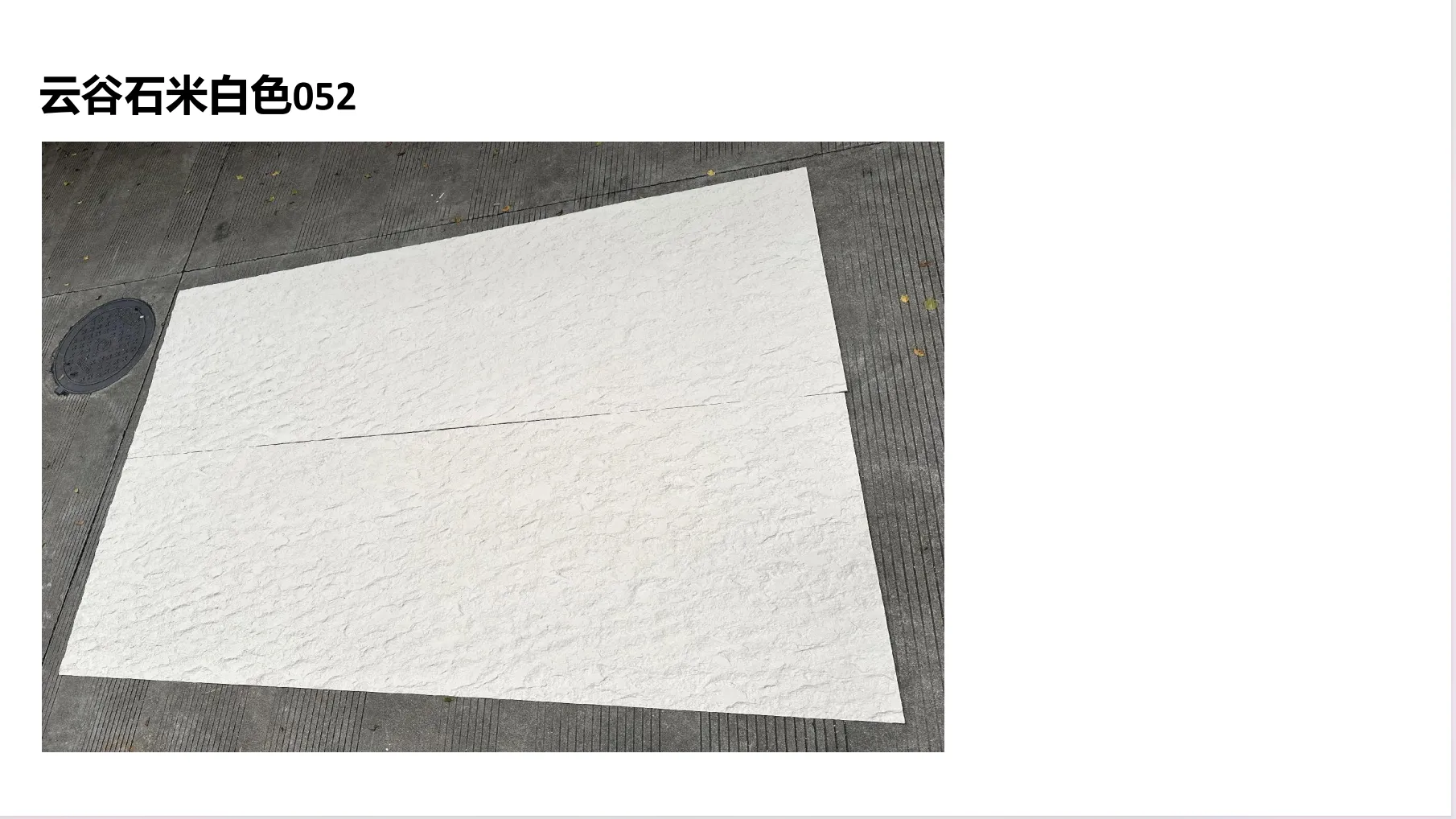
Every space we inhabit—whether a cozy home, a bustling office, or a grand public building—tells a story through its materials. From the rough-hewn charm of ancient stone to the sleek precision of modern concrete, the substances we choose to build with shape not just walls and floors, but the way we feel within those spaces. In recent years, a material has emerged that blends the timeless allure of natural stone with the innovation of modern engineering: cloud stone . Part of the MCM flexible stone family, this material is redefining what's possible in architecture and design. Let's dive into its world—exploring what makes it unique, how it's used, and why it's capturing the attention of designers and homeowners alike.
At first glance, cloud stone might evoke images of soft, billowy textures or the misty hues of a dawn sky—and in many ways, that's not far off. But technically, it's a cutting-edge modified composite material , born from the fusion of natural minerals (like marble dust, quartz, and feldspar) and advanced polymers. This marriage of old and new gives cloud stone the best of both worlds: the organic beauty of stone and the practical benefits of modern composites. It's part of the broader MCM project board series , a line of building materials celebrated for their versatility and performance.
Unlike traditional stone slabs, which are heavy and rigid, cloud stone is engineered to be lightweight and flexible. Imagine holding a large panel that feels surprisingly easy to lift, yet looks like it was quarried from a mountainside—that's the magic of MCM technology. This flexibility means it can bend gently around curves, cling to uneven surfaces, or even be shaped into custom forms, opening up design possibilities that rigid stone simply can't match.
What makes cloud stone stand out in a crowded market of building materials? Let's break down its most compelling traits:
Weighing up to 70% less than natural stone, cloud stone panels are a dream for installers. A typical 1m² panel might weigh just 8-12kg, compared to 30-40kg for traditional marble or granite. This reduces structural load on buildings and cuts down on installation time—no need for heavy machinery or reinforced supports.
Thanks to its composite makeup, cloud stone can flex up to 30 degrees without cracking. This makes it perfect for curved facades, rounded columns, or even ceiling features. Imagine a restaurant with a swooping, cloud-like wall that feels soft yet sturdy—that's cloud stone at work.
Don't let its lightweight nature fool you—cloud stone is tough. It resists UV rays, rain, and temperature swings, making it suitable for both indoor and outdoor use. Unlike some natural stones, it won't fade in sunlight or absorb moisture, keeping its beauty intact for decades.
Cloud stone comes in a stunning range of finishes, from the subtle veining of marble veil white to bold, starry patterns reminiscent of travertine (starry blue) . Designers can choose from matte, semi-polished, or even textured surfaces that mimic the look of weathered stone or smooth river pebbles.
Cloud stone's blend of beauty and practicality makes it a favorite in diverse settings. Here are some of the most inspiring ways it's being used today:
Architects love cloud stone for exterior cladding. Its lightweight nature reduces the stress on a building's frame, while its weather resistance ensures the facade stays vibrant year-round. One striking example is a boutique hotel in Barcelona, where the designers used large-format cloud stone panels in soft gray tones, accented with streaks of silver—evoking the city's coastal mists. The panels wrap around the building's curved corners seamlessly, creating a fluid, organic look that traditional stone could never achieve.
Homeowners and interior designers are embracing cloud stone for feature walls in living rooms, bedrooms, and home offices. Picture a modern living room with a fireplace flanked by cloud stone panels in a starry blue finish—tiny flecks of iridescent material catch the light, mimicking a night sky. The panels are smooth to the touch, cool under your hand, yet their texture adds depth, making the wall feel like a piece of art rather than just a partition.
For museums, galleries, or community centers, cloud stone offers a way to blend durability with artistic expression. Take the new city library in Portland, which features a grand entrance hall lined with cloud stone in a lunar peak silvery finish. The panels are arranged in a wave-like pattern, and when sunlight streams through the skylights, they cast soft, shifting shadows that change throughout the day—turning the space into a dynamic, ever-evolving exhibit.
It's also worth noting that cloud stone plays well with architectural big slab solutions . For large-scale projects like airport terminals or convention centers, oversized panels (up to 3m in length) can be used to create seamless, monolithic surfaces that feel both grand and cohesive. No more unsightly grout lines—just a smooth, uninterrupted expanse of stone-like beauty.
To truly appreciate cloud stone, it helps to see how it stacks up against familiar materials like natural stone, fair-faced concrete , or even other composites. Let's take a closer look:
| Feature | Cloud Stone (MCM Flexible) | Natural Stone (e.g., Marble) | Fair-Faced Concrete |
|---|---|---|---|
| Weight (per m²) | 8-12kg | 30-40kg | 20-25kg |
| Flexibility | Can bend up to 30° | Rigid; prone to cracking if bent | Minimal flexibility |
| Design Options | Starry patterns, veining, metallic finishes, custom colors | Limited to natural variations | Monochromatic; texture depends on formwork |
| Installation Complexity | Simple; can be cut on-site with basic tools | Requires heavy lifting equipment and skilled masons | Requires precise formwork; difficult to adjust post-pour |
| Outdoor Durability | Resists fading, moisture, and temperature changes | May stain or etch with exposure to elements | Durable but prone to cracking in freeze-thaw cycles |
The standout here? Cloud stone's versatility . While fair-faced concrete offers a raw, industrial charm and natural stone brings timeless elegance, cloud stone bridges the gap—offering the look of stone with the adaptability of a modern composite. It's the material for designers who refuse to choose between beauty and practicality.
In an era where eco-conscious design is more than a trend, cloud stone has another trick up its sleeve: sustainability. The MCM manufacturing process uses recycled minerals and reduces waste compared to traditional stone quarrying, which often leaves large environmental footprints. Additionally, its lightweight nature reduces transportation emissions, and its durability means less frequent replacement—all small wins for the planet.
For example, a recent project in Copenhagen used cloud stone for a residential complex, cutting the building's carbon footprint by 15% compared to using natural limestone. "We wanted a material that felt rooted in nature but didn't come at nature's expense," said the project's architect. "Cloud stone checked every box."
At the end of the day, building materials are about more than function—they're about emotion. Cloud stone, with its soft textures, ethereal colors, and chameleon-like adaptability, creates spaces that feel both grounded and aspirational. Whether you're a homeowner dreaming of a feature wall that feels like a slice of the sky, an architect pushing the boundaries of curved design, or a developer aiming for sustainability without sacrificing beauty, cloud stone offers a canvas for creativity.
As part of the MCM flexible stone family, it's a testament to how innovation can honor tradition—taking the raw, earthy appeal of stone and reimagining it for the needs of today's world. So the next time you walk into a space that feels uniquely alive, pause and look closer. It might just be cloud stone, quietly transforming walls into stories.
Recommend Products












