
Walk down any city street, and your eyes are drawn to them—the buildings that stand out not just for their height or shape, but for the way they wear their "skin." Architectural cladding, that outer layer that wraps a structure, is more than just protection; it's a language. It speaks to the building's purpose, its personality, and even the era it was born in. From the rough-hewn stone of ancient castles to the sleek glass of modern skyscrapers, cladding has always mirrored human innovation. But today, as we crave spaces that feel both timeless and forward-thinking, a new star has emerged: Marble Stream Stone . It's not just another material—it's a bridge between nature's artistry and cutting-edge design, and it just might be the future of how we dress our buildings.
Let's rewind a little. For most of history, cladding was purely functional. Early civilizations used mud bricks or rough stone to shield against the elements, prioritizing survival over style. Then came marble and granite, quarried from the earth to add grandeur to temples and palaces—think of the Parthenon's gleaming white columns, standing as a testament to power and beauty. Fast forward to the 20th century, and we saw a shift: concrete brutalism brought raw, unapologetic strength, while glass curtain walls celebrated transparency and light. But with this evolution came trade-offs. Concrete could feel cold; glass, too sterile. Wood, though warm, often lacked durability. And as sustainability became a global cry, many traditional materials fell short of eco-friendly standards.
Enter the 21st century, and architects found themselves at a crossroads: how to create cladding that was durable, beautiful, and kind to the planet. Materials like MCM flexible stone emerged, offering lightweight versatility, while wood grain board brought the warmth of timber without deforestation. Yet, something was missing—a material that could blend the organic depth of natural stone with the precision of modern engineering. That's where Marble Stream Stone steps in.
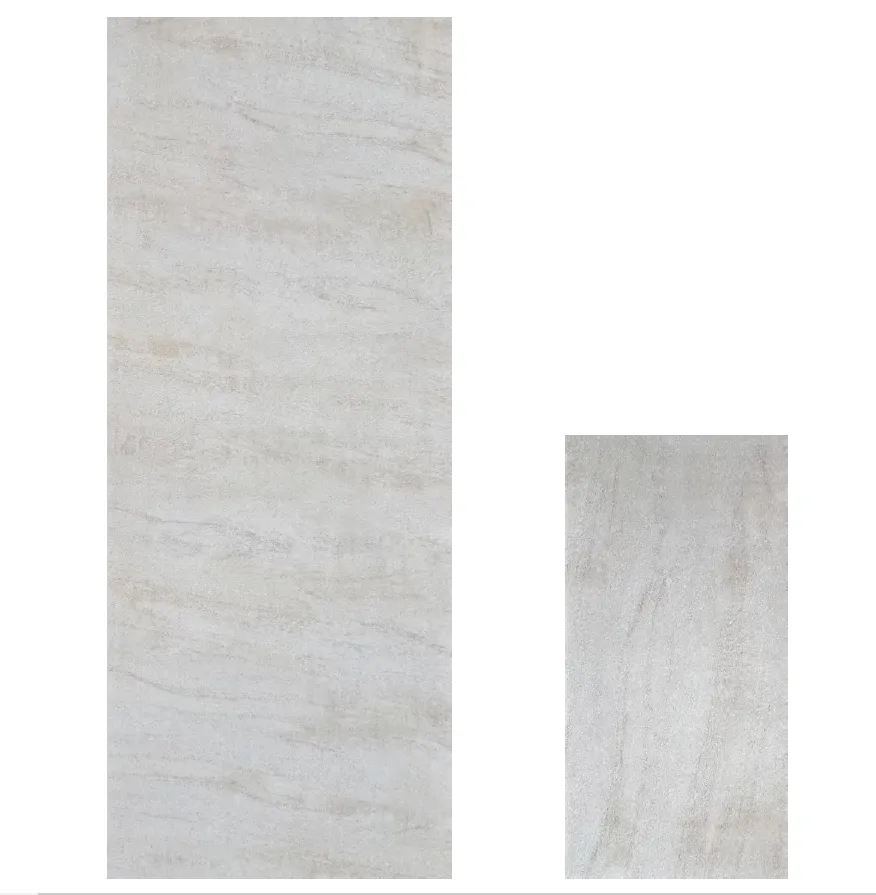
Picture a riverbed, smoothed by centuries of water flowing over stone, each ripple leaving a delicate trace. Now imagine that same fluidity frozen in time, captured in a slab of marble. That's the essence of Marble Stream Stone. Unlike traditional marble, which often features bold veins or uniform color, this variant is defined by its soft, flowing patterns—subtle waves of gray, cream, and beige that mimic the movement of water. It's as if the stone itself holds a memory of the streams that shaped it, turning every panel into a unique landscape.
But don't let its gentle appearance fool you. Marble Stream Stone is a product of both nature and innovation. Quarried from select deposits where mineral-rich waters once carved through limestone, each slab is then precision-cut and treated with modern sealants to enhance durability. The result? A material that retains the warmth and uniqueness of natural stone but with the strength to withstand harsh weather, pollution, and the test of time.
Let's get up close. Run your hand over a panel of Marble Stream Stone, and you'll feel it—the slight texture, cool to the touch but not icy, with a surface that catches light in unexpected ways. Unlike polished marble, which can feel slippery or overly formal, its finish is somewhere between matte and satin, inviting interaction. The "stream" in its name isn't just marketing; the veining truly flows, like a quiet brook winding through a forest. In sunlight, those veins glow softly, shifting from pale gray to warm beige; under artificial light, they take on a deeper, more mysterious tone. It's a material that changes with the day, making the building feel alive.
But beauty is just the start. Marble Stream Stone is surprisingly tough. Unlike porous limestone or delicate travertine, it resists stains, scratches, and water absorption. In coastal areas, where salt air eats away at lesser materials, it holds its ground. In busy urban environments, it stands up to graffiti and pollution, requiring little more than a gentle wash to look fresh. And here's the kicker: it's sustainable. Quarried using low-impact methods, and often sourced from reclaimed stone deposits, it minimizes environmental disruption. Plus, its longevity means less frequent replacement, reducing waste over time.
To truly understand why Marble Stream Stone is a game-changer, let's compare it to some of today's most popular cladding materials. How does it stack up against the likes of fair-faced concrete , wood grain board , and even ethereal shadow travertine (a close cousin in the marble family)?
| Material | Texture & Aesthetics | Durability | Sustainability | Best For |
|---|---|---|---|---|
| Marble Stream Stone | Flowing, water-like veining; soft matte finish; warm, organic depth | High (resists stains, weathering, and scratches) | Excellent (low-impact quarrying, long lifespan reduces waste) | Luxury residential, boutique hotels, cultural centers |
| Fair-Faced Concrete | Raw, industrial; gray, uniform; bold, minimalist | Very high (resists fire, impact, and erosion) | Moderate (high carbon footprint in production) | Warehouses, museums, modernist public buildings |
| Wood Grain Board | Warm, natural wood patterns; smooth or textured; cozy, rustic | Moderate (prone to warping, rot, or insect damage without treatment) | Good (often made from recycled wood or FSC-certified sources) | Cottages, cafes, low-rise residential |
| Ethereal Shadow Travertine | Swirling, cloud-like patterns; porous surface; cool, elegant | Moderate (porous, requires regular sealing) | Good (natural stone, but higher maintenance) | Luxury interiors, spa resorts, high-end retail |
| MCM Flexible Stone | Versatile; mimics stone, wood, or metal; lightweight, thin profile | High (resistant to fading, cracking, and moisture) | Very good (low waste production, recyclable) | Renovations, high-rise exteriors, curved surfaces |
What jumps out? Marble Stream Stone balances the best of all worlds. It has the durability of concrete without the coldness, the warmth of wood grain board without the upkeep, and the luxury of travertine with added resilience. And unlike MCM flexible stone, which often imitates natural textures, Marble Stream Stone is nature—just refined by human ingenuity.
Designer's Take: "I recently used Marble Stream Stone on a boutique hotel in Lisbon," says architect Maria Almeida. "The client wanted something that felt both rooted in the city's historic stone architecture and utterly modern. The stone's flowing veins echo the Tagus River that runs through Lisbon, creating a connection to the landscape. Guests often comment on how the lobby feels 'calm'—like standing by a quiet stream. That's the power of a material that tells a story."
Marble Stream Stone isn't limited to grand buildings—it's surprisingly versatile. Let's explore how it's making waves across different projects:
Imagine a suburban home with a facade of Marble Stream Stone. The soft beige and gray waves catch the morning light, making the house feel welcoming, not imposing. Unlike stark concrete or generic brick, it adds character without overwhelming the neighborhood. Inside, it works as a feature wall in a living room, where its texture contrasts beautifully with plush sofas and warm lighting. Even in bathrooms, where moisture is a concern, its sealed surface holds up, turning a utilitarian space into a spa-like retreat.
Boutique stores, cafes, and hotels are embracing Marble Stream Stone to create memorable first impressions. A high-end jewelry store in Tokyo used it for its exterior, the stone's gentle veining mirroring the delicate craftsmanship inside. A coastal restaurant in Greece cladded its outdoor patio walls with it, where the stone's "stream" patterns blend seamlessly with the nearby ocean. In these spaces, the cladding isn't just a backdrop—it's part of the brand's identity, telling customers, "We care about beauty in every detail."
Museums, libraries, and community centers are also falling for Marble Stream Stone's charm. A new public library in Berlin features a facade of the stone, its flowing patterns inviting visitors to "dive into knowledge"—a subtle nod to the stream-like flow of ideas. In parks, it's used for pavilions and seating walls, where its natural texture encourages people to touch and connect with the space. Unlike cold concrete, it feels approachable, turning public buildings into places people want to linger.
So, what makes Marble Stream Stone more than just a trend? Let's break it down:
Biophilic design—the idea that humans innately seek connection with nature—has taken the architectural world by storm. We're tired of sterile, artificial spaces; we want to feel grounded, even in urban environments. Marble Stream Stone delivers that connection. Its patterns are a direct echo of nature's most soothing element: water. Studies show that spaces with natural textures reduce stress and boost creativity. Imagine a workplace clad in Marble Stream Stone; instead of feeling trapped in a concrete box, employees might feel as if they're working alongside a gentle stream. That's not just design—that's wellbeing.
Gone are the days of one-size-fits-all cladding. Today's architects demand customization, and Marble Stream Stone delivers. Advanced cutting techniques allow for precise shaping—curved walls, intricate panels, even 3D-printed accents (hello, 3D printing series compatibility!). It can be paired with other materials, too: combine it with glass for a modern twist, or with wood grain board for a rustic-modern vibe. The possibilities are limited only by imagination.
Sustainability isn't a buzzword anymore—it's a requirement. Marble Stream Stone checks this box in spades. Quarried with minimal disturbance to ecosystems, and requiring no toxic chemicals for maintenance, it aligns with green building certifications like LEED and BREEAM. Its longevity also means less frequent replacement, reducing the carbon footprint over a building's lifetime. In a world grappling with climate change, choosing materials that last and respect the planet isn't just responsible—it's smart business.
As we look to the future, one thing is clear: the buildings of tomorrow will need to do more. They'll need to inspire, to connect, and to coexist harmoniously with the environment. Marble Stream Stone isn't just a material for today—it's a partner in that vision. It's a reminder that the most innovative designs often come from listening to nature, not fighting against it.
Think about the skyline of 2050. Will it be filled with cold, uniform towers? Or will it be a tapestry of textures, colors, and stories—each building wearing its stone skin with pride? If Marble Stream Stone has anything to say about it, the future will be warm, timeless, and wonderfully human. Because at the end of the day, architecture is about people. And people, it turns out, have always been drawn to the beauty of a stream—whether it's in a forest or etched into the side of a building.
Marble Stream Stone isn't just changing how we clad buildings; it's changing how we think about them. It's a testament to the fact that progress doesn't have to mean leaving nature behind. In a world of fast trends and disposable design, it stands as a symbol of longevity and intention. So the next time you pass a building that makes you pause, that makes you feel something, take a closer look. Maybe, just maybe, it's wearing Marble Stream Stone. And if it is, you're not just looking at a wall—you're looking at the future.
Recommend Products












