Now that we understand how MCM marble is made, let's explore its core properties—the features that make it a standout choice for modern design. These properties aren't just technical specs; they translate directly into real-world benefits for homeowners, businesses, and installers.
1. Lightweight and Flexible
Perhaps the most defining feature of MCM marble is its lightweight nature. While natural marble panels can be thick and heavy, MCM marble sheets typically range from 3mm to 8mm in thickness and weigh as little as 3-5 pounds per square foot. This lightness reduces the structural load on buildings, making it suitable for both new construction and retrofits where weight is a concern (like older homes with weaker foundations). It also simplifies installation: panels can be handled by a small team, reducing labor costs and installation time.
Flexibility is another game-changer. Thanks to its composite structure, MCM marble can flex up to 30 degrees without cracking—a property that opens up endless design possibilities. Imagine a curved fireplace surround clad in
marble stream stone
, its flowing patterns mirroring the curve of the wall, or a restaurant ceiling with undulating waves of
marble veil white
that mimic the movement of clouds. These are designs that would be cost-prohibitive or structurally challenging with natural marble, but with MCM, they're achievable.
2. High Strength and Durability
Don't let its light weight fool you—MCM marble is surprisingly tough. The reinforcing fibers and polymer binders in its composition give it high tensile strength, meaning it can withstand impacts, bending, and temperature fluctuations better than natural marble. It's resistant to chipping, scratching, and staining, which is a huge plus for high-traffic areas like hotel lobbies, retail stores, or family kitchens. Unlike natural marble, which is porous and requires regular sealing to prevent spills from seeping in, MCM marble has a non-porous surface that repels liquids. A quick wipe with a damp cloth is usually all it takes to clean up coffee spills, oil splatters, or dirt.
Weather resistance is another key strength. Exterior cladding with natural marble can be risky, as freeze-thaw cycles, rain, and UV rays can cause discoloration and deterioration over time. MCM marble, however, is engineered to stand up to the elements. Its colorfast pigments resist fading, and its moisture-resistant properties prevent water damage, making it ideal for outdoor applications like facade cladding, patio flooring, or pool surrounds.
3. Aesthetic Versatility
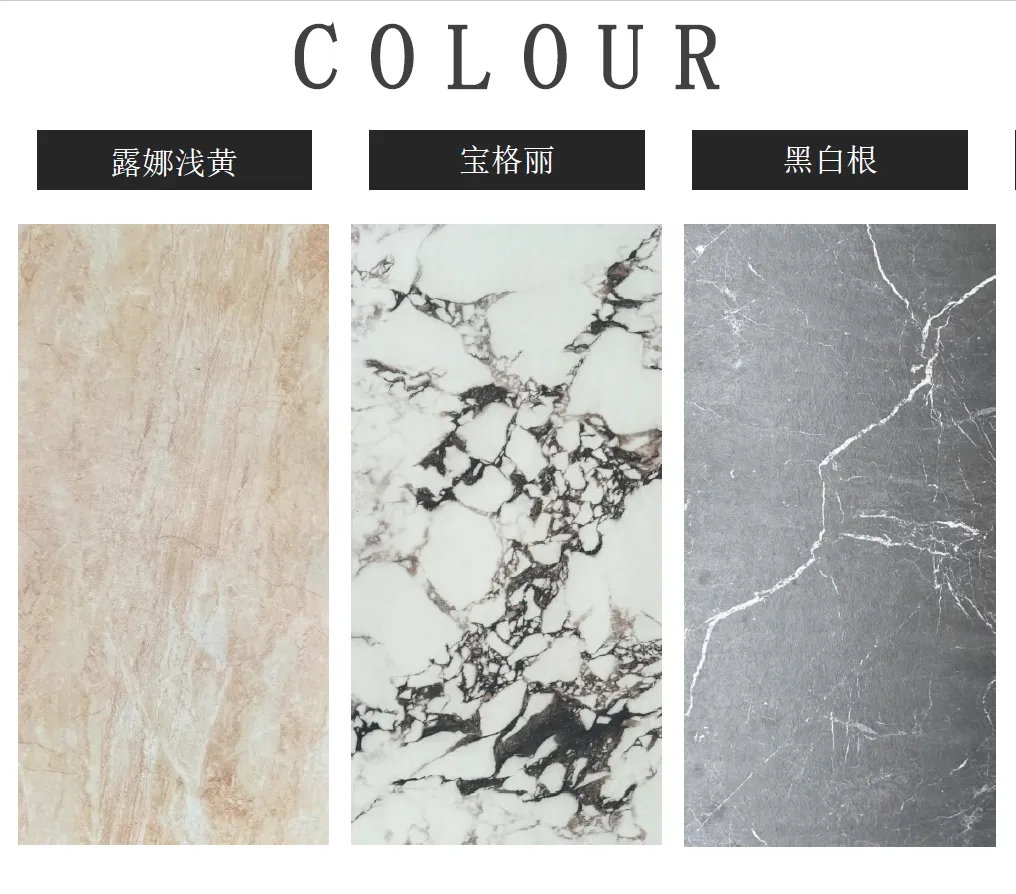
Of course, none of these technical benefits would matter if MCM marble didn't look like real marble. Fortunately, the series excels here, offering a wide range of styles that capture the beauty of natural stone. Let's take a closer look at three popular options to see how they differ:
|
Marble Type
|
Key Features
|
Aesthetic Appeal
|
Best For
|
|
Marble Veil White
|
Soft, feathery white veining on a bright white base; smooth, matte finish.
|
Clean, airy, and timeless—evokes a sense of calm and spaciousness.
|
Small kitchens, bathrooms, or minimalist living rooms where light reflection is desired.
|
|
Marble Stream Stone
|
Flowing, river-like patterns in shades of gray and beige; subtle texture.
|
Dynamic and organic—adds movement to walls or floors, mimicking the look of water.
|
Commercial lobbies, feature walls, or dining areas where a focal point is needed.
|
|
Marble Interstellar Gray
|
Deep charcoal base with iridescent metallic flecks and thin white veins.
|
Dramatic and modern—adds depth and sophistication, especially under lighting.
|
High-end bars, hotel reception desks, or home theater rooms with a moody vibe.
|
These are just a few examples; the MCM Marble Series includes dozens of variations, from warm beiges to bold blacks, each with its own unique character. Whether you're going for a classic, rustic, or contemporary look, there's an MCM marble to match your vision.
4. Sustainability
In an era where eco-conscious design is increasingly important, MCM marble also scores points for sustainability. Traditional marble quarrying is resource-intensive, involving heavy machinery and large amounts of water, and it often leaves behind scars on the landscape. MCM marble, by contrast, uses significantly less natural stone—only the finest aggregates are needed, reducing waste. The lightweight panels also lower transportation emissions, as more panels can be shipped per load compared to heavy natural stone. Additionally, many MCM products are low-VOC (volatile organic compound), meaning they release fewer harmful chemicals into the air, making them safer for indoor spaces.