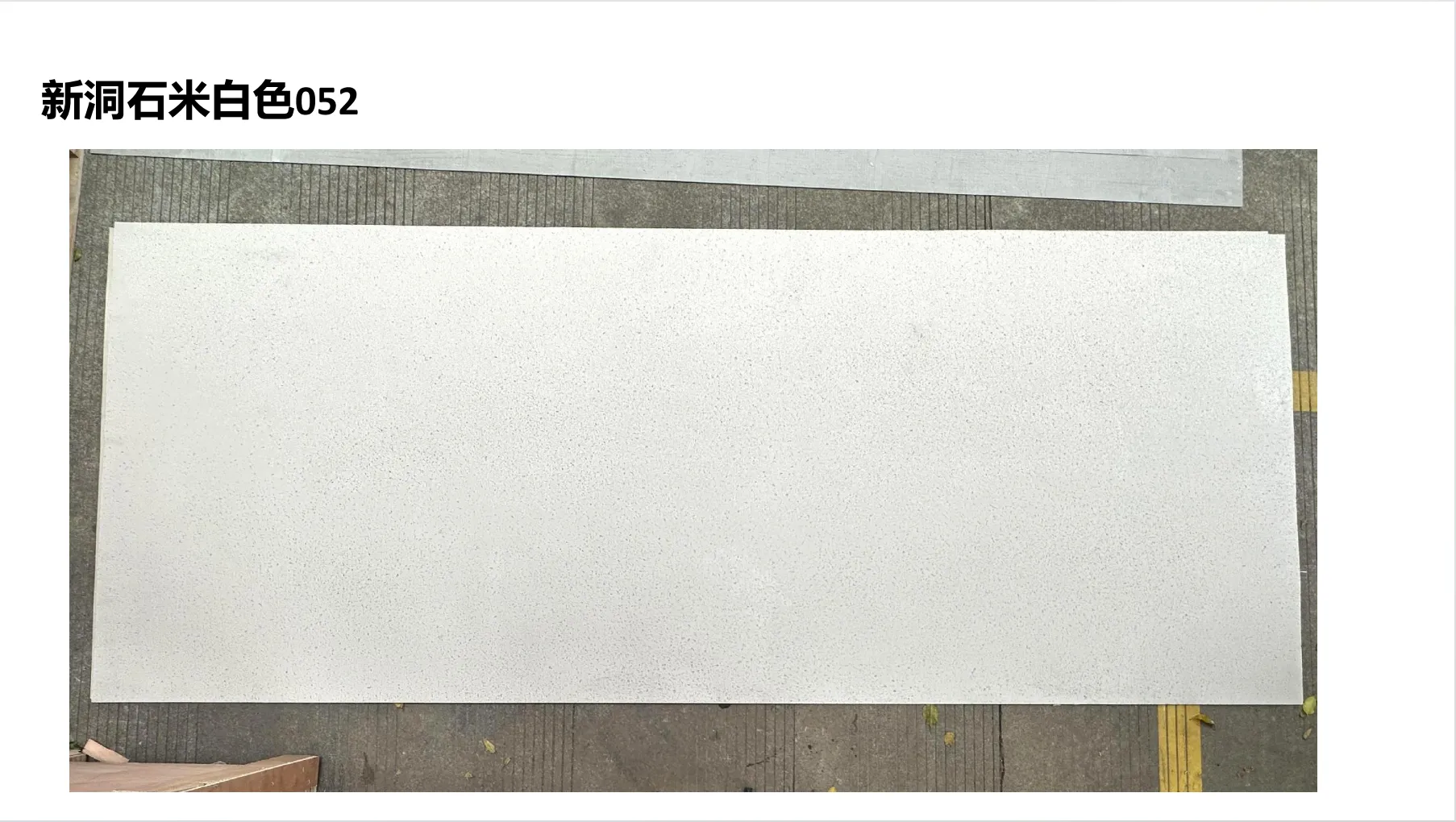
Replicating a stone's color is one thing. Replicating its
character
is another. White
Travertino's magic lies in its imperfections—the way no two veins are the same, the subtle shifts in tone from slab to slab, the tactile contrast between smooth surfaces and pitted "eyes." MCM technology nails this by focusing on three key elements: texture, color variation, and depth.
Texture: More Than Skin Deep
Run your hand over a natural White
Travertino slab, and you'll notice it's not uniformly smooth. Some areas are polished to a soft sheen, others are slightly rough, and the eyes add tiny indentations that catch the light. MCM doesn't just print a flat image of this texture—it
builds
it. Using 3D printing techniques from the
MCM 3D printing series, manufacturers can create micro-level variations in the surface. Tiny ridges mimic the natural crystallization of minerals, while precisely placed pits replicate the stone's characteristic eyes. The result? When you touch an MCM White
Travertino panel, your fingers feel the same interplay of smooth and rough as they would on the real thing. It's not just a visual trick; it's a sensory experience.
Color: Capturing the "Living" Palette
White
Travertino isn't "just white." It's a symphony of off-whites, creams, and ivories, with veins that range from pale gold to smoky gray. MCM achieves this by avoiding flat, uniform pigments. Instead, colorants are mixed in gradients, and sometimes even tiny mineral particles are added to create subtle flecks—just like in natural stone. For example, to replicate the warm undertones of White
Travertino, manufacturers might blend beige and ivory pigments with hints of ochre, ensuring that no two panels are identical. It's why an MCM White
Travertino wall doesn't look like a printed poster; it looks like a collection of stones pulled from the same quarry, each with its own personality.
Depth: The Illusion of Thickness
Natural stone has depth because it's… well, thick. MCM panels, by contrast, are often just a few millimeters thin. But thanks to clever optical illusions, they still look like solid stone. The 3D scanning process captures how light interacts with the stone's surface—where shadows form in the pits, how veins catch the light—and replicates those effects in the panel's texture. When installed, the result is a surface that looks like it has weight and volume, even though it's lightweight enough to hang on drywall. It's like a painter using perspective to make a flat canvas feel three-dimensional.