
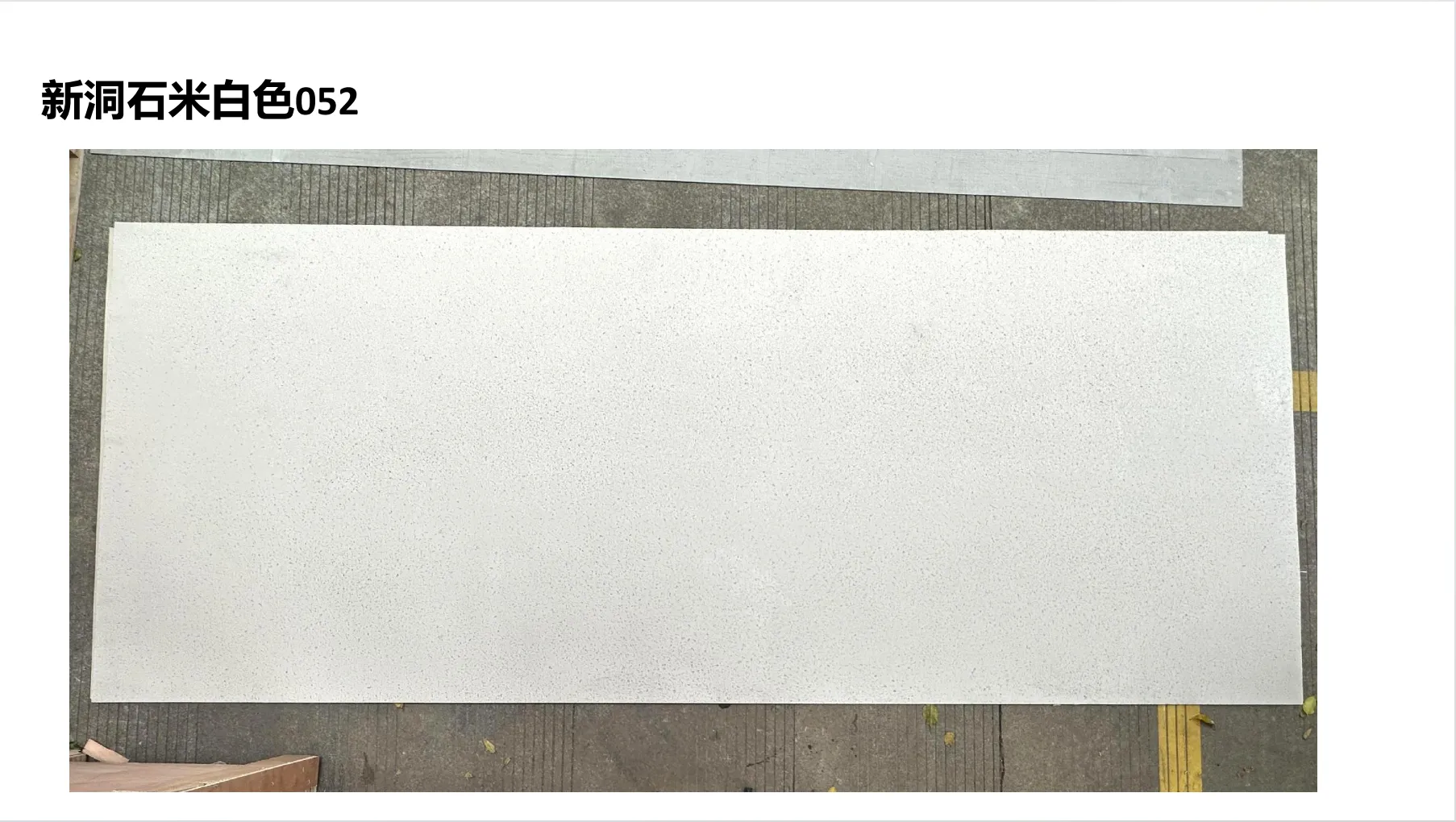
Walk into a luxury home, a high-end hotel, or a historic building, and there's a good chance you'll encounter the soft, elegant texture of white travertino. With its warm ivory tones, subtle veining, and unique pitted surface, it's a stone that feels both ancient and timeless. Formed over centuries by mineral-rich hot springs, travertino carries the story of the earth in every pore—literally. Those tiny, natural cavities are part of its charm, a reminder of its organic origins. But for architects, designers, and homeowners, those same pores have long been a source of frustration. They're not just aesthetic; they're a vulnerability waiting to cause trouble.
Imagine investing in a stunning white travertino backsplash for your kitchen, only to watch a splash of tomato sauce seep into the stone within minutes, leaving a permanent orange stain. Or picture a commercial lobby with travertino floors that, despite regular sealing, start to discolor and crack after years of foot traffic and moisture exposure. Porosity—the stone's ability to absorb liquids and gases—is the culprit here. And for white travertino, which shows every blemish, it's a problem that can turn beauty into regret.
Porosity is a measure of how much empty space (pores) a material contains, and how easily those pores can absorb liquids. In natural stone like travertino, these pores form as carbon dioxide bubbles escape during the stone's formation, leaving behind tiny channels and cavities. For geologists, it's a fascinating feature; for anyone tasked with maintaining the stone, it's a headache. White travertino typically has a porosity level of 8-12%, which means up to 12% of its volume is empty space. To put that in perspective: a single square meter of travertino can absorb up to half a liter of water if left unprotected.
Why porosity is a problem: When liquids—whether water, oil, wine, or cleaning chemicals—seep into travertino's pores, they don't just sit there. Over time, they can cause discoloration, promote mold growth, or even weaken the stone's structure. In cold climates, absorbed water can freeze and expand, leading to cracks. Even regular foot traffic can push dirt deep into the pores, making the stone look dull and dirty despite cleaning. Sealing helps temporarily, but it needs reapplication every 1-3 years, adding ongoing maintenance costs.
For decades, the solution seemed simple: either accept the maintenance hassle or choose a less porous stone (like granite) and sacrifice travertino's unique texture. But what if there was a way to have it all—the beauty of white travertino, minus the porosity problems? That's where MCM technology steps in.
MCM, or Modified Composite Material, isn't just another synthetic substitute. It's an engineering breakthrough that marries the best of natural stone with modern innovation. At its core, MCM is a blend of natural stone aggregates (including crushed travertino), high-performance polymers, and reinforcing fibers. The result? A material that looks and feels like authentic travertino but behaves entirely differently—especially when it comes to porosity.
The magic lies in the manufacturing process. Unlike natural travertino, which forms with random, interconnected pores, MCM is engineered at the molecular level. During production, the stone aggregates are mixed with polymers that fill in gaps and create a dense, non-porous matrix. The material is then pressed into thin, flexible sheets that mimic the texture of travertino—complete with simulated pores (for that classic look) that are actually sealed, not open. The result is a surface that looks porous but acts impervious.
Take MCM flexible stone , for example. Designed to be lightweight and bendable (it can curve around columns or arches with ease), it's a far cry from heavy, brittle natural travertino. But its most impressive feature? A porosity level of less than 1%, compared to 8-12% in traditional stone. That's a game-changer for anyone tired of fighting stains and water damage.
To truly appreciate MCM's impact, let's break down how it addresses the specific challenges of porous travertino. Here's a side-by-side comparison of traditional white travertino and MCM flexible stone (with a white travertino finish):
| Property | Traditional White Travertino | MCM Flexible Stone (White Travertino Finish) |
|---|---|---|
| Porosity Level | 8-12% (highly porous) | <1% (virtually non-porous) |
| Water Absorption Rate | 3-5% (absorbs 300-500ml per sqm) | 0.1% (absorbs <10ml per sqm) |
| Stain Resistance | Low (easily stains from oil, wine, coffee) | High (resists most household stains; wipes clean with a cloth) |
| Weight per sqm | 25-30kg (requires heavy-duty installation) | 4-6kg (light enough for DIY projects or vertical applications) |
| Durability | Prone to cracking/chipping; sensitive to freeze-thaw cycles | Impact-resistant; withstands temperature extremes and moisture |
| Maintenance Needs | Requires sealing every 1-3 years; professional cleaning for stains | No sealing needed; simple soap-and-water cleaning |
Real-world example: A restaurant in downtown Chicago recently replaced its traditional white travertino floors with MCM project board series (a rigid MCM variant designed for high-traffic areas). Within six months, the owner reported zero stains from food spills, a 60% reduction in cleaning costs, and no signs of wear—even in the busiest dining sections. "We used to seal the floors quarterly and still had stains," they noted. "With MCM, we wipe up spills with a paper towel, and that's it. It looks just as good as the real stone, but it's actually built for real life."
While white travertino is a classic, MCM technology isn't limited to one color or style. The MCM project board series , for instance, offers a range of finishes that let designers embrace the travertino aesthetic in new ways—all with the same non-porous benefits. Here are a few standout options:
And it's not just travertino-inspired designs. MCM technology extends to other porous materials too, like fair-faced concrete (a popular industrial look that's notoriously porous) and even wood grain board (which combines the warmth of wood with MCM's durability). The goal is simple: preserve the beauty of natural materials while fixing their flaws.
At the end of the day, MCM technology isn't about replacing natural stone—it's about reimagining it. White travertino's porosity has always been a trade-off between beauty and practicality. But with MCM flexible stone, MCM project board series, and other innovations, that trade-off no longer exists. You can have the soft, organic texture of travertino in your home or project, plus the peace of mind that comes with a non-porous, low-maintenance surface.
Whether you're designing a luxury hotel, a cozy kitchen, or a commercial space, the message is clear: porosity doesn't have to be the price of beauty. Thanks to MCM, white travertino (and its many stylish cousins) can finally live up to its promise—timeless, elegant, and built to last .
Recommend Products












