


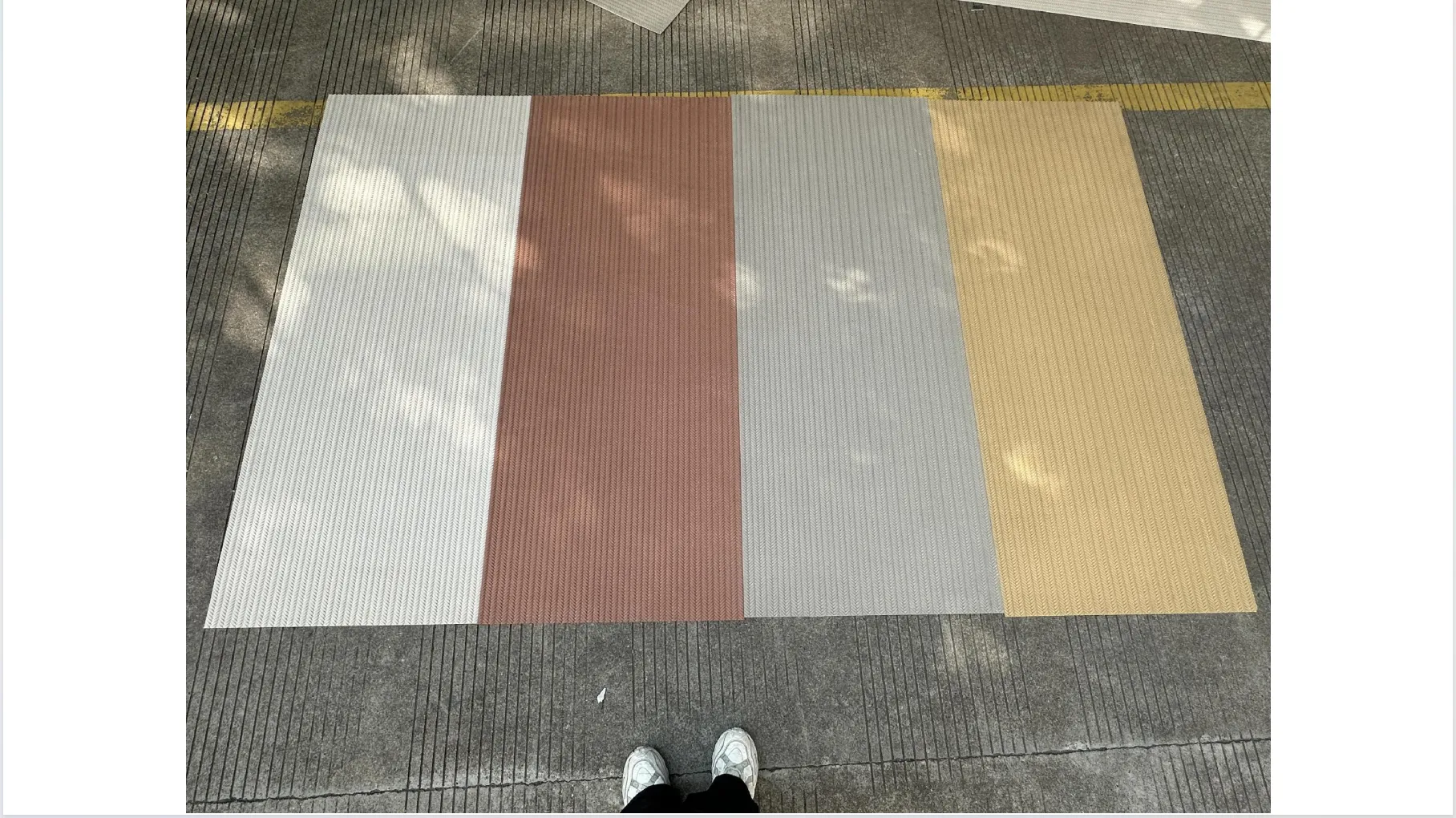
Picture this: You walk into a restaurant, and the first thing you notice is the wall behind the host stand. It looks like a giant, intricately woven basket—strands of natural fiber crisscrossing in soft, earthy tones, catching the light just so. You reach out to touch it, half-expecting the rough give of straw or reeds, but instead, your fingers meet a smooth, solid surface. That's woven real photos in action.
At their core, woven real photos are decorative panels that replicate the look and texture of handwoven materials—think traditional baskets, textile weaves, or even natural fiber mats—using high-resolution photography and advanced printing techniques. Unlike generic "woven patterns" that feel flat or artificial, these panels start with real woven textures: photographers capture the details of actual weaves, from the way fibers overlap to the tiny imperfections that make handcrafted pieces feel alive. These images are then enhanced digitally and printed onto durable substrates, creating a finish that tricks the eye (and almost the touch) into believing you're looking at the real thing.
But they're more than just pretty pictures. The magic lies in the depth. A well-executed woven real photo panel has shadow and dimension; the light hits the "strands" just right, creating the illusion of depth that flat paint or basic wallpaper can't match. It's the difference between a poster of a forest and standing in the middle of one—one is a representation, the other an experience.










