
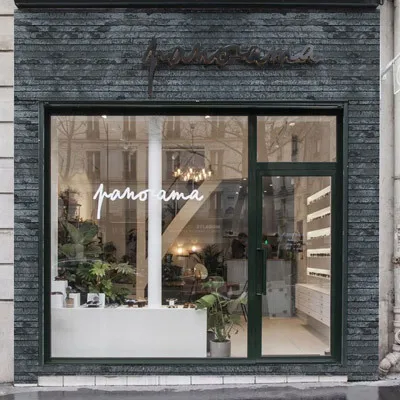
The quiet poetry of a material that shapes our urban stories
Walk through any city, and you'll notice something subtle but profound: the buildings aren't just structures—they're storytellers. The materials they wear, the way light plays on their surfaces, the textures that catch your fingertips as you brush past—these details don't just shape skylines; they shape how we feel about the places we live, work, and wander. Among the many materials that whisper these urban tales, one stands out for its quiet confidence and timeless allure: dark grey Muretto stone . It's not the flashiest material on the block, nor the most trendy. But in its understated way, it has become a silent protagonist in the narrative of modern city design.
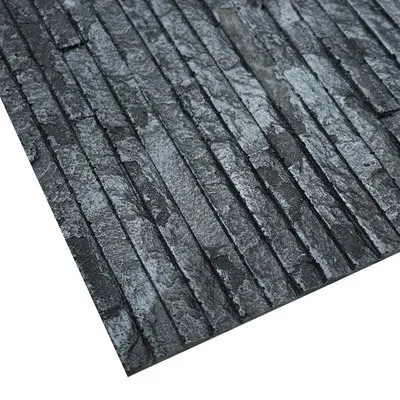
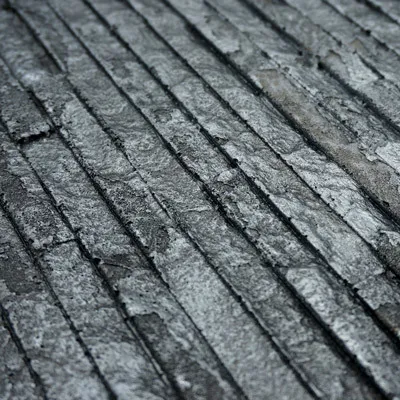
Let's start with the obvious: dark grey Muretto stone is beautiful , but not in a way that demands attention. It's the kind of beauty that grows on you, like a well-loved book or a neighborhood café you pass daily before finally stepping inside. Run your hand over its surface, and you'll feel a gentle roughness—no harsh edges, just the soft irregularities of natural stone, smoothed by time but never fully tamed. It's a texture that invites touch, that makes you want to press your palm against it on a cold morning, to feel the warmth it retains from the sun or the coolness of a shaded corner.
What truly sets dark grey Muretto stone apart, though, is how it interacts with light. Unlike glossy marbles or stark white concretes that reflect light aggressively, Muretto stone absorbs and diffuses it, creating a play of shadows that shifts with the day. At dawn, when the sky is a soft gradient of pink and blue, the stone takes on a warm, almost violet hue, as if blushing at the first light. By midday, under the harsh sun, it deepens into a rich charcoal, grounding the building it adorns, making it feel solid and reassuring. And as dusk falls? That's when it truly shines. The fading light turns it into a canvas for amber and gold tones, the stone seeming to glow from within, as if holding onto the day's warmth a little longer than the world around it.
I once stood beneath a building clad in dark grey Muretto stone during a rainstorm, and it was like watching a living thing breathe. The water didn't bead up and run off in straight lines, the way it does on sleek glass or polished metal. Instead, it seeped into the stone's tiny crevices, darkening some areas and leaving others lighter, creating a patchwork of grays that looked almost painterly. When the sun came out afterward, the stone steamed gently, releasing the rain back into the air, and for a moment, the whole facade seemed to shimmer. It was a reminder that great architecture isn't just about how a building looks—it's about how it lives with the elements.
One of the things that makes dark grey Muretto stone so versatile is how well it plays with others. It doesn't compete with neighboring materials; it complements them, like a reliable friend who knows when to step forward and when to let others shine. Take, for example, its relationship with fair-faced concrete —another staple of modern urban design. Fair-faced concrete is raw and industrial, with its visible formwork lines and subtle color variations. Pair it with dark grey Muretto stone, and suddenly both materials feel more intentional: the stone softens the concrete's starkness, while the concrete adds a modern edge to the stone's warmth. Together, they create facades that feel both grounded and forward-thinking, like a conversation between the past and the present.
Then there's travertine (beige) —a material that, on the surface, couldn't be more different. Beige travertine is warm and earthy, with its creamy tones and natural pitting, evoking sunlit terraces in Tuscany or ancient Roman ruins. But when used alongside dark grey Muretto stone, something magical happens. The contrast is striking but not jarring: the Muretto's coolness tempers the travertine's warmth, while the travertine adds a softness that prevents the Muretto from feeling too severe. I've seen this pairing in a boutique hotel in Barcelona, where the lobby walls were clad in beige travertine, and the exterior in dark grey Muretto. Stepping from the sun-drenched street into the lobby felt like moving from a crisp winter morning into a cozy fireside chat—same building, same design philosophy, but two distinct moods, all thanks to the materials.
| Material | Texture | Light Interaction | Best For |
|---|---|---|---|
| Dark Grey Muretto Stone | Softly rough, with natural pitting and irregularities | Absorbs and diffuses light; deepens in bright sun, glows at dusk | Commercial towers, cultural centers, boutique hotels |
| Fair-Faced Concrete | Smooth with visible formwork lines; industrial edge | Reflects light evenly; cool, neutral tone | Museums, office buildings, minimalist homes |
| Travertine (Beige) | Warm, porous, with natural holes and veining | Warms light; golden undertones in sunlight | Residential exteriors, lobbies, outdoor patios |
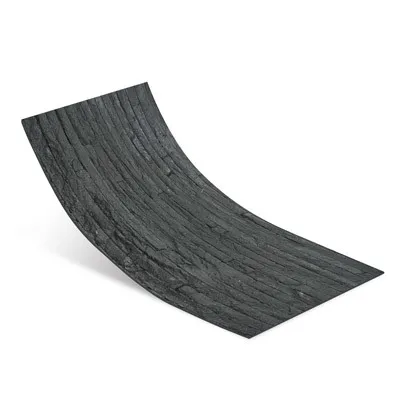
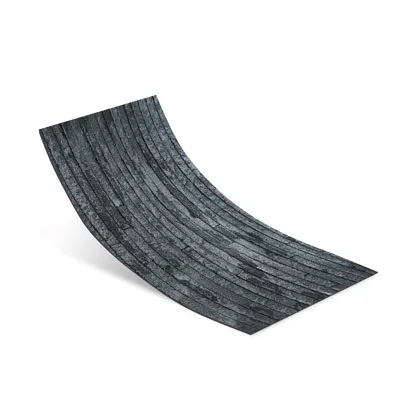
Of course, no discussion of modern stone materials would be complete without mentioning MCM flexible stone —a relative newcomer that's changing the game for architects and designers. Unlike traditional stone, which is heavy and rigid, MCM flexible stone is lightweight and adaptable, able to bend around curves or cling to uneven surfaces without cracking. It's a material born from necessity: as cities grow taller and more complex, we need materials that can keep up with bold, innovative designs. But here's the interesting part: MCM flexible stone, for all its modern engineering, often takes inspiration from classics like Muretto stone. Many of its finishes mimic the texture and color variations of natural stone, including—you guessed it—dark grey Muretto. It's a beautiful blend of old and new: the timeless aesthetic of natural stone, reimagined for a world that demands flexibility and sustainability.
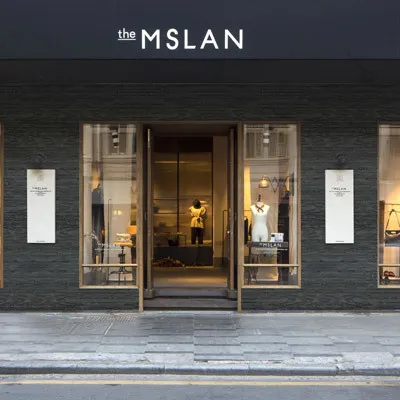
So where does dark grey Muretto stone feel most at home? Let's start with commercial architecture. Picture a mid-rise office building in the heart of the city, surrounded by glass skyscrapers that glint and shimmer in the sun. The Muretto-clad building doesn't try to outshine them; instead, it anchors the skyline, a presence among the chaos. Its dark grey facade softens the harsh angles of the modern city, adding a touch of organic warmth that makes the building feel approachable, even welcoming. Employees rushing in with coffee cups in hand might not consciously notice the stone, but on some level, they feel it—its solidity, its quiet strength—and it sets the tone for their day.
Then there are public spaces. I visited a community library last year that used dark grey Muretto stone for its exterior walls and outdoor seating areas. The stone's texture made the benches surprisingly comfortable—no need for cushions; the natural roughness kept you from sliding around, and the stone stayed cool even on hot days. Kids would run their hands along the walls as they entered, tracing the faint veins and indentations, turning the building into an accidental tactile playground. Parents would sit on the benches, chatting while keeping an eye on their children, and I noticed something sweet: many of them would absentmindedly stroke the stone as they talked, as if drawing comfort from its presence. That's the power of good material design—it doesn't just serve a function; it becomes part of the rituals of daily life.
Residential architecture, too, has embraced dark grey Muretto stone, though often in smaller doses. A townhouse in Copenhagen I once saw used it for the lower half of its facade, pairing it with pale wood siding above. The contrast was striking: the dark stone grounded the home, making it feel rooted to the street, while the wood added a lightness that kept it from feeling gloomy. At night, when the interior lights came on, the stone seemed to frame the windows like a picture frame, turning the warm glow of the rooms into a display for passersby. It was intimate and inviting, a reminder that even in dense urban areas, a home can feel like a sanctuary.
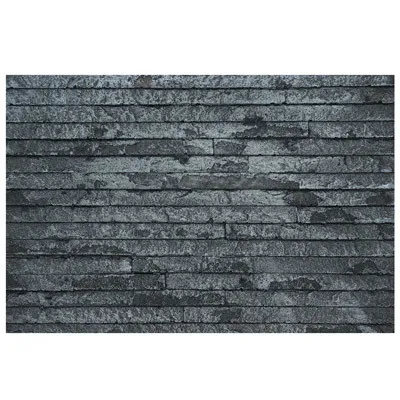
One of the most compelling things about dark grey Muretto stone is how it ages. Unlike materials that fade, chip, or lose their luster over time, Muretto stone improves with age. The elements—rain, wind, sun, even the occasional graffiti (which, let's be honest, is part of city life)—add character to its surface. A scratch here, a water stain there, a patch of lichen that takes root in a corner—these aren't flaws; they're stories. They tell the tale of the building's life, of the people who've passed by, of the seasons that have come and gone.
I think of it as the urban equivalent of a well-worn leather jacket. When it's new, it looks sharp, but there's something missing—a sense of history. As it gets scuffed and faded, though, it becomes uniquely yours, a reflection of the life you've lived in it. Dark grey Muretto stone does the same for buildings. A Muretto-clad structure from the 1980s doesn't look outdated; it looks lived-in , like it belongs to the city in a way that a brand-new glass tower never will. It's a material that builds trust, because it doesn't pretend to be something it's not. It's honest, and in a world that often values the shiny and new over the authentic and enduring, that honesty is a rare and precious thing.
This aging process also has practical benefits. Unlike painted surfaces, which need regular touch-ups, or metal cladding that can rust, dark grey Muretto stone requires minimal maintenance. A occasional wash with water is usually enough to keep it looking its best, and even if you neglect it, it won't fall apart. It's a low-maintenance friend in a high-maintenance world, and that's a quality that architects and building owners appreciate more than you might think.
At the end of the day, though, the real magic of dark grey Muretto stone isn't in its practicality or its aesthetic appeal. It's in the emotional response it elicits. Think about the last time you walked through a city and felt a sudden sense of calm, or awe, or belonging. Chances are, the buildings around you played a role in that feeling. Materials have a language all their own, and dark grey Muretto stone speaks in a dialect that's both comforting and inspiring.
It says, "I am here to stay." In a world of constant change—where neighborhoods are gentrified overnight, where buildings are torn down and rebuilt in the blink of an eye—Muretto stone offers stability. It says, "You can trust me to be here tomorrow, and the day after that, and long after you're gone." That kind of reliability is deeply reassuring, especially in urban environments that can feel chaotic and transient.
It also says, "Look closer." In a culture that's always scrolling, always rushing, always looking for the next big thing, dark grey Muretto stone demands presence. It doesn't reveal all its secrets at first glance. You have to slow down, to lean in, to notice the way its color shifts with the light, or the tiny fossils that sometimes appear in its surface (a reminder that this stone was once part of something much older than our cities). It encourages mindfulness, and in doing so, it helps us connect not just with the building, but with the moment we're in.
And perhaps most importantly, it says, "You belong here." Cities can be lonely places, full of strangers and noise and endless stimulation. But when you're surrounded by materials that feel human—materials with texture, with history, with warmth—you feel less like an outsider and more like a participant in the city's story. Dark grey Muretto stone doesn't just house people; it welcomes them. It's a material that wraps around a building like a hug, softening the harsh edges of urban life and reminding us that even in the busiest of cities, we're all in this together.
As we look to the future of urban architecture, there's a growing conversation about sustainability, about creating buildings that are kind to the planet and to the people who inhabit them. Dark grey Muretto stone, and materials like it, have a role to play in this conversation. Unlike some synthetic materials, which rely on fossil fuels to produce and release harmful chemicals into the environment, natural stone is a renewable resource (though it should be sourced responsibly, of course). It's also recyclable—if a building is ever torn down, the stone can be crushed and reused as aggregate, or even cut into new slabs. And because it's so durable, it reduces the need for frequent replacements, which in turn reduces waste.
MCM flexible stone, with its lightweight composition and minimal waste during production, takes this sustainability a step further. It's a material that proves we don't have to sacrifice aesthetics for eco-friendliness, or vice versa. By combining the best of natural stone with modern technology, MCM flexible stone offers a glimpse of what the future might hold: buildings that are beautiful, functional, and kind to the planet, all at the same time.
But sustainability isn't just about the environment; it's also about creating spaces that support human well-being. Studies have shown that exposure to natural materials can reduce stress, improve mood, and even boost productivity. Dark grey Muretto stone, with its earthy texture and connection to the natural world, is a perfect example of this. It's a material that brings a little bit of the outdoors in, even in the heart of the city, and in doing so, it helps us feel more grounded, more connected, more alive.
So, what have we learned about dark grey Muretto stone? It's a material that doesn't shout, but it speaks volumes. It's beautiful, but not in a way that fades. It's durable, but not in a way that feels cold. It's versatile, pairing seamlessly with everything from concrete to wood to glass. It ages gracefully, telling the stories of the cities it calls home. And most importantly, it connects with us on a human level—through touch, through sight, through the way it makes us feel when we're near it.
In a world that often celebrates the bold and the brash, there's something deeply satisfying about a material that finds its strength in subtlety. Dark grey Muretto stone isn't here to dazzle us with flashy tricks or cutting-edge technology (though it pairs beautifully with both). It's here to remind us of the power of simplicity, of the beauty in imperfection, and of the importance of building cities that feel human. It's a quiet hero in our skylines, and like all quiet heroes, it deserves to be noticed.
The next time you're walking through your city, take a moment to look up. Notice the buildings around you, the materials they wear, the stories they tell. And if you happen to pass a wall of dark grey Muretto stone, reach out and touch it. Feel its texture, its warmth, its history. You might just find that in that simple act, you've connected with your city in a way you never have before.
Recommend Products












