
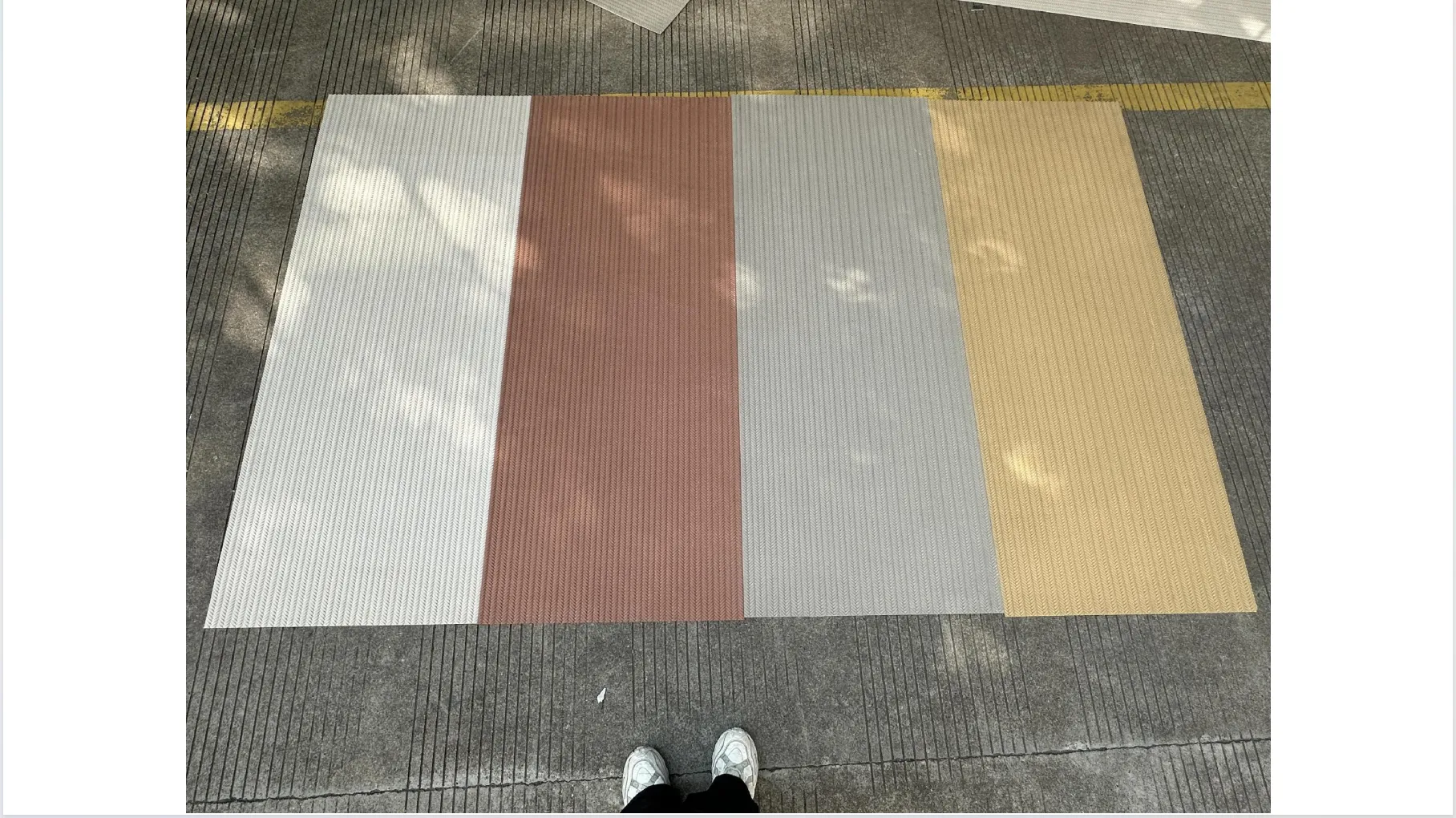
If you've ever stood in front of a wall clad in rich, earthy stone or sleek, modern panels and thought, "I want that in my space," you're not alone. The materials we choose for our homes, offices, or commercial projects do more than fill a functional role—they set the mood, tell a story, and even influence how we feel in a room. But here's the catch: beauty often comes with a price tag, and navigating the costs of materials like MCM (Modified Composite Material) versus traditional natural stone can feel like trying to solve a puzzle with missing pieces. That's where tools like woven real photos come in—not just as pretty pictures, but as practical guides to making informed, budget-savvy decisions. Let's dive into how MCM and natural stone stack up in installation costs, and why those high-res, texture-rich woven real photos might just be your secret weapon in this process.
First, let's get clear on the contenders. Natural stone is the OG of building materials—think travertine with its honeycombed pores, granite with its flecks of mica, or marble with its swirled veins. These materials are quarried from the earth, cut into slabs, and installed as-is (or polished, honed, etc.). They're beloved for their uniqueness—no two pieces are exactly alike—and their timeless, organic appeal. But all that natural beauty comes with weight (literally) and complexity: natural stone slabs can weigh 10-20 pounds per square foot, require heavy machinery to transport, and often need custom cutting on-site.
MCM (Modified Composite Material) , on the other hand, is the new kid on the block, but it's quickly gaining ground. MCM products—like MCM flexible stone, foamed aluminium alloy board, or fair-faced concrete—are engineered to mimic the look of natural materials (or create entirely new aesthetics) while being lighter, more durable, and easier to handle. They're made by combining natural minerals with polymers or resins, resulting in thin, flexible sheets that can be bent, curved, or cut to fit almost any surface. And unlike natural stone, MCM comes in a dizzying array of styles, from "travertine (starry green)" with its celestial speckles to "woven (khaki)" with a textured, fabric-like finish—many of which are showcased in stunning detail through woven real photos.
Before we jump into costs, let's talk about the unsung hero of this comparison: woven real photos . If you've ever ordered a paint color based on a tiny swatch, only to find it looks neon in your living room, you know the danger of relying on low-quality visuals. Woven real photos solve that problem by capturing materials in their full, unfiltered glory. These aren't stock images or computer renderings—they're high-resolution photographs taken in natural light, showing every texture, color variation, and imperfection (the good kind) that makes a material feel real.
Take "travertine (starry blue)" MCM flexible stone, for example. A generic catalog image might make it look like a solid blue slab, but a woven real photo reveals the subtle silver "stars" embedded in the surface, how the color shifts from deep indigo in shadow to sky blue in sunlight, and even how the material interacts with adjacent colors (like wood or metal). That level of detail isn't just about aesthetics—it directly impacts cost. If those stars clash with your existing decor, you might end up replacing the material, blowing your budget. Woven real photos help you avoid that "oops" moment by letting you "test drive" the material visually before you commit.
The same goes for natural stone. A woven real photo of "granite portoro" (a black granite with gold veins) can show whether the veins are thick and dramatic or thin and subtle—details that might make you choose a cheaper, veinier slab over a pricier, more uniform one. In short, woven real photos turn guesswork into confidence, ensuring that the material you pick (and the money you spend) aligns with your vision.
Now, let's get to the numbers. When comparing installation costs, we need to look at more than just the price tag on the material itself. We're talking material cost per square foot, labor, installation time, and even long-term maintenance. To make this tangible, let's break it down with a side-by-side comparison—using real-world examples of popular MCM and natural stone options, many of which you'll find in woven real photos online.
| Material Type | Material Cost (per sq ft) | Labor Cost (per sq ft) | Installation Time (100 sq ft) | Annual Maintenance Cost | Durability (1-10 Scale) |
|---|---|---|---|---|---|
| MCM Flexible Stone (Travertine Starry Green) | $12–$18 | $6–$10 | 1–2 days | $150–$250 (sealing every 5 years) | 8–9 |
| Foamed Aluminium Alloy Board (Vintage Gold) | $15–$22 | $5–$8 | 1 day | $50–$100 (occasional cleaning) | 9–10 |
| Natural Travertine (Beige) | $25–$40 | $18–$25 | 3–4 days | $400–$600 (sealing every 1–2 years) | 8–9 (prone to chipping) |
| Granite Portoro | $35–$55 | $20–$30 | 4–5 days | $300–$500 (sealing every 2–3 years) | 9–10 (scratch-resistant) |
| Fair-Faced Concrete (MCM) | $8–$14 | $7–$12 | 2–3 days | $100–$200 (sealing every 3–4 years) | 8–9 (stain-resistant) |
Material Cost: MCM wins here by a mile. Because MCM is engineered in factories, it's produced in consistent batches with minimal waste, driving down material costs. Natural stone, on the other hand, is a finite resource—quarrying, cutting, and transporting huge slabs is labor-intensive and expensive. For example, "travertine (starry green)" MCM costs roughly half of natural travertine, and "foamed aluminium alloy board (vintage gold)" is significantly cheaper than solid brass or copper cladding.
Labor and Installation Time: MCM's lightweight, flexible nature is a game-changer for installers. Most MCM panels weigh less than 3 pounds per square foot (compared to 15–20 pounds for natural stone), so they don't require heavy lifting equipment or structural reinforcement. They also come pre-cut to standard sizes, reducing on-site cutting time. A crew can install 100 square feet of MCM flexible stone in a day; natural stone might take 3–4 days, requiring specialized tools (like diamond saws) and skilled labor to avoid cracking.
Maintenance: Natural stone is porous, meaning it stains easily and needs frequent sealing to protect against water, oil, and dirt. MCM, with its polymer coating, is far more resistant to stains and moisture—some options, like foamed aluminium alloy board, barely need maintenance beyond a quick wipe-down. Over 10 years, the cost of sealing natural stone can add up to thousands, while MCM's maintenance costs stay low.
To be fair, MCM isn't always the "cheaper" choice in the long run. Natural stone has a reputation for increasing property value, especially in luxury markets. A kitchen with granite countertops or a bathroom with marble floors can feel more high-end to potential buyers, which might translate to a higher resale price. Additionally, natural stone is incredibly durable—granite, for example, can last a lifetime with proper care, while MCM might need replacement after 20–30 years (though many manufacturers offer 15–20 year warranties).
But here's where woven real photos come in again: they can help you find MCM products that look so close to natural stone, the aesthetic difference is negligible. For instance, "travertine (vintage gold)" MCM mimics the warm, honeyed tones of natural travertine, right down to the subtle pitting—you'd be hard-pressed to tell the difference in a woven real photo. In these cases, you get the look of natural stone at a fraction of the cost, with none of the maintenance hassle.
Let's put this all into context with a real example. A few years back, a friend of mine opened a small Italian restaurant with a tight $50,000 renovation budget. She fell in love with the look of natural travertine for the walls—warm, earthy, and perfect for the rustic vibe she wanted. But when she got the quote: $28 per square foot for the stone, plus $22 per square foot for labor, totaling $50 per square foot. For the 800 square feet of wall space she needed, that would have cost $40,000—80% of her entire budget, leaving nothing for lighting, furniture, or decor.
That's when her designer showed her woven real photos of MCM flexible stone in "travertine (starry orange)." The photos revealed the same warm base color as natural travertine, with tiny orange "stars" that added a unique, eye-catching detail—something natural travertine couldn't offer. The material cost was $14 per square foot, labor $8 per square foot, totaling $22 per square foot. For 800 square feet, that came to $17,600—freeing up $22,400 for other upgrades. Today, diners often comment on the "gorgeous travertine walls," and my friend still laughs, "If they only knew it's MCM!"
At the end of the day, choosing between MCM and natural stone isn't just about cost—it's about balancing your aesthetic goals, budget, and long-term needs. If you're after a one-of-a-kind, heirloom-quality material and have the budget to match, natural stone might be worth the splurge. But if you want a durable, stylish option that won't break the bank, MCM is hard to beat—especially when you use woven real photos to ensure you're getting the look you love.
So the next time you're planning a renovation, take a deep dive into woven real photos of MCM products like foamed aluminium alloy board or fair-faced concrete. You might just find that the material of your dreams is more affordable than you think—and that those high-res, texture-rich images are the key to making it all come together without the sticker shock.
Recommend Products












