
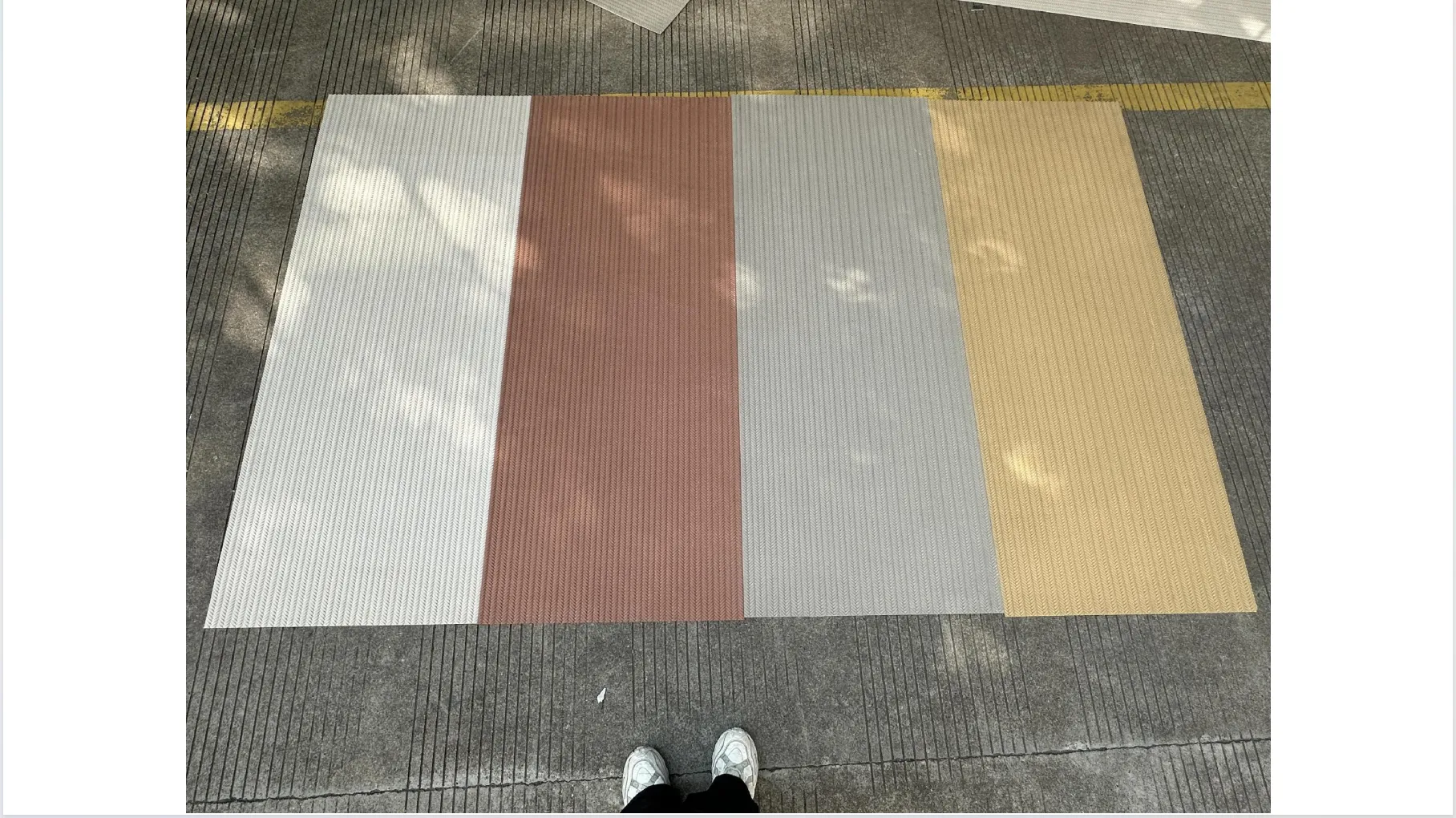
Walk into any modern retail space, and you'll notice something has shifted. It's no longer just about shelves and products—it's about storytelling. Today's shoppers crave experiences that engage their senses, and retailers are racing to create environments that feel both intimate and awe-inspiring. But here's the catch: translating a designer's vision into a tangible, tactile space has always been a challenge. How do you convey the cool smoothness of a stone wall or the warm grain of wood to a client who's only looking at blueprints? Enter the MCM 3D Printing Series —a game-changer in architectural materials—and the unsung hero of its success: woven real photos . Together, they're turning abstract ideas into vivid, touchable realities.
At the heart of this revolution is the MCM 3D Printing Series—a collection of modified composite materials crafted using cutting-edge 3D printing technology. What makes these materials stand out? They're lightweight yet durable, flexible yet strong, and designed to mimic the beauty of natural materials while overcoming their limitations. Take Flexible Stone , for example. Traditional stone is heavy, brittle, and hard to shape into intricate designs. MCM's Flexible Stone, however, bends without breaking, allowing for curves, waves, and custom geometries that were once impossible. It's the kind of material that makes a retail feature wall feel less like a construction project and more like a work of art.
But the magic doesn't stop at flexibility. The 3D printing process itself unlocks a world of detail. Think wave panels that ripple like water, semicircle boards that soften harsh edges, or mosaic travertine patterns that tell a visual story—all printed with precision down to the millimeter. These aren't just materials; they're tools for designers to craft spaces that evoke emotion. And because they're made from modified composites, they're also eco-friendly, using fewer resources than traditional stone or wood while lasting longer in high-traffic retail environments.
Here's the problem designers and clients have faced for years: A swatch of material or a flat digital render can't capture the way light plays on a stone's surface at 3 PM, or how a texture feels under your fingertips as you brush past a display. That's where woven real photos come in. These aren't your average stock images. They're high-resolution, tactile photographs that capture every nuance of a material's texture—from the tiny pores in travertine to the woven threads in a bamboo mat board or the metallic sheen of foamed aluminium alloy . They're called "woven" because they layer visual and textural information, creating a image that feels almost touchable, even on a screen.
Imagine a designer sitting down with a boutique owner. The owner wants a feature wall that feels "cosmic yet cozy." The designer pulls up a woven real photo of Travertine (Starry Green) —a material from the MCM 3D Printing Series that mimics natural travertine but with a twist: tiny, iridescent flecks that sparkle like stars against a deep green backdrop. The woven real photo doesn't just show the color; it lets the owner see how the starry pattern shifts when viewed from different angles, how the stone's subtle veins add warmth, and how it would interact with the store's track lighting. Suddenly, "cosmic yet cozy" isn't just a phrase—it's a visual reality. That's the power of woven real photos: they turn abstract concepts into concrete, emotional experiences.
If there's a material that embodies the MCM 3D Printing Series' ethos, it's Travertine (Starry Green) . Travertine is a classic natural stone, beloved for its porous texture and earthy tones. But MCM's 3D-printed version takes it further. The "starry" effect isn't just a surface treatment; it's embedded into the material during printing, creating tiny, reflective particles that catch light like distant stars. Run your hand over it, and you'll feel the same subtle roughness as natural travertine, but with a flexibility that lets it wrap around columns or curve over a display case.
In retail, this material shines in spaces that aim for warmth and wonder. Picture a children's clothing store with a Travertine (Starry Green) accent wall—kids stop to trace the "stars" with their fingers, while parents appreciate the soft, natural palette that feels safe and inviting. Thanks to woven real photos, the designer could show the client exactly how the wall would look at different times of day: golden morning light making the stars glow, evening spotlights turning the green into a deep, forest-like hue. No more guesswork—just a shared vision.
For retailers chasing a more contemporary vibe, Lunar Peak Silvery is a showstopper. Part of the Lunar Peak trio (alongside golden and black), this material has a metallic, moonlit sheen that feels both futuristic and grounded. It's 3D-printed to have a subtle, crater-like texture—nothing too busy, just enough to catch light and add depth. Unlike real metal, it's lightweight, so it can be used for ceiling panels or hanging displays without structural concerns. And because it's part of the MCM series, it resists scratches and fingerprints, making it perfect for high-touch areas like checkout counters or product shelves.
Woven real photos of Lunar Peak Silvery are particularly impactful. They capture the way the silvery surface reflects its surroundings—so a designer can show a client how the material will mirror the store's lighting fixtures, or how it will complement wooden display units. It's not just about color; it's about interaction. A luxury tech boutique, for instance, used woven real photos of Lunar Peak Silvery to convince stakeholders that the material would elevate the space without feeling cold. The result? A sleek, immersive environment where the products (and the walls) feel equally premium.
| Material Name | Texture & Aesthetic | Best Retail Use Case | Woven Real Photo Advantage |
|---|---|---|---|
| Travertine (Starry Green) | Earthy green base with iridescent star-like flecks; porous, natural texture. | Children's stores, wellness boutiques, eco-friendly brands. | Captures how starry flecks interact with light; shows warmth in different lighting. |
| Lunar Peak Silvery | Metallic silver with subtle crater texture; smooth yet tactile. | Tech stores, luxury fashion, modern cafes. | Highlights reflective properties; demonstrates how it complements other materials. |
| Flexible Stone | Mimics natural stone (granite, marble) with bendable, lightweight structure. | Curved walls, custom display units, outdoor patios. | Shows flexibility in action; visualizes custom shapes before printing. |
| Foamed Aluminium Alloy Board (Vintage Silver) | Matte silver with vintage, oxidized finish; lightweight, industrial-chic. | Industrial-themed cafes, vintage clothing stores, art galleries. | Captures "aged" texture; shows how it pairs with wood or brick accents. |
Let's bring this to life with a real-world example. A small but ambitious boutique in downtown Portland wanted to revamp its space to compete with larger chain stores. The goal? Create a "forest-meets-futurism" vibe that would make shoppers linger. The designer proposed using the MCM 3D Printing Series, but the boutique owner was hesitant—she'd been burned before by materials that looked great in swatches but fell flat in person.
Enter woven real photos. The designer presented a mood board featuring Travertine (Starry Green) for the main walls (to evoke the forest) and Lunar Peak Silvery for the checkout counter (to add futurism). The woven real photos weren't just images—they were printed on textured paper that mimicked the feel of the materials. The owner ran her hand over the Travertine (Starry Green) photo and gasped: "It feels like real stone!" She could see how the starry flecks would catch the light from the store's skylights, and how the Lunar Peak Silvery counter would contrast beautifully with the warm green walls.
Three months later, the boutique reopened. The feature wall, clad in Travertine (Starry Green), became an Instagram hotspot—customers posed in front of it, tagging the store. The Lunar Peak Silvery counter, meanwhile, made the checkout process feel like a luxury experience, with shoppers commenting on how "cool" and "different" the space felt. Foot traffic increased by 30%, and sales rose with it. All because woven real photos helped bridge the gap between vision and reality.
As retail continues to evolve, so too will the tools and materials that shape it. The MCM 3D Printing Series is already pushing boundaries with innovations like 3D art concrete boards and gradient color rammed earth boards , and woven real photos are keeping pace—soon, they may integrate with AR technology, letting clients "walk through" a virtual store and interact with MCM materials in real time.
Sustainability will also play a bigger role. Materials like Foamed Aluminium Alloy Board (Vintage Silver) are already 100% recyclable, and MCM is exploring plant-based composites for future series. Woven real photos will highlight these eco-credentials, showing not just how materials look, but how they align with a brand's values.
At the end of the day, retail design is about connection. It's about making shoppers feel something—curiosity, comfort, joy. The MCM 3D Printing Series, with its innovative materials like Travertine (Starry Green) and Lunar Peak Silvery , gives designers the tools to create those feelings. And woven real photos? They ensure that everyone—designers, clients, and eventually shoppers—can share in that vision long before the first panel is installed.
So the next time you walk into a retail space that takes your breath away, take a closer look. Chances are, it's not just the products that are drawing you in—it's the materials. And behind those materials? A blend of 3D printing innovation and woven real photos, working together to turn ordinary spaces into extraordinary experiences.
Recommend Products












