
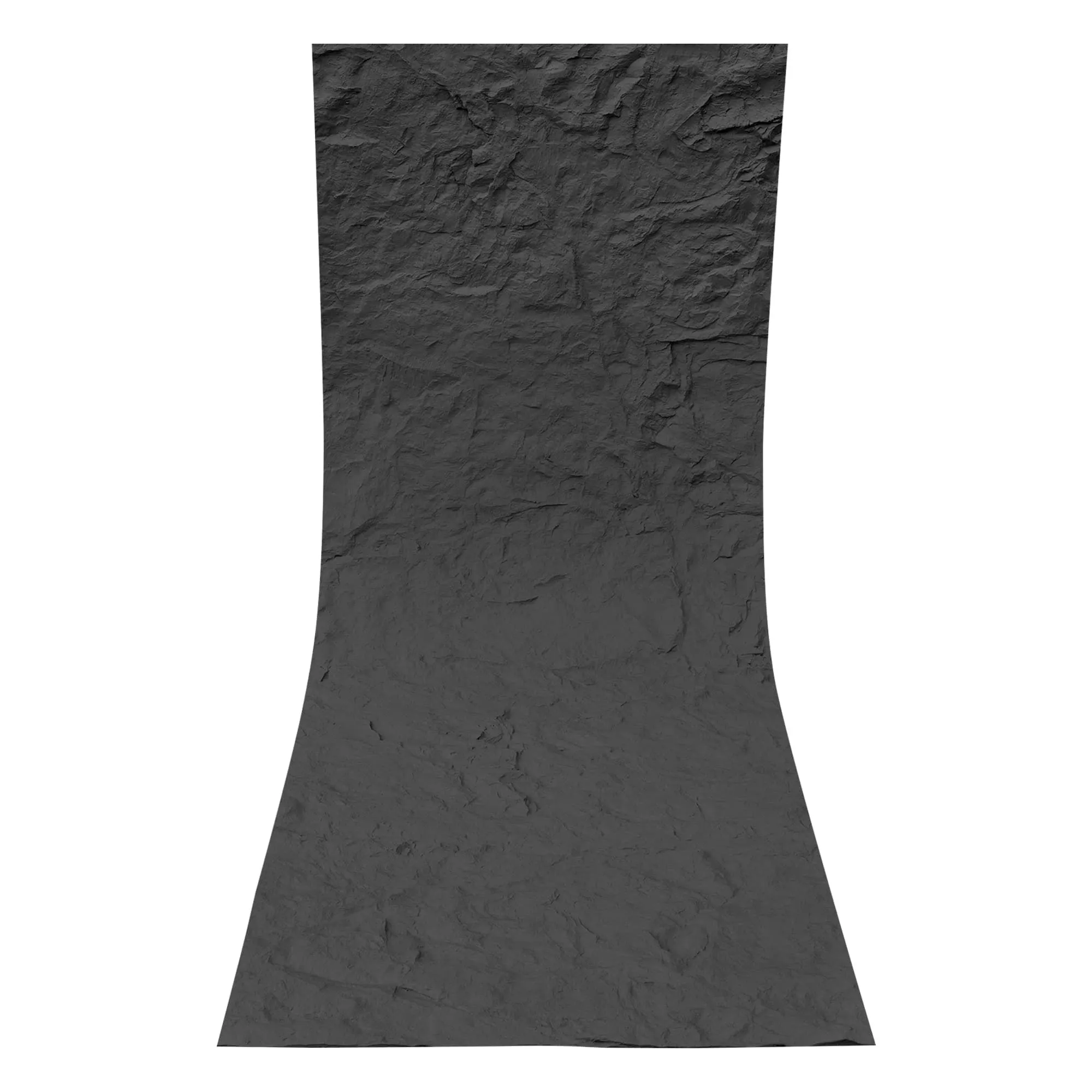
High-rise buildings have long stood as symbols of human progress—soaring toward the sky, blending innovation with aspiration. Yet for architects and designers, these vertical marvels come with a unique set of challenges: how to balance bold aesthetics with structural practicality, how to infuse warmth into towering spaces, and how to reduce the burden of heavy materials on building frames. In recent years, a solution has emerged that's reshaping high-rise design: COLORIA's Vintage Black Boulder Slab . Part of the mcm big slab board series , this material isn't just a pretty face; it's a testament to how advanced technology can turn design dreams into reality—without the weight of tradition.
Walk into any modern high-rise, and you'll likely notice the materials that define its character: the sleekness of glass, the solidity of marble, the industrial edge of fair-faced concrete . But behind these choices lies a quiet tension. Traditional cladding materials like natural stone or thick concrete panels are heavy—often weighing 50kg/m² or more. For a 50-story building, that weight adds up, straining structural foundations, limiting design flexibility, and driving up construction costs. "We wanted the lobby to feel grand, like a cathedral of modern living," recalls Mia Chen, lead architect at a Shanghai-based firm, "but the marble we initially chose would have required reinforcing the entire lower floor. It was a logistical nightmare."
Then there's the issue of installation. Heavy materials demand specialized labor, cranes, and time—delaying projects and inflating budgets. And once installed, their rigidity leaves little room for error; a single crack or misalignment can compromise both safety and aesthetics. For designers aiming to create unique, textured surfaces—think weathered stone, vintage metal, or organic patterns—the options often felt limited by what could physically support the building's weight.
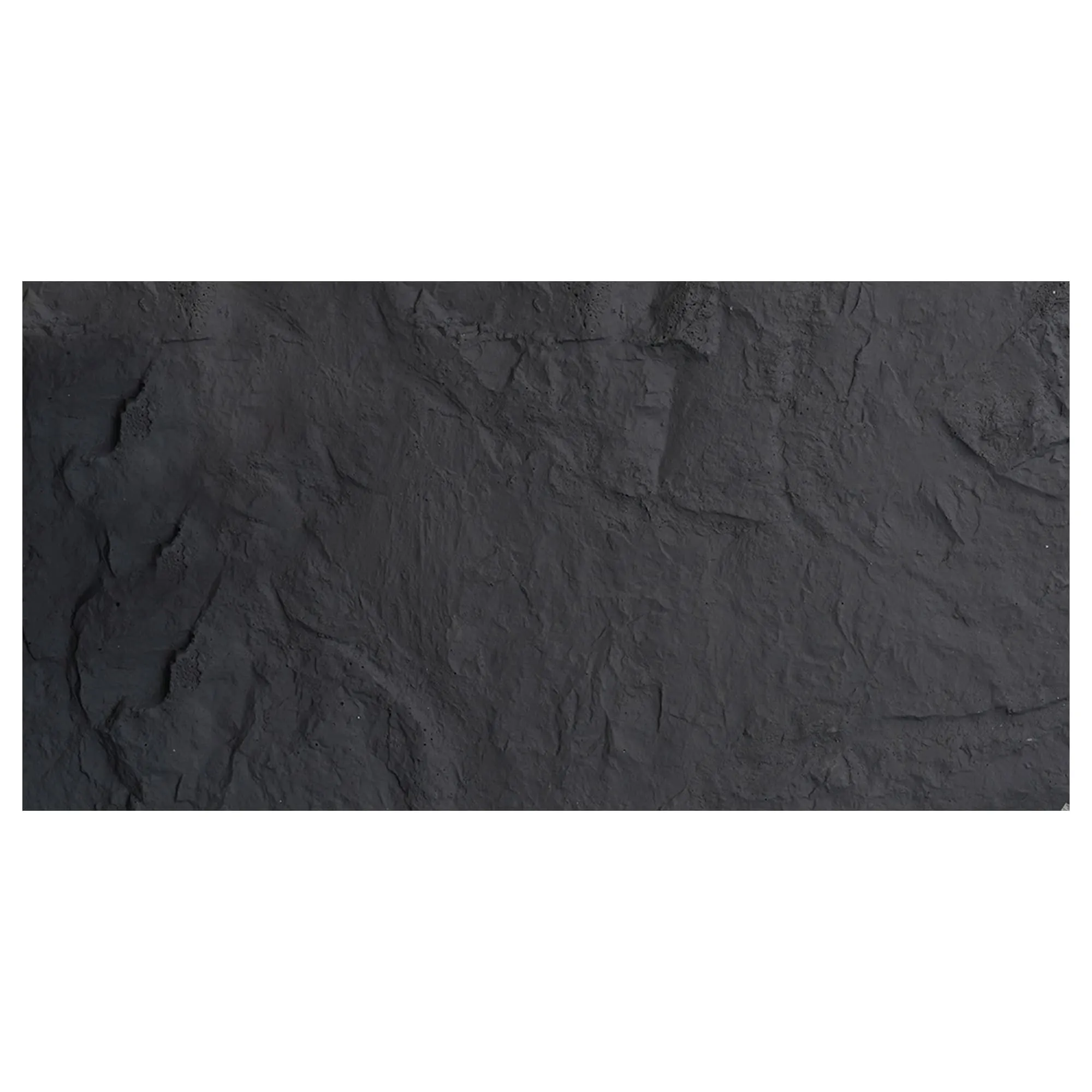
Enter COLORIA's Vintage Black Boulder Slab. At first glance, it's easy to mistake it for natural stone: deep, moody black hues swirled with subtle veins of silver and charcoal, evoking the timelessness of aged rock. But pick it up, and the difference is clear. Weighing in at just 12-15kg/m²—less than a third of traditional marble—this material is a lightweight revolution. "It's like holding a piece of art that's also a engineering breakthrough," says Jason Liu, a construction manager who recently used the slab for a 38-story residential tower in Singapore. "We installed the entire facade in half the time, and the structural engineer couldn't believe how little load it added."
So what makes it so light? The secret lies in COLORIA's proprietary mcm flexible stone technology. Unlike natural stone, which is quarried and cut, Vintage Black Boulder Slab is crafted using modified composite materials (MCM)—a blend of natural minerals, polymers, and advanced binders. This composition not only reduces weight but also grants the material flexibility, making it resistant to cracks and easy to shape into large slabs (up to 3m x 1.2m) without sacrificing durability. "It bends, but it doesn't break," Liu explains. "We even used it on curved sections of the building's facade—something we would never have dared with granite."
Critics might wonder: Does lighter mean less durable? In this case, the answer is a resounding no. Vintage Black Boulder Slab boasts a lifespan of over 50 years, withstanding harsh weather (UV rays, rain, extreme temperatures) and daily wear and tear. Its surface is scratch-resistant, stain-proof, and fire-retardant—qualities that make it ideal for high-traffic areas like lobbies, elevator banks, and exterior cladding. "We tested it for months," says Dr. Elena Park, a materials scientist at COLORIA's R&D lab. "It outperformed natural travertine in impact tests and held up better than fair-faced concrete in freeze-thaw cycles. Lightweight doesn't have to mean fragile."
Sustainability is another feather in its cap. Traditional stone quarrying is resource-intensive, often leaving ecological scars. COLORIA's manufacturing process, by contrast, uses recycled minerals and low-energy production methods, cutting carbon emissions by 40% compared to marble extraction. And because the slabs are lightweight, transportation requires fewer trucks, further reducing the carbon footprint. "Sustainability isn't just a buzzword for us," Park adds. "It's about creating materials that respect the planet while serving people for generations."
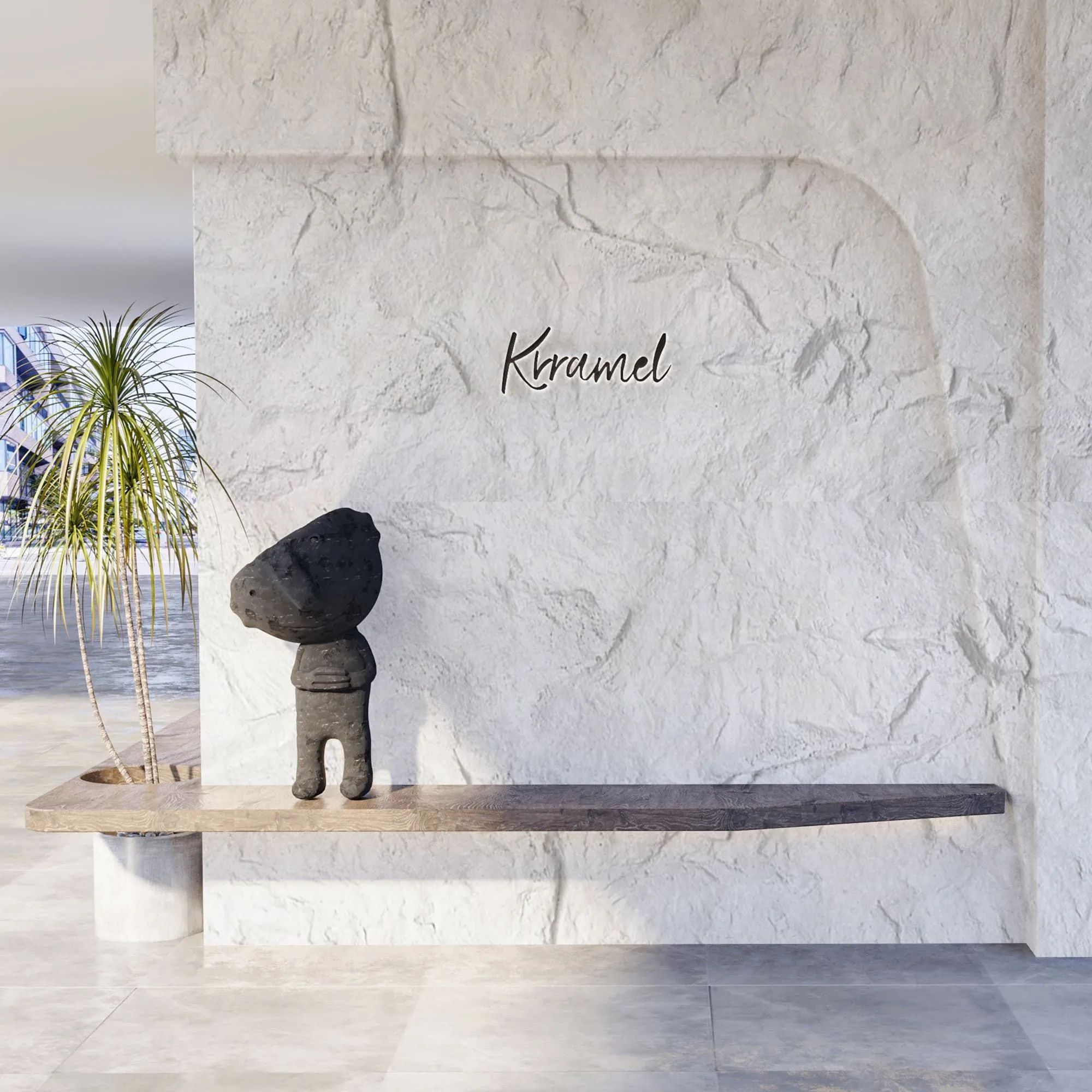
Vintage Black Boulder Slab may steal the spotlight, but its beauty lies in its adaptability. The "vintage" in its name refers to its textured finish—subtle indentations and tonal variations that mimic the look of stone weathered by time, adding depth to high-rise spaces that might otherwise feel sterile. "We paired it with warm wood accents in the lobby," Chen says of her Singapore project. "The black slab grounded the space, while the wood added softness. It felt both modern and timeless."
But its versatility doesn't stop at color. The slab can be polished for a sleek, contemporary look or left matte for a more rustic vibe. It works indoors (accent walls, kitchen backsplashes, bathroom cladding) and outdoors (facades, terraces, pool surrounds), seamlessly bridging the gap between interior and exterior design. For architects craving contrast, it pairs beautifully with COLORIA's lunar peak silvery or lunar peak golden series—metallic-hued slabs that add a touch of luxury without overwhelming the space.
| Material | Weight (kg/m²) | Installation Time | Durability (Lifespan) | Aesthetic Range | Sustainability |
|---|---|---|---|---|---|
| Vintage Black Boulder Slab | 12-15 | Fast (2-3 workers/day for 100m²) | 50+ years | Textured black, customizable finishes | Recycled materials, low carbon footprint |
| Natural Marble | 50-60 | Slow (requires specialized labor) | 20-30 years (prone to staining) | Classic veining, limited color options | High quarrying impact, non-recyclable |
| Fair-Faced Concrete | 24-28 | Moderate (heavy lifting needed) | 30-40 years (cracks over time) | Industrial gray, minimal texture | High energy use in production |
| Traditional Granite | 60-70 | Very slow (crane-dependent) | 40-50 years (brittle, prone to chipping) | Polished, limited color range | Extensive mining, high transportation emissions |
Vintage Black Boulder Slab is just one star in COLORIA's constellation of high-rise materials. For designers seeking lighter tones, the epoch stone and century stone series offer soft beiges and grays, perfect for creating airy, light-filled interiors. The mcm 3d printing series takes customization further, allowing for intricate patterns—think geometric motifs or organic textures—that were once impossible with traditional materials. "We used 3D-printed wave panels from the series in a hotel lobby," says Chen. "Guests kept touching them, asking if they were carved by hand. It added that 'wow' factor without the cost."
For projects aiming for a metallic edge, COLORIA's foamed aluminium alloy board (vintage gold) and foamed aluminium alloy board (vintage silver) bring industrial chic to facades and accent walls, pairing beautifully with Vintage Black Boulder Slab for a bold, contemporary look. And for those drawn to earthier aesthetics, the gobi panel and historical pathfinders stone evoke desert landscapes and ancient pathways, adding narrative depth to high-rise spaces.
In downtown Tokyo, a 45-story office tower recently replaced its outdated concrete facade with Vintage Black Boulder Slab. The result? A building that now stands out on the skyline—its dark, textured surface reflecting the city's lights by night and creating a striking contrast with neighboring glass towers by day. "Tenants love it," says the building's property manager. "The lobby feels more sophisticated, and we've even noticed an increase in foot traffic to the ground-floor retail spaces."
Closer to home, a luxury residential high-rise in Sydney used the slab for both exterior cladding and interior accent walls. "Our clients wanted a building that felt exclusive but not intimidating," says the project's designer. "Vintage Black gave us that balance—strong, but not harsh. The lightweight nature also meant we could add larger windows, flooding apartments with natural light. It was a win-win."
As cities grow taller and design aspirations rise with them, materials like Vintage Black Boulder Slab are more than just trends—they're necessities. They represent a shift toward human-centric construction: spaces that are beautiful, functional, and sustainable, without compromising on safety or structural integrity. "High-rises shouldn't feel like cold, imposing monoliths," Chen reflects. "They should feel like homes, offices, and communities. Materials that are light, durable, and full of character help make that possible."
For COLORIA, the journey doesn't end with Vintage Black. The company's labs are already experimenting with even lighter composites and more vibrant colorways, ensuring that the next generation of high-rises will be as unique as the people who inhabit them. "We're not just making materials," Dr. Park says. "We're helping designers tell stories—stories of innovation, of connection, of respect for both the built and natural worlds."
Vintage Black Boulder Slab isn't just a material—it's a solution. It addresses the weighty challenges of high-rise construction with elegance, proving that lightweight can be luxurious, durable can be flexible, and sustainable can be stunning. Whether you're an architect dreaming of a bold facade, a designer crafting a warm lobby, or a homeowner seeking to elevate your space, this slab invites you to reimagine what's possible. After all, the best high-rise designs don't just reach for the sky—they ground us in beauty, one lightweight slab at a time.
Recommend Products












