
Let's set the scene: You're standing in front of a half-finished building site, hard hat in hand, staring up at a facade that's taking twice as long to install as planned. The architect's renderings showed a sleek, modern exterior—dark, textured, with depth that would make the building feel both grounded and dynamic. But the reality? The chosen material, a dense, traditional granite, is weighing everything down. Literally. Each slab requires two workers to lift, the structural engineers are raising eyebrows at the load, and the delivery trucks keep getting stuck in the narrow city streets because the stone is so heavy. Sound familiar? For architects, builders, and designers, the battle between aesthetics, practicality, and sustainability is nothing new. But what if there was a material that checked all three boxes? Enter COLORIA's Vintage Black Boulder Slab—a rising star in the world of mcm flexible stone—and the age-old giant it's challenging: granite. Today, we're diving deep into this showdown, exploring why more and more projects are swapping the old for the new, and why "vintage black" might just be the color of construction's future.
Before we jump into the nitty-gritty, let's make sure we're on the same page. Granite, of course, needs no introduction. It's the rockstar of natural stones—formed over millions of years by volcanic activity, prized for its toughness, and adored for its unique, speckled patterns. It's been used in everything from ancient temples to modern skyscrapers, and for good reason: it's durable, it looks luxurious, and it's got that "forever" vibe. But here's the catch: all that durability comes with a price—literally and figuratively. Granite is heavy, hard to quarry, and not exactly kind to the planet.
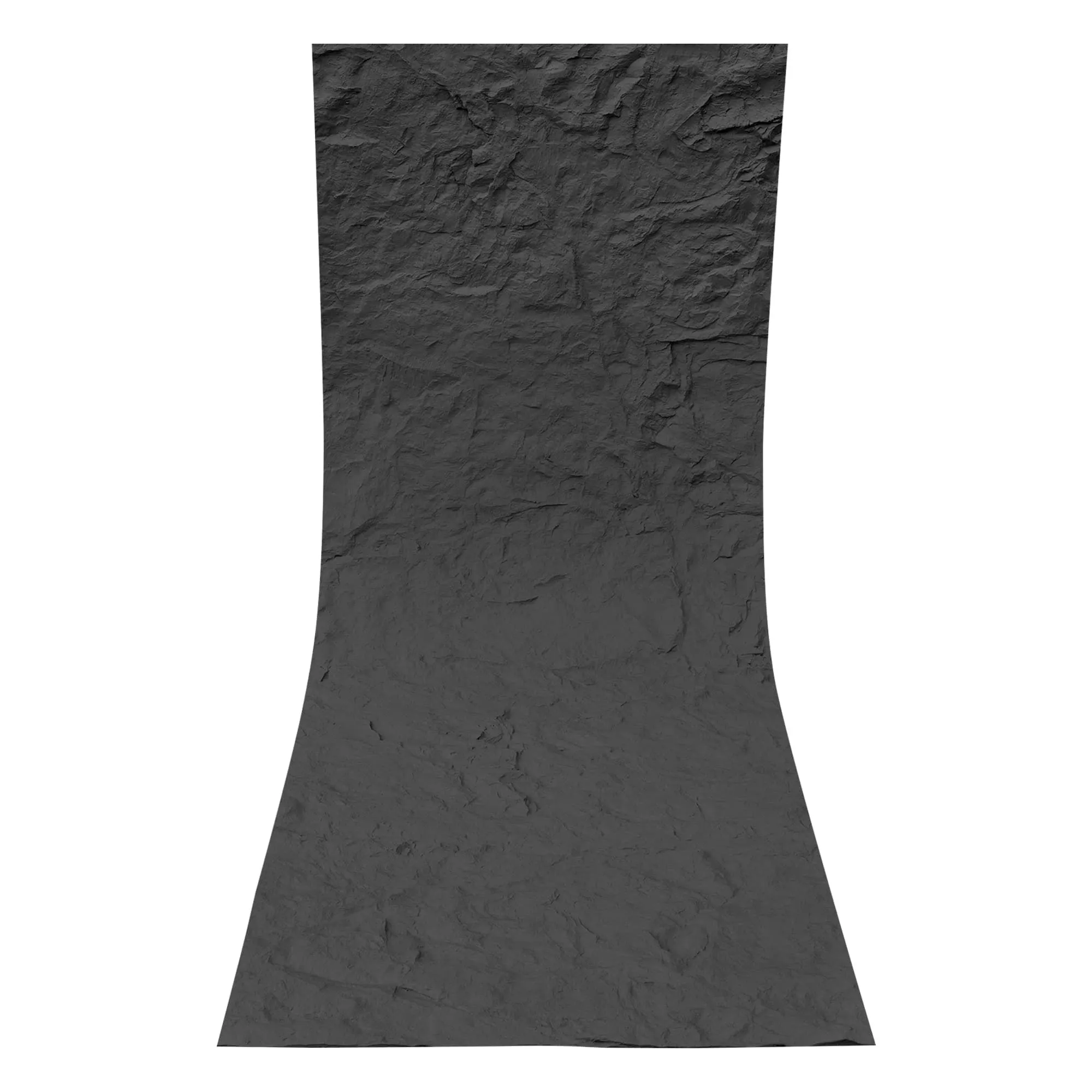
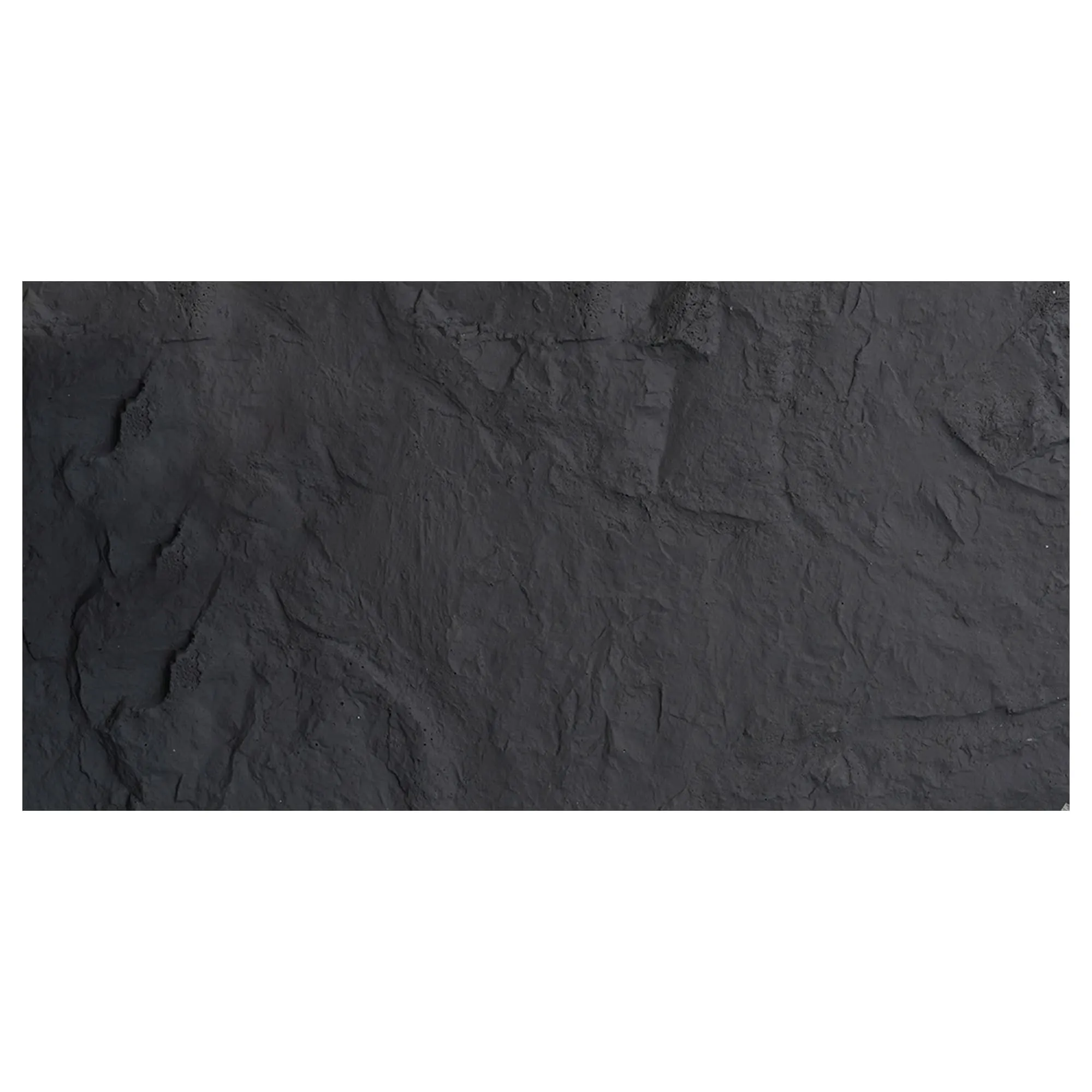
Then there's COLORIA's Vintage Black Boulder Slab. If granite is the classic rock ballad, Boulder Slab is the indie remix—familiar enough to feel timeless, but with a modern twist that makes it fresh. Part of COLORIA's innovative boulder slab series, this material is a product of modified composite material (MCM) technology, blending natural minerals with high-performance polymers to create something that looks and feels like stone but behaves like a dream. And "vintage black"? It's not just a color—it's a finish: deep, moody, with subtle variations that mimic the weathered patina of stone that's been around for decades, without the wait. Think of it as stone with a story, but one that's easy to write.
Let's start with the elephant in the room (or the slab on the truck): weight. Granite is dense—really dense. We're talking about 25-30 kilograms per square meter for a standard 20mm slab. That might not sound like much until you multiply it by a 10,000-square-meter facade. Suddenly, you're looking at hundreds of tons of material that needs to be quarried, transported, lifted, and installed. And each step of that process adds up.
Take transportation, for example. A single truck can carry maybe 200 square meters of granite before hitting weight limits. With Boulder Slab? Thanks to its MCM core, it clocks in at just 6-8 kilograms per square meter—less than a third of granite's weight. That same truck can now carry 600+ square meters. Fewer trucks mean fewer emissions, lower fuel costs, and less wear and tear on roads. For urban projects, where delivery windows are tight and street access is limited, this isn't just a convenience—it's a game-changer. Imagine trying to navigate a narrow downtown street with a truck loaded with granite slabs versus one carrying Boulder Slab. Which one do you think the city planners will smile at?
Installation is another area where weight makes or breaks a project. Granite slabs often require cranes, scaffolding, and teams of workers to maneuver into place. Miss a step, and you're looking at cracked stone, damaged structures, or worse, safety risks. Boulder Slab, on the other hand, is light enough to be handled by two people (sometimes even one, for smaller pieces) and can be installed using simple adhesives or mechanical fasteners. No need for heavy machinery cluttering the site. On a recent project in Barcelona—a boutique hotel with a curved facade—the contractors switched from granite to Boulder Slab halfway through, and installation time dropped by 40%. "We went from installing 50 square meters a day to 80," the site foreman told me. "And the crew wasn't exhausted by lunch."
In 2024, the Skyline Tower in Dubai faced a dilemma: the original plan called for a granite facade, but the building's structural engineers warned that the added weight would require reinforcing the steel framework—a $2 million expense and a three-month delay. Enter COLORIA's Vintage Black Boulder Slab. By switching materials, the team eliminated the need for reinforcement, cut transportation costs by 65%, and finished the facade a month ahead of schedule. The result? A 42-story tower that looks like it's wrapped in weathered obsidian, with a installation process that was safer, faster, and cheaper.
These days, "sustainability" isn't just a buzzword—it's a requirement. Clients want LEED certifications, cities are tightening environmental regulations, and the public is holding brands accountable for their carbon footprints. So how do our two materials stack up here? Let's start with granite.
Quarrying granite is a brutal process. It involves blasting bedrock with dynamite, which disrupts ecosystems, displaces wildlife, and leaves massive scars on the landscape. Then there's the water usage: cutting and polishing granite requires millions of gallons of water per quarry, much of which is contaminated with silica dust and chemicals before being released back into waterways. And let's not forget transportation again—those heavy slabs we talked about? Shipping them across the globe adds tons of CO2 to the atmosphere. A 2023 study by the Construction Materials Research Institute found that the average carbon footprint of granite is around 35 kg CO2 per square meter. That's equivalent to driving a car 85 miles.
Boulder Slab, by contrast, is a poster child for green building materials. The MCM production process starts with recycled natural minerals (think leftover stone dust from quarries that would otherwise end up in landfills) and mixes them with a small amount of polymer resin. The result is a material that uses 70% less natural resources than granite and produces 80% less CO2 during manufacturing—around 7 kg CO2 per square meter. That's like driving just 17 miles. And because it's lighter, the transportation emissions are cut by two-thirds, too. But the sustainability story doesn't end there: Boulder Slab is also 100% recyclable at the end of its life. When a building is renovated or demolished, the slabs can be ground down and reused in new MCM products, closing the loop.
For architects chasing LEED points or developers aiming for BREEAM certification, this difference is huge. One recent project in Portland, Oregon, switched to Boulder Slab and saw its LEED score jump from Gold to Platinum, thanks in part to the material's low embodied carbon. "Sustainability isn't optional anymore," the project's sustainability consultant told me. "Clients ask for it in the first meeting. Boulder Slab lets us deliver without sacrificing design."
Let's be honest: part of why we love granite is how it looks. Each slab is unique, with swirls of color, flecks of mineral, and a depth that feels alive. But that uniqueness can also be a headache. Order 100 slabs of "black granite," and you might get 100 slightly different shades—some with more white veining, some darker, some lighter. Trying to match them for a uniform facade? Good luck. It's why so many granite projects end up with a "patchwork" look, even with careful selection.
Vintage Black Boulder Slab solves this problem by offering consistency with character. Because it's engineered, COLORIA can control the color and texture at scale, ensuring that every slab matches the sample you approved. But that doesn't mean it looks artificial—far from it. The MCM process mimics the natural variation of stone, with subtle shifts in tone and texture that make the material feel organic. Run your hand over it, and you'll feel the same rough-hewn texture as granite, with tiny pits and grooves that catch the light. The "vintage" finish adds another layer: a slight matte sheen that softens the black, making it less harsh than a polished granite and more inviting. It's the kind of material that looks equally at home on a minimalist office building and a rustic mountain lodge.
And let's talk about design flexibility. Granite is rigid—you cut it into slabs, and that's it. Want a curved wall? You'll need to hire a specialist to custom-carve each piece, which is expensive and time-consuming. Boulder Slab, thanks to its flexibility (another perk of MCM), can be bent to a radius of up to 30cm, making it perfect for curved facades, rounded columns, or even 3D-printed architectural features. Imagine a hotel lobby with a sweeping, curved wall clad in Vintage Black Boulder Slab—it would feel like stepping into a cave sculpted by time, but built in weeks, not millennia.
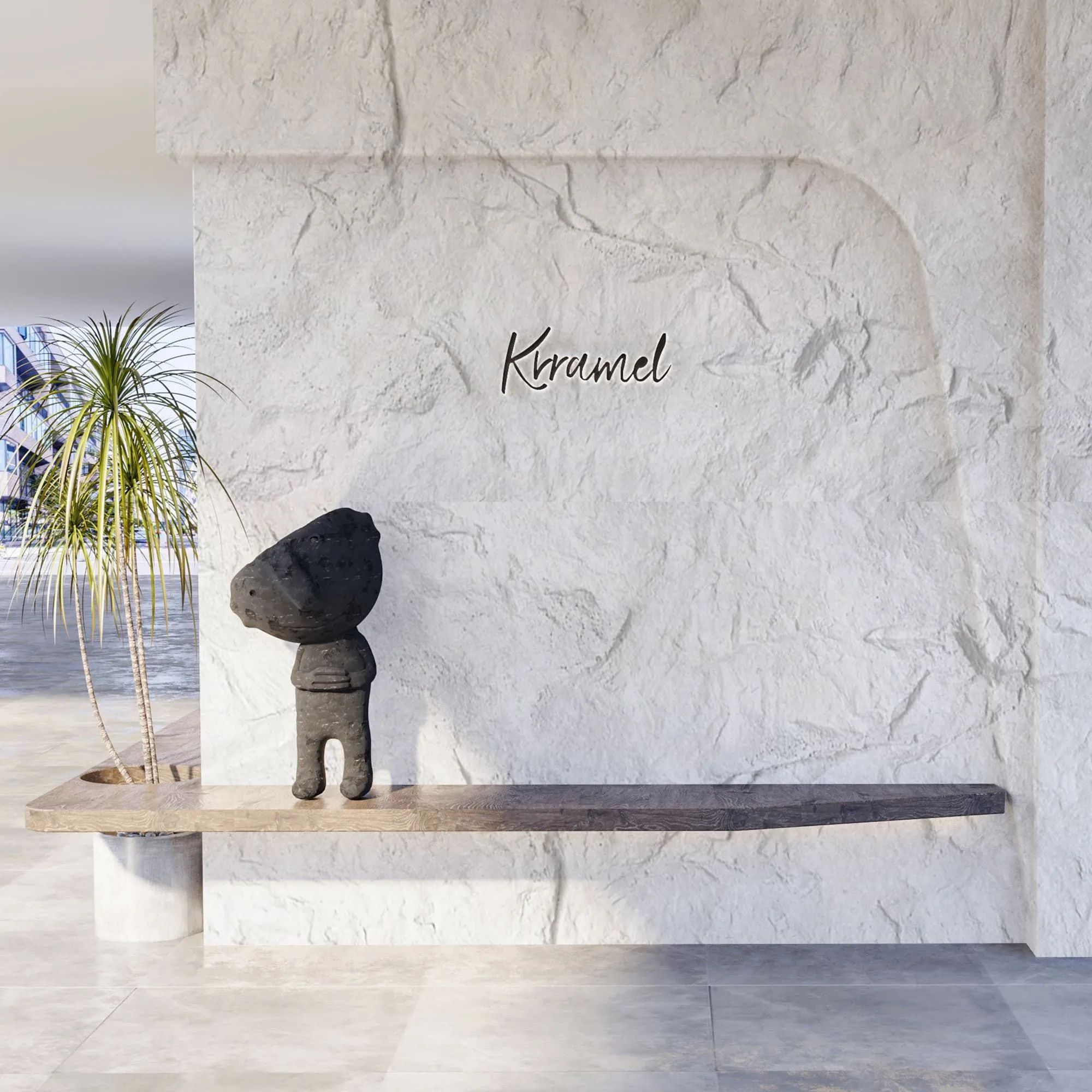
Here's the million-dollar question: if Boulder Slab is lighter and more sustainable, does it sacrifice durability? Let's put it to the test. Granite is known for being tough—it resists scratches, stains, and weathering. But so does Boulder Slab. The polymer resin in its core acts as a shield, making it resistant to UV rays (so it won't fade), moisture (no mold or mildew), and even chemicals (perfect for urban environments with air pollution). In accelerated aging tests, Boulder Slab showed no signs of deterioration after 20 years of simulated weathering—rain, snow, extreme heat, you name it. Granite, for comparison, started to show slight fading and pitting after 15 years in the same conditions.
Maintenance is another win for Boulder Slab. Granite needs to be sealed every 1-2 years to prevent staining; skip a seal, and that spilled coffee or rainwater with mineral deposits will leave a permanent mark. Boulder Slab? No sealing required. A quick hose-down with water is all it takes to keep it looking fresh. For busy commercial buildings or homeowners who don't want to fuss with upkeep, that's a huge relief.
| Feature | Vintage Black Boulder Slab | Traditional Granite |
|---|---|---|
| Weight per sqm | 6-8 kg | 25-30 kg |
| Carbon Footprint | 7 kg CO2/sqm | 35 kg CO2/sqm |
| Installation Time | 1-2 workers per sqm | 3-4 workers per sqm |
| Design Flexibility | Can be curved (radius ≥30cm); 3D-printable options | Rigid; limited to flat/cut shapes |
| Maintenance | No sealing required; hose down to clean | Seal every 1-2 years; prone to staining |
| Sustainability Rating | 9/10 (recyclable, low resource use) | 4/10 (high quarrying impact, high emissions) |
Don't just take my word for it—Boulder Slab is already making waves in projects around the world. Take the "Ember" restaurant in Tokyo, a 2024 redesign that wanted to balance industrial edge with warmth. The designer chose Vintage Black Boulder Slab for the exterior and accent walls, pairing it with warm wood and fixtures. "The material's texture adds depth without overwhelming the space," said lead designer Yuki Tanaka. "And because it's lightweight, we could install it on the second-floor balcony without reinforcing the structure—something we couldn't have done with granite."
Then there's the "Haven" residential complex in Berlin, which aimed for a LEED Platinum certification. The developers chose Boulder Slab for all 12 buildings, citing its sustainability and cost savings. "We saved over €500,000 on transportation and installation alone," said project manager Lena Schmidt. "And the residents love how the black facade contrasts with the green roofs—it feels modern but connected to nature."
At the end of the day, choosing between Vintage Black Boulder Slab and granite isn't just about picking a material—it's about picking a philosophy. Granite is a relic of a time when "bigger, heavier, stronger" was the only way to think about durability. But in 2025, we know better. We know that sustainability and performance can go hand in hand, that lightness doesn't mean weakness, and that great design shouldn't come at the expense of the planet.
Vintage Black Boulder Slab isn't just a lighter, greener alternative to granite—it's a better one. It's for the architect who wants to push boundaries without breaking budgets. For the developer who wants to build for the future, not just the present. For the homeowner who wants a material that tells a story, but doesn't require a lifetime of upkeep. It's stone, reimagined—and that's a trend worth building on.
So the next time you're standing on that building site, hard hat in hand, staring up at a facade that's supposed to be finished next month, ask yourself: Do I want the heavyweight that's been around for centuries, or the featherweight that's ready to change the game? The answer, I think, is clear.
Recommend Products












