
When it comes to designing the exterior of a building—whether it's a cozy home, a bustling commercial space, or a landmark public structure—there's a silent battle happening that most people never notice. It's the battle between beauty and resilience. We all want exteriors that turn heads, that tell a story, that blend seamlessly with their surroundings. But what good is a stunning facade if it crumbles after the first heavy rain or succumbs to mold after a humid summer? That's where the unsung hero of exterior materials comes into play: water absorption rate. And today, we're zeroing in on a material that's been gaining traction in architectural circles for its balance of aesthetics and durability: Rock Cut Dolomitic Stone. Let's unpack why its water absorption rate matters, how it stacks up against other popular materials, and what it means for your next exterior project.
First things first: What even is water absorption rate, and why should you care? Think of it like a sponge. Some materials soak up water like a thirsty kitchen sponge, while others repel it like a well-oiled raincoat. Water absorption rate is the percentage of a material's weight that comes from water when it's fully saturated. For exterior materials, this number isn't just a technicality—it's a predictor of how well that material will hold up over time.
Imagine two buildings side by side. One uses a stone with a high water absorption rate, say 8%, and the other uses a stone with a low rate, like 2%. After a week of heavy rain, the first stone is swollen with water. When the temperature drops below freezing, that trapped water expands, cracking the stone from the inside out. Over time, those cracks grow, letting in more water, and suddenly you're looking at costly repairs or even a full replacement. The second building? Its stone absorbed far less water, so freezing temperatures don't cause the same damage. Mold and mildew, which thrive in damp environments, also have a harder time taking root. In short, water absorption rate isn't just about "getting wet"—it's about longevity, maintenance costs, and the overall integrity of your exterior.
Before we dive into its water absorption rate, let's get to know Rock Cut Dolomitic Stone a little better. Dolomitic stone, in general, is a type of sedimentary rock formed from dolomite, a mineral similar to calcite but with magnesium in its composition. What makes "Rock Cut" Dolomitic Stone unique is, as the name suggests, how it's processed. Instead of being polished to a smooth finish, it's cut with specialized tools to reveal its natural, rough-hewn texture—think of the look of stone that's been shaped by centuries of wind and water, but with a controlled, intentional edge. This gives it a raw, organic appeal that's hard to replicate with synthetic materials.
Geologically, dolomitic stone is known for being denser and less porous than traditional limestone, which is one reason it's gaining popularity for exteriors. But density alone doesn't tell the whole story. The way it's cut—whether the surface is left rough, honed, or slightly polished—can affect how much water it absorbs. Rock Cut Dolomitic Stone, with its intentionally textured surface, might seem like it would soak up more water than a polished stone, but as we'll see, its natural composition gives it a pleasant surprise in the absorption department.
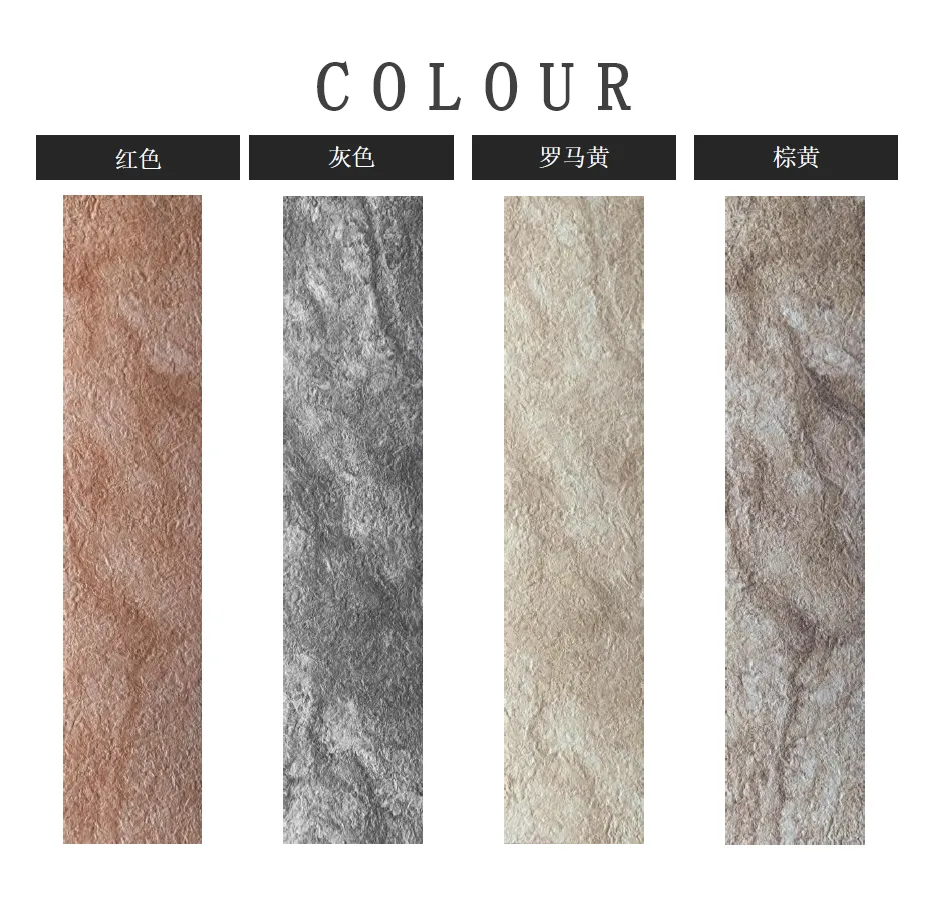
Let's talk about the "beauty" side of the beauty-resilience equation. Rock Cut Dolomitic Stone isn't just tough—it's versatile. Depending on the quarry and the specific cut, it can range in color from deep, moody dark grey (hello, dolomitic travertine dark grey from our keyword list) to warm, earthy claybank. Its rough texture adds depth and dimension to exteriors, making it a favorite for everything from mountain cabins to urban lofts. Pair it with sleek metal accents, like foamed aluminium alloy board in vintage silver, and you've got a modern industrial vibe. Use it alongside wood elements, and it leans into a cozy, rustic charm. It's the kind of material that doesn't just cover a wall—it tells a story about the earth it came from.
Water absorption rate isn't measured by just splashing a little water on the surface and seeing if it beads up. The industry standard, set by organizations like ASTM International, involves a more rigorous process. Typically, a sample of the material is dried in an oven until it reaches a constant weight, then submerged in water for a specified period (often 24 hours). After submersion, the sample is removed, blotted dry, and weighed again. The difference in weight—before and after submersion—is the water absorption rate, expressed as a percentage of the dry weight.
For Rock Cut Dolomitic Stone, this process reveals something interesting: despite its textured surface, its absorption rate tends to hover around 2.3% on average. That's lower than many other natural stones, including some types of travertine or sandstone, which can reach 5% or higher. Why? Remember that dolomite composition we mentioned earlier? Dolomite is less soluble in water than calcite, which means it's less likely to absorb moisture through its crystalline structure. The rock-cut finish, while adding texture, doesn't create large pores or gaps that would trap water—instead, the natural density of the stone acts as a barrier.
Let's put that 2.3% in context. If you're designing an exterior in a climate with harsh winters, where temperatures regularly drop below freezing, even a 1% difference in absorption can mean the world. Water expands by about 9% when it freezes, so a stone with 3% absorption will have more expanding water inside it than one with 2%. Over time, this repeated freeze-thaw cycle leads to spalling—small pieces of stone flaking off the surface—or even larger cracks. In coastal areas, where saltwater spray is common, high absorption can accelerate deterioration, as salt crystals form inside the stone and erode it from within.
Then there's the issue of mold and mildew. A stone that retains moisture is a breeding ground for these unsightly (and sometimes harmful) growths. Not only do they stain the exterior, but they can also eat away at the stone's surface over time. For commercial buildings, this means frequent cleaning and maintenance costs; for homeowners, it means a facade that loses its curb appeal far too soon. And let's not forget staining from rainwater itself. Water that soaks into a stone can carry dirt, pollution, or minerals from the environment, leaving behind permanent discoloration. A lower absorption rate means less of this unwanted "color transfer."
To really understand how Rock Cut Dolomitic Stone performs, let's compare its water absorption rate to some other popular exterior materials. We'll look at everything from natural stones to modern composites, so you can see how it stacks up in real-world scenarios.
MCM (Modified Composite Material) Flexible Stone has been making waves in recent years for its lightweight, bendable design—perfect for curved surfaces or retrofits where heavy materials are a no-go. But how does its water absorption rate compare? On average, MCM Flexible Stone clocks in at around 1.2%, which is even lower than Rock Cut Dolomitic Stone. That's because it's a composite material, often made with a mix of natural stone particles and polymers, which are inherently water-resistant. So, if flexibility and ultra-low absorption are your top priorities, MCM might be the way to go. But it's worth noting that MCM lacks the natural, organic texture of Rock Cut Dolomitic Stone—so you're trading a bit of raw beauty for technical performance.
Fair-faced concrete—concrete left in its natural state, without additional cladding—is a staple of modern, minimalist design. It's durable, fire-resistant, and has a sleek, monolithic look. But when it comes to water absorption, it's a mixed bag. Unsealed fair-faced concrete can have an absorption rate as high as 5%, which is significantly higher than Rock Cut Dolomitic Stone's 2.3%. That's because concrete is porous by nature, with tiny air bubbles and capillaries that draw in water. To combat this, most projects seal fair-faced concrete with a water-repellent coating, which can bring the absorption rate down to around 2-3%—on par with Rock Cut Dolomitic Stone. The downside? Sealing is a maintenance task that needs to be repeated every few years, adding to long-term costs. Rock Cut Dolomitic Stone, on the other hand, often performs well without frequent sealing, thanks to its natural density.
Lunar Peak Black is another natural stone that's popular for its dramatic, jet-black color and smooth, almost metallic finish. It's often used as an accent material to add contrast to lighter exteriors. But what's its water absorption rate? Around 3.1%, which is higher than Rock Cut Dolomitic Stone. That's not a dealbreaker—many stones with absorption rates in the 3-4% range perform well with proper maintenance—but it does mean you'll need to be more proactive about sealing and drainage, especially in wet climates. If you love the look of Lunar Peak Black but are worried about absorption, pairing it with Rock Cut Dolomitic Stone as a primary cladding (with Lunar Peak as an accent) could give you the best of both worlds.
Bali Stone, inspired by the lush landscapes of its namesake island, is known for its warm, golden tones and porous, volcanic-like texture. It's a favorite for tropical or coastal designs, where a relaxed, beachy aesthetic is key. However, its porosity translates to a higher water absorption rate—typically around 4.5%. In dry, arid climates, this might not be a problem, but in areas with heavy rainfall or high humidity, Bali Stone can be prone to staining and mold growth. It's a reminder that even the most beautiful materials need to be paired with the right climate to thrive.
| Material | Water Absorption Rate (%) | Key Characteristics | Best For |
|---|---|---|---|
| Rock Cut Dolomitic Stone | 2.3% | Natural texture, moderate density, earthy tones | Moderate to wet climates, rustic/modern exteriors |
| MCM Flexible Stone | 1.2% | Lightweight, flexible, composite material | Curved surfaces, retrofits, low-maintenance needs |
| Fair-Faced Concrete (Unsealed) | 5.0% | Sleek, industrial look, high compressive strength | Dry climates or with regular sealing |
| Lunar Peak Black | 3.1% | Jet-black color, smooth finish, high aesthetic appeal | Accent walls, modern designs with sealing |
| Bali Stone | 4.5% | Warm, porous texture, tropical aesthetic | Dry, arid climates or coastal areas with minimal rainfall |
As you can see, Rock Cut Dolomitic Stone sits comfortably in the middle of the pack—offering lower absorption than porous natural stones like Bali Stone and unsealed concrete, while still retaining the natural beauty that composites like MCM sometimes lack. It's a balanced choice for many climates and design styles.
Numbers on a page are one thing, but how do they translate to real buildings in real places? Let's break down what Rock Cut Dolomitic Stone's 2.3% water absorption rate means for different climates and scenarios.
If you live in an area where winters are harsh—think Chicago, Montreal, or parts of Northern Europe—freeze-thaw cycles are your biggest enemy. Rock Cut Dolomitic Stone's 2.3% absorption rate means it absorbs less water than materials like Lunar Peak Black (3.1%) or Bali Stone (4.5%), which translates to less ice formation inside the stone. This reduces the risk of spalling and cracking, helping your exterior stay intact for decades. To maximize performance, pair it with proper installation techniques, like using a breathable mortar that allows moisture to escape and installing a drainage plane behind the stone to channel water away from the wall.
In humid climates—places like Miami, Singapore, or the Pacific Northwest—mold and mildew are constant threats. Rock Cut Dolomitic Stone's moderate absorption rate means it dries out relatively quickly after rain, leaving less moisture for mold to feed on. Compare this to Bali Stone, which retains more water and can stay damp for days, creating the perfect environment for mold growth. Of course, even with Rock Cut Dolomitic Stone, proper ventilation is key. Avoid installing it in shaded areas with poor air circulation, and consider adding overhangs or awnings to protect vulnerable areas from constant rain exposure.
Coastal exteriors face a unique challenge: saltwater spray. Salt is corrosive, and when it seeps into porous materials, it can break down the stone from the inside out. Rock Cut Dolomitic Stone's density and moderate absorption rate make it more resistant to saltwater damage than highly porous stones like Bali Stone. However, it's still a good idea to seal it with a salt-resistant sealer every 3-5 years, especially if you're within a mile of the coast. This adds an extra layer of protection against salt crystals forming inside the stone and causing deterioration.
Even the most durable materials need a little TLC to stay in top shape, and Rock Cut Dolomitic Stone is no exception. Here are a few tips to keep your exterior looking fresh for years to come:
Even the best material can fail if it's installed incorrectly. Here's what to keep in mind when installing Rock Cut Dolomitic Stone:
Start with a solid substrate: Rock Cut Dolomitic Stone isn't as heavy as some natural stones, but it still needs a stable, flat surface to adhere to. Make sure the wall or surface is clean, dry, and free of cracks or debris before installation.
Use the right mortar: Opt for a mortar that's compatible with natural stone, preferably one with a low water-cement ratio to reduce shrinkage. A breathable mortar is also key—it allows moisture to escape, preventing buildup behind the stone.
Include a drainage plane: This is a layer (often a synthetic fabric or mesh) installed behind the stone that allows water to flow down and away from the wall, rather than seeping into the structure. It's especially important in wet climates.
Leave expansion joints: All materials expand and contract with temperature changes. Leaving small gaps (expansion joints) between stone panels allows for this movement without causing cracks.
In an era where sustainability is more important than ever, the choice of exterior materials plays a big role in a building's overall environmental impact. Rock Cut Dolomitic Stone has a few sustainability feathers in its cap: it's a natural material, so it doesn't rely on synthetic chemicals or energy-intensive manufacturing processes like some composites. Its durability also means less frequent replacement, reducing the carbon footprint associated with material production and transportation.
That said, sustainability isn't just about the material itself—it's about how it's used. By choosing Rock Cut Dolomitic Stone for climates where it performs best (moderate to wet climates, with proper maintenance), you're ensuring that your exterior will last for decades, minimizing waste. Pair it with other sustainable practices, like using locally quarried stone to reduce transportation emissions and incorporating green spaces around the building to manage rainwater, and you've got a recipe for an exterior that's both beautiful and kind to the planet.
At the end of the day, the water absorption rate of Rock Cut Dolomitic Stone is more than just a number—it's a tool to help you make smarter, more informed design decisions. It's a material that doesn't force you to choose between beauty and resilience: you get the natural, organic texture that makes exteriors feel alive, paired with a moderate absorption rate that holds up in a variety of climates. Whether you're designing a mountain retreat, a coastal home, or a modern office building, Rock Cut Dolomitic Stone offers a versatility that's hard to beat.
So, the next time you're standing in front of a stunning exterior, take a moment to appreciate the science behind the beauty. The stones, the concrete, the composites—they're not just there to look good. They're working hard, day in and day out, to protect what's inside. And with Rock Cut Dolomitic Stone, that protection comes with a side of timeless, earthy elegance. Now, go out there and design something that not only turns heads but stands the test of time.
Recommend Products












