
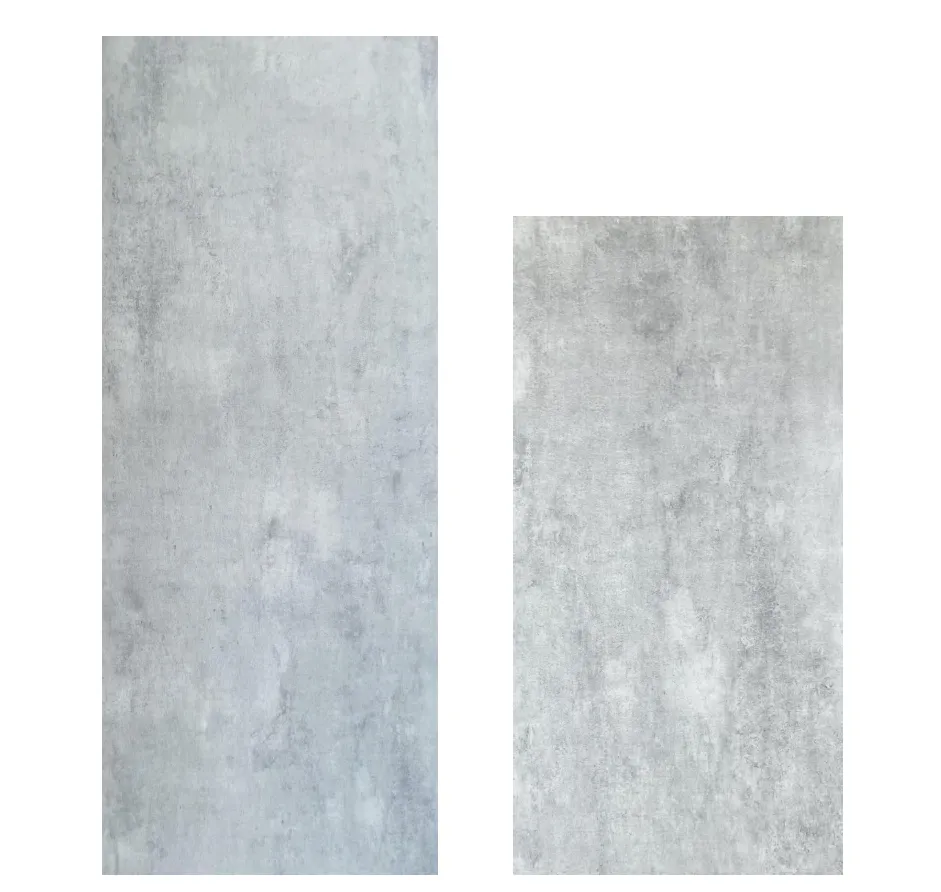
Let's talk about the heart of your home—the places where functionality meets beauty, but also where chaos (and moisture) run rampant. Your bathroom, that sanctuary after a long day, and your kitchen, the bustling hub of family meals and midnight snacks—both deserve surfaces that can keep up with life's messes without sacrificing style. If you've ever stared at a stained backsplash or fretted over a water-damaged bathroom wall, you know the struggle: finding materials that are tough enough to handle spills, steam, and humidity, yet pretty enough to make you smile every time you walk in. Enter waterproof marble concrete board—a game-changer that's quietly revolutionizing how we design these spaces.
Think about a typical week in your kitchen: tomato sauce splatters during pasta night, oil pops from the skillet, and water splashes from the sink. In the bathroom, hot showers fill the air with steam, shampoo bottles drip, and wet towels linger on the floor. These aren't just minor inconveniences—they're daily battles against moisture, stains, and wear. Traditional materials often fall short here. Natural stone like travertine (beige), for example, is stunning but porous; it soaks up water like a sponge, leaving behind unsightly marks and even mold if not sealed religiously. Ceramic tiles? They can crack, and grout lines become breeding grounds for mildew. Even polished concrete, while durable, can feel cold and industrial in a space meant to be welcoming.
This is where marble concrete board steps in. It's not just another building material—it's a blend of practicality and artistry. Imagine a surface that repels water like a duck's back, stands up to scratches from pots and pans, and mimics the timeless elegance of marble or the earthy warmth of travertine (beige). That's the magic of marble concrete board. It's engineered to solve the very problems that make designing bathrooms and kitchens such a headache, without forcing you to choose between form and function.
At first glance, you might mistake it for natural marble or high-end travertine. Run your hand over it, though, and you'll notice the difference: a smooth, non-porous finish that feels solid yet refined. But the real beauty is in what you can't see. Unlike natural stone, which has tiny pores that trap moisture, marble concrete board is crafted with a dense, waterproof core. It's made by combining marble dust, Portland cement, and reinforcing fibers, then compressed under high pressure to create a material that's not just water-resistant, but actively waterproof. That means no more worrying about steam warping your bathroom walls or a forgotten spill seeping into your backsplash and causing mold.
Durability is another standout feature. This isn't a material that chips easily or fades under sunlight. It's designed to handle the daily grind: kids slamming bathroom doors, pots clanging against the backsplash, even the occasional dropped hairbrush or spoon. And because it's made in a controlled environment, each board is consistent in color and pattern—no more hunting for matching tiles or dealing with the natural variations that make natural stone installation a nightmare.
But let's not overlook the design possibilities. Marble concrete board comes in a range of finishes, from polished to matte, and colors that mimic everything from classic marble veining to the soft warmth of travertine (beige) or the bold drama of dark granite. Want a sleek, modern bathroom? Opt for a white marble-inspired board with subtle gray veins. Dreaming of a cozy kitchen with rustic charm? Choose a travertine (beige) lookalike with gentle texture. You can even find options that blend with other materials, like pairing it with fair-faced concrete for an industrial-chic vibe or contrasting it with the metallic sheen of foamed aluminium alloy board (vintage gold) for a touch of luxury.
Curious how it compares to other popular materials? Let's break it down. We've put together a quick comparison to help you see why marble concrete board is becoming the go-to choice for homeowners and designers alike:
| Material | Waterproofing | Durability | Maintenance | Aesthetics | Cost |
|---|---|---|---|---|---|
| Marble Concrete Board | Excellent (100% waterproof) | High (resists scratches, chips, and stains) | Low (wipe with soap and water; no sealing needed) | Versatile (mimics marble, travertine, etc.) | Mid-range (more affordable than natural marble) |
| Travertine (Beige) | Poor (porous; requires frequent sealing) | Medium (prone to etching from acidic substances) | High (seal every 6–12 months; avoid harsh cleaners) | Warm, natural look | High (expensive to buy and install) |
| Fair-Faced Concrete | Good (resistant but not fully waterproof) | High (very durable but can crack if not sealed) | Medium (seal annually; stains may require special cleaners) | Industrial, minimalist | Mid to high (labor-intensive installation) |
| Polished Concrete | Fair (can be sealed but still porous over time) | High (resistant to wear but prone to staining) | Medium (seal every 2–3 years; avoid acidic spills) | Cold, modern look | Mid-range |
As you can see, marble concrete board outperforms traditional materials in key areas like waterproofing and maintenance, while still holding its own in aesthetics. It's a practical choice that doesn't skimp on style—a rare find in the world of home design.
Ever wondered how something so beautiful and durable is created? The process is a fascinating mix of science and craftsmanship. It starts with selecting high-quality raw materials: fine marble dust (often recycled from marble quarries, making it eco-friendly), Portland cement for strength, and fiberglass or carbon fibers for reinforcement. These ingredients are mixed with water to form a thick paste, which is then poured into molds. The molds can be designed to mimic the texture of natural stone, from the smoothness of polished marble to the pitted surface of travertine (beige).
Once in the mold, the mixture is compressed under extreme pressure—up to 4,000 pounds per square inch—to squeeze out air bubbles and create a dense, uniform slab. This compression is what gives the board its strength and waterproof properties. After pressing, the slabs are cured in a controlled environment, where temperature and humidity are carefully regulated to ensure proper hardening. Finally, they're sanded, polished, or textured to achieve the desired finish, and treated with a protective sealant (though the core is already waterproof, this extra layer adds scratch resistance).
The result? A material that's not only tough but also surprisingly lightweight. Unlike natural stone slabs, which can be heavy and require extra structural support, marble concrete board is thin and easy to handle, making installation a breeze—even for DIY enthusiasts with basic skills.
Installing marble concrete board isn't rocket science, but a little preparation goes a long way. Whether you're tackling a bathroom renovation or updating your kitchen backsplash, here's what you need to know:
If you're working with a backsplash, measure twice and cut once. Marble concrete board can be cut with a circular saw fitted with a diamond blade (wear eye protection and a dust mask!). For intricate cuts around outlets or fixtures, use a jigsaw. Once the boards are cut, apply a thin layer of thinset mortar to the wall, then press the board firmly into place, using spacers to ensure even gaps (these will later be filled with grout). For bathrooms, consider using a waterproof thinset to add an extra layer of protection against moisture.
Grouting is next. Choose a grout that matches or complements the color of your board—for a seamless look, go with a shade close to the board's base color. After grouting, wipe away excess with a damp sponge, and let it cure for 24–48 hours. Finally, seal the grout (even though the board itself is waterproof, grout is porous and needs protection). That's it! With a little patience, you'll have a backsplash or bathroom wall that looks like it was installed by a pro.
One of the best things about marble concrete board is how little maintenance it requires. Unlike natural travertine (beige), which needs to be sealed every few months, or ceramic tile, which demands constant scrubbing of grout lines, this material is designed to be low-fuss. Here's how to keep it looking like new:
With just a little care, your marble concrete board will look as good in 10 years as it did on installation day. No more expensive resealing or replacement—just a beautiful, functional surface that keeps up with your life.
Now that you know the "how" and "why," let's talk about the fun part: designing with marble concrete board. Whether you prefer modern minimalism, rustic charm, or something in between, this material plays well with a variety of styles. Here are a few ideas to spark your creativity:
Create a calming oasis by pairing white marble concrete board with soft gray accents. Add a freestanding tub, a rainfall showerhead, and travertine (beige) floor tiles for warmth. Hang a mirror with a thin gold frame and add potted plants for a touch of nature. The waterproof board will stand up to steam, while the neutral palette makes the space feel open and serene.
Go bold with a black marble concrete board backsplash, then add contrast with white cabinetry and gold hardware. For warmth, incorporate wooden countertops and pendant lights with foamed aluminium alloy board (vintage gold) shades. The dark board hides stains, making it perfect for a busy kitchen, while the gold accents add a touch of luxury.
Mimic the look of weathered travertine (beige) with a matte-finish marble concrete board. Use it for kitchen walls, then pair with shiplap, a farmhouse sink, and open wooden shelving. Add vintage-inspired fixtures and a woven (khaki) rug for texture. The earthy tones and subtle texture of the board will make the space feel cozy and inviting.
At the end of the day, designing a bathroom or kitchen is about more than just picking pretty materials—it's about creating spaces that work for you. Spaces that don't stress you out when something spills, that make you proud to host guests, and that grow with your family. Marble concrete board checks all these boxes and more. It's waterproof, durable, and endlessly customizable, all while offering the kind of beauty that makes a house feel like a home.
So, if you're tired of choosing between a surface that's tough enough to last and one that makes you smile, consider marble concrete board. It's not just a material—it's a solution. A solution that lets you have it all: the elegance of marble, the warmth of travertine (beige), the durability of concrete, and the peace of mind that comes with knowing your space can handle whatever life throws at it. Your bathroom and kitchen deserve the best—give them marble concrete board, and you'll wonder how you ever lived without it.
Recommend Products












