
Before we dive into the specifics of COLORIA's MCM Marble Series, let's talk about why waterproofing is non-negotiable in building materials. Think about the environments where stone and cladding are used: exteriors exposed to rain, snow, and humidity; bathrooms and kitchens where water splashes are daily occurrences; basements and laundry rooms prone to dampness; even commercial spaces like spas or indoor pools where moisture levels stay high year-round. In each of these cases, a material that can't repel water is setting itself up for failure.
Traditional natural stones—marble, travertine, granite—are beloved for their unique veining and organic beauty, but they have a Achilles' heel: porosity. Travertine, for example, is formed from mineral-rich hot springs, which leaves it with tiny, natural pores. These pores act like sponges, absorbing water, oils, and stains. Over time, this absorption leads to discoloration, cracking (when water freezes and expands), and even mold growth. To combat this, homeowners and businesses often have to seal these stones every 6–12 months—a tedious and ongoing expense. And even with sealing, no traditional stone is fully waterproof.
That's where MCM technology changes the game. COLORIA's MCM Marble Series takes the aesthetic appeal of natural stone and wraps it in a protective, waterproof shell. But how exactly does it work? Let's break it down.
At its core, MCM stands for "modified composite material"—a blend of natural stone aggregates, polymers, and reinforcing fibers that creates a material that's both lightweight and incredibly durable. Unlike solid natural stone, which is a single porous layer, MCM panels are engineered in layers, each with a specific job. Let's simplify the structure:
But the real magic is in the additives. During manufacturing, COLORIA adds hydrophobic agents to the surface layer. These are molecules that repel water, causing it to bead up and roll off the surface instead of soaking in. You've seen this effect before: when water hits a freshly waxed car, it beads up and slides away. COLORIA's MCM panels work similarly, but the hydrophobic treatment is integrated into the material itself, not just a topical coating. That means it won't wear off over time, unlike sealants on natural stone.
To put it in perspective: Traditional travertine has a water absorption rate of around 3–5% (meaning 3–5% of its weight is water after 24 hours of submersion). COLORIA's mcm flexible stone? Less than 0.1%. That's a difference of 30–50 times less water absorption. For materials like lunar peak silvery, which has a metallic finish, the waterproofing is even more enhanced—the metallic particles in the surface layer create an extra barrier, making water bead up even more dramatically.
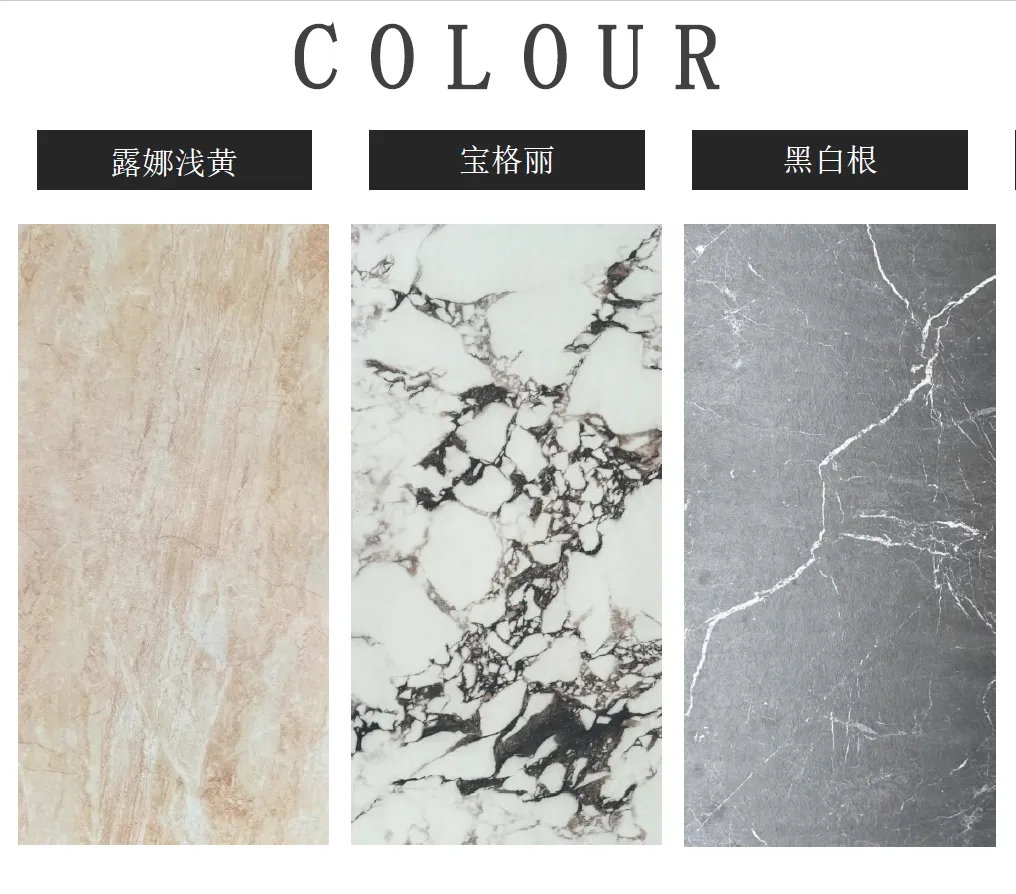
COLORIA's MCM Marble Series isn't a one-size-fits-all solution. It's a family of products, each with unique aesthetics but all sharing that core waterproof technology. Let's shine a light on a few fan favorites and how their design enhances their moisture resistance.
Travertine (starry blue) is one of COLORIA's most popular designs, and it's easy to see why. Its deep blue base is dotted with iridescent "stars"—tiny mineral flecks that catch the light, mimicking a night sky. But beyond its looks, this panel is a waterproof powerhouse. The starry pattern isn't just for show: the surface is treated with an extra layer of hydrophobic coating, which makes water bead up and roll off, leaving no streaks or stains. Unlike natural travertine, which would absorb water and darken the blue over time, the starry blue MCM version stays vibrant, even after years of rain or humidity.
We spoke to an architect in coastal California who used travertine (starry blue) for a beach house exterior. "The client wanted that oceanic vibe, but we were worried about saltwater spray and constant fog," she said. "Traditional travertine would have pitted and stained within a year. With COLORIA's MCM version? Two years later, it still looks brand new. No sealing, no scrubbing—just hosing it down occasionally to keep the stars shining."
If travertine (starry blue) is the "night sky" of the series, lunar peak silvery is the "moonbeam." This panel has a cool, silvery metallic finish with subtle texture, evoking the look of polished steel or brushed aluminum. But don't let the metallic sheen fool you—it's not just for aesthetics. The metallic particles in the surface layer add an extra layer of density, making the panel even less porous than standard MCM. It's also resistant to corrosion, which is a big plus for coastal areas or regions with high pollution (which can react with water to form acids that eat away at stone).
A hotel in Seattle recently renovated its lobby with lunar peak silvery cladding. "We wanted something modern but durable," the project manager explained. "Seattle's rainy season is 9 months long, and the lobby has floor-to-ceiling windows that let in a lot of condensation. With traditional metal panels, we'd have worried about rust or water spots. But the lunar peak silvery MCM panels? They wipe clean with a damp cloth, and the moisture just beads up and drips off. No streaks, no water damage—even in a space that's basically a greenhouse for half the year."
MCM flexible stone is the backbone of COLORIA's lineup. It's not tied to a specific aesthetic—instead, it's a versatile panel that can mimic everything from rough-hewn granite to smooth marble. What makes it special is its flexibility (hence the name), which allows it to be bent around curves or used on uneven surfaces without cracking. But here's the kicker: that flexibility doesn't compromise waterproofing. The core layer is reinforced with a flexible polymer that adapts to movement (like thermal expansion in exteriors) while maintaining its water-tight seal.
A residential builder in Arizona used mcm flexible stone for a series of desert homes. "In the desert, we have extreme temperature swings—100°F during the day, 50°F at night," he noted. "Traditional stone cracks under that stress, and once it cracks, water (from rare but heavy rains) gets in and causes even more damage. MCM flexible stone bends with the temperature changes, and since it's waterproof, even if there's a tiny gap in the installation, the panel itself doesn't absorb water. We've had zero water-related callbacks on those homes, which is unheard of with natural stone."
Numbers tell a story, so let's put COLORIA's MCM Marble Series head-to-head with traditional stone and other common cladding materials. The table below compares key metrics related to waterproofing and durability:
| Material | Water Absorption Rate (24hr submersion) | Need for Sealing | Resistance to Mold Growth | Weight (kg/sqm) |
|---|---|---|---|---|
| COLORIA MCM Travertine (Starry Blue) | <0.1% | Never | High (non-porous surface) | 4–5 |
| Natural Travertine | 3–5% | Every 6–12 months | Low (porous, traps moisture) | 18–20 |
| COLORIA Lunar Peak Silvery | <0.05% | Never | High (metallic barrier + hydrophobic coating) | 3–4 |
| Traditional Granite | 0.5–1% | Every 1–2 years | Medium (less porous than travertine but still absorbent) | 20–25 |
| COLORIA MCM Flexible Stone | <0.1% | Never | High (flexible core resists cracking) | 3–5 |
| Fair-Faced Concrete | 4–8% | Every 6 months | Low (highly porous, prone to staining) | 25–30 |
The takeaway? COLORIA's MCM panels absorb 95–99% less water than traditional materials, eliminate the need for constant sealing, and are significantly lighter (which reduces installation time and structural load). For anyone prioritizing long-term durability and low maintenance, the choice is clear.
Waterproofing is useful everywhere, but there are certain environments where COLORIA's MCM Marble Series truly proves its worth. Let's explore a few applications where moisture resistance isn't just important—it's critical.
Exterior cladding is the first line of defense against the elements. In coastal areas, saltwater spray accelerates corrosion; in rainy regions, constant moisture tests a material's limits. COLORIA's MCM panels, like travertine (starry blue) and lunar peak silvery, are designed for these harsh conditions. A hotel in Florida's Gulf Coast replaced its natural limestone exterior with MCM panels after repeated storm damage. "Hurricane season used to mean patching water-stained limestone and replacing cracked tiles," the maintenance director said. "Now, after storms, we just hose off the salt spray, and the panels look as good as new. No water gets through, even in 100mph winds."
Bathrooms are a moisture hotspot—steam from showers, splashes from sinks, and condensation on walls. Traditional tile and grout are breeding grounds for mold, but MCM panels (especially mcm flexible stone) eliminate that risk. A luxury spa in Colorado used MCM panels for its steam room walls. "Steam rooms are the ultimate test—100% humidity, daily," the spa manager explained. "With traditional marble, we were scrubbing mold off the walls weekly. Now, the MCM panels don't absorb moisture, so mold can't grow. We clean them with a damp cloth once a month, and they still look brand new after two years."
Basements are prone to groundwater seepage and high humidity, making them a nightmare for traditional stone. MCM's waterproof core acts as a barrier, even in below-grade installations. A homeowner in Oregon converted their damp basement into a home theater using lunar peak silvery panels. "Before, the walls were always damp—you could feel the moisture," they said. "Now, with MCM, the walls stay dry, and there's no musty smell. We even have a dehumidifier, but the panels themselves don't absorb any of that excess moisture. It's like having a waterproof shield around the room."
While waterproofing is the star of the show, COLORIA's MCM panels offer a host of other benefits that make them a smart choice for any project:
Waterproofing isn't just a feature—it's a foundation. A beautiful material that can't stand up to moisture is a temporary solution, destined to fade, crack, or stain. COLORIA's MCM Marble Series, with products like mcm flexible stone, travertine (starry blue), and lunar peak silvery, redefines what's possible: materials that are as tough as they are beautiful, as practical as they are stunning. Whether you're building a beach house, designing a luxury bathroom, or cladding a commercial high-rise, these panels offer peace of mind—knowing that water, that silent enemy, has finally met its match.
At the end of the day, the best building materials are the ones that work with the environment, not against it. COLORIA's MCM Marble Series does just that—blending innovation, sustainability, and timeless design into a solution that proves you don't have to choose between beauty and functionality. So the next time you're planning a project, ask yourself: Is this material built to last, even when the rain comes? With COLORIA, the answer is a resounding yes.
Recommend Products












