
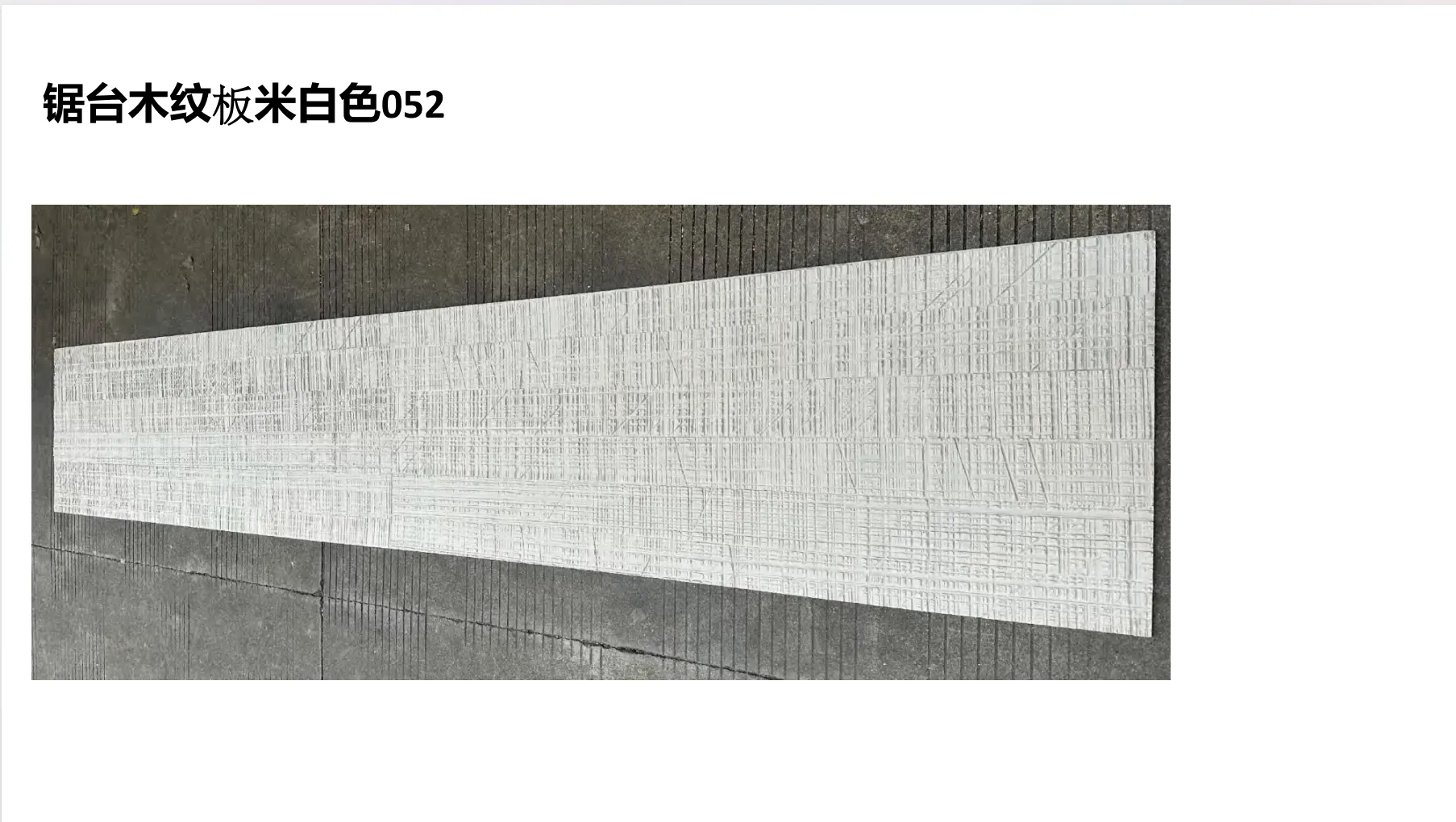
Imagine standing in your backyard after a week of relentless rain, staring at the exterior walls of your home. On one side, there's the warm, honey-colored sawing wood board siding you fell in love with during the renovation—its natural grain once felt like a hug from the outdoors. On the other side, a neighbor's house sports sleek, stone-like panels that look just as striking, but somehow, after the storm, they're still crisp and unblemished. That's the moment many homeowners, designers, and builders find themselves asking: When it comes to weathering the elements, can traditional wood really hold its own against modern materials like MCM flexible stone or MCM big slab board series ?
Waterproofing and weather resistance aren't just technical checkboxes—they're the difference between a home that ages gracefully and one that becomes a constant maintenance project. Whether you're building a coastal cottage, a mountain retreat, or a city rooftop deck, the materials you choose will determine how well your space stands up to rain, snow, UV rays, humidity, and even the occasional hailstorm. Let's dive into the showdown between the timeless charm of sawing wood boards and the innovative durability of MCM products, exploring which truly reigns supreme when the weather turns harsh.
There's a reason wood has been a go-to building material for centuries. Sawing wood boards, with their organic texture and rich, earthy tones, bring a sense of warmth and character that's hard to replicate. Think of a cozy cabin with wooden siding, or a backyard deck where you sip morning coffee, the wood beneath your feet smooth from years of use. It's natural, it's inviting, and it feels like a connection to the world outside.
But here's the catch: wood is a living material, even after it's cut and dried. Its cellular structure is porous, meaning it soaks up water like a sponge. Let's say you live in a rainy climate—every spring, that wood siding on your home absorbs moisture, causing the boards to swell. When summer comes, the sun bakes the wood, drying it out and making it shrink. This cycle of swelling and shrinking? It's a recipe for warping, cracking, and splitting. Over time, those cracks become entry points for water, and before you know it, you're dealing with rot, mold, or even termites that see your wood as an all-you-can-eat buffet.
Of course, no one's letting wood go down without a fight. Homeowners and contractors treat sawing wood boards with waterproofing sealants, stains, and paints to create a barrier against moisture. But these treatments are temporary. UV rays from the sun break down the sealant over time, rain washes it away, and before you know it, you're back to sanding, reapplying, and spending weekends on maintenance instead of enjoying your space. I once had a friend who installed high-end cedar siding on his home, vowing to stay on top of the upkeep. Five years later, he was replacing half of it—rot had set in around the windowsills, where water had seeped in through tiny, overlooked gaps. "I loved the look," he told me, "but I didn't realize I was signing up for a part-time job as a wood caretaker."
Even with meticulous care, sawing wood boards have a limited lifespan outdoors. In moderate climates, with regular maintenance, you might get 10–15 years out of them. In harsher environments—coastal areas with salt spray, humid regions with constant moisture, or places with extreme temperature swings—you're looking at half that time. And let's not forget the cost: between the initial material, the sealants, the tools, and the labor for reapplication, that "affordable" wood siding can end up costing far more in the long run than you bargained for.
Enter MCM—Modified Composite Material—a category of building products that's been quietly revolutionizing the way we think about exterior and interior surfaces. If sawing wood boards are the reliable old friend who's great for a chat but can't handle a storm, MCM is the new neighbor who shows up with a toolbox, a plan, and a smile. It's not just one product, but a family of materials designed to mimic the look of natural stone, wood, or metal—without the natural vulnerabilities.
Take MCM flexible stone , for example. At first glance, it looks like real stone—rough-hewn, textured, with all the depth and character of something pulled from a quarry. But pick it up, and you'll notice it's surprisingly lightweight and bendable. That's because MCM is made by blending natural minerals (like stone powder or fibers) with high-performance resins, creating a composite that's both strong and flexible. This unique composition gives it a superpower: it can mimic the aesthetics of wood, stone, or even marble, but with none of their weaknesses.
Then there's the MCM big slab board series —large, seamless panels that are perfect for creating modern, minimalist exteriors or statement walls. These slabs are designed to be easy to install (thanks to their lightweight nature), and they come in a stunning range of finishes, from the muted elegance of Lunar Peak silvery to the warm glow of Lunar Peak golden . But what really sets MCM apart isn't just its looks—it's how it holds up when Mother Nature decides to throw a tantrum.
Let's get down to the nitty-gritty: how do sawing wood boards and MCM materials actually perform when faced with water? To find out, let's imagine a simple test: take a sample of each and submerge them in a bucket of water for 24 hours. What happens next tells you everything you need to know.
The sawing wood board? It soaks up water like a sponge. You'll notice it gets heavier, the edges swell, and if you press on it, it might even feel soft in spots. Pull it out, let it dry, and it shrinks—maybe even cracks. This isn't just a lab experiment; it's what happens every time it rains heavily or your sprinkler hits the siding. Over time, that repeated absorption and drying weakens the wood, making it prone to rot and decay.
Now the MCM flexible stone sample: submerge it, leave it, come back a day later. Pick it up, and it feels the same as when you put it in—no weight gain, no swelling, no soft spots. Why? Because MCM's resin-based matrix is inherently waterproof. Unlike wood, which has tiny pores that absorb water, MCM's structure is dense and non-porous. Water beads up and rolls off it, like water on a waxed car. Even if there's a scratch or a nick in the surface, the material itself doesn't absorb moisture, so there's no risk of rot or mold spreading from the damage.
This waterproofing isn't just a happy accident—it's intentional. MCM is engineered for applications where water resistance is critical: exterior siding, outdoor decks, pool surrounds, even bathroom walls. Builders in coastal areas love it because it stands up to saltwater spray, which is notorious for corroding metal and rotting wood. Homeowners in rainy regions appreciate that they don't have to worry about water seeping into walls and causing mold problems. And for anyone who's ever dealt with a leaky roof or a flooded basement, that peace of mind is priceless.
Waterproofing is just one piece of the puzzle. True weather resistance means standing up to a whole army of elements: UV rays that fade colors, extreme heat that warps materials, freezing cold that cracks them, and even wind-driven debris that chips surfaces. Let's see how our two contenders stack up.
Sawing wood boards are no match for UV rays. Over time, the sun bleaches their color, turning rich cedar into a pale gray (unless you're diligent about reapplying stain). Extreme heat can cause them to dry out and split, while freezing temperatures make the wood brittle—so a single hailstorm can leave your siding covered in dents and cracks. Humidity? It's a breeding ground for mold and mildew, which not only look unsightly but can also eat away at the wood's structure.
MCM, on the other hand, laughs in the face of these challenges. Take UV resistance: MCM products are treated with special additives that block harmful UV rays, so their colors stay vibrant for decades. I visited a commercial building in Arizona a few years back that had used MCM big slab boards in a bold Rona yellow finish. After 15 years in the desert sun, the color was as bright as the day it was installed. The architect told me, "We chose MCM because we didn't want to be repainting every five years. It's still perfect."
Temperature extremes? MCM handles them with ease. Its composite structure is designed to expand and contract minimally, so it doesn't warp or crack in the heat or cold. In coastal areas, where salt air can corrode metal and rot wood, MCM holds strong—no rust, no decay, just a surface that stays looking fresh. Even in places with heavy snowfall, MCM big slab boards don't absorb moisture, so they don't freeze and crack like wood can.
When you're investing in building materials, you're not just buying something for today—you're buying peace of mind for tomorrow. So let's talk about longevity: how long can you realistically expect sawing wood boards and MCM materials to last?
With sawing wood boards, the answer depends on how much time and money you're willing to spend on maintenance. In ideal conditions—covered porches, dry climates, with annual sealing—you might get 15–20 years out of them. But in most real-world scenarios? 10 years is more common, especially if you skip a year of maintenance or a particularly harsh storm hits. And when they fail, they fail big: rotted boards need to be replaced, not just repaired, which means higher costs and more disruption.
MCM materials, by contrast, are built for the long haul. Most manufacturers warranty their MCM products for 20–30 years, and in practice, they often last longer. Why? Because they don't rot, they don't warp, they don't fade, and they're impervious to insects. A builder I know in Florida, where humidity and hurricanes are a fact of life, switched to MCM flexible stone for exterior cladding a decade ago. "I've never had a callback," he told me. "Homeowners love that they don't have to do anything—just hose it down once in a while if it gets dirty."
Let's break it down financially, too. Sawing wood boards might have a lower upfront cost—say, $5–$10 per square foot. But factor in the cost of sealants ($100–$300 every 2–3 years), repairs, and eventual replacement (every 10 years), and the total cost over 20 years could easily double or triple. MCM, on the other hand, has a higher upfront cost—maybe $12–$20 per square foot—but with zero maintenance and a 30-year lifespan, the long-term value is clear. It's an investment that pays off in fewer headaches and more money in your pocket over time.
| Feature | Sawing Wood Boards | MCM Flexible Stone / MCM Big Slab Board Series |
|---|---|---|
| Waterproofing | Porous; absorbs water, leading to swelling, rot, and decay. Requires regular sealing. | Inherently waterproof; resin matrix repels water. No absorption, no swelling, no rot. |
| Weather Resistance | Vulnerable to UV fading, temperature warping, and insect damage. Short lifespan in harsh climates. | UV-resistant, thermally stable, and impervious to insects. Thrives in coastal, humid, and extreme temperature environments. |
| Maintenance | High; requires annual sealing, sanding, and occasional repairs. Frequent repainting/staining. | Low; occasional cleaning with soap and water. No sealing, painting, or repairs needed. |
| Lifespan | 5–15 years (depending on climate and maintenance). | 20–30+ years (with minimal maintenance). |
| Best For | Interior applications, covered exteriors, or low-moisture climates with high maintenance tolerance. | Exteriors, high-moisture areas (baths, kitchens), coastal homes, commercial buildings, and any space where durability matters. |
One of the biggest arguments in favor of sawing wood boards is their natural beauty. So does choosing MCM mean giving up that warm, organic look? Not at all. In fact, MCM's greatest trick might be how well it mimics the look and feel of natural materials—without the drawbacks.
Take MCM flexible stone, for example. It can replicate the texture of rough-hewn granite, the veining of marble, or even the grain of sawing wood boards—so much so that you'd have to touch it to tell the difference. The MCM big slab board series offers large-format panels that can mimic everything from travertine (starry green) to fair-faced concrete , giving designers endless options for creating the aesthetic they want. Whether you're going for a rustic cabin vibe or a sleek, modern high-rise, MCM has a finish that fits.
I recently visited a restaurant that used MCM big slab boards in a wood grain board finish for their walls. From across the room, I would have sworn it was real wood—warm, inviting, with that classic grain pattern. But when I asked the owner about maintenance, he laughed. "We get splashed with wine, food, who knows what else daily. I just wipe it down with a cloth. If this were real wood, we'd have replaced the walls twice by now."
At the end of the day, the choice between sawing wood boards and MCM materials comes down to your priorities. If you're willing to put in the time, money, and effort to maintain the natural beauty of wood— and you don't mind replacing it every decade or so—then wood might still be the right choice for you. It's a classic for a reason, and in the right setting, it's undeniably charming.
But if you want a material that looks great, lasts decades, and doesn't require you to become a weekend handyman (or handywoman), then MCM is the clear winner. Whether you opt for MCM flexible stone for its versatility or the MCM big slab board series for its seamless modern look, you're getting a product that's built to stand up to whatever the weather throws at it—without sacrificing an ounce of style.
Think of it this way: your home is more than just walls and a roof—it's a place where memories are made, where you feel safe and comfortable, and where you shouldn't have to worry about whether the siding will hold up to next year's storm. With MCM, you're not just choosing a building material; you're choosing peace of mind. And in the end, that's the most valuable feature of all.
Recommend Products












