
Blending Comfort, Cleanliness, and Craftsmanship in Modern Medical Spaces
When you walk into a healthcare facility, the first thing that registers isn't just the clinical hum of monitors or the faint scent of disinfectant—it's the environment . The walls, the floors, the textures underfoot, the light filtering through surfaces—these elements don't just fill space; they shape how patients feel, how staff perform, and even how quickly recovery happens. In a place where stress runs high and vulnerability is constant, design isn't a luxury. It's medicine.
For decades, healthcare design leaned into sterility: cold whites, hard plastics, and surfaces chosen more for durability than warmth. But research tells a different story now. Studies show that spaces with natural textures, soft tones, and organic patterns reduce anxiety in patients, lower blood pressure, and even shorten hospital stays. Yet here's the catch: those warm, inviting materials can't compromise on the one non-negotiable of healthcare environments— hygiene .
Enter MCM (Modified Composite Material) solutions —a category of building materials that's quietly revolutionizing how we think about medical spaces. MCM products, like flexible stone, woven panels, and textured concretes, marry the best of both worlds: the tactile comfort of natural materials with the rigorous performance needed in high-stakes settings. And among these, one trend is standing out for its ability to humanize healthcare spaces: weaving real photos and textures into MCM designs. Let's dive into how these materials are transforming sterile rooms into sanctuaries.
Before we explore weaving and textures, let's unpack why MCM has become the material of choice for forward-thinking healthcare designers. Traditional options—like natural stone, wood, or even standard drywall—often fall short in one critical area: they're either too porous (hard to clean), too rigid (prone to cracks), or too high-maintenance (fading, chipping, or harboring bacteria).
MCM solves these issues by combining natural minerals, polymers, and advanced engineering. The result? Materials that are flexible (they bend without breaking, ideal for curved walls or custom shapes), non-porous (resistant to mold, mildew, and bacterial growth), and durable (they stand up to daily scrubbing with harsh disinfectants). But perhaps most importantly, MCM doesn't just perform —it feels alive . Through techniques like digital printing and 3D texturing, manufacturers can embed real-world patterns into these materials: think the soft weave of a linen blanket, the gentle ripple of a stream, or the warm grain of aged wood. These aren't just "prints"; they're tactile experiences that ground patients in familiarity, even in an unfamiliar place.
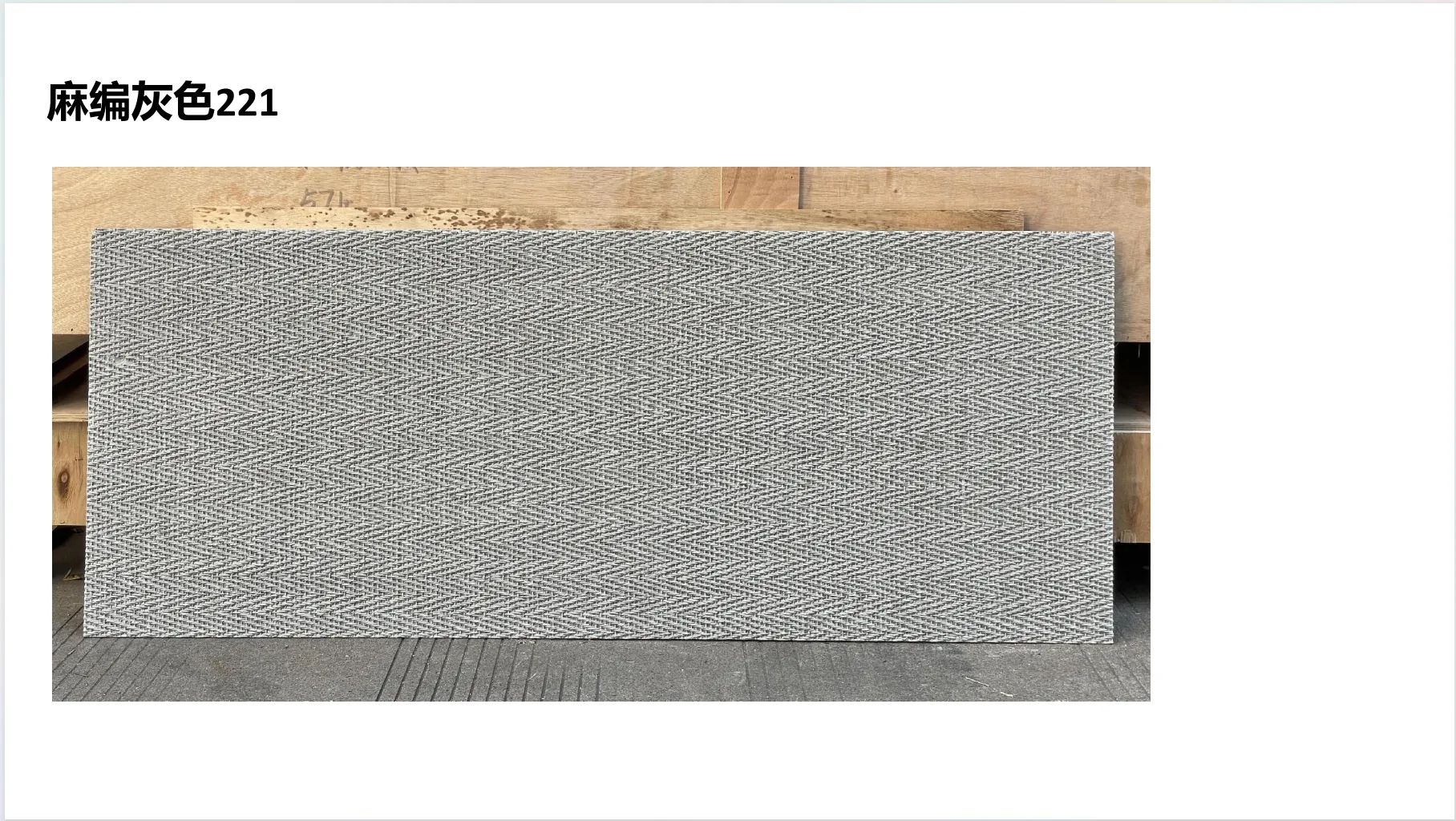
Take, for example, weaving (beige) MCM panels. Crafted to mimic the look and feel of handwoven textiles, these panels bring the comfort of home into exam rooms and waiting areas. Run a hand over them, and you'll feel the subtle ridges of interlaced fibers—a texture that instantly softens the clinical edge of a space. Yet unlike real fabric, they're sealed with a protective layer that repels liquids and resists stains, making them as easy to wipe down as a ceramic tile. It's the kind of detail that doesn't shout, but whispers: "You're in a place that cares about how you feel."
Not all MCM products are created equal, especially when it comes to healthcare. To truly serve medical environments, materials must meet strict criteria: they need to be non-porous (to prevent bacterial growth), resistant to chemicals (to withstand daily disinfection), and low-VOC (to maintain air quality). Below, we've highlighted five standout MCM solutions that check all these boxes—while adding a touch of warmth that patients and staff alike appreciate.
| Product Name | Key Features | Why It Works in Healthcare |
|---|---|---|
| MCM Flexible Stone | Thin, lightweight, and bendable; mimics natural stone textures (e.g., travertine, marble) with zero porosity. | Resists moisture, mold, and scratches. Perfect for wall cladding in patient rooms—adds the warmth of stone without the weight or maintenance. |
| Weaving (Beige) Panels | Digitally printed woven patterns (linen, cotton, jute) on a rigid MCM base; soft, matte finish. | Reduces echo in waiting areas, adds tactile comfort, and wipes clean with mild disinfectants. Ideal for reception or therapy rooms. |
| Fair-Faced Concrete | Smooth, industrial-chic finish with subtle aggregate textures; pre-sealed for stain resistance. | Durable enough for high-traffic corridors, yet warm-toned to avoid feeling "cold." Pairs well with wood accents for balance. |
| Travertine (Beige) MCM | Replicates the honeyed, porous look of natural travertine—but with a sealed, non-porous surface. | Brings earthy warmth to recovery rooms; the soft beige tone reduces eye strain and creates a calming atmosphere. |
| Foamed Aluminium Alloy Board (Vintage Silver) | Lightweight, metallic finish with a brushed texture; resistant to corrosion and impact. | Adds subtle elegance to nurse stations or lab walls; easy to sanitize and reflects light, brightening dim spaces. |
Let's zoom in on a few of these to understand their impact. Take travertine (beige) MCM , for instance. Natural travertine is beloved for its warm, fossil-like veining, but its porous surface makes it a nightmare for healthcare—germs can hide in those tiny holes, even after cleaning. MCM travertine solves this by recreating that veining digitally on a dense, non-porous composite base. The result? A wall that looks like it was quarried from a sunlit Italian hillside, but can be sprayed with bleach without fading or warping.
Then there's fair-faced concrete —a material once associated with cold warehouses, now reimagined for healthcare. Modern MCM fair-faced concrete comes in soft, warm grays and beiges, with subtle aggregates that catch the light. Unlike traditional concrete, it's pre-sealed to resist stains and moisture, making it perfect for busy corridors where wheelchairs, stretchers, and foot traffic are constant. One children's hospital in Chicago recently used it in their playroom, pairing it with colorful murals—proving concrete can feel playful, not punitive.
Here's where MCM truly shines: its ability to tell stories through texture. Weaving real photos into panels isn't just about aesthetics—it's about creating connection . Imagine a pediatric ward where the walls aren't blank, but lined with panels that mimic the exact weave of a favorite blanket, or a senior care facility where corridors feature MCM panels printed with vintage family photos (sealed, of course, to protect them). These details don't just decorate—they remind patients they're not alone.
Take the example of weaving (beige) MCM panels. Manufacturers start with high-resolution photos of real woven textiles—hand-knit sweaters, artisanal baskets, even traditional tapestries. Using advanced digital printing, they transfer these images onto a composite base, then add a textured overlay that mimics the feel of the original material. The result is a panel that looks and feels like fabric, but behaves like armor. A hospital in Seattle recently used these panels in their oncology wing, choosing a soft beige linen pattern. Nurses reported patients commenting on how "homey" the rooms felt, and staff noticed fewer instances of anxiety during treatments.
Another standout is foamed aluminium alloy board (vintage silver) . While aluminium might sound cold, the "vintage silver" finish adds a soft, brushed warmth that pairs beautifully with natural wood accents. One rehabilitation center in Boston installed these boards in their physical therapy rooms, printing them with subtle nature scenes—gentle waves, leaf patterns—to create a calming backdrop for patients during grueling sessions. The metal surface is easy to wipe down between uses, and the reflective quality helps brighten the space, reducing the need for harsh overhead lighting.
"We used to think healthcare design was about hiding messes and withstanding wear," says Maria Gonzalez, an interior designer specializing in medical spaces. "Now we know it's about healing through the senses. MCM materials let us do both—create a space that feels safe and familiar, without ever compromising on cleanliness."
For all their beauty, MCM materials wouldn't earn a place in healthcare if they couldn't back up their claims with science. Let's break down the hygiene benefits that make these products non-negotiable in medical settings:
Non-Porous Surfaces: Unlike natural stone or wood, MCM panels are engineered to be completely non-porous. This means no tiny cracks or pores for bacteria like MRSA or E. coli to hide in. Studies by the American Journal of Infection Control found that non-porous MCM surfaces reduced bacterial growth by up to 90% compared to traditional drywall in hospital rooms.
Chemical Resistance: Healthcare facilities rely on strong disinfectants—bleach, hydrogen peroxide, quaternary ammonium compounds—to keep spaces sterile. MCM materials are tested to withstand daily exposure to these chemicals without fading, warping, or releasing harmful fumes. For example, mcm flexible stone can handle weekly deep cleans with industrial-grade cleaners, making it ideal for high-touch areas like nurse stations or exam tables.
Low Maintenance: Scratches, chips, and stains are more than just eyesores in healthcare—they're potential breeding grounds for germs. MCM's durability means fewer repairs and replacements, which not only saves costs but also reduces disruptions to patient care. A study by the Healthcare Facilities Symposium found that hospitals using MCM wall panels reported 40% fewer maintenance calls related to surface damage compared to those using traditional materials.
Air Quality: Many MCM products are low-VOC (volatile organic compound), meaning they don't release harmful chemicals into the air. This is critical for patients with respiratory issues, as poor air quality can exacerbate conditions like asthma or COPD. Travertine (beige) MCM , for example, is certified by GREENGUARD for low chemical emissions, making it a safe choice for even the most sensitive patients.
To see these benefits in action, let's look at a real-world example: the Riverview Community Clinic in Portland, Oregon. When the clinic underwent a renovation in 2023, administrators had a clear goal: create a space that felt less "doctor's office" and more "community hub"—without sacrificing cleanliness.
The design team turned to MCM solutions, selecting three key products:
After the renovation, the clinic surveyed patients and staff. The results were striking: patient satisfaction scores rose by 35%, with comments like "feels less scary" and "more like visiting a friend's home" dominating feedback. Staff reported feeling less stressed in the new environment, and the clinic's infection control team noted a 22% drop in surface bacteria counts during routine swabs.
"We didn't just change the walls—we changed the mood ," says Dr. James Lin, the clinic's medical director. "When patients walk in and smile instead of tense up, that's when you know the design is working. MCM made that possible."
As healthcare continues to evolve, so too will the demand for materials that balance function and humanity. MCM solutions are at the forefront of this shift, with innovations like 3D-printed textures (think: panels that mimic the feel of tree bark or ocean waves) and customizable color palettes that adapt to specific patient needs (softer blues for pediatric wards, warm terracottas for senior care).
Weaving real photos into these materials will only grow more sophisticated. Imagine MCM panels that can display family photos via embedded, sanitizable screens, or panels that change texture with temperature to create a more dynamic environment. The possibilities are endless—and exciting.
At the end of the day, healthcare is about people. It's about the patient nervous for their first appointment, the nurse working a 12-hour shift, the family waiting for news. MCM solutions don't just build spaces—they build moments of comfort, connection, and calm. And in a world where healthcare can feel cold and impersonal, that's nothing short of revolutionary.
So the next time you step into a healthcare facility, take a closer look at the walls. If they feel warm, textured, and alive—if they make you feel a little less anxious, a little more at ease—chances are, you're looking at the future of healing: MCM solutions, quietly doing their part to make healthcare feel human again.
Recommend Products












