
In the world of hospitality, a hotel is more than just a place to sleep—it's a canvas where stories are told, memories are made, and emotions are stirred. The walls, floors, and surfaces that surround guests hold the power to transform a stay from ordinary to unforgettable. This is where MCM (Modified Composite Material) steps in, blending innovation with nature-inspired artistry to redefine what interior design can achieve. From the celestial glow of travertine (starry blue) to the warm embrace of weaving (beige) , and the industrial elegance of fair-faced concrete , MCM's product lineup isn't just about materials—it's about crafting experiences. Let's dive into how these elements come together to weave narratives that linger long after check-out.
Walk into any luxury hotel, and you'll notice it immediately: the air feels different, the light softens, and every surface seems to have a purpose. That's because top designers understand that materials are the building blocks of emotion. A rough-hewn stone wall might evoke a sense of timelessness, while a smooth, polished panel can feel sleek and modern. But in today's design landscape, guests crave more than just aesthetics—they want authenticity, sustainability, and a connection to something bigger than themselves.
MCM's range of products answers this call by drawing inspiration from nature, history, and art. Take MCM flexible stone , for example. Unlike traditional stone, which is heavy and rigid, MCM flexible stone is lightweight, durable, and adaptable, allowing designers to bend, curve, and shape it into forms that were once impossible. It's a material that respects the earth (many MCM products use recycled or low-impact materials) while offering endless creative freedom. This balance of function and feeling is what makes MCM a favorite among architects and interior designers worldwide.
Designer Insight: "Guests don't just see a hotel—they feel it. The texture of a wall when they brush against it, the way light plays on a surface at dusk, the subtle patterns that catch their eye as they wait for an elevator—these are the details that turn a space into a story. MCM materials excel at these micro-moments because they're designed with human interaction in mind." — Elena Torres, Principal Designer at Studio Ethereal
At the heart of MCM's offerings is MCM flexible stone —a revolutionary material that captures the beauty of natural stone without its limitations. Traditional stone is heavy, prone to cracking, and difficult to install on curved surfaces. MCM flexible stone solves these challenges by combining natural minerals with advanced polymers, resulting in a product that's 80% lighter than natural stone, water-resistant, and easy to install. But what truly sets it apart is its ability to mimic the intricate details of nature: the porous elegance of travertine, the rugged charm of slate, the warmth of sandstone. It's nature, reimagined for the modern world.
Consider travertine (starry blue) , a standout in MCM's travertine series. Imagine a hotel lobby where the walls are clad in panels that seem to hold a piece of the night sky—deep blues swirled with flecks of silver and gold, like distant stars frozen in stone. This isn't just decoration; it's a mood setter. Guests entering such a space might pause, take a breath, and feel a sense of calm wash over them, as if they've stepped into a quiet observatory. It's a reminder that even in the busiest cities, we can still connect with the cosmos.
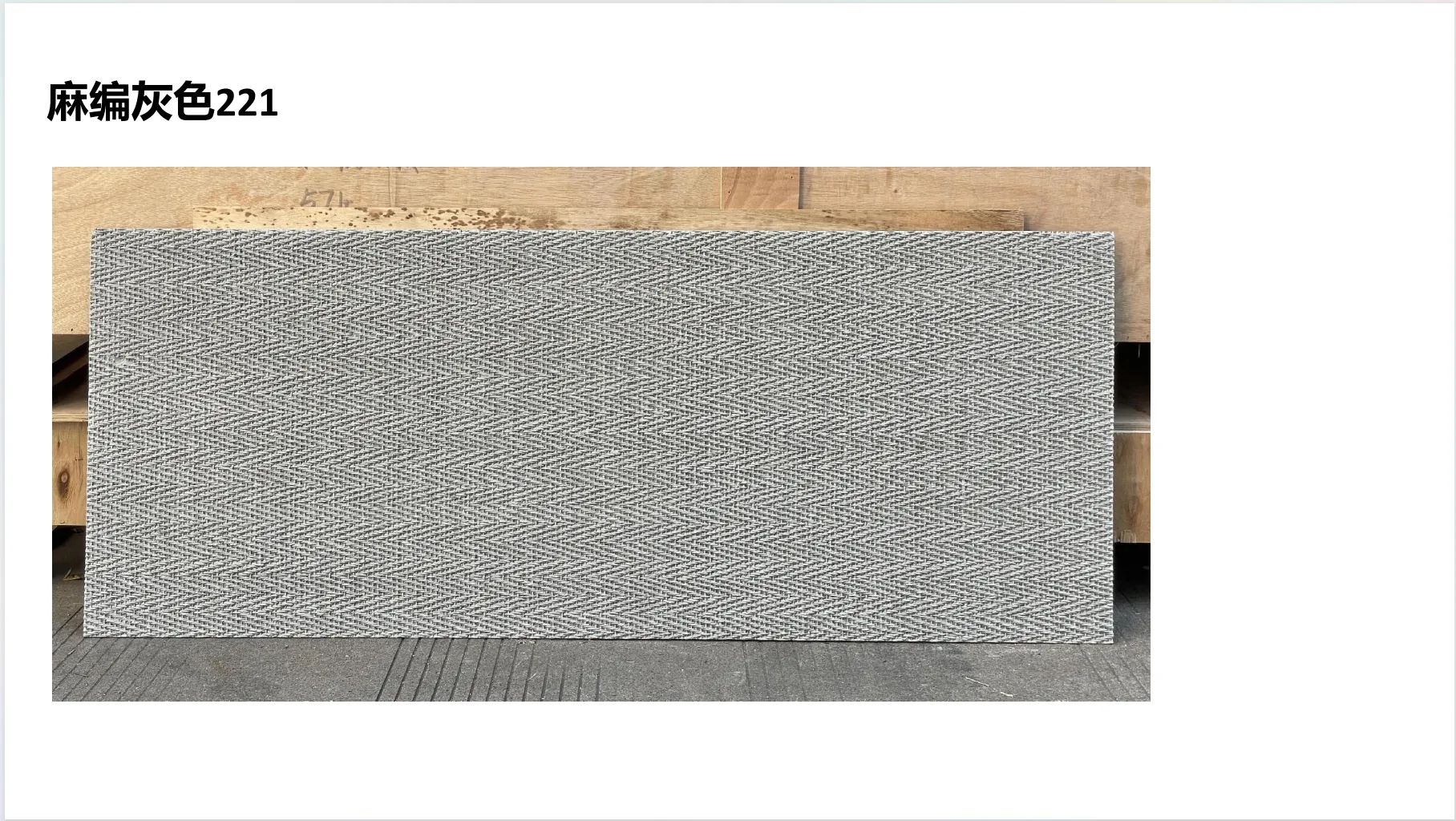
Then there's weaving (beige) , a product that brings the tactile comfort of textiles into hard surfaces. Inspired by traditional weaving techniques, this MCM panel features soft, interlacing patterns in warm, earthy tones. Picture a hotel lounge where the walls are draped in this material—suddenly, the space feels less like a public area and more like a cozy living room. The texture invites touch, the color palette (think soft sand and warm ivory) feels familiar, and the overall effect is one of understated luxury. It's the kind of space where guests might linger over a cup of tea, striking up conversations with strangers, because the environment feels safe and welcoming.
Nestled in the heart of a bustling city, the Nightfall Hotel set out to create a retreat from the chaos—an oasis where guests could "sleep under the stars" without ever leaving their rooms. The design team, led by award-winning architect Mia Chen, wanted to avoid clichéd "space-themed" decor and instead opt for something subtler, more immersive. "We wanted the hotel to feel like a whispered secret," Chen explains. "A place where the night sky isn't just a view out the window, but a part of the walls themselves."
Traditional starry-themed decor often relies on LED lights or paint, which can feel gimmicky. Chen needed a material that could capture the depth and mystery of the night sky without feeling artificial. Enter MCM's travertine (starry blue) . "When I first saw the sample, I knew it was perfect," Chen recalls. "The way the blue base swirls with metallic flecks—some bright like supernovas, others soft like distant galaxies—it's not just a panel. It's a portal."
The Nightfall Hotel's lobby is where the magic begins. The reception desk, clad in travertine (starry blue) , curves gently like a crescent moon, with recessed lighting that makes the stone's metallic flecks shimmer as guests approach. Behind the desk, a feature wall rises two stories, its panels arranged in a gradient—deepening from light to dark blue—to mimic the transition from dusk to midnight. "We wanted guests to feel like they're stepping into a different world the moment they walk in," Chen says.
Guest rooms take the theme further. The headboard wall in each suite is covered in travertine (starry blue) , paired with soft, gray bedding and warm, amber lighting. "The stone absorbs light during the day and glows softly at night, like a sky that never fades," says Sarah Lee, the hotel's general manager. "We've had guests tell us they kept their curtains open just to watch how the stone changes with the light. One couple even said it felt like sleeping in a glass dome under the stars."
Since opening, the Nightfall Hotel has become a hotspot for travelers seeking more than just a bed. "Our guests don't just post photos of their rooms—they post videos of the walls, showing how the 'stars' shift with the light," Lee notes. "It's become a talking point, a reason people choose us over other hotels. And that's the power of MCM materials: they don't just decorate a space—they become part of the story."
Located in a converted 19th-century textile mill, The Millhouse Hotel aimed to honor its industrial past while offering modern luxury. "The building has so much character—exposed brick, wooden beams, large windows—but we needed to balance that history with comfort," says designer Raj Patel. "We wanted guests to feel like they're staying in a piece of history, but with all the amenities of a 5-star hotel."
The mill's original features—think rough brick walls and metal girders—were striking, but they risked feeling cold. Patel needed materials that could warm up the space without overshadowing its heritage. "We needed something that could complement the industrial elements but add softness," he explains. "That's when we landed on weaving (beige) and fair-faced concrete from MCM. They're like two sides of the same coin—one organic and warm, the other sleek and strong."
The Millhouse's restaurant, "The Loom," is a masterclass in texture mixing. The walls are a patchwork of fair-faced concrete (left in its raw, unpolished state to show off its subtle aggregates) and weaving (beige) panels arranged in a herringbone pattern, echoing the mill's textile history. "The concrete adds that industrial edge we wanted, but the weaving softens it—like a wool blanket thrown over a metal chair," Patel says. The result? A space that feels both rugged and cozy, where guests can enjoy a gourmet meal while surrounded by the mill's past and present.
In the guest rooms, weaving (beige) takes center stage on the accent wall behind the bed, paired with reclaimed wooden furniture and Edison bulb lighting. "Guests often comment on how 'huggy' the rooms feel," says hotel manager James Wilson. "That's the weaving at work—it has this tactile quality that makes you want to reach out and touch it. It's like bringing a bit of the outdoors in, but in a sophisticated way."
The lobby, meanwhile, features a grand staircase with fair-faced concrete treads and weaving (beige) risers, creating a visual rhythm that guides guests upward. "We wanted the staircase to feel like a bridge between the mill's past and its future," Patel notes. "Concrete for the industrial roots, weaving for the human touch."
Since its opening, The Millhouse has become a favorite among travelers seeking a "home away from home" vibe. "Guests tell us they feel more relaxed here than in other hotels," Wilson says. "They'll sit in the lobby for hours, just enjoying the space. I think that's because the materials—concrete and weaving—work together to create balance. It's not too cold, not too soft—just right."
While emotion and storytelling are at the core of MCM's appeal, practicality can't be overlooked—especially in high-traffic spaces like hotels. Let's break down why materials like MCM flexible stone , travertine (starry blue) , weaving (beige) , and fair-faced concrete are as functional as they are beautiful:
| Product | Key Practical Features | Why It Works for Hotels |
|---|---|---|
| MCM Flexible Stone | Lightweight (80% lighter than natural stone), water-resistant, fire-retardant, easy to install on curved surfaces. | Reduces structural load on historic buildings (like The Millhouse); withstands spills, humidity, and heavy foot traffic. |
| Travertine (Starry Blue) | UV-resistant (no fading in sunlight), scratch-resistant, low maintenance (). | Perfect for high-visibility areas like lobbies; retains its "starry" sheen for years, even with daily cleaning. |
| Weaving (Beige) | Stain-resistant, mold-resistant, fade-resistant, soft to the touch but durable. | Ideal for guest rooms and lounges; can handle accidental spills and still look fresh. |
| Fair-Faced Concrete | Thermal insulation properties, sound-dampening, highly customizable (can be tinted or textured). | Helps regulate room temperature (reducing AC costs) and keeps noise levels low in busy areas. |
"Sustainability is another big factor," adds Chen, the Nightfall Hotel's architect. "MCM uses a significant amount of recycled materials in their products, and their manufacturing process has a lower carbon footprint than traditional stone quarrying. For hotels looking to meet eco-friendly goals, that's a huge plus."
As travelers become more design-savvy, hotels are under pressure to innovate—but not at the cost of authenticity. MCM's commitment to blending nature and technology positions it at the forefront of this shift. Imagine a hotel where travertine (starry red) creates a sunset-inspired lobby, or lunar peak silvery panels evoke the moon's craters in a spa. The possibilities are endless, but the core remains the same: materials that don't just fill space, but mean something.
"At the end of the day, hotel design is about connection," says Elena Torres, the designer we quoted earlier. "It's about making guests feel seen, understood, and inspired. MCM materials do that because they're rooted in real, tangible things—the sky, the earth, the artisanal crafts of the past. They're not just products; they're partners in storytelling."
So the next time you check into a hotel and find yourself lingering in the lobby, running your hand along a wall, or pausing to stare at a particularly striking surface, take a moment to appreciate the materials at work. Chances are, it's MCM—weaving stories, one texture at a time.
Recommend Products












