
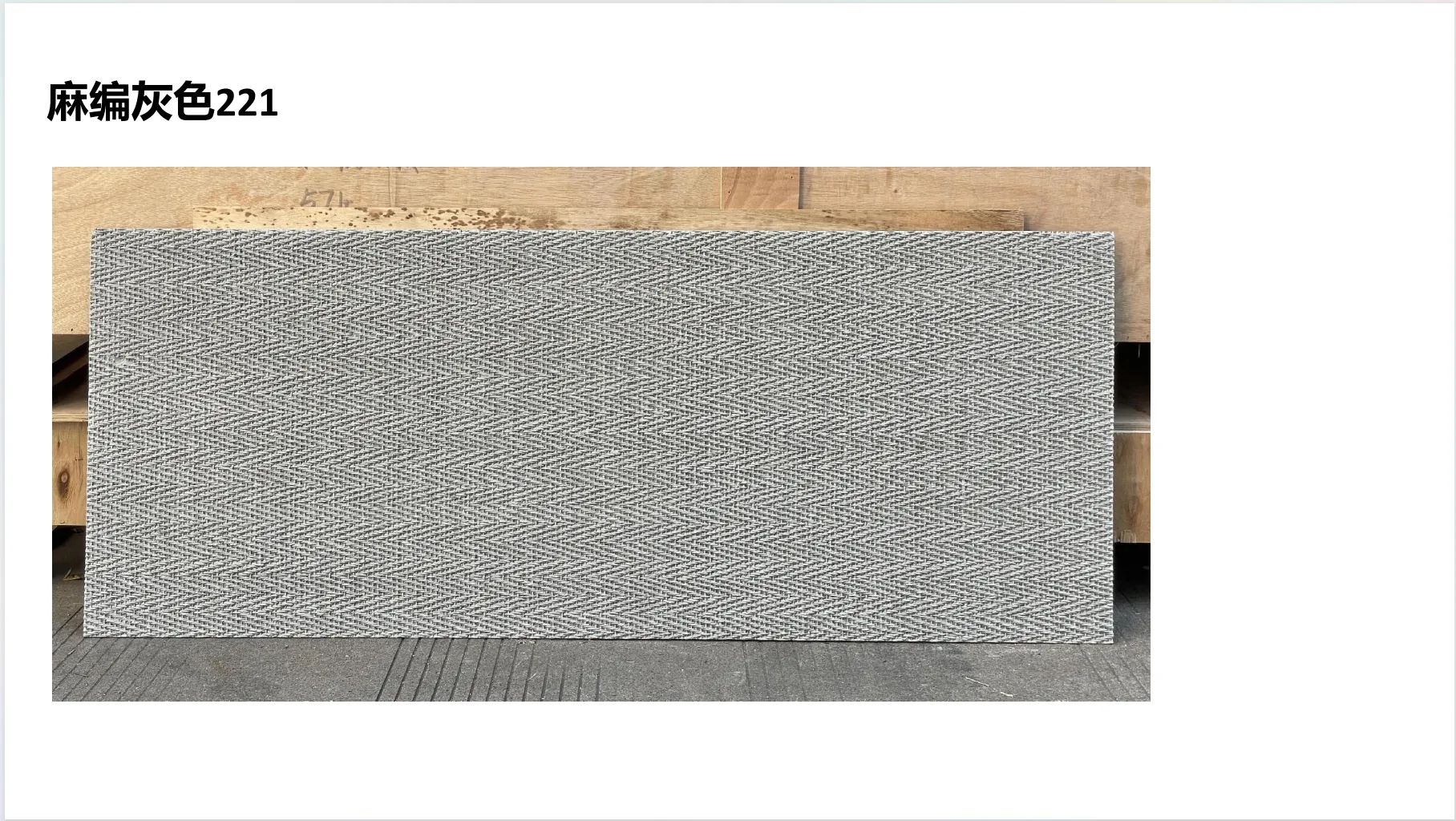
Walk into any commercial construction site, and you'll sense the buzz of a thousand moving parts—architects refining blueprints, contractors coordinating timelines, clients visualizing the final space. Yet, amid this chaos, one challenge often emerges as a silent roadblock: material selection. How do you ensure the marble-like finish a client dreams of translates to reality? Or that the rustic stone texture fits both the budget and the building's structural needs? For years, the answer involved flipping through thick catalogs with generic images or shipping heavy samples across the country—until MCM project boards stepped in, redefining how the industry collaborates, decides, and delivers.
Commercial construction isn't just about bricks and mortar; it's about storytelling. A hotel lobby should evoke luxury, a retail store should reflect brand identity, and an office space should inspire productivity. But here's the catch: materials are the storytellers. A single misstep—a tile that looks "too shiny" in person or a stone that clashes with lighting—can derail months of planning. Traditional methods only worsened this: Catalogs, with their filtered, studio-lit photos, rarely show how a material behaves in natural sunlight or against other surfaces. Physical samples, while helpful, are bulky, expensive to ship, and limited in quantity—making it hard for entire teams (architects, clients, contractors) to align.
Enter MCM project boards: a curated collection of Modified Composite Materials (MCM) that blend durability, versatility, and aesthetics—paired with something revolutionary: real photos. Not stock images, not renderings, but high-resolution snapshots of these materials in actual, built environments. Suddenly, "trusting the process" becomes "seeing the result," turning material selection from a leap of faith into a confident, collaborative choice.
At their core, MCM project boards are more than just pretty displays. They're problem-solvers, designed to address the industry's biggest pain points. MCM itself is a marvel: a lightweight, eco-friendly alternative to natural stone, wood, or metal, engineered to resist weathering, fire, and wear—all while mimicking the texture and depth of premium materials. But what truly sets these project boards apart is their focus on realism . Each board features high-quality images of MCM series—from the sleek lines of the 3D Printing Series to the organic of Flexible Stone—captured in real-world settings: a restaurant wall clad in travertine (starry green), a corporate facade with wave panel accents, a lobby floor finished in lunar peak silvery. These aren't just photos; they're proof that what you see is what you get.
Imagine (oops—scratch that) Think about this: A client describes their ideal café as "cozy yet modern," mentioning a love for "rustic stone with a hint of warmth." Without real photos, you might suggest a generic "rustic stone" sample. But with MCM project boards, you can pull up an image of rust square line stone installed in a similar café—showing how its earthy tones soften under pendant lights, how its textured surface adds depth without feeling overwhelming. The client nods, "That's exactly it." No guesswork, no backtracking, no "this isn't what I pictured."
Real photos in MCM project boards eliminate the "translation gap" between concept and reality. They let stakeholders see:
-
Scale
: How does a big slab board look on a 20-foot wall vs. a small sample?
-
Lighting
: Does travertine (starry blue) glow under warm bulbs or appear muted?
-
Pairing
: How does wave panel complement fair-faced concrete in a lobby?
-
Finish
: Is the polish on marble veil white subtle enough for a minimalist space?
In short, real photos turn abstract ideas into tangible options—making approvals faster, revisions fewer, and everyone happier.
MCM project boards aren't one-size-fits-all. They're a showcase of diversity, with series tailored to every design vision. Let's dive into some standout materials that make these boards indispensable:
| MCM Series | Key Materials | What Makes Them Unique | Best For |
|---|---|---|---|
| Flexible Stone Series | Travertine (starry green/red/orange), Rust Mosaic Stone | Ultra-lightweight, bendable panels that mimic natural travertine's voids and veining—perfect for curved surfaces. | Feature walls, accent niches, retail displays |
| 3D Printing Series | Wave Panel, Thread, Linear Travertine (claybank) | Customizable 3D textures—from flowing waves to geometric threads—add depth without heavy installation. | Modern facades, hospitality lobbies, art installations |
| Big Slab Board Series | Lunar Peak (silvery/golden/black), Boulder Slab (vintage silver) | Large-format slabs (up to 1200x2400mm) with seamless joints, ideal for creating expansive, uninterrupted surfaces. | Office exteriors, hotel atriums, commercial plazas |
| Foamed Aluminium Alloy Series | Vintage Silver, Vintage Gold, Gold | Metallic sheen with a lightweight, durable core—resists corrosion and adds industrial-chic flair. | Restaurant facades, tech company offices, urban lofts |
| Rammed Earth Board Series | Gradient (Matcha Green, Red), Khaki, Light Yellow | Earthy, textured panels that evoke the warmth of traditional rammed earth—without the weight or maintenance. | Eco-resorts, wellness centers, cultural spaces |
Take, for example, the travertine (starry green) from the Flexible Stone Series. In MCM project board photos, you can see its unique "starry" pattern—tiny, iridescent flecks that catch light like constellations—paired with wooden accents in a café. It's not just a stone; it's a mood. Or the wave panel from the 3D Printing Series: real photos show it installed on a hotel exterior, where its undulating shape softens the building's angular lines, creating movement even on a still day. These details matter—and they're only visible through real, context-rich imagery.
Let's walk through a typical scenario. An architect is designing a boutique hotel in Dubai, tasked with blending "desert warmth" with "modern luxury." The client mentions loving "golden tones" but worries about heat resistance. The architect pulls up the MCM project board, flipping to the lunar peak golden in the Big Slab Board Series. The real photo shows it installed on a hotel in Arizona—soaking up sunlight without fading, paired with gobi panel accents that echo desert dunes. "This will stay vibrant even in Dubai's heat," the architect explains, pointing to the photo. The client smiles, "Let's do it."
That's the magic: MCM project boards cut through the noise. They reduce:
-
Time
: No more waiting for samples or arguing over "how it might look." Decisions happen in meetings, not weeks later.
-
Cost
: Fewer revisions mean less wasted material and labor. Shipping physical samples? A thing of the past.
-
Risk
: Real photos mean fewer "surprises" on-site. What's approved is what's installed.
-
Friction
: Clients feel heard, architects feel confident, contractors know exactly what to source. Collaboration flows.
MCM project boards aren't static—they evolve with the industry. New series join the lineup regularly, like the foamed aluminium alloy board (vintage gold) for clients craving retro-modern metallic accents, or the gradient color rammed earth board for projects aiming for organic, nature-inspired palettes. Each new addition comes with fresh real photos, ensuring the boards stay a living, breathing resource for designers.
Even better, MCM materials themselves are engineered for sustainability. Many are made from recycled content, require minimal energy to produce, and are 100% recyclable at the end of their lifecycle. So when clients ask, "Is this eco-friendly?" the project board doesn't just show a photo—it tells a story of responsibility, too.
In commercial construction, time is money, and trust is everything. MCM project boards deliver both by turning material selection from a stressful hurdle into a collaborative highlight. With real photos that showcase flexible stone's versatility, wave panel's drama, and lunar peak's elegance, these boards don't just sell materials—they sell confidence. Confidence that the final space will look like the vision. Confidence that budgets and timelines will hold. Confidence that everyone—architect, client, contractor—is on the same page.
So the next time you're staring at a client's mood board, wondering how to make their "rustic-modern, starry, warm" vision real, remember: MCM project boards are more than tools. They're bridges—between what's imagined and what's built. And in a world where every detail counts, that bridge might just be the difference between a project that meets expectations and one that exceeds them.
Recommend Products












