
Walk into a space that feels less like a structure and more like a story. The walls aren't just barriers—they're canvases. The floors don't just support footsteps—they guide journeys. In the world of modern architecture, this transformation isn't magic; it's the art of choosing the right materials. Enter MCM (Modified Composite Material), a revolution in building design that marries durability with creativity. And at the heart of this revolution? The delicate craft of weaving real photos into materials that turn ordinary spaces into extraordinary experiences.
Weaving real photos in MCM isn't about slapping a print on a wall. It's about capturing texture, emotion, and narrative in every fiber of the material. It's the difference between a hotel lobby that feels generic and one that makes you pause, run a hand along the wall, and think, "This was made for this place." Today, we're diving into how MCM's weaving techniques—paired with a stunning array of customizable materials—are redefining what buildings can be. From the soft warmth of weaving (khaki) to the cosmic allure of travertine (starry blue) , let's explore how these materials aren't just built—they're crafted .
Weaving, at its core, is about connection—interlacing elements to create something stronger, more beautiful than the sum of its parts. In MCM, this ancient technique gets a modern twist. Instead of yarn or fabric, we're weaving stories . Real photos, digitized and translated into tactile patterns, become part of the material itself. Imagine a community center in a coastal town, where the exterior walls feature a subtle weave pattern inspired by local fishermen's nets. Or a café where the bar front uses weaving (khaki) to mimic the texture of handwoven baskets, evoking the market stalls that once stood on that street decades ago.
"Weaving real photos isn't just design—it's memory preservation," says Elena Marquez, an architect specializing in heritage-inspired spaces. "Last year, I worked on a project for a school in a small village. The kids drew pictures of their grandparents' farms, and we wove those sketches into the MCM panels for the auditorium walls. Now, every assembly feels like a celebration of their roots." This is the power of MCM: it turns abstract ideas into tangible, touchable reality. The weave isn't just a pattern; it's a conversation between the past and present.
MCM's magic lies in its diversity. Weaving real photos is just one tool in a toolkit filled with extraordinary materials, each with its own personality. Let's shine a light on a few standouts that are making waves in customization:
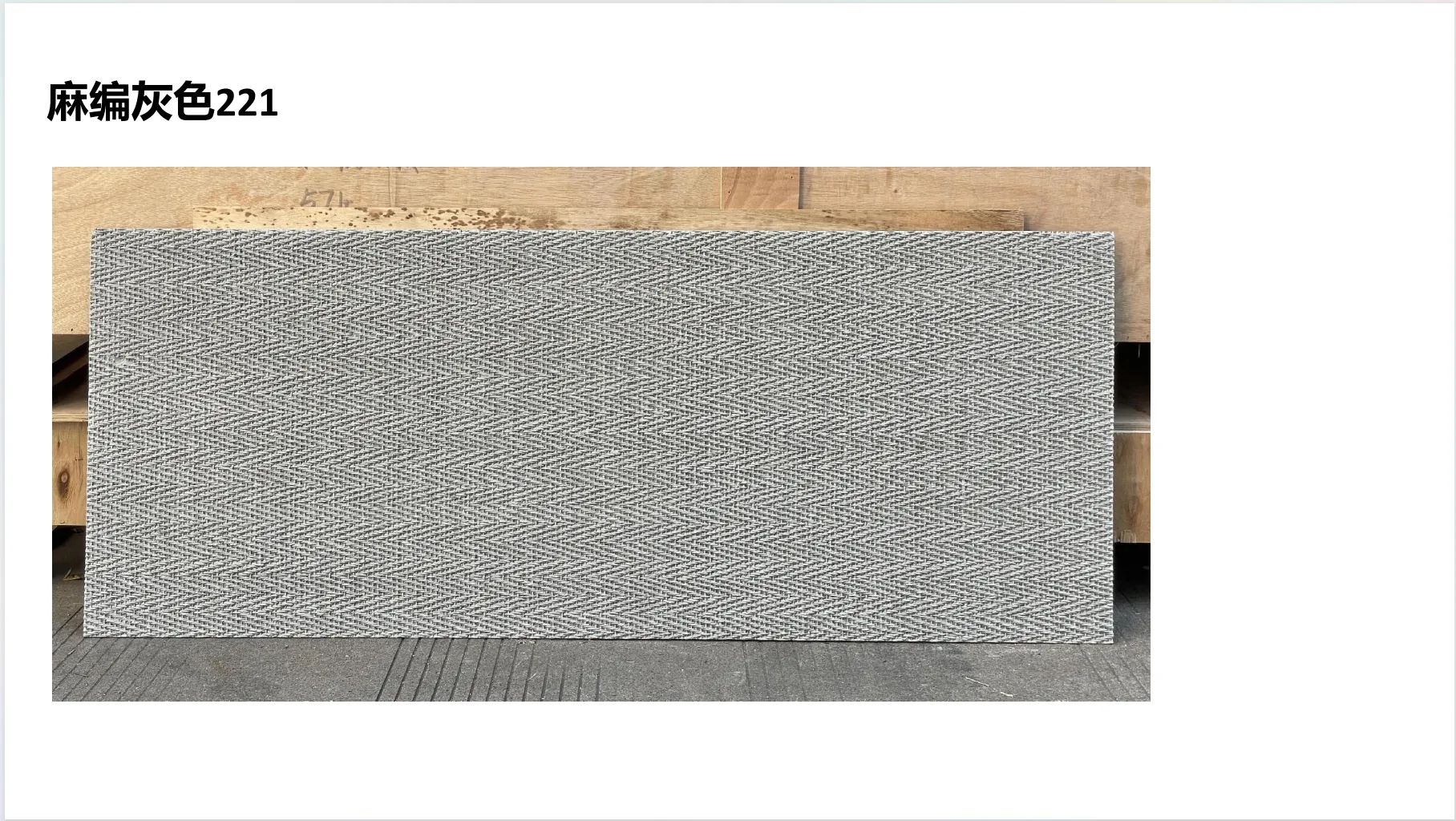
If there's a material that feels like a hug, it's weaving (khaki) . Soft, earthy, and endlessly versatile, this MCM variant takes the texture of handwoven cotton or linen and elevates it. The khaki hue—warm, not overwhelming—works in spaces where comfort is key: residential living rooms, boutique hotels, even pediatric clinics. What makes it special? Its ability to blend. Weave in photos of family heirlooms, local flora, or abstract patterns, and it adapts, never dominating the room but always grounding it. "I used weaving (khaki) in a retirement home's common area," recalls interior designer Raj Patel. "We incorporated old photos of the neighborhood from the 1950s into the weave pattern. The residents? They sit there for hours, pointing out familiar storefronts. It's not just a wall anymore—it's a time machine."
For spaces that demand drama, travertine (starry blue) is non-negotiable. Travertine, a natural stone known for its porous, organic texture, gets a celestial upgrade here. The "starry" effect comes from tiny, iridescent particles embedded in the material, mimicking a night sky scattered with stars. But when paired with weaving techniques, it becomes otherworldly. Imagine a hotel bar with a backlit travertine (starry blue) wall, where the weave pattern traces constellations significant to the region. Or a tech startup office where the meeting room walls feature a weave inspired by circuit boards, set against that deep blue backdrop—innovation meets the infinite.
"Starry blue travertine is for dreamers," says Marcus Chen, a materials engineer at MCM Labs. "We had a client who wanted their rooftop lounge to feel like 'sitting under the stars, even in the city.' We wove a pattern of the Milky Way into the travertine panels, and now, when the LED lights behind them glow at night? It's like the universe is right there with you."
If travertine (starry blue) is the night sky, lunar peak silvery is the moon itself—cool, polished, and full of mystery. This material, with its metallic sheen and subtle crater-like texture, is a favorite for high-end commercial spaces. Think luxury boutiques, tech headquarters, or airport lounges where sophistication is key. What's exciting is how weaving transforms its cold, futuristic vibe into something approachable. A recent project for a financial firm used lunar peak silvery with a woven grid pattern inspired by stock market charts—subtle enough to be elegant, meaningful enough to spark conversation.
"Lunar peak silvery is all about balance," notes Chen. "It's sleek, but the texture keeps it from feeling sterile. Add a custom weave—maybe a company's logo woven into the panels at a 45-degree angle—and suddenly it's not just a wall. It's brand storytelling, in 3D."
No discussion of MCM customization is complete without mcm flexible stone . This material is a game-changer: it looks and feels like natural stone but bends, curves, and conforms to any shape. Want a circular fireplace surround? A wave-like accent wall in a yoga studio? Flexible stone makes it possible. And when paired with weaving? The possibilities explode. Imagine a restaurant with a curved bar front made of flexible stone, woven with a pattern of grapevines to nod to the wine region it celebrates. Or a museum exhibit wall that curves around artifacts, its weave pattern echoing the texture of ancient scrolls.
"Flexible stone is freedom," says Marquez. "Architects used to be limited by what rigid materials could do. Now, we can design buildings that flow, that move, that feel alive. And weaving? It's the detail that turns that freedom into art."
With so many materials to choose from, how do you pick the right one for your project? To help, we've put together a snapshot of four standout options, comparing their texture, best uses, and customization potential. Whether you're designing a cozy café or a cutting-edge office, this guide will point you in the right direction:
| Material | Texture Profile | Best For | Customization Options | Why We Love It |
|---|---|---|---|---|
| Weaving (Khaki) | Soft, matte, with subtle horizontal/vertical weave lines; mimics handwoven fabric. | Residential spaces, community centers, boutique hotels. | Custom photo patterns (e.g., family photos, local landmarks), color tweaks (darker khaki, olive undertones). | Feels like home—warm, inviting, and deeply personal. |
| Travertine (Starry Blue) | Porous, slightly rough, with iridescent "star" particles; natural stone look with cosmic flair. | Hotels, rooftop lounges, high-end restaurants. | Star density (more/less sparkle), weave patterns (constellations, abstract art), backlighting options. | Turns any space into a celestial experience. |
| Lunar Peak Silvery | Smooth, metallic, with tiny indentations; cool, futuristic sheen. | Tech offices, luxury retail, airports. | Weave patterns (geometric, logos, data visualizations), finish (matte vs. polished). | Blends modernity with texture—sleek without being cold. |
| MCM Flexible Stone | Varied (mimics marble, granite, limestone); rigid-look but bendable. | Curved surfaces, fireplaces, feature walls, museums. | Shape (any curve/radius), stone type mimicry, woven texture overlays (e.g., vines, historical patterns). | Breaks the rules of traditional stone—design without limits. |
Behind every stunning MCM installation is a story of collaboration. Let's step into the shoes of two architects who turned their wildest ideas into reality with woven MCM materials.
When Sarah Liu, principal architect at Liu & Co., was tasked with designing a new library for the town of Millfield, she had a clear goal: "I wanted it to feel like the heart of the community, not just a building with books." Millfield had a rich history of textile mills, so Sarah turned to weaving (khaki) as her muse. "The mill workers used to weave fabric that clothed the nation," she says. "I wanted to honor that."
Sarah worked with MCM's customization team to weave old photos of the mills—black-and-white shots of workers at looms, the mill's iconic clock tower—into the khaki panels that line the library's main hall. The weave pattern itself mimics the diagonal threads of the mill's most famous fabric. "On opening day, an 89-year-old woman walked in, pointed to a panel, and said, 'That's my father's loom!'" Sarah recalls. "That's when I knew: we didn't just build a library. We built a living archive."
For the Azure Sands Hotel in Bali, architect James Wong wanted guests to "feel the ocean, even when they're inside." The solution? travertine (starry blue) with a custom weave pattern inspired by ocean waves. "The hotel sits right on the beach, so we wanted the lobby to blur the line between indoors and out," James explains. "Starry blue travertine already has that deep, oceanic color—adding a wave-like weave made it feel like the walls were moving, like the tide."
The team took drone photos of the hotel's shoreline at different times of day, capturing the way waves curl and crash. Those photos were digitized into a repeating weave pattern, etched into the travertine panels. "At sunset, when the lobby lights turn golden, the weave pattern casts shadows that look like waves rolling across the floor," James says. "Guests tell me they feel calmer just walking through. That's the power of customization—you're not just designing a space. You're designing an emotion."
As technology advances, so does MCM's ability to weave stories into materials. Chen, from MCM Labs, teases upcoming innovations: "We're experimenting with 3D-printed weave patterns that change texture based on temperature—warm up a wall, and the weave tightens; cool it down, and it loosens. Imagine a home where the living room walls 'breathe' with the seasons!"
Another frontier? Sustainability. MCM is already leading the way with eco-friendly materials, but future weaves may incorporate recycled threads or photos printed with plant-based inks. "Weaving real photos could one day include images of endangered species or deforested areas—turning buildings into billboards for conservation," Chen suggests. "Beauty with a purpose—that's where we're heading."
At the end of the day, building materials are more than just the stuff of construction. They're the language of spaces. They tell us who belongs there, what matters there, and how we should feel there. MCM's weaving real photos—paired with extraordinary materials like weaving (khaki) , travertine (starry blue) , and mcm flexible stone —isn't just about making buildings look better. It's about making them mean more.
So the next time you walk into a space that feels uniquely alive, take a closer look. Maybe it's the soft weave of khaki panels, the starry glow of blue travertine, or the flexible stone that curves like a hug. That's MCM at work—turning photos into patterns, patterns into stories, and stories into spaces that don't just exist. They resonate .
After all, the best buildings aren't just built to last. They're built to be remembered.
Recommend Products












