
Walk into a modern sustainable building today, and you'll likely notice something different about the walls, facades, or interior panels. They feel alive—textured, warm, and intentional, as if the materials themselves have a story to tell. Behind that feeling is often a deliberate choice: Modified Composite Material, or MCM. More than just a construction material, MCM is a bridge between design ambition and environmental responsibility, especially for projects aiming to meet the rigorous standards of LEED certification. In this article, we'll explore how MCM products like flexible stone, weaving textures, and foamed aluminium alloy boards are redefining green building design—one panel, one texture, one LEED credit at a time.
Traditional building materials have long posed a dilemma: natural stone is stunning but heavy and resource-intensive; concrete is durable but often carbon-heavy; metals can be sleek but energy-intensive to produce. MCM changes the game by blending recycled or low-impact base materials with advanced engineering, resulting in products that are lightweight, durable, and eco-friendly. At the heart of this innovation is MCM flexible stone—a standout in the MCM lineup. Unlike quarried stone, which requires extensive mining and transportation, MCM flexible stone starts with a core of recycled polymers and natural minerals, bound together with minimal adhesives. The result? A panel that mimics the look and feel of natural stone—complete with veins, grains, and depth—but weighs up to 70% less. This lightness isn't just about ease of installation (though contractors will tell you it's a game-changer); it reduces the structural load on buildings, cutting down on steel and concrete use in foundations. For LEED projects, that translates to points in the "Materials and Resources" category, where optimizing material efficiency is key.
But MCM's sustainability story doesn't end with weight. Many MCM products, including flexible stone, are manufactured using closed-loop processes, meaning waste from production is recycled back into the system. Water usage is also minimized—unlike natural stone, which requires heavy washing and cutting, MCM panels are precision-engineered to reduce water consumption by up to 90% during manufacturing. And because they're pre-finished, on-site waste is drastically reduced too. Imagine a construction site where there's no pile of stone dust or discarded concrete slabs; instead, panels fit together like a puzzle, leaving little to no excess. That's the MCM difference—and it's exactly the kind of detail that catches the eye of LEED auditors.
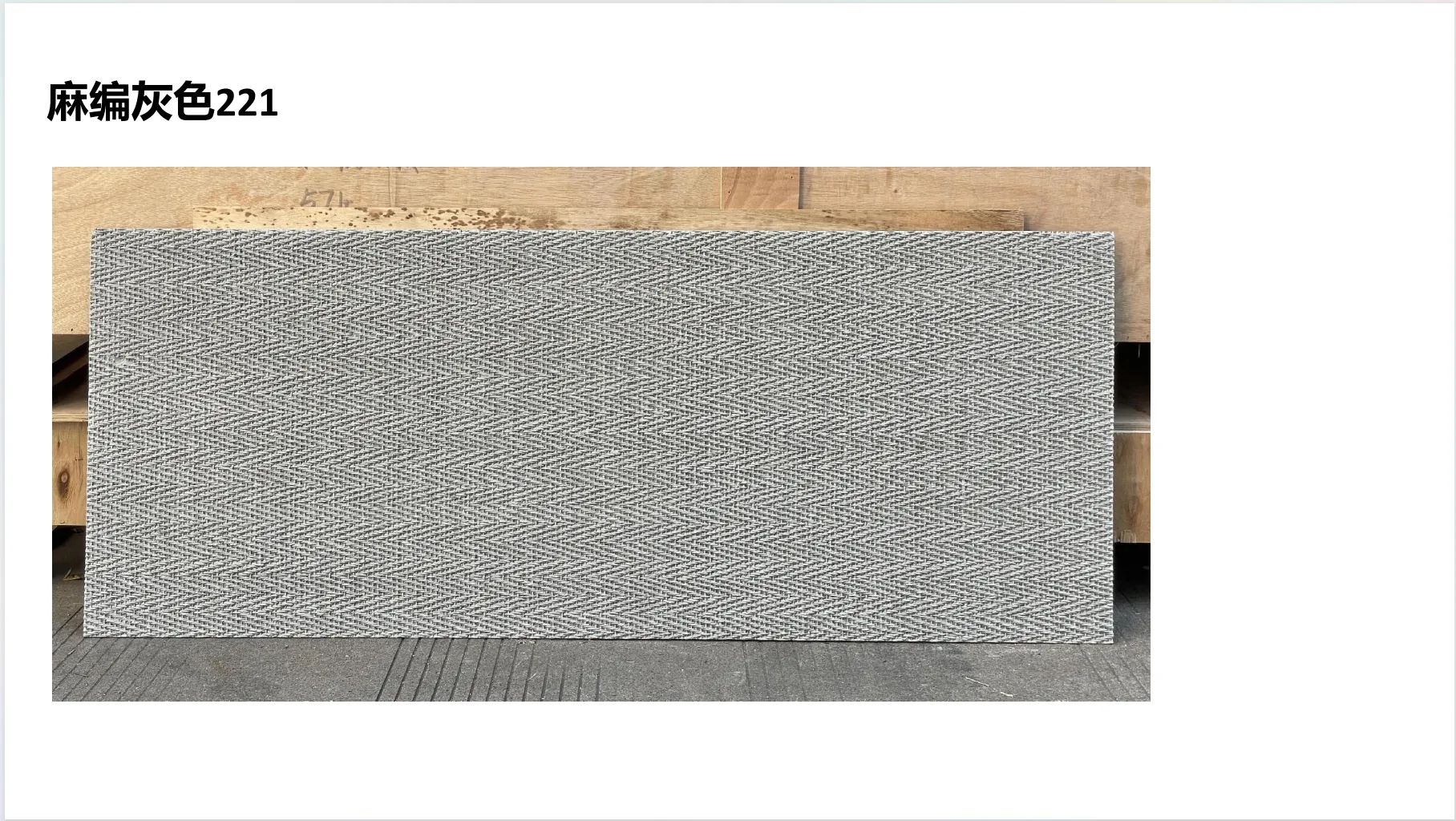
Sustainability shouldn't mean sacrificing soul—and MCM's weaving series is proof of that. Take weaving (khaki), for example. Run your hand over a panel, and you'll feel the soft, interlaced texture, reminiscent of handwoven textiles or natural fibers. It's a material that invites touch, turning cold, clinical walls into surfaces that feel approachable and human. Weaving (beige) offers a similar warmth, with a lighter, sandier hue that brings the calm of a sunlit beach into interior spaces. These aren't just decorative flourishes; they're intentional design choices that enhance indoor environmental quality—a critical LEED category focused on occupant health and comfort.
LEED's "Indoor Environmental Quality" credits reward features that improve air quality, lighting, and thermal comfort. Weaving textures contribute here by reducing the need for synthetic paints or coatings, which can off-gas volatile organic compounds (VOCs). MCM weaving panels are finished with water-based, low-VOC sealants, ensuring that the air inside the building stays clean and safe. What's more, their textured surfaces play with light, diffusing harsh glares and creating soft, ambient illumination—reducing reliance on artificial lighting and earning points in the "Energy and Atmosphere" category. In a school, this might mean calmer classrooms; in an office, more focused workers; in a hospital, a more healing environment. Weaving textures don't just look good—they make spaces feel good, too.
For projects leaning into a modern, industrial aesthetic, foamed aluminium alloy board (vintage silver) is a revelation. With its matte, brushed finish and subtle metallic sheen, it adds a touch of understated luxury—think boutique hotels, tech offices, or urban art galleries. But beyond its looks, this material is a sustainability powerhouse. Foamed aluminium alloy starts with recycled aluminium, which requires 95% less energy to produce than primary aluminium. The "foamed" structure—tiny air pockets within the material—gives it exceptional insulation properties, helping buildings retain heat in winter and stay cool in summer. For LEED, that's a direct line to "Energy and Atmosphere" credits, where optimizing energy performance is a top priority.
Vintage silver isn't the only star here. Foamed aluminium alloy boards come in vintage gold and classic gold, offering versatility for designers. And because aluminium is infinitely recyclable, these panels can be repurposed at the end of a building's life, aligning with LEED's "Circular Economy" pilot credits. Imagine a skyscraper facade clad in vintage silver foamed aluminium: it reflects sunlight to reduce cooling loads, insulates to cut heating costs, and when the building is renovated decades later, the panels are melted down and turned into new products. That's sustainability with a long view—and LEED auditors take notice.
In the world of MCM, sometimes the most impactful materials are the ones that embrace simplicity. Fair-faced concrete is a perfect example. Stripped of paint or coatings, it celebrates the natural texture of concrete—with its subtle pores, slight color variations, and organic grain. It's a material that feels honest, like it has nothing to hide. And that honesty extends to its environmental footprint. Fair-faced concrete in MCM form uses a blend of recycled aggregates and low-carbon cement, reducing its embodied carbon by up to 30% compared to traditional concrete. For LEED projects chasing "Materials and Resources" credits, this is a big win: using recycled content directly contributes to points for "Recycled Content" and "Waste Management."
But fair-faced concrete isn't just about sustainability—it's about storytelling. A wall of fair-faced concrete MCM panels can evoke the ruggedness of a mountain, the quiet strength of a historic warehouse, or the modernity of a minimalist home. It pairs beautifully with other MCM products, too: imagine fair-faced concrete walls accented with weaving (khaki) panels for warmth, or paired with foamed aluminium alloy (vintage silver) for an industrial-chic vibe. In LEED terms, this versatility means designers can meet aesthetic goals without compromising on green credentials. It's proof that sustainability and style don't have to be opposites—they can be partners.
For projects that demand a touch of the extraordinary, travertine (starry blue) delivers. This MCM panel mimics the look of natural travertine, with its characteristic pitted surface and warm undertones, but adds a whimsical twist: tiny, iridescent flecks that catch the light, like stars scattered across a midnight sky. It's a material that turns a wall into a conversation piece, whether in a hotel lobby, a restaurant, or a residential living room. But what makes starry blue travertine truly special is that it achieves this magic without the environmental cost of natural travertine.
Natural travertine is quarried from hot springs and limestone deposits, a process that can disrupt ecosystems and consume vast amounts of water. MCM travertine (starry blue), by contrast, uses a fraction of the water and no virgin stone. Its base is a blend of recycled stone dust and polymers, and the "starry" effect comes from eco-friendly, mineral-based pigments. The result is a panel that looks like it was plucked from a quarry but leaves a fraction of the carbon footprint. For LEED projects, this means earning points in "Sustainable Sites" (by reducing habitat disruption) and "Materials and Resources" (by minimizing resource extraction). It's a reminder that even the most eye-catching designs can be kind to the planet.
To see how these MCM products stack up in terms of sustainability and LEED impact, let's break them down:
| Product Name | Core Material | Key Sustainability Features | LEED Credit Categories |
|---|---|---|---|
| MCM Flexible Stone | Recycled polymers + natural minerals | 70% lighter than natural stone; closed-loop manufacturing; low water usage | Materials and Resources (Material Efficiency, Recycled Content) |
| Weaving (Khaki) | Recycled textiles + mineral composites | Low-VOC finish; reduces synthetic coating use; enhances natural light diffusion | Indoor Environmental Quality (Low-Emitting Materials); Energy and Atmosphere (Daylighting) |
| Foamed Aluminium Alloy (Vintage Silver) | Recycled aluminium + foam core | 95% recycled content; high insulation value; 100% recyclable at end-of-life | Materials and Resources (Recycled Content, Circular Economy); Energy and Atmosphere (Energy Efficiency) |
| Fair-Faced Concrete | Recycled aggregates + low-carbon cement | 30% lower embodied carbon; minimal on-site waste; no toxic coatings | Materials and Resources (Waste Management, Recycled Content); Indoor Environmental Quality (Low-VOC) |
| Travertine (Starry Blue) | Recycled stone dust + eco-pigments | No virgin stone extraction; low water usage; mineral-based "star" pigments | Sustainable Sites (Habitat Protection); Materials and Resources (Resource Efficiency) |
LEED certification isn't just a badge—it's a commitment to a better built environment. Buildings that achieve LEED status use 25% less energy, 11% less water, and reduce carbon emissions by 34% compared to conventional buildings, according to the U.S. Green Building Council. For developers, owners, and designers, LEED means lower operating costs, higher property values, and a reputation as leaders in sustainability. For occupants, it means healthier, more comfortable spaces. And for the planet, it means less strain on resources and a step toward a greener future.
MCM products play a vital role in this journey by addressing multiple LEED credit categories at once. Whether it's reducing material waste, cutting energy use, improving indoor air quality, or minimizing resource extraction, MCM panels are designed with LEED in mind. They're not just building materials—they're tools for change. And as the demand for sustainable buildings grows, MCM is poised to lead the way, proving that green design can be bold, beautiful, and accessible.
Weaving (khaki) panels that invite touch, foamed aluminium alloy (vintage silver) facades that reflect the sun, fair-faced concrete walls that tell stories, travertine (starry blue) surfaces that spark joy—these are more than just MCM products. They're proof that sustainability doesn't have to mean sacrifice. With MCM, designers can create spaces that are kind to the planet and kind to the people who use them. They can chase LEED certification without compromising on style, and build legacies that stand the test of time—both structurally and environmentally.
So the next time you walk into a building and feel that "something different" in the air—the warmth, the texture, the sense that care went into every detail—chances are, MCM is part of the story. And behind that story? A step toward a greener, more beautiful world. That's the power of MCM: it doesn't just build buildings. It builds futures.
Recommend Products












