
The sun rises over Riyadh, casting a golden glow over the city's skyline—a blend of ancient minarets and gleaming modern towers. In the heart of a bustling construction site, a team of workers unloads crates marked with the COLORIA GROUP logo. Inside, sheets of material wait to transform this empty plot into something more than a building: a space that breathes, tells stories, and feels alive. This is the magic of MCM (Modified Composite Material) technology—a revolution in construction that marries durability with emotion. For COLORIA GROUP, a leading name in innovative building materials, every slab, panel, and texture is a brushstroke in the masterpiece of Saudi Arabia's evolving architectural identity. Today, we step into the world of their most evocative creations, where materials like weaving (khaki) , lunar peak silvery , travertine (starry blue) , and fair-faced concrete aren't just products—they're characters in the narrative of place.
"A building is more than steel and stone," says Fatima Al-Mansoori, lead designer at COLORIA GROUP. "It's a silent conversation with the people who live, work, and gather there. Our job is to give that conversation a voice." For COLORIA, this means reimagining construction materials as carriers of emotion. Traditional building supplies often prioritize function over feeling—cold, uniform, and forgettable. MCM changes that. By combining natural elements (like stone, clay, and wood fibers) with advanced composites, COLORIA creates materials that retain the warmth of nature while offering the strength of modern engineering. They don't just cover walls; they create atmospheres. A hospital corridor lined with lunar peak silvery feels calm and futuristic, easing patient anxiety. A café wrapped in weaving (khaki) invites patrons to linger, its textured surface evoking the comfort of a handwoven blanket. In Saudi Arabia, where architecture bridges centuries of tradition and breakneck modernization, this balance is everything.
Take, for example, the challenge of designing for both heritage sites and tech districts. In Jeddah's historic Al-Balad district, buildings must honor the city's coral-stone past; in Riyadh's King Abdullah Financial District, they demand sleek innovation. COLORIA's materials don't force a choice—they harmonize. Travertine (starry blue) , with its speckled surface that shimmers like a desert night sky, can adorn a modern art gallery and still nod to the Bedouin tradition of stargazing. Fair-faced concrete , raw and unpolished, brings a sense of honesty to public squares, mirroring the resilience of Saudi communities. These are materials with memory—and they're rewriting the rules of what construction can be.
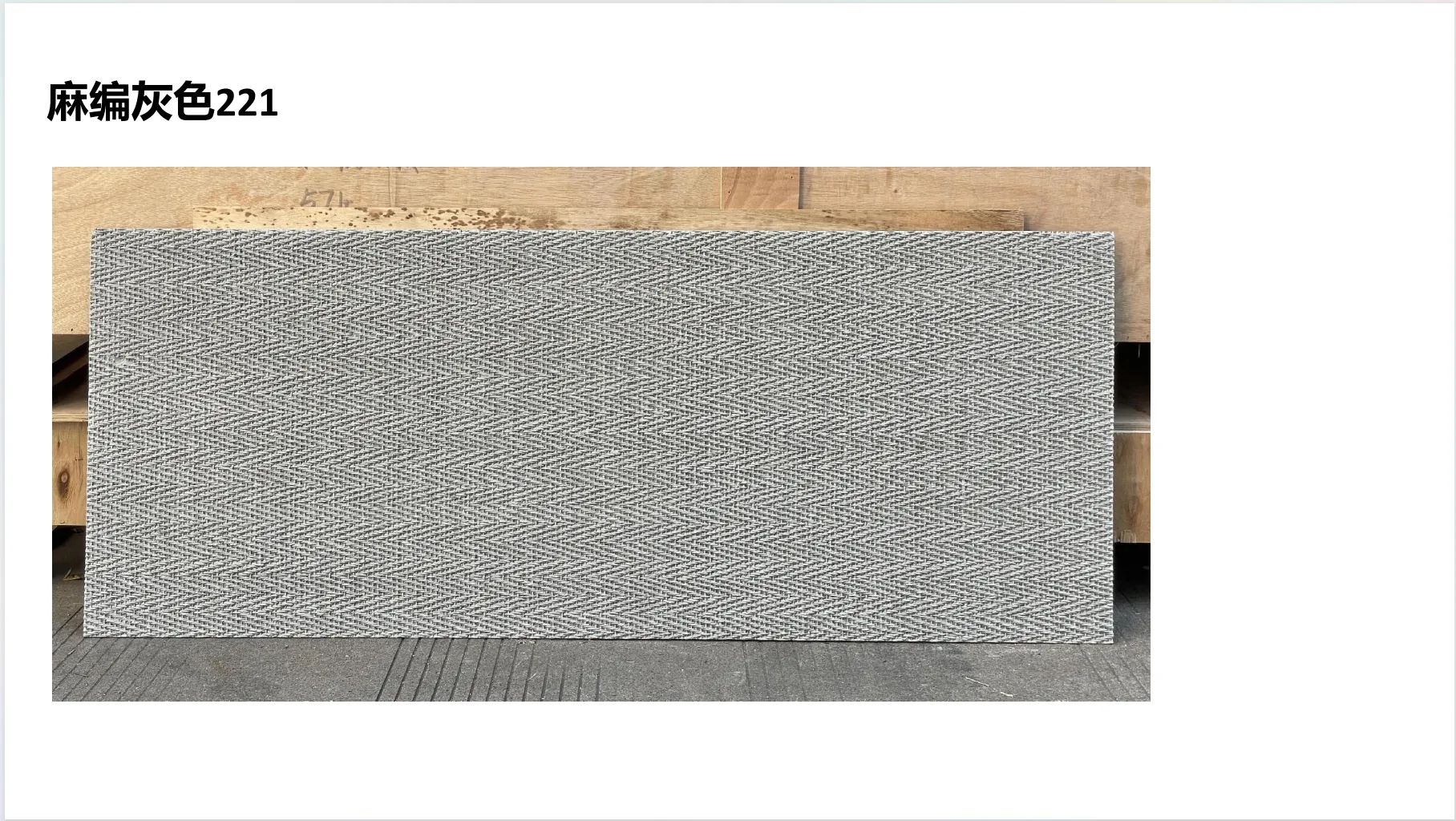
In the coastal city of Dammam, the Al-Majd Cultural Center stands as a testament to Saudi Arabia's rich artistic heritage. Its exterior, however, posed a dilemma: how to honor traditional crafts without feeling outdated. Enter COLORIA's weaving (khaki) panels. At first glance, they look like giant woven mats, their interlaced fibers catching the light in soft, earthy tones. Run a hand over them, and you'll feel the texture—a subtle give, like fabric stretched taut over a frame. But these "mats" are anything but fragile. Made from a blend of recycled polyester fibers and reinforced composite resin, they're weather-resistant, fireproof, and designed to withstand Dammam's humid summers.
"We wanted the center to feel like a hug," explains architect Omar Khalid, who led the project. "Growing up, my grandmother's living room had these woven palm-leaf mats—cool in the heat, full of stories. Weaving (khaki) brings that memory into a 21st-century space. When kids run their fingers over the walls during art workshops, they're not just touching a building—they're touching a piece of our culture." The impact is tangible. Since opening last year, the center has become a community hub, with locals often remarking on how "welcoming" the exterior feels compared to the sterile glass of nearby buildings. It's a small detail, but it matters: in a world of fast-paced change, familiarity is a anchor. Weaving (khaki) doesn't just decorate the Al-Majd Center—it roots it in home.
What makes weaving (khaki) truly special is its versatility. Beyond cultural centers, it's found its way into boutique hotels in Al-Ula, where it lines lobby walls to create a sense of intimacy, and even residential complexes in Riyadh, where balcony railings wrapped in the material add privacy without blocking light. "It's like bringing a piece of the desert indoors," says Abdullah, a resident of the Al-Nahda complex. "I sit on my balcony at sunset, and the way the light filters through the weave—it feels like sitting under a palm tree." For COLORIA, that's the goal: materials that don't just exist in space, but live in time.
Over in Riyadh's King Salman Tech City, the future is being built—literally. Home to startups, AI labs, and innovation hubs, the district demands a design language that screams "forward-thinking." Enter lunar peak silvery , COLORIA's ode to the cosmos. Imagine a building facade that shimmers like moonlight on sand, its surface rippling with subtle metallic waves. That's lunar peak silvery : a blend of aluminum alloy and mica particles that catches light from every angle, creating a dynamic, almost alive effect. It's not just beautiful—it's intentional.
"Tech workers spend hours staring at screens," says Dr. Khalid Al-Tamimi, CEO of a cybersecurity firm based in the district. "When they step outside, they need to feel inspired, not drained. Our office building, clad in lunar peak silvery , does that. In the morning, it's bright and energizing; at dusk, it glows like a distant planet. It's a reminder that we're part of something bigger than code." The material's durability is equally impressive. Saudi Arabia's harsh sun and sandstorms can wear down lesser materials, but lunar peak silvery resists fading and corrosion, maintaining its luster for decades. It's a practical choice, but one that never sacrifices beauty.
COLORIA's team spent two years perfecting the texture of lunar peak silvery , drawing inspiration from the moon's surface—smooth in some areas, pockmarked with tiny "craters" in others. "We wanted it to feel otherworldly but not alien," explains material scientist Hassan Ibrahim. "So we added microscopic indentations that mimic the way light scatters on the moon. When you walk past the building, the facade seems to shift—like the moon rising over the horizon." The result is a material that turns office parks into destinations. Tourists now visit the Tech City just to take photos of the "silver buildings," and local businesses have reported increased foot traffic. In a world where social media drives attention, lunar peak silvery isn't just a facade—it's a billboard for innovation.
Deep in the Asir Mountains, the Abha Astronomy Observatory is a sanctuary for stargazers. Its domed roof opens to the night sky, but its interior holds a surprise: walls lined with travertine (starry blue) . At first glance, the stone looks like any other travertine—porous, earthy, with natural veining. But switch off the lights, and magic happens: tiny flecks of synthetic quartz embedded in the stone glow faintly, mimicking a starry sky. It's a stroke of genius, turning the observatory's lobby into a preview of the cosmos above.
"Travertine has been used in architecture for millennia—think of the Colosseum or the Roman baths," says Dr. Amal Al-Zahrani, the observatory's director. "But COLORIA's starry blue iteration is something new. It connects our ancient fascination with the stars to modern science. Schoolchildren visit, and their eyes light up when they realize the walls 'twinkle.' It's a bridge between generations." The material's origin story adds another layer of meaning. The base travertine is sourced from local quarries in Madinah, supporting Saudi artisans, while the blue dye is derived from recycled plastic bottles, aligning with the observatory's commitment to sustainability. It's a material with a conscience—a rarity in construction.
Beyond observatories, travertine (starry blue) has found a home in luxury resorts along the Red Sea. The Royal Azure Resort uses it in their spa, where treatment rooms feature walls of the stone. "It's incredibly calming," says spa director Layla Hassan. "Guests lie on the massage tables, and their gaze drifts to the 'stars' on the walls. It's like being outdoors, but in the comfort of a private room." The stone's natural coolness also helps regulate temperature, reducing the need for air conditioning—a small but impactful eco-friendly touch. For COLORIA, travertine (starry blue) is a celebration of Saudi Arabia's dual identity: a land of ancient skies and cutting-edge innovation.
Not all emotional materials rely on flash or color. Sometimes, the most powerful stories are told in simplicity. Take fair-faced concrete —a material that wears its imperfections proudly. Unlike polished concrete, which is smooth and uniform, fair-faced concrete retains the marks of its creation: the texture of the wooden formwork, tiny air bubbles, and subtle variations in color. It's raw, unapologetic, and deeply human. In Riyadh's Al-Murabba Public Square, COLORIA used this material to stunning effect, creating a series of benches and planters that feel like they've grown out of the earth.
"Public spaces often feel sterile, like they're trying too hard to be 'perfect,'" says urban planner Nasser Al-Harthy. " Fair-faced concrete rejects that. It's honest. The benches have visible seams where the concrete was poured; the planters have slight color variations. It feels like a community built them, not a machine. People sit closer, touch the surfaces, even run their fingers over the texture. It's a subtle thing, but it makes the square feel like it belongs to everyone." The material's durability is also a boon. Saudi Arabia's public spaces see heavy use, from children climbing on benches to extreme temperature swings, but fair-faced concrete stands up to it all. Unlike marble or granite, it doesn't scratch easily, and minor chips only add to its character—like wrinkles on a well-loved face.
COLORIA's take on fair-faced concrete goes a step further by adding natural aggregates, like local sand and gravel, to the mix. "We wanted it to taste of the desert," says Ibrahim. "So we source sand from the Rub' al Khali and gravel from the Hijaz Mountains. When you look closely at the concrete, you can see bits of Saudi Arabia in every inch." It's a detail that doesn't go unnoticed. "My grandfather used to collect desert stones," says 12-year-old Aisha, who visits the square daily. "These benches look like his collection—all different and special." In a world that often values uniformity, fair-faced concrete is a reminder that beauty lies in being unapologetically oneself.
Each of COLORIA's materials tells a unique story, but they all share a common goal: to make buildings feel human. Below is a snapshot of how weaving (khaki) , lunar peak silvery , travertine (starry blue) , and fair-faced concrete measure up in terms of texture, application, and emotional impact:
| Material | Texture & Appearance | Typical Applications | Emotional Resonance | Sustainability Features |
|---|---|---|---|---|
| Weaving (Khaki) | Soft, interlaced fibers with a matte, earthy finish; mimics handwoven textiles. | Cultural centers, hotels, residential lobbies. | Warmth, nostalgia, comfort; evokes tradition and community. | Made with 30% recycled polyester fibers; reduces reliance on virgin plastics. |
| Lunar Peak Silvery | Metallic, slightly iridescent surface with microscopic "crater" texture; shimmers in light. | Tech hubs, innovation centers, modern offices. | Futurism, inspiration, wonder; encourages forward thinking. | 100% recyclable aluminum core; reflective properties reduce cooling costs. |
| Travertine (Starry Blue) | Porous natural stone with blue-gray base; embedded quartz flecks glow faintly in low light. | Observatories, spas, luxury resorts. | Awe, tranquility, connection to nature; sparks imagination. | Locally sourced travertine; dye made from recycled plastic bottles. |
| Fair-Faced Concrete | Raw, unpolished surface with visible formwork marks and natural aggregate variations. | Public squares, parks, community centers. | Honesty, resilience, inclusivity; celebrates imperfection. | Uses local sand and gravel; low-carbon production process. |
As Saudi Arabia continues its journey of transformation—from the futuristic NEOM project to the restoration of historic sites like Diriyah—COLORIA GROUP remains at the forefront of shaping its built environment. "Our materials are more than products; they're tools for storytelling," says CEO Ahmed bin Saeed. "In a country with such a rich history and ambitious future, we have a responsibility to build spaces that honor both." For the team at COLORIA, this means never stopping at "good enough." They're already experimenting with new iterations: travertine (starry red) for a museum dedicated to Saudi Arabia's space program, weaving (jacinth) for a women's empowerment center in Jeddah, and lunar peak golden for a luxury hotel in Al-Ula that blends desert elegance with cosmic wonder.
But perhaps the most exciting part of COLORIA's work is the way it empowers others. Local architects, once limited to imported materials, now have a palette of homegrown options that speak to Saudi identity. Young designers are using fair-faced concrete to create street art murals that blend with public spaces. Even schoolchildren, inspired by the starry blue walls of the Abha Observatory, are dreaming of careers in science and design. "That's the real impact," says Fatima Al-Mansoori. "When a material makes a child say, 'I want to build something amazing,' we've succeeded."
Back at the Riyadh construction site, the sun is setting, casting long shadows over the half-built structure. A worker carries a sheet of lunar peak silvery into place, and for a moment, the metal catches the light, turning the dusty site into something magical. This is the power of COLORIA GROUP's MCM materials: they don't just build buildings—they build hope. In a world that often feels cold and disconnected, they remind us that even the most ordinary walls can tell extraordinary stories. And in Saudi Arabia, where the past and future collide, those stories have never been more important.
Recommend Products












