
How a pioneering approach to material science is redefining the future of architecture and design
Walk into any space—a cozy café on a street corner, a sleek corporate lobby, a sunlit home—and what hits you first isn't just the layout or the lighting. It's the materials. The rough-hewn texture of a stone wall, the warm grain of wood, the cool smoothness of concrete. These surfaces don't just fill a room; they shape how we feel in it. They tell a story. For decades, architects and designers have chased the perfect balance of beauty, durability, and sustainability in building materials. And in that chase, one name has emerged as a quiet disruptor: COLORIA GROUP.
Founded over 30 years ago, COLORIA didn't set out to just sell materials. They set out to reimagine them. At the heart of their innovation lies a technology so transformative, yet so intuitive, that it's changing the game for creators worldwide: Weaving Real Photos Technology . It's not just a process—it's a philosophy. A commitment to turning the natural world's most stunning textures, patterns, and colors into building materials that are as functional as they are breathtaking. Today, we're diving deep into how this technology works, the stories behind some of COLORIA's most beloved products, and why the future of design might just be written in the weave of a photograph.
Let's start with the basics: What is Weaving Real Photos Technology, anyway? Imagine (oops, scratch that—let's describe ) a world where you could take a high-resolution photograph of a sun-bleached desert rock, a centuries-old woven basket, or the surface of the moon, and turn that image into a physical material. Not a cheap print or a flimsy sticker, but a durable, flexible, eco-friendly panel that looks and feels exactly like the real thing. That's the promise—and the reality—of COLORIA's breakthrough.
Traditional building materials often force a trade-off: natural stone is beautiful but heavy and hard to install; synthetic panels are lightweight but lack authenticity. Weaving Real Photos Technology flips that script. Here's how it works: COLORIA's team starts by capturing ultra-detailed photographs of natural textures—think the intricate weave of a khaki textile, the starry pattern of a blue travertine, or the silvery sheen of moonlight on a mountain peak. These photos are then "weaved" into a proprietary composite material using a combination of 3D scanning, digital rendering, and advanced layering techniques. The result? A panel that retains the exact visual and tactile qualities of the original texture but with added benefits: flexibility, durability, and a fraction of the weight of traditional materials.
"It's about preserving the soul of natural materials while solving the practical problems that have held them back," says Maria Gonzalez, lead material scientist at COLORIA. "We're not just copying nature—we're collaborating with it. Our technology lets us capture the essence of a texture, then enhance it to meet the demands of modern design."
To truly understand the impact of Weaving Real Photos Technology, let's take a closer look at five of COLORIA's most popular products. Each one tells a story of how this technology is transforming spaces, one texture at a time.
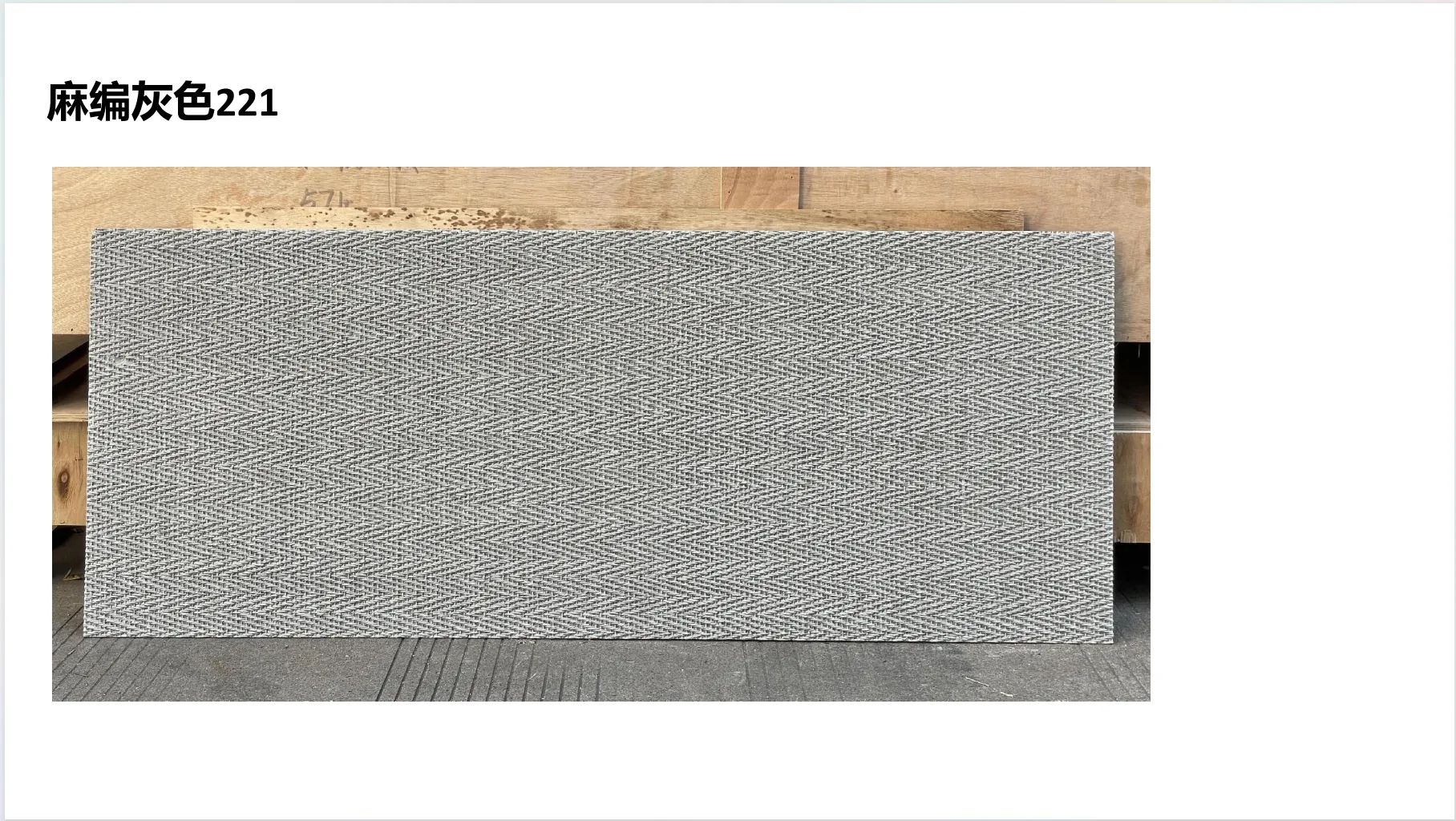
There's something inherently comforting about the texture of woven fabric. It evokes memories of handmade blankets, artisanal baskets, and the softness of a well-loved sweater. COLORIA's weaving (khaki) panels capture that warmth and translate it into a building material that's surprisingly versatile. Inspired by traditional khaki textiles—known for their durability and earthy tone—the panels feature a tight, interlaced pattern that's both visually interesting and tactilely satisfying.
What makes these panels special? Unlike actual fabric, which would fade or fray in high-traffic areas, COLORIA's weaving (khaki) panels are treated with a UV-resistant coating and a water-repellent layer, making them suitable for both indoor and outdoor use. They've become a favorite in hospitality design: imagine a boutique hotel lobby where the walls are clad in these panels, creating a space that feels like a cozy living room rather than a sterile waiting area. Or a café where the bar front is wrapped in weaving (khaki), inviting customers to run their hands over the surface as they order their coffee.
"We used weaving (khaki) in our latest restaurant project, and it's become the talking point of the space," says David Chen, principal designer at Studio D. "The texture adds depth without overwhelming the room, and it pairs beautifully with wood and metal accents. Plus, since the panels are lightweight, we could install them ourselves in a weekend—something we never could have done with traditional woven materials."
Stone has been a cornerstone of architecture for millennia, but its weight has always been a limitation—until now. MCM flexible stone is COLORIA's answer to that challenge. Using Weaving Real Photos Technology, the team captured the texture of natural stone—from the rough grain of granite to the smooth flow of marble—and embedded it into a flexible, lightweight panel. The result is a material that looks and feels like real stone but can bend, curve, and be installed in places traditional stone never could.
Take, for example, the renovation of a historic theater in Barcelona. The architects wanted to preserve the building's classic stone facade but needed to add a modern extension. Traditional stone would have been too heavy for the existing structure, but MCM flexible stone panels were lightweight enough to install without reinforcing the foundation. "The panels matched the original stone so perfectly, most visitors can't tell where the old ends and the new begins," notes Carlos Mendez, the project's lead architect. "It's like giving the building a new lease on life without sacrificing its heritage."
Beyond facades, MCM flexible stone is a hit in residential design. Homeowners are using it for accent walls, fireplace surrounds, even kitchen backsplashes—areas where the beauty of stone was once out of reach due to weight or cost.
Concrete has long been celebrated for its industrial, no-nonsense aesthetic, but fair-faced concrete—concrete left in its natural state, without additional finishes—takes that to another level. However, achieving the perfect fair-faced look traditionally requires meticulous craftsmanship and often results in inconsistencies. COLORIA's fair-faced concrete panels, made with Weaving Real Photos Technology, solve that problem by capturing the ideal texture of hand-finished concrete and replicating it flawlessly across every panel.
The panels feature the subtle variations of real concrete—the tiny air bubbles, the slight imperfections that give it character—without the hassle of on-site pouring. "We worked with master concrete artisans to capture their best work," explains Gonzalez. "Now, any designer can get that 'handcrafted' look without relying on luck or a skilled laborer."
This product has become a staple in modern offices and retail spaces. A tech startup in San Francisco used fair-faced concrete panels for their entire office interior, creating a minimalist, industrial vibe that feels polished yet authentic. "The panels were so consistent, we could mix and match them without worrying about color or texture differences," says the startup's facilities manager. "And since they're lightweight, we didn't have to worry about adding extra support to the ceiling when we installed them overhead."
Travertine is a classic natural stone, prized for its porous, almost honeycomb-like texture. But COLORIA's travertine (starry blue) takes that classic material to celestial heights. Inspired by the night sky over the Italian countryside, where travertine quarries have stood for centuries, this product features a deep blue base with tiny, iridescent "stars" scattered across the surface—replicated from actual photographs of the night sky.
"We wanted to create a travertine that felt otherworldly," says Luca Romano, COLORIA's design director. "The starry pattern is so detailed, you can spend minutes picking out different 'constellations.' It's like having a piece of the night sky on your wall."
Starry blue travertine has found a home in luxury spaces, from high-end hotels to private residences. A boutique hotel in the Maldives used the panels in their ocean-view suites, where the blue hue complements the sea, and the stars twinkle alongside the real stars visible through the floor-to-ceiling windows. "Guests often comment on how the walls 'glow' at night," says the hotel's interior designer. "It's a subtle effect, but it turns a beautiful room into an unforgettable one."
If starry blue travertine is the night sky, then lunar peak silvery is moonlight itself. This product was inspired by a team trip to the Swiss Alps, where the designers observed how sunlight reflected off snow-capped peaks, creating a silvery glow that seemed to shift with the time of day. Using Weaving Real Photos Technology, they captured that ephemeral quality and embedded it into a panel that shimmers and changes tone depending on the light.
The surface of lunar peak silvery features subtle, crater-like indentations that mimic the moon's surface, with a metallic sheen that ranges from bright silver to soft pewter. It's a material that feels both futuristic and timeless, making it perfect for spaces that aim to inspire awe—think art galleries, museums, or even planetariums.
The National Science Museum in Tokyo recently used lunar peak silvery panels in their "Space Exploration" exhibit. "We wanted visitors to feel like they were standing on the moon," says exhibit curator Yuki Tanaka. "The panels' texture and reflectivity create that illusion—kids press their hands against them, thinking they're touching real moon rock. It's education through immersion, made possible by COLORIA's technology."
| Product Name | Key Texture Inspiration | Best For | Sustainability Features |
|---|---|---|---|
| Weaving (Khaki) | Handwoven khaki textiles | Restaurants, cafes, residential accent walls | Recycled textile fibers, low-VOC coating |
| MCM Flexible Stone | Natural granite and marble | Historic renovations, facade cladding, fireplaces | Reduces quarrying, 80% lighter than natural stone (lowers transport emissions) |
| Fair-Faced Concrete | Hand-finished concrete slabs | Offices, retail spaces, industrial-chic interiors | Recycled aggregate, no need for additional finishes |
| Travertine (Starry Blue) | Night sky and natural travertine | Luxury hotels, high-end residences, spas | Water-based pigments, energy-efficient manufacturing |
| Lunar Peak Silvery | Moonlight on alpine peaks | Museums, art galleries, planetariums | Solar-powered production, recyclable core material |
Great technology is only as good as its real-world applications. COLORIA's Weaving Real Photos Technology has already left its mark on projects around the globe, transforming spaces and challenging what's possible in design.
Take the "Green Haven" community center in Portland, Oregon. The architects wanted the building to blend into its forested surroundings while using sustainable materials. They chose MCM flexible stone for the exterior (to mimic the look of local granite) and weaving (khaki) panels for the interior walls (to create a warm, inviting space). "The MCM panels were so lightweight, we could install them without heavy machinery, reducing our construction carbon footprint by 30%," says the project manager. "And the weaving panels? They've become the heart of the building—kids love sitting against them, and parents comment on how the space feels 'like a big treehouse.'"
In Dubai, the "Starry Night" boutique hotel used travertine (starry blue) panels in their rooftop bar, which overlooks the city skyline. "We wanted the bar to feel like a floating platform under the stars," says the hotel's owner. "The panels reflect the city lights during the day and glow softly at night—guests say it's like drinking under the Milky Way. Our occupancy rates for that bar are 20% higher than any other space in the hotel."
Even historic preservation projects are benefiting. The "Heritage Museum" in Rome needed to restore a damaged stone facade without altering its historic character. Traditional stone replacement would have been time-consuming and expensive, but MCM flexible stone panels matched the original stone so precisely that the restoration was completed in half the time, with minimal disruption to the museum's operations.
Developing Weaving Real Photos Technology wasn't without its hurdles. Early prototypes struggled to replicate the tactile quality of natural textures—digital prints looked flat, and early composites felt plasticky. "We spent years refining the layering process," Gonzalez recalls. "At one point, we had a panel that looked like woven fabric but felt like cardboard. Our team was ready to scrap it, but then we tried adding a micro-thin layer of recycled textile fibers to the surface. That was the breakthrough—the texture finally felt authentic."
Another challenge was scalability. Initially, producing small batches of panels was feasible, but mass production led to inconsistencies. COLORIA invested in custom machinery that could "weave" the digital photos into the composite material with pinpoint accuracy, ensuring every panel matched the original design. Today, the technology can produce thousands of panels per day with near-zero variation.
Looking ahead, COLORIA has big plans. The team is currently working on integrating smart technology into their panels—imagine a lunar peak silvery panel that adjusts its reflectivity based on sunlight to reduce energy costs, or a weaving (khaki) panel that doubles as a touch-sensitive surface. "The future of building materials isn't just about looking good," says Romano. "It's about performing better, too. We want our panels to do more than decorate spaces—we want them to enhance how we live and work in them."
In a world where design often prioritizes speed and cost over soul, COLORIA GROUP's Weaving Real Photos Technology is a reminder that innovation and authenticity can go hand in hand. By capturing the beauty of natural textures and reimagining them for the modern world, COLORIA isn't just creating building materials—they're creating experiences. Experiences that make spaces feel warmer, more alive, and more connected to the natural world.
Whether it's the cozy weave of khaki panels in a neighborhood café, the starry glow of blue travertine in a luxury hotel, or the silvery shimmer of lunar peak panels in a museum, these materials tell a story. A story of how technology, when guided by respect for nature and a passion for design, can transform the places we live, work, and play.
"At the end of the day, it's not about the panels themselves," Gonzalez says. "It's about the moments they create. The gasp of a child touching a lunar peak panel and thinking it's moon rock. The smile of a homeowner who finally has the stone fireplace they've always wanted, without the hassle. That's the real magic of Weaving Real Photos Technology."
And as COLORIA continues to push the boundaries of what's possible, one thing is clear: the future of design is looking more textured, more authentic, and more beautiful than ever before.
Recommend Products












