
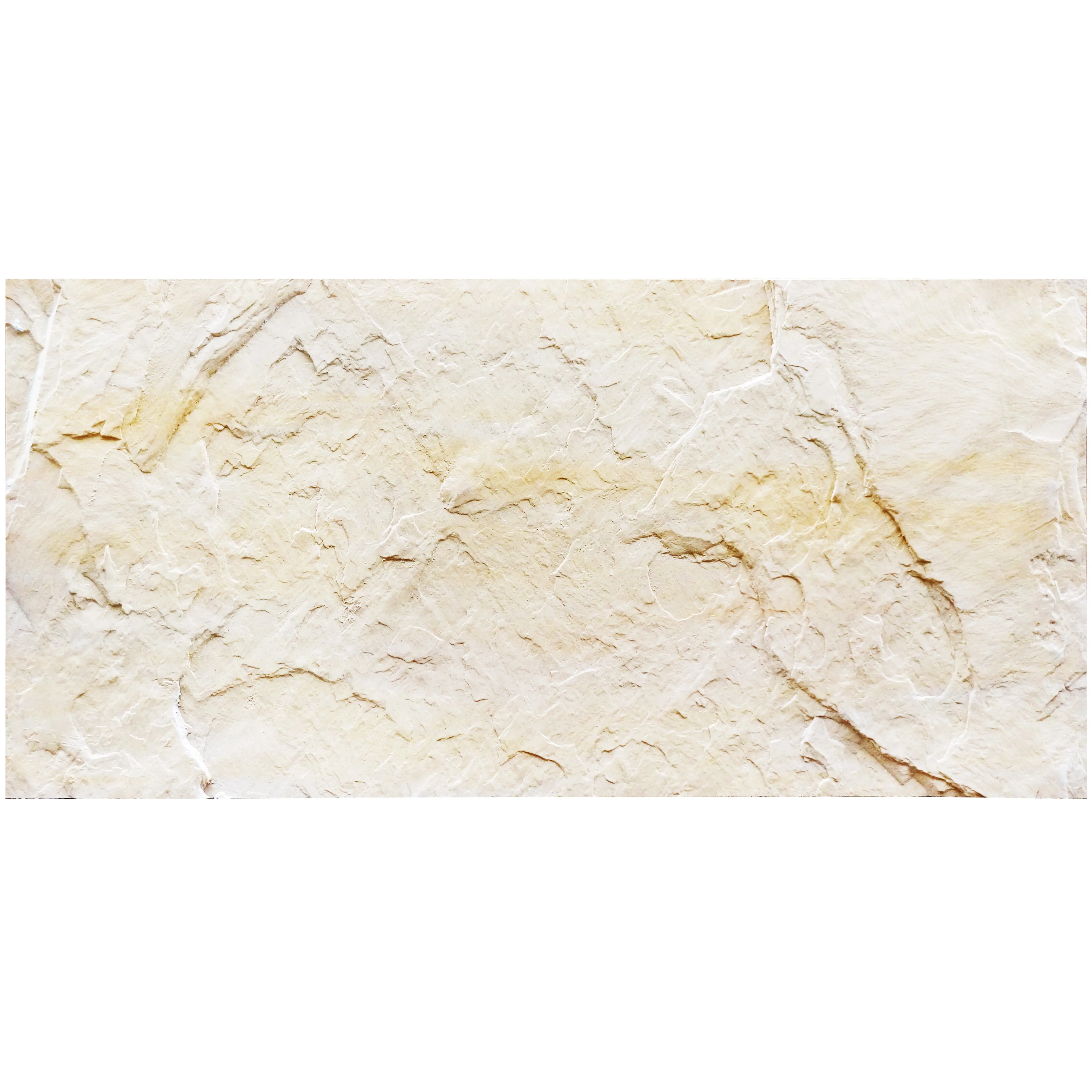
Let's start with the basics: You're knee-deep in a new project, a mixed-use development with a facade that needs to make a statement. The client is dreaming of something timeless, maybe with the warmth of natural stone, but your structural engineer is already asking about load limits. Can the material you choose handle wind loads? Support the weight of upper-level overhangs? And let's not forget aesthetics—no one wants a beautiful stone that cracks under pressure. Enter Slate Sunnye, a material that's been quietly turning heads in architectural circles for its balance of strength and beauty. But what exactly makes its load-bearing capacity stand out, and why should it matter to you?
Before we dive into load-bearing specs, let's get to know the material itself. Slate Sunnye isn't your average quarry stone. It's a engineered composite, blending natural slate aggregates with a polymer resin matrix that enhances durability without losing the organic texture architects love. Think of it as nature meets science: the earthy veining and depth of real slate, but with the consistency and strength of modern materials. It's part of a broader trend toward architectural big slab solutions—large-format panels (often 1200x2400mm or bigger) that minimize joints and create seamless facades. But here's the kicker: unlike some lightweight alternatives (looking at you, mcm flexible stone), Slate Sunnye doesn't skimp on structural heft.
Load-bearing capacity—the maximum weight a material can support without deformation or failure—might sound like a topic for structural engineers, but for architects, it's the backbone of design freedom. Let's break it down: A stone with low load-bearing capacity limits your options. You're stuck with small panels, extra support brackets, or shallow overhangs. But a material with strong load-bearing? It opens doors. Imagine cantilevering a facade 2 meters beyond the structure, or using Slate Sunnye for a rooftop terrace floor that can handle foot traffic, furniture, and the occasional storm. Suddenly, that bold design move you sketched at 2 a.m. isn't just a pipe dream—it's feasible.
Safety, of course, is non-negotiable. A facade that can't bear wind loads in a coastal city or snow loads in a mountain town is a liability. But beyond that, load-bearing capacity impacts longevity. Materials that flex or crack under stress don't just look bad—they let in moisture, leading to rot, mold, or structural damage over time. For architects, specifying a material with proven load-bearing strength is an investment in the building's lifespan (and your reputation).
Let's get technical—without the boring spreadsheets. Slate Sunnye's load-bearing capacity is measured in a few key metrics, and here's what you need to know:
But numbers alone don't tell the whole story. Let's put this in context with a real-world scenario: You're designing a 10-story apartment building with a Slate Sunnye facade. The wind load in your area is 1.5 kPa (kilopascals). Using Slate Sunnye's flexural strength, your engineer calculates that a 1200x2400mm panel can span 1.8 meters between support rails without exceeding deflection limits. That means fewer rails, cleaner lines, and a facade that reads as one cohesive surface—not a patchwork of small stones. That's the design freedom load-bearing capacity unlocks.
To really appreciate Slate Sunnye, let's compare it to other materials architects often consider. We'll focus on load-bearing metrics that matter most for facades and structural elements:
| Material | Compressive Strength (MPa) | Flexural Strength (MPa) | Weight (kg/m²) | Best For |
|---|---|---|---|---|
| Slate Sunnye | 180 | 12 | 55-65 | High-load facades, cantilevers, floor applications |
| mcm flexible stone | 80-100 | 6-8 | 12-15 | Lightweight cladding, interior accent walls |
| Boulder Slab (Vintage Silver) | 170 | 10 | 70-80 | Heavy-duty structural elements, rustic aesthetics |
| Fair-Faced Concrete | 200-300 | 4-5 | 180-200 | Industrial-style facades, load-bearing walls |
| Natural Slate (Standard) | 150-160 | 8-10 | 60-70 | Traditional roofs, low-load cladding |
Notice the pattern? Slate Sunnye outperforms mcm flexible stone in both compressive and flexural strength, making it better suited for exterior, high-load applications. It's lighter than boulder slab (which can hit 80 kg/m²), reducing dead load on the structure, but still stronger in flexure—meaning it bends less under stress. And compared to fair-faced concrete? It's significantly lighter while offering better flexural strength, which is a win for both design and engineering.
Let's look at a project where Slate Sunnye's load-bearing capacity took center stage. The Riverfront Museum, completed in 2023, features a 4-story facade clad in 1200x2400mm Slate Sunnye panels. The design called for a series of 1.2-meter cantilevers on the upper floors, creating shaded terraces overlooking the river. Initially, the structural team proposed steel support brackets every 600mm to handle the overhangs—but after testing Slate Sunnye's flexural strength, they revised the plan. By spacing brackets 1.8 meters apart, they reduced the number of visible supports by 30%, resulting in a cleaner, more streamlined facade.
"We were skeptical at first," admits James Chen, the project's structural engineer. "Natural slate has a history of brittleness, but Slate Sunnye's resin matrix changes the game. Those cantilevers? They've withstood two winter storms with zero deflection. It's rare to find a material that lets architects push the envelope without compromising safety."
Even the strongest material can fail if installed poorly. Here's what you need to keep in mind to leverage Slate Sunnye's load-bearing capacity:
Let's not overlook the extras that make Slate Sunnye a standout choice. Its load-bearing strength is impressive, but architects care about more than just numbers:
As architectural trends lean into larger, more expressive facades, materials with strong load-bearing capacity will only grow in importance. Slate Sunnye is already being specified for projects like the upcoming Skyline Tower in Chicago, where its ability to span 3-meter gaps between structural columns will create a facade that appears to "float" above the street. And with manufacturers testing even larger formats (1500x3000mm is in the works), the possibilities are expanding.
At the end of the day, architecture is about balance—between form and function, art and engineering. Slate Sunnye's load-bearing capacity isn't just a technical spec; it's a tool. It's the difference between a design that stays on the drafting table and one that becomes a landmark. So the next time you're weighing facade options, ask yourself: Can this material keep up with my vision? If the answer is yes, you might just be looking at Slate Sunnye.
Now, go grab that cold coffee, and let's start sketching.
Recommend Products












