
Architecture is more than steel beams and concrete—it's storytelling. Every material choice writes a chapter, shaping how people experience space. Today, a new generation of materials is rewriting that narrative, blending innovation with intimacy to turn buildings into living, breathing stories. For architects ready to push boundaries, MCM's latest offerings—from the MCM 3D Printing Series to weaving real photos, flexible stone, and big slab boards—aren't just products; they're tools to craft spaces that resonate on a human level.
Gone are the days when architectural textures were confined to the molds of yesterday. The MCM 3D Printing Series is redefining possibility, letting architects translate digital designs into physical surfaces with unprecedented precision. This isn't just about 3D printing as a manufacturing technique—it's about giving form to ideas that once lived only in sketches. Picture a facade where every ridge, groove, and curve is exactly as you imagined, down to the millimeter. That's the promise here.
What sets this series apart is its marriage of technology and artistry. Unlike traditional materials, which often force design compromises, 3D-printed MCM panels adapt to your vision. Want a wall that mimics the undulating waves of a coastal landscape? The 3D Printing Series can replicate that flow, layer by layer, with a tactile quality that invites touch. For a recent cultural center in Barcelona, the design team used the series to recreate the texture of ancient Roman bricks—only lighter, more durable, and free from the uniformity of mass production. The result? A building that feels both timeless and futuristic, grounding visitors in history while pointing to the future.
Sustainability, too, is baked in. By printing only what's needed, the series cuts down on material waste—a critical consideration in an industry grappling with carbon footprints. And because MCM's base materials are a blend of natural minerals and recycled polymers, the finished product doesn't just look good; it does good, too. For architects balancing aesthetics with environmental responsibility, this is a game-changer.
If the MCM 3D Printing Series is about precision, weaving real photos is about warmth. These aren't your average printed surfaces—they're textured panels that capture the look and feel of handwoven textiles, with patterns derived from real-life imagery. Imagine a hotel lobby where the accent wall features a blown-up photo of a local artisan's woven basket, rendered in tactile detail. Suddenly, the space isn't just a lobby; it's a nod to the community's craftsmanship, a conversation starter for guests.
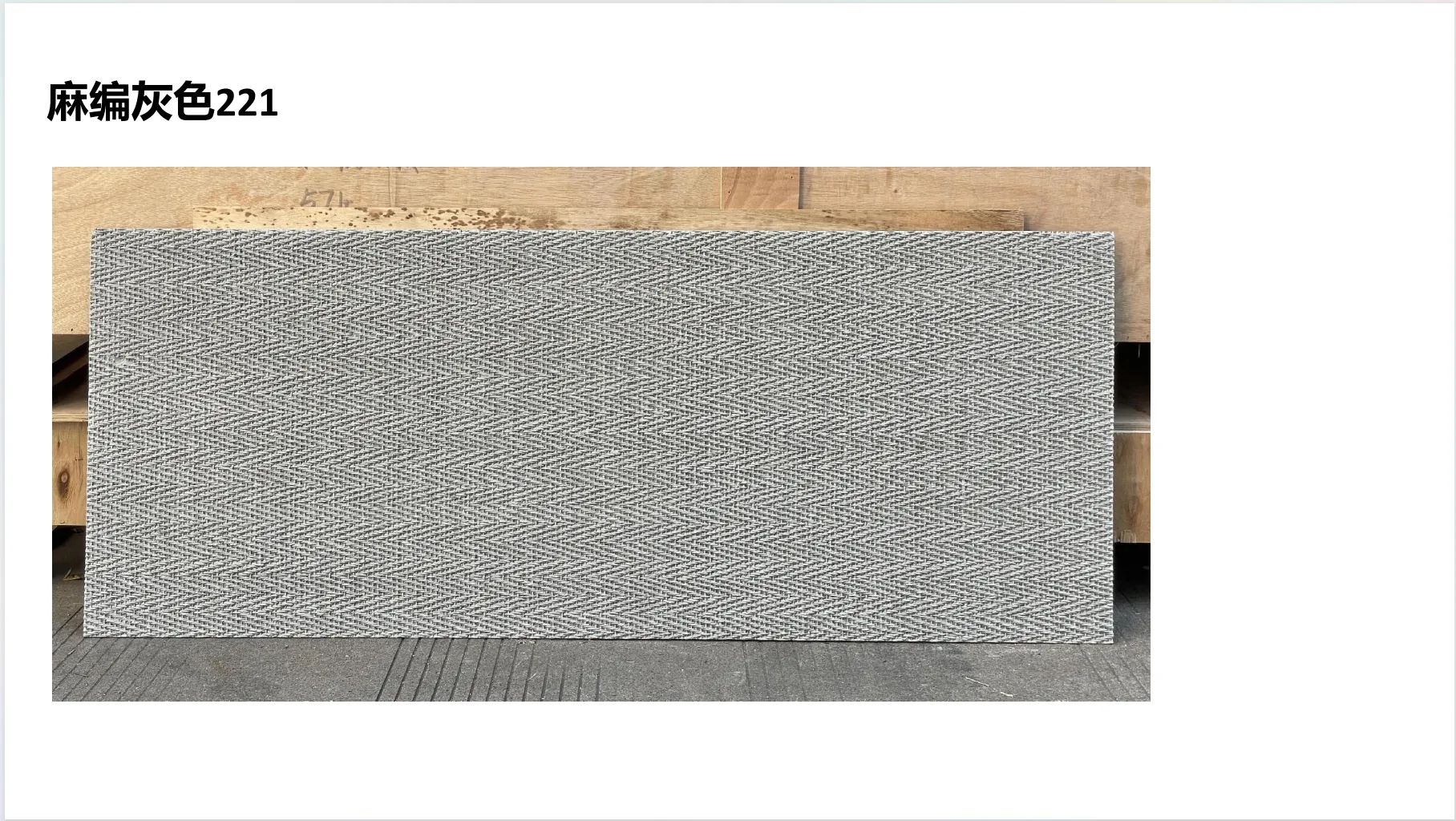
The magic lies in the "real photos" part. MCM's process starts with high-resolution images of natural textures—think weathered linen, woven jute, or even the bark of an ancient oak. These images are then translated into physical patterns, with raised threads and subtle indentations that mimic the original material's depth. The result is a surface that looks authentic and feels alive. In a recent residential project in Portland, an architect used weaving real photos (khaki) to clad a home office wall, drawing inspiration from the client's childhood summers on a farm. The soft, earthy texture now serves as a backdrop for video calls, grounding the space in nostalgia while keeping it modern.
Beyond aesthetics, these panels add acoustic benefits, dampening noise in busy spaces like restaurants or co-working areas. And with options ranging from neutral tones like khaki and beige to richer hues like jacinth, they're versatile enough to complement any design palette. For architects aiming to create spaces that feel "lived-in" rather than sterile, weaving real photos is a shortcut to soul.
Stone has long been a cornerstone of architecture, but its rigidity often limits design. MCM Flexible Stone flips that script, offering the beauty of natural stone with the flexibility of a composite. This material bends—literally—to the demands of curved facades, circular columns, or undulating walls, all while retaining the durability that makes stone a timeless choice.
Take travertine (starry green), a standout in the flexible stone lineup. With its soft green base and subtle, star-like sparkles (thanks to mineral inclusions), it's a material that transforms spaces. A boutique hotel in Kyoto used it to line the interior of a circular staircase, the stone curving gently upward like a river of moss. The effect? Guests don't just walk up the stairs—they're drawn into a sensory experience, the texture underfoot and the play of light on the stone making every step feel intentional.
Durability isn't an afterthought. MCM Flexible Stone resists moisture, UV rays, and temperature fluctuations, making it suitable for both interior and exterior use. And at a fraction of the weight of natural stone, it reduces structural load, opening up possibilities for lighter, more efficient building designs. For architects working on heritage restorations, it's a boon—matching the look of historic stone without the risk of damaging delicate structures.
Sometimes, architecture demands grandeur. The MCM Big Slab Board Series delivers just that, with panels spanning up to 3 meters in length—perfect for creating seamless, monolithic surfaces that command attention. Imagine a corporate headquarters with a lobby wall clad in a single slab of travertine (vintage gold), its warm tones and veined texture stretching from floor to ceiling. The lack of visible joints creates a sense of continuity, making the space feel larger, more cohesive, and undeniably luxurious.
But big slabs aren't just about size—they're about precision. MCM's manufacturing process ensures each slab is consistent in color and texture, eliminating the variability that plagues natural stone. This uniformity is a lifesaver for architects working on large-scale projects, where matching materials across a facade can be a logistical nightmare. And because the slabs are lightweight, installation is faster and more cost-effective than with traditional stone or concrete panels.
Sustainability shines here, too. The Big Slab Board Series uses recycled content in its core, and its large format reduces the number of panels needed, cutting down on waste and labor. For a recent airport terminal in Dubai, the design team chose the series for its ability to create a seamless, easy-to-maintain facade that reflects the city's forward-thinking ethos—all while keeping environmental impact in check.
| Material | Key Features | Ideal Applications | Aesthetic Quality |
|---|---|---|---|
| MCM 3D Printing Series | Custom 3D textures, design flexibility, low waste | Accent walls, facades, heritage restorations | Organic or geometric patterns, high detail |
| Weaving Real Photos | Tactile textile textures, acoustic benefits | Lobbies, residential interiors, restaurants | Warm, artisanal, story-driven |
| MCM Flexible Stone | Bendable, lightweight, weather-resistant | Curved facades, columns, heritage projects | Natural stone look with modern durability |
| MCM Big Slab Board Series | Large format (up to 3m), seamless design | Lobbies, airport terminals, corporate facades | Grand, cohesive, luxurious |
The most memorable spaces often come from mixing materials, and MCM's lineup plays well together. Take a recent community center in Seattle, where the design team combined the MCM 3D Printing Series, weaving real photos, and MCM Flexible Stone to stunning effect. The exterior facade features 3D-printed panels with a wave-like texture, paying homage to the city's coastal location. Inside, the main hall uses weaving real photos (grey) to clad the ceiling, its soft, woven texture dampening noise and creating a cozy atmosphere. Along the staircase, MCM Flexible Stone in travertine (starry blue) curves upward, its subtle sparkle echoing the night sky—inviting visitors to pause and look up.
This kind of integration isn't just aesthetically pleasing; it's strategic. Each material solves a specific problem: the 3D-printed panels handle the facade's complex geometry, the weaving photos improve acoustics, and the flexible stone adds durability to high-traffic areas. For architects, this means more tools in the toolkit—and more freedom to design spaces that are as functional as they are beautiful.
Recommend Products












