
Picture this: You're standing in front of a 19th-century building in the heart of Rome, tasked with restoring its facade while infusing it with a modern twist. The client craves the warmth of ancient stone—something that whispers of history—but also demands the durability and flexibility to withstand today's urban chaos. Your mind drifts to Roman huge travertine, that iconic material that graced the Colosseum and the Pantheon. But then you remember: traditional stone is heavy, hard to install, and costly to maintain. Enter MCM (Modified Composite Material) products—flexible stone, big slab boards, and a universe of modern textures that promise to lighten the load without sacrificing soul. The question hits you: Can these two worlds—timeless travertine and cutting-edge MCM—truly coexist? Let's dive in.
To talk about Roman huge travertine is to talk about legacy. Formed over millennia by mineral-rich hot springs, this stone carries the weight of history in its honeyed hues and naturally pitted surface. Architects have long been drawn to its organic texture—the way light dances on its pores at dawn, or how rainwater seeps into its crevices to create a weathered, storybook charm. "There's a reason it's been used for 2,000 years," says Elena Marini, a Rome-based architect specializing in historic preservation. "It's not just stone; it's a connection to the past. When you run your hand over a travertine slab, you're touching the same material that builders used to craft empires."
But for all its beauty, Roman huge travertine comes with trade-offs. Quarrying large slabs is labor-intensive, and transporting them to job sites adds logistical headaches. Installation often requires heavy machinery, and over time, the stone can crack under extreme temperature shifts or absorb moisture, leading to staining. For modern architects balancing tradition with practicality, these challenges have sparked a search for partners—materials that can complement travertine's aesthetic while its limitations. That's where MCM steps in.
MCM isn't just a buzzword—it's a revolution in how we build. Short for Modified Composite Material, these products are engineered to mimic the look and feel of natural stone, wood, or metal, but with a lightweight, flexible core that makes installation a breeze. Take MCM flexible stone , for example: thin enough to bend around curves, yet tough enough to resist scratches and UV rays. Or the MCM big slab board series , which offers the grandeur of large-format stone without the bulk—perfect for creating seamless facades that read as one cohesive surface.
"MCM changed the game for me," admits David Chen, an architect in Shanghai who specializes in commercial projects. "I once had a client who wanted a travertine-like exterior for a shopping mall, but the budget couldn't handle real stone. We used MCM flexible stone in a vintage gold finish, and you'd never know the difference—except the installers finished in half the time, and the building's structural load was cut by 60%." It's this blend of practicality and beauty that makes MCM a favorite among architects navigating tight deadlines and tighter budgets.
At first glance, pairing a 2,000-year-old stone with a 21st-century composite might seem like mixing oil and water. But dig deeper, and you'll find a surprisingly harmonious relationship—one built on shared values (durability, aesthetics) and complementary strengths. Let's break it down.
Roman huge travertine is heavy—we're talking 25-30 kg per square meter for a standard slab. MCM, by contrast, weighs in at a featherlight 3-5 kg/m². This difference is a godsend for architects working on retrofits or buildings with weight restrictions. Imagine restoring a 1920s theater: the original walls can't support real travertine, but MCM big slab boards can be applied directly over existing surfaces, preserving the structure while achieving the desired look. "We recently did a project like that in Barcelona," says Marini. "We used Roman travertine for the main entrance—authentic, to honor the building's history—and MCM flexible stone for the upper floors. The result? A facade that feels cohesive, but doesn't risk collapsing the roof."
Then there's durability. Roman travertine is tough, but it's porous—prone to staining from rain, pollution, or even bird droppings. MCM products, however, are sealed at the factory, creating a non-porous barrier that repels water and grime. When used together, MCM can act as a "protective layer" for travertine: use real stone in high-visibility areas (like entryways) where its texture can shine, and MCM in hard-to-reach spots (like upper facades) where maintenance is tricky. It's a division of labor that keeps both materials looking their best for decades.
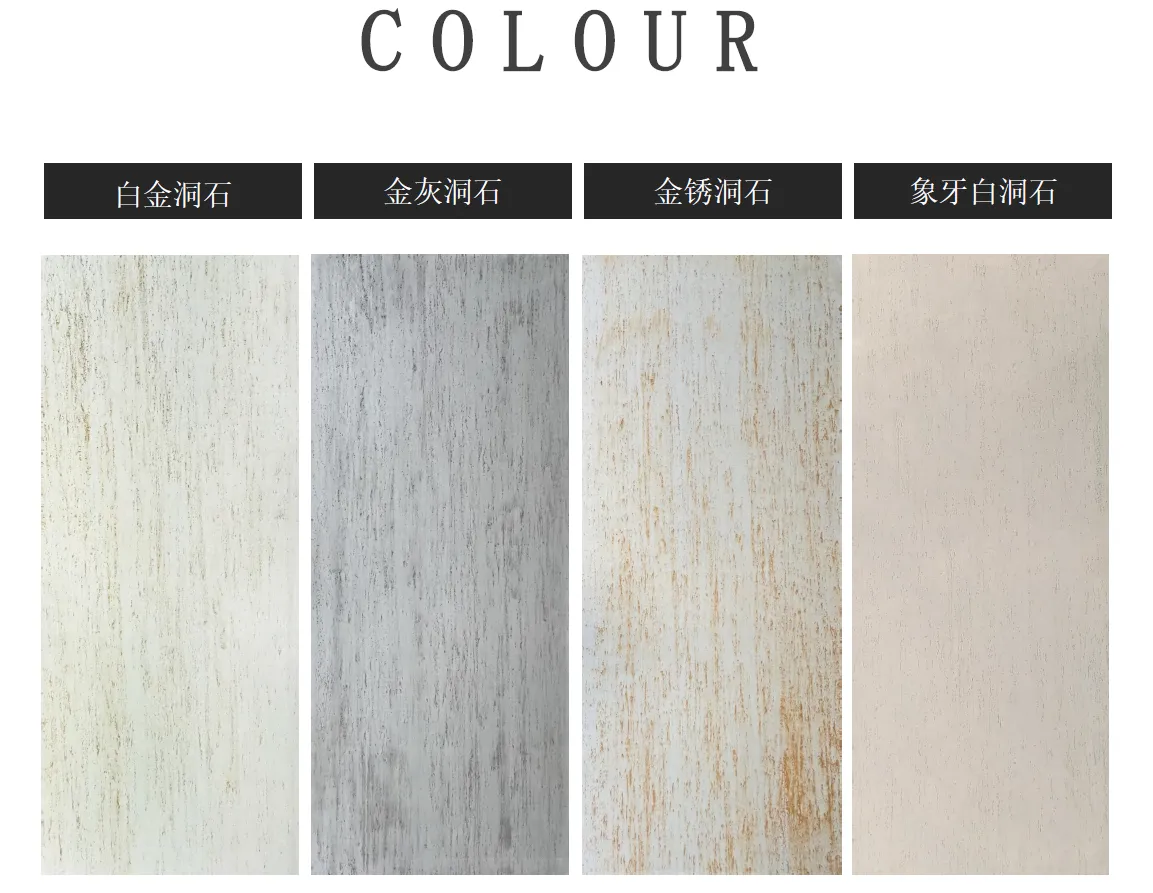
Aesthetics matter—and here, Roman huge travertine and MCM are a match made in design heaven. Roman travertine's warm, earthy tones (think creamy beiges, soft golds, and subtle rusts) pair beautifully with MCM's versatile palette. Take travertine (vintage silver) from the MCM line: its cool metallic sheen complements the stone's warmth, adding a modern edge without clashing. Or lunar peak silvery , with its iridescent finish, which mirrors the way sunlight plays on wet travertine—creating a dynamic, ever-changing facade.
Texture is another area of harmony. Roman travertine's pitted, organic surface contrasts gently with MCM's smoother, more uniform finishes, creating visual interest without chaos. "I love using MCM big slab boards in a honed finish next to rough-hewn travertine," says Chen. "It's like pairing a tailored blazer with a linen shirt—polished yet relaxed." This balance of textures can transform a building from "nice" to "unforgettable," evoking both the comfort of tradition and the excitement of innovation.
To truly understand their compatibility, let's put Roman huge travertine and MCM flexible stone head-to-head on key properties architects care about:
| Property | Roman Huge Travertine | MCM Flexible Stone |
|---|---|---|
| Weight | 25-30 kg/m² | 3-5 kg/m² |
| Installation Time | 3-4 days/100 m² (requires heavy machinery) | 1-2 days/100 m² (can be installed by hand) |
| Moisture Resistance | Low (porous; requires sealing every 2-3 years) | High (non-porous; no sealing needed) |
| Cost (per m²) | $80-$150 (quarrying + transport + installation) | $30-$60 (material + installation) |
| Sustainability | Moderate (quarrying impacts ecosystems; long lifespan offsets some impact) | High (recyclable core; low carbon footprint in production) |
As the table shows, MCM excels in areas where travertine struggles—weight, cost, installation speed—while travertine brings irreplaceable authenticity. Together, they form a "best of both worlds" solution that's hard to beat.
Theory is one thing; real projects are another. Let's look at how architects around the world are using Roman huge travertine and MCM together to stunning effect.
When the Teatro Olimpico in Rome needed a facade update, architect Elena Marini faced a dilemma: the 18th-century building's original travertine was crumbling, but replacing it with new stone would cost a fortune and risk losing historical integrity. Her solution? Use Roman huge travertine for the first two floors (restored from original quarries) and MCM big slab boards in travertine (starry blue) for the upper levels. "The blue hue echoes the theater's iconic dome, and the MCM slabs are lightweight enough to sit on the building's fragile roof," she explains. "Visitors walk up to the entrance and touch the real travertine, feeling that connection to the past, but from the street, the facade reads as one cohesive story."
In Dubai's Design District, David Chen's firm used Roman huge travertine in a warm beige finish for the lobby walls of a tech company headquarters, paired with foamed aluminium alloy board (vintage silver) for the exterior cladding. "The travertine brings a sense of calm to the lobby—employees say it feels 'grounded,'" Chen notes. "The vintage silver MCM, on the other hand, reflects the desert sun, keeping the building cool and adding a futuristic vibe. It's a conversation starter: clients walk in and ask, 'Is that real stone?' Then they see the exterior and go, 'Wow—how did you do that?'"
Ready to start pairing Roman huge travertine with MCM? Here's advice from the pros to ensure success:
As technology advances, the bond between Roman huge travertine and MCM is only getting stronger. New MCM formulations, like 3D printing series , allow architects to create custom textures that mimic travertine's pits and veins with pinpoint accuracy. Meanwhile, sustainable quarrying practices are making Roman travertine more eco-friendly, aligning with MCM's green credentials (many MCM products use recycled materials).
"I see a future where we're not choosing between tradition and innovation—we're blending them," says Chen. "Imagine a skyscraper where the base is Roman travertine, the mid-section is MCM flexible stone in lunar peak golden , and the crown is foamed aluminium alloy board (gold) . It's a vertical story of human progress, told through materials."
At the end of the day, architecture is about more than bricks and mortar—it's about telling stories. Roman huge travertine tells the story of our past: of empires, artisans, and the enduring power of natural beauty. MCM tells the story of our present: of innovation, sustainability, and the drive to build smarter. Together, they tell a new story—one where tradition and modernity don't compete, but collaborate to create spaces that feel both timeless and alive.
So to all the architects out there, struggling to honor the old while embracing the new: Take heart. Roman huge travertine and MCM aren't just materials—they're partners. And with a little creativity, they can help you build something truly extraordinary.
Recommend Products












