
Exploring the warmth, durability, and beauty of one of architecture's most captivating cladding innovations
Imagine walking down a city street at dusk, when the sun dips low and paints the sky in hues of amber, peach, and soft gold. Now, picture that same warmth and radiance wrapping around the facade of a building—so vivid, so lifelike, it feels like the sunset itself has been captured in stone. That's the magic of Golden Sunset in MCM cladding applications. For architects, designers, and property owners, it's more than just a material; it's a way to infuse buildings with emotion, turning structures into stories.
In recent years, the demand for cladding that balances aesthetics with practicality has skyrocketed. We want buildings that stand out, but we also need them to withstand the elements, stay lightweight (to reduce structural strain), and align with sustainable building practices. Enter MCM (Modified Composite Material) cladding—a category that has revolutionized the industry with products like flexible stone cladding panels and mcm big slab board series . And among these, Golden Sunset has emerged as a fan favorite, thanks in no small part to the striking authenticity of its "real photos"—images that don't just show the material, but let you almost feel the warmth of the sun on its surface.
Let's start with the basics. Golden Sunset isn't a natural stone, but rather a modified composite material panel engineered to mimic the look and feel of sunlit stone—specifically, the warm, glowing tones of a sunset over a desert or coastal horizon. It's part of the broader MCM family, which blends natural minerals (like stone aggregates) with high-performance polymers to create cladding that's both durable and incredibly versatile.
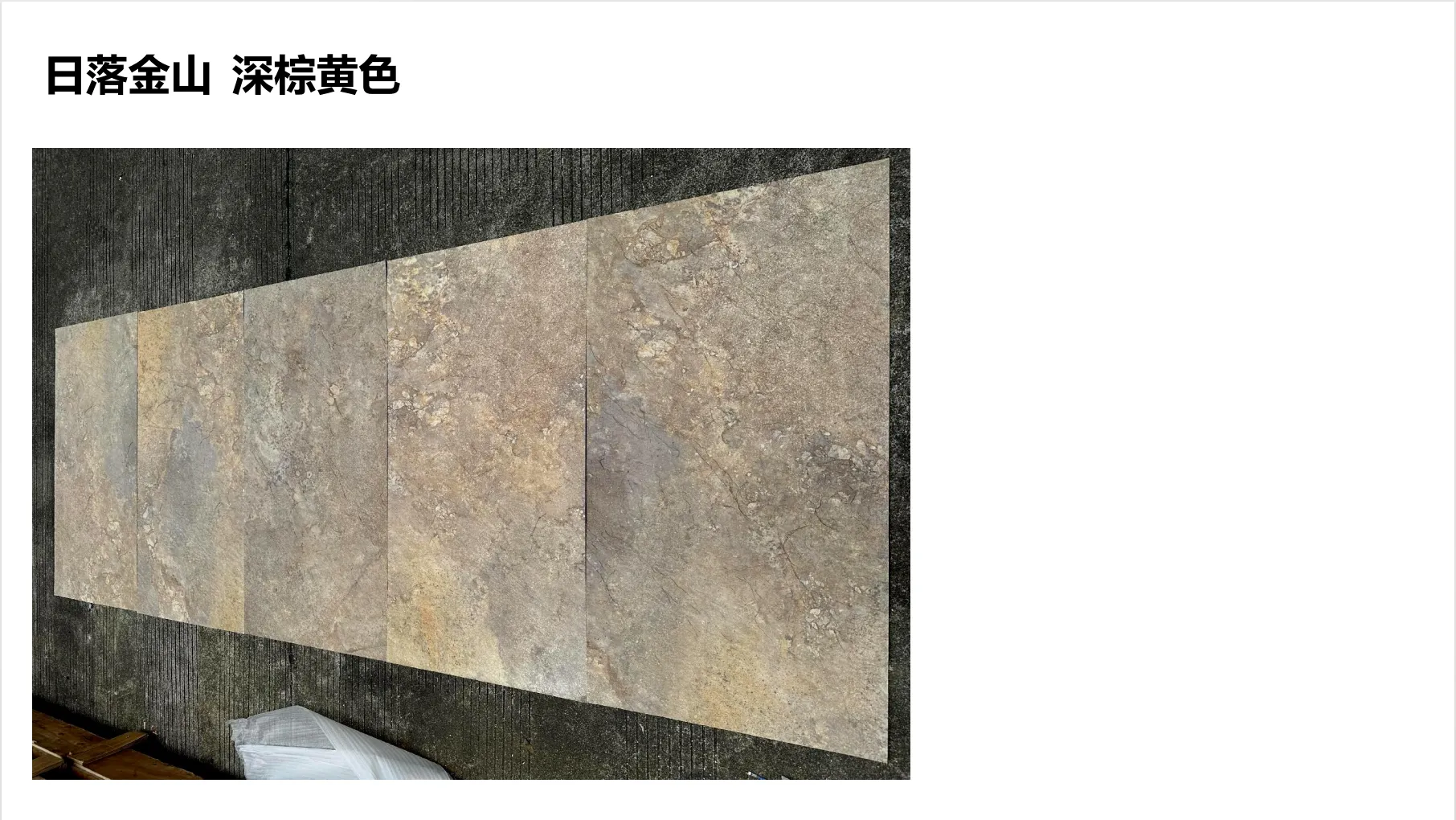
If you've seen Golden Sunset real photos, you'll notice they don't look "digital" or over-edited. Unlike some cladding materials that rely on heavy filters to hide inconsistencies, Golden Sunset's photos showcase its true character: subtle variations in color (from pale gold to deep amber), delicate veining that mimics natural stone, and a texture that catches light just like real rock. This authenticity matters because when you're choosing cladding for a building, you need to trust that what you see in the photos is what you'll get on-site. Golden Sunset delivers that reliability, making it a go-to for designers who want to avoid costly surprises.
So, what gives it that signature golden hue? The secret lies in the mineral blend and surface treatment. Manufacturers carefully select stone aggregates with warm undertones and mix them with polymers that enhance light reflection. The result? A panel that doesn't just "look" like a sunset—it behaves like one, too. In the morning, it might glow softly under diffused light; at noon, it shimmers with bright gold highlights; and in the evening, it deepens into rich, coppery tones. It's dynamic, not static—just like the natural phenomenon it's named after.
To truly appreciate Golden Sunset, you need to understand the MCM technology that powers it. Traditional stone cladding (like marble or travertine) is heavy—often weighing 20-30 kg per square meter. That adds significant load to a building's structure, limiting where it can be used. MCM, by contrast, is lightweight: Golden Sunset panels weigh just 4-6 kg per square meter, making them ideal for high-rises, renovations, or buildings with weight restrictions.
| Feature | Golden Sunset (MCM) | Traditional Natural Stone |
|---|---|---|
| Weight (per sq.m) | 4-6 kg | 20-30 kg |
| Flexibility | Can bend slightly (ideal for curved surfaces) | Brittle; prone to cracking on curves |
| Installation Time | 30-50% faster (lightweight, easy to handle) | Slower (requires heavy machinery, skilled labor) |
| Weather Resistance | Resistant to UV rays, rain, and temperature swings | May fade or erode over time (especially porous stones) |
But it's not just about weight. Golden Sunset is also flexible —a trait that makes it perfect for modern architectural designs with curved walls, undulating facades, or custom shapes. Unlike rigid natural stone, which can crack if forced into bends, these panels can flex slightly without losing structural integrity. This flexibility opens up a world of design possibilities, from organic, flowing exteriors to intricate interior accent walls.
And let's talk durability. MCM panels are engineered to withstand the harshest conditions: extreme heat, freezing cold, heavy rain, and even saltwater (making them a great choice for coastal buildings). The polymer binder protects the stone aggregates from fading, chipping, or staining, so your "sunset" will look just as vibrant in 10 years as it did on day one. That's a big deal for property owners who want their investment to last.
At the end of the day, cladding is as much about emotion as it is about function. Golden Sunset excels here because it doesn't just replicate a color—it captures a mood. Think of the difference between a flat, uniform gold paint and the nuanced, layered tones of a real sunset: there are streaks of honey, hints of rose, and even subtle shadows that make the surface feel three-dimensional. That's exactly what Golden Sunset brings to a building.
One of the most praised aspects of Golden Sunset real photos is how they showcase this depth. In direct sunlight, the panels glow with a warm, almost iridescent quality—like sunlight reflecting off sand or polished amber. On cloudy days, they take on a softer, more muted tone, with the veining becoming more pronounced, adding texture without overwhelming the eye. And at night, under artificial lighting, they shift again, casting a cozy, inviting glow that makes buildings feel welcoming rather than cold or industrial.
"When I first saw Golden Sunset real photos, I thought, 'That's exactly the feeling I want for this project.' We were designing a boutique hotel in Arizona, and we wanted guests to feel like they were stepping into a desert sunset every time they arrived. The panels didn't just meet that vision—they exceeded it. Even on overcast days, the building has this quiet warmth that guests comment on constantly."
Another advantage is versatility. Golden Sunset pairs beautifully with other materials, making it easy to integrate into diverse design styles. For a modern look, combine it with fair-faced concrete or black metal accents. For a more traditional vibe, pair it with wood or earthy-toned bricks. It's also available in different formats, including large slabs (thanks to the mcm big slab board series ), which minimize visible seams and create a sleek, continuous facade.
Let's shift from aesthetics to practicality—because even the most beautiful cladding won't work if it's a nightmare to install or maintain. Golden Sunset checks all the boxes here, starting with installation speed. Thanks to its lightweight nature, it requires fewer workers and less heavy machinery to handle. A typical crew can install Golden Sunset panels two to three times faster than natural stone, which cuts down on labor costs and project timelines. That's a huge win for commercial projects with tight deadlines.
Maintenance is another breeze. Unlike natural stone, which often requires regular sealing to prevent staining, Golden Sunset is inherently stain-resistant. A simple hose-down with water is usually enough to keep it clean. And if a panel does get damaged (say, from a wayward golf ball or severe storm), individual panels can be replaced without tearing up the entire facade—a far cry from natural stone, where repairs often involve matching veins and colors, which is time-consuming and expensive.
In today's world, sustainability isn't just a buzzword—it's a requirement. Golden Sunset aligns with green building materials standards in several ways. First, its production uses less energy than mining and processing natural stone, which reduces its carbon footprint. Second, the lightweight panels reduce the overall weight of the building, which can lower foundation costs and make the structure more energy-efficient (since lighter buildings require less heating and cooling). Third, many manufacturers use recycled materials in the polymer binder, further minimizing environmental impact.
For developers aiming for LEED certification or other green building credentials, Golden Sunset can contribute points in categories like sustainable materials, energy efficiency, and indoor environmental quality (since it doesn't off-gas harmful chemicals). It's a small choice that makes a big difference for both the planet and your project's reputation.
Golden Sunset isn't limited to one type of building—it's versatile enough to shine in commercial, residential, and even cultural projects. Let's break down some of the most popular applications:
From shopping malls to office towers, Golden Sunset adds instant curb appeal. Imagine a retail plaza with a facade that glows at dusk, drawing customers in with its warm, inviting vibe. Or a tech company headquarters that uses Golden Sunset panels alongside glass to create a modern, innovative look that stands out in a sea of generic office buildings. The mcm big slab board series is particularly popular here, as it allows for large, uninterrupted surfaces that make a bold statement.
Luxury homes and townhouses are also embracing Golden Sunset. Homeowners love that it adds a touch of elegance without the high cost and maintenance of natural stone. It's perfect for exterior walls, pool surrounds, or even outdoor kitchens, where durability and beauty are equally important. In interior design, it's used for accent walls in living rooms, bedrooms, or home offices, creating a focal point that feels both sophisticated and cozy.
Hotels, resorts, and museums thrive on creating memorable experiences, and Golden Sunset helps deliver that. A beachfront resort in Bali might use it to blend with the golden sands and sunsets, while a museum in Rome could pair it with classical architecture to bridge old and new. Its ability to evoke emotion makes it ideal for spaces where ambiance matters as much as function.
You might be thinking, "There are other warm-toned cladding options out there—what makes Golden Sunset special?" Let's compare it to a few popular alternatives to see why it stands out.
Travertine is a natural stone with warm, earthy tones, but it's porous, heavy, and prone to staining. Golden Sunset offers similar warmth but with none of the maintenance headaches. Plus, travertine's color can vary dramatically from slab to slab, making consistency hard to achieve—something Golden Sunset solves with its engineered uniformity (while still retaining natural-looking variation).
Stucco and paint are cheaper upfront, but they lack the depth and texture of Golden Sunset. Paint fades, peels, and requires repainting every 5-7 years, while stucco can crack and needs regular patching. Golden Sunset, by contrast, is a one-time investment that looks great for decades.
Within the MCM family, there are other colors—grays, whites, blacks—but Golden Sunset's unique ability to capture light and evoke warmth makes it a standout for projects aiming to create a welcoming, uplifting atmosphere. It's not just a color; it's a feeling.
At the end of the day, Golden Sunset is more than just cladding. It's a way to infuse architecture with emotion, to create buildings that don't just exist—they inspire. Whether you're designing a commercial high-rise, a luxury home, or a cultural center, its blend of beauty, durability, and sustainability makes it a smart choice.
And let's not forget the "real photos" that started this conversation. They're not just marketing tools—they're a promise. A promise that what you see is what you'll get: a cladding material that captures the magic of a golden sunset, day in and day out, for years to come. In a world where so much feels artificial, that authenticity is priceless.
So, if you're looking to create a building that stands out, feels warm, and lasts, Golden Sunset might just be the answer. It's not just about covering a wall—it's about creating a moment, a memory, and a connection to the natural beauty of the world around us. And isn't that what great architecture is all about?
Recommend Products












