
In the world of architecture and design, the gap between a concept on paper and a finished building often hinges on one critical element: trust. Trust that the materials chosen will look, feel, and perform exactly as envisioned. For decades, this trust was built through physical samples—chunks of stone, swatches of concrete, slabs of wood hauled from factories to offices. But in an era where projects span continents and decisions are made via Zoom calls, a new hero has emerged: lime stone real photos. These aren't just snapshots; they're windows into the soul of a material, capturing its texture, color, and character with such precision that they bridge the miles between a designer's desk in New York and a quarry in Italy. Today, we're diving into what lime stone real photos truly are, why they've become indispensable in construction material showcases, and how they're reshaping the way we build.
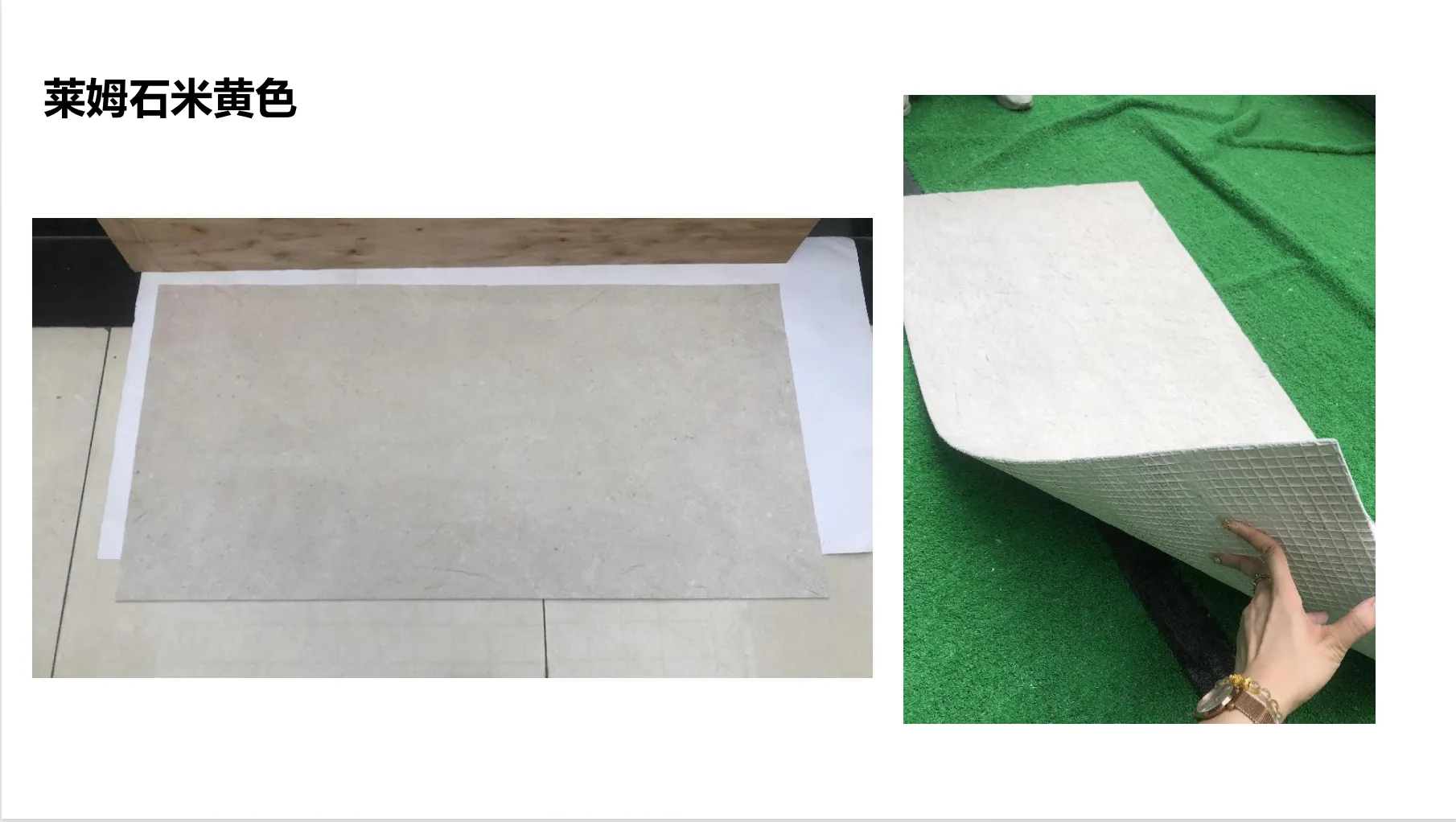
Let's start with the basics. Lime stone real photos are high-resolution, professionally captured images that document the authentic appearance of limestone products—from raw slabs to finished cladding panels. Unlike generic stock photos, which might depict a "typical" limestone wall, these photos are specific to a manufacturer's or supplier's actual inventory. They show the unique veining in a lime stone(beige) slab, the subtle color variations in a batch of tiles, or the rough-hewn texture of a rustic limestone facade. Think of them as a material's resume: they don't just list features—they show you the personality.
What sets them apart? For one, they're unapologetically real. A lime stone real photo won't hide imperfections; instead, it celebrates the natural variations that make limestone so appealing. A beige limestone, for example, might have streaks of ivory or hints of taupe that vary from slab to slab. A real photo captures these nuances, ensuring designers know exactly what to expect when they order a shipment. They're also context-rich: many include scale references (like a hand or a ruler) to show size, or are shot in natural light to mimic how the stone would look on a building's exterior at noon.
But it's not just about documentation. These photos are crafted with intent. Professional photographers use specialized lighting—often soft, diffused setups—to avoid glare on polished surfaces or harsh shadows on textured ones. They shoot from multiple angles: a wide shot to show the slab's overall pattern, a macro shot to highlight the pockmarks and fossilized details in travertine (a type of limestone), and even edge shots to reveal thickness and finish. The goal? To make you feel like you're holding the stone in your hands, even if you're scrolling through a catalog on your laptop.
Now, let's talk about why these photos matter. Construction material showcase isn't just about displaying products—it's about telling a story. A story of how a material can transform a space, evoke a mood, or solve a design challenge. Lime stone real photos are the narrators of that story, and their role is multi-layered.
Imagine an architect working on a boutique hotel in Barcelona. They've settled on a warm, earthy palette and are torn between lime stone(beige) and fair-faced concrete for the lobby walls. They can't fly to the supplier's warehouse in Turkey to inspect samples, so they turn to the supplier's website. If all they find are low-quality, overly edited photos, they're stuck. But if they see crisp, detailed real photos of the beige limestone—close-ups of its honeyed veining, shots of how it absorbs light at different times of day—they can make an informed choice. They can overlay the photo onto their digital renderings, test how it pairs with the hotel's oak flooring, and even present it to the client with confidence.
Real photos also help designers anticipate challenges. Maybe the beige limestone has a slightly porous surface that will need sealing in high-moisture areas like a spa. A real photo might capture that porosity, prompting the designer to ask the supplier about maintenance. Without that visual cue, they might not realize the issue until installation—costing time and money.
Clients aren't always familiar with construction jargon. Words like "honed finish" or "tumbled edge" might mean nothing to someone commissioning their first commercial space. But a photo? A photo is universal. A client looking at a lime stone real photo can say, "I love how warm that beige is" or "Will the texture be too rough for the restaurant's kid-friendly zones?" It turns abstract decisions into tangible ones. In fact, suppliers often report that clients are 30% more likely to sign off on a material when they've seen high-quality real photos, compared to relying solely on samples or descriptions.
Take, for example, a client wanting to revamp their office's exterior. They're considering mcm flexible stone —a lightweight, durable alternative to traditional stone—for the cladding. The supplier sends over real photos of the mcm panels installed on a similar building: shots of how the material weathers rain, how the color shifts at sunset, and even close-ups of the interlocking system that makes installation quick. The client doesn't need to understand "flexible composite technology"—they just need to see that it looks good and works. That's the power of a real photo.
Suppliers aren't just selling stone—they're selling reliability. In an industry where "what you see is what you get" is critical, real photos are a mark of transparency. A supplier who posts unedited, detailed photos of their lime stone(beige) is saying, "This is exactly what we'll deliver." Compare that to a supplier who uses stock photos of "limestone" that look nothing like their actual product. Which one would you trust? Real photos reduce the risk of disputes down the line. If a client receives beige limestone that matches the real photos, there's no room for "this isn't what I ordered" complaints.
While we're focusing on limestone, this trend isn't limited to one material. From green building materials like recycled concrete to high-end options like marble, real photos are becoming standard. A supplier of fair-faced concrete, for instance, now includes photos of every batch—showing the slight color variations that come with using natural aggregates. A manufacturer of mcm flexible stone posts time-lapse videos alongside photos, proving how their panels age gracefully. It's all part of a shift toward authenticity in an industry that's long relied on polished marketing speak.
You might be thinking, "Can't I just use stock photos?" The short answer: no—at least not if you want to stand out. Stock photos are generic, often overly saturated, and rarely specific to a product. A stock photo of "beige limestone" might be from a quarry in France, while your product is sourced from Spain, with different mineral deposits and color tones. Clients notice the difference, and so do designers.
Let's break down the key differences:
| Feature | Lime Stone Real Photos | Stock Photos |
|---|---|---|
| Authenticity | Depicts the exact product a supplier sells, including natural variations. | Generic, often sourced from stock libraries and not tied to a specific product. |
| Detail | High-res macro shots highlight texture, veining, and finish. | Often low-res or overly edited, hiding texture and flaws. |
| Context | Includes scale references and real-world applications (e.g., installed on a building). | Typically isolated on a white background, with no sense of scale or use. |
| Trustworthiness | Builds trust by showing what clients will actually receive. | Can mislead clients if the stock image doesn't match the product. |
The bottom line? Stock photos are for inspiration; real photos are for decision-making. And in construction, decisions matter.
To illustrate the impact of real photos, let's look at a real-world example. A hospitality group in Dubai was developing a luxury resort with a "desert oasis" theme. The design called for lime stone(beige) for the exterior cladding and fair-faced concrete for the poolside walls. The supplier, based in Jordan, sent physical samples of both materials, but the client was hesitant—the beige limestone sample looked slightly pinker in the hotel's fluorescent meeting room than they'd imagined.
The supplier responded by sending a folder of real photos: images of the limestone slabs taken in natural sunlight, at dawn and dusk; photos of the same stone installed on a nearby resort; and even a video of water splashing on the stone to simulate rain. One photo, in particular, showed the limestone next to the fair-faced concrete, capturing how the warm beige and cool gray complemented each other. The client was sold. "Those photos made all the difference," the project manager later said. "We could see exactly how it would look in our space, not just under showroom lights."
Months later, when the stone was installed, the client noted, "It's exactly like the photos." No surprises, no delays—just a smooth process, all thanks to a few well-taken images.
It's not all easy, though. Taking high-quality lime stone real photos requires skill, patience, and the right equipment. Here are some of the biggest hurdles suppliers face:
Limestone is notoriously finicky under light. Polished limestone can reflect glare, while rough-hewn limestone can look flat if lit poorly. Photographers often use a combination of natural light (for warmth) and softbox lights (to eliminate shadows) to balance it out. For outdoor shots, they might shoot at golden hour (early morning or late afternoon) to avoid harsh midday sun, which can wash out the beige tones.
A slight shift in color temperature—even 500 Kelvin—can make beige limestone look yellow or gray in photos. Suppliers often use color calibration tools, like gray cards, to ensure the photo's colors match the stone's actual hue. They also test photos on different screens (phones, monitors, tablets) to make sure the color remains consistent across devices.
The beauty of limestone is in its texture—whether it's the smoothness of honed beige limestone or the ruggedness of a split-face finish. Capturing that texture without over-editing is a balancing act. Too much contrast, and the stone looks artificial; too little, and it loses its character. Macro lenses help here, allowing photographers to zoom in on details without distortion.
With the rise of 3D rendering and virtual reality (VR) in construction, some might wonder if real photos will become obsolete. After all, VR lets you "walk through" a space and "touch" digital materials. But here's the thing: even the best 3D renderings still rely on real-world data. A 3D model of beige limestone needs a texture map—often created from high-res real photos—to look realistic. Clients also crave authenticity. A rendering is a simulation; a real photo is proof that the material exists, exactly as shown.
That said, we're seeing a blend of both. Some suppliers now pair real photos with 360-degree virtual tours, letting clients zoom in on the photo and then "place" the stone in a virtual room. It's the best of both worlds: the authenticity of a real photo, with the interactivity of 3D.
Lime stone real photos are more than just marketing tools. They're a promise: "This is what we offer. This is what you'll get." In an industry built on precision and trust, that promise is invaluable. For architects, they're a design compass; for clients, a window into their future space; for suppliers, a way to stand out in a crowded market.
As construction becomes more global and digital, the role of real photos will only grow. They'll continue to bridge gaps—between countries, between technical specs and emotional appeal, between plans and reality. So the next time you scroll through a supplier's catalog and pause on a photo of lime stone(beige) , take a closer look. That photo isn't just a picture—it's the start of a building's story.
Recommend Products












