
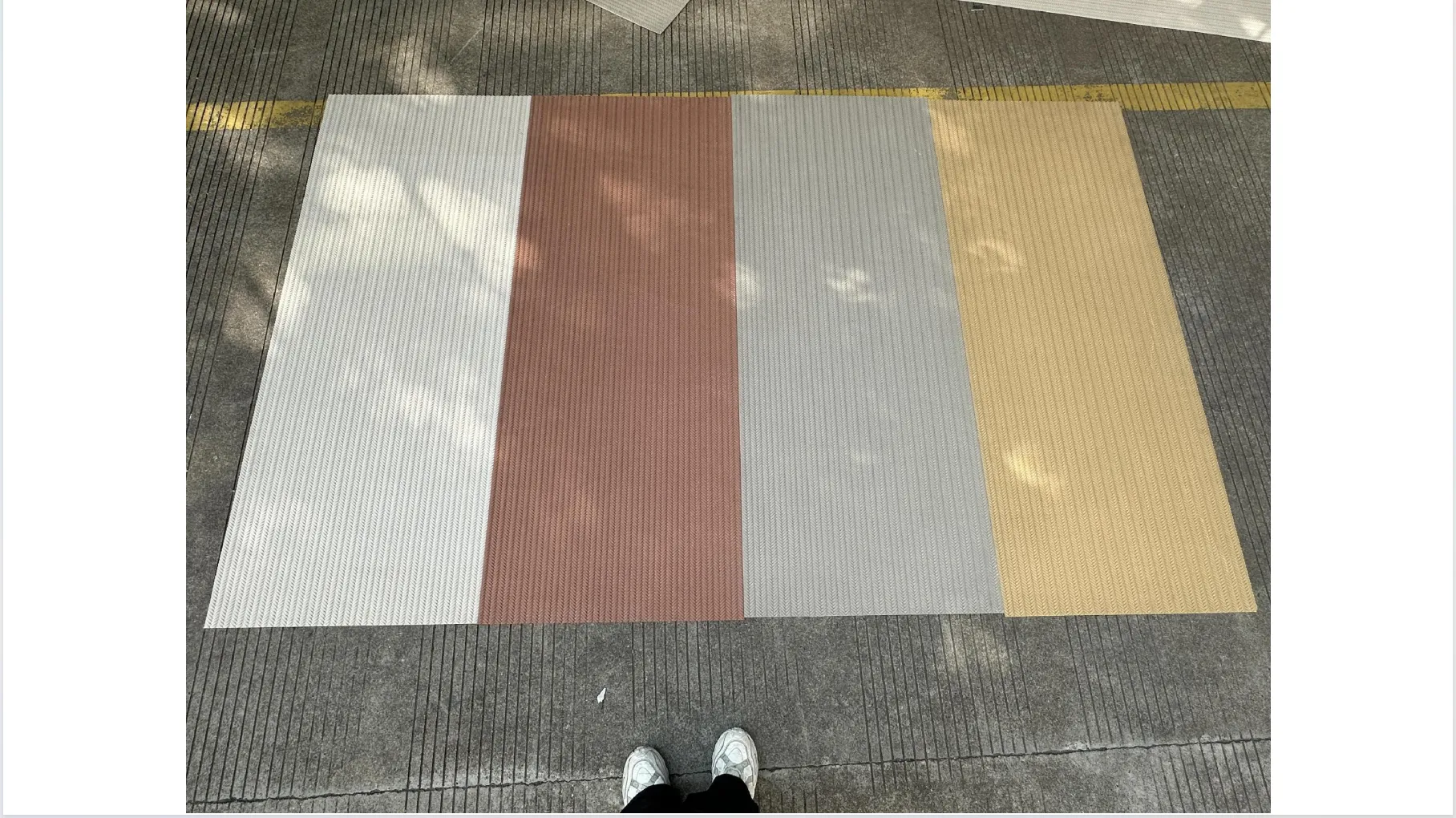
Exploring how high-fidelity visual tools transform the way we choose, visualize, and fall in love with architectural materials
Walk into any space—whether it's a cozy café with exposed brick walls, a sleek office clad in fair-faced concrete, or a home with a fireplace wrapped in travertine (starry green)—and you'll feel it immediately: the materials shape the mood. They tell a story. A rough-hewn granite portoro might evoke strength and timelessness, while a bamboo mat board whispers warmth and organic calm. But here's the catch: with thousands of options—from lunar peak silvery to epoch stone, from foamed aluminium alloy board (vintage gold) to weaving (khaki)—how do you pick the right one without second-guessing every choice?
For decades, designers, architects, and homeowners have relied on tiny swatches, flat catalog photos, or even memory to make these decisions. But a 2x2 inch sample of travertine (vintage gold) can't capture how it'll look spanning an entire living room wall. A pixelated image of a boulder slab (vintage black) won't show how light dances across its textured surface at sunset. This is where woven real photos step in—not just as images, but as bridges between intention and reality. They don't just show materials; they let you *experience* them.
In this article, we'll dive into why woven real photos are revolutionizing MCM (Modified Composite Material) selection. We'll explore how they solve the age-old frustrations of misjudged textures, mismatched colors, and disconnected visions. And we'll uncover how they turn the overwhelming sea of options—from wood grain board to lunar peak golden—into a curated, inspiring journey of discovery.
"I once specified a 'rustic' stone for a client's kitchen backsplash based on a swatch that looked warm and earthy. When it was installed, the color was dull, the texture flat—it felt like a completely different material. The client hated it, and we had to redo the entire wall. That mistake cost us time, money, and trust." — Maria Gonzalez, Interior Designer with 15 years of experience
Maria's story isn't unique. The gap between expectation and reality is a constant in material selection. Why? Because traditional tools fail to capture the *essence* of a material. Swatches are static; they don't account for scale. A small piece of lime stone(beige) might seem subtle, but covering an entire facade with it could feel washed out. Flat photos are two-dimensional; they flatten the depth of a rough granite stone (dark grey) or the sheen of a foamed aluminium alloy board (gold), making it impossible to gauge how it interacts with light.
Then there's the problem of context. A material rarely exists in isolation. A travertine (starry red) accent wall might look stunning with white wood trim in a catalog, but how does it pair with a bamboo mat board floor in a real room? Without seeing them together, you're guessing. And guesswork leads to regret—like the homeowner who chose dolomitic travertine(dark grey) for their bathroom, only to realize its cool tone clashed with the warm lighting, turning the space from "serene" to "sterile."
Even experts fall prey to this. Architects designing a commercial space might select epoch stone for its durability, but if the woven real photos aren't available, they can't anticipate how the material will age—will the color fade? Will the texture wear unevenly? These are questions swatches and flat photos can't answer. And in an industry where a single material choice can make or break a project's success, uncertainty is a luxury no one can afford.
Let's start with the basics: What *are* woven real photos? They're not your average catalog snapshots. Think of them as high-definition, multi-layered visual narratives. They combine 3D rendering, high-resolution photography, and contextual staging to create images that feel… *alive*. A woven real photo of a travertine (starry blue) panel won't just show you the color; it'll zoom in to reveal the tiny, star-like pockmarks that give the stone its name. It'll show the panel installed on a wall, flanked by woven (grey) textiles and lit by natural sunlight, so you can see how shadows play in its crevices.
At their core, woven real photos solve a critical problem: materials are three-dimensional, and light interacts with them in complex ways. A flat photo of a fair-faced concrete wall might look cold and industrial, but a woven real photo could show the same wall at dawn, where the morning light softens its texture, making it feel warm and inviting. Or at dusk, when the setting sun casts golden hues across its surface, turning "industrial" into "majestic."
Many woven real photos also include scale references—like a hand resting on a boulder slab (vintage silver) to show size, or a chair placed next to a bamboo mat board floor to convey proportion. This might sound simple, but it's game-changing. Imagine trying to choose between a linear travertine(claybank) and a dolomitic travertine(claybank) for a kitchen backsplash. A swatch can't tell you if the linear pattern will feel busy at eye level, but a woven real photo, showing the material spanning the entire backsplash with cabinets above, makes the decision obvious.
Some advanced woven real photos even let you toggle between lighting scenarios—daylight, warm artificial light, cool LED—to see how the material shifts. Want to know if lunar peak black will look too harsh in a bedroom with soft overhead lighting? A woven real photo can show you. Curious if the rust square line stone will complement the rona yellow accents in your living room? Woven real photos put them side by side, no guesswork required.
Texture is the soul of a material. The rough, tactile surface of a rammed earth board(matcha green) isn't just visual—it's something you want to reach out and touch. The smooth, polished finish of a marble veil white countertop feels different under your palm than the granular coarseness of a gravel omani stone floor. But traditional photos flatten texture, turning 3D depth into 2D flatness. A woven real photo, though, uses high-resolution imaging and subtle shadowing to make texture leap off the screen.
Take, for example, the rough granite stone (dark grey). A standard photo might show a uniform grey surface, but a woven real photo reveals the stone's true character: flecks of silver and black, tiny indentations from years of formation, and a grain that catches the light in unexpected ways. This level of detail is crucial for designers aiming for a specific aesthetic—say, a rustic cabin where the "roughness" of the stone is part of the story. Without seeing that texture, they might accidentally choose a cut stone (grey) that's too smooth, undermining the entire vision.
A restaurant owner wanted to revamp their dining room with a "mountain lodge" vibe. They initially leaned toward rock cut stone (dark grey) based on a swatch that felt rough to the touch. But when they viewed woven real photos of the stone installed on a wall, they noticed the texture was more jagged than rustic—too harsh for a cozy dining space. Instead, they opted for ancient wood paired with muretto stone (beige), whose woven real photos revealed a softer, more weathered texture that felt like a warm hug. The result? A space that guests describe as "inviting" and "like coming home."
Color is tricky. A sample of travertine (vintage gold) might look rich and warm under the fluorescent lights of a showroom, but washed out in the natural light of a sunlit kitchen. Woven real photos solve this by capturing materials in multiple lighting conditions, ensuring the color you see on screen is the color you'll get in your space.
Consider the lunar peak series: silvery, golden, and black. A flat photo might make lunar peak silvery look almost white, but a woven real photo shows its subtle metallic undertones that catch the light—critical for a homeowner trying to match it with their stainless steel appliances. Similarly, lime stone(beige) can range from pale cream to deep sand depending on the light; woven real photos show both extremes, so there are no surprises post-installation.
This accuracy is especially vital for materials with natural variation, like travertine (starry orange) or sandstone cloude. These stones aren't uniform—they have veins, spots, and color shifts that make each piece unique. Woven real photos highlight these variations, so you know exactly what to expect. No more ordering "starry orange" and getting a stone that's more "starry peach."
One of the biggest frustrations in material selection is imagining how a sample will look in *your* specific space. A gobi panel might look stunning in a desert home, but how does it fare in a city apartment with limited natural light? Woven real photos answer this by placing materials in realistic contexts—think: a foamed aluminium alloy board (vintage gold) facade on a modern office building, a wood line accent wall in a small bedroom, or a travertine (starry green) floor in a sunroom with large windows.
Some woven real photos even let you customize the context. Want to see how the charcoal burnt wood board looks with white walls vs. dark walls? Or how the weaving (jacinth) panels pair with marble stream stone floors? Advanced tools overlay materials onto photos of *your* actual space, turning "what if" into "this is it."
| Traditional Material Visuals | Woven Real Photos |
|---|---|
| Flat, 2D images with no sense of scale | 3D-rendered with scale references (furniture, people) to show size |
| Color under artificial showroom light only | Color in natural light, warm light, and cool light |
| Isolated material with no surrounding context | Material in real spaces (living rooms, offices, facades) |
| Texture flattened or exaggerated | Micro-detail texture captured with high-res imaging |
Materials aren't just functional—they're emotional. A wood concrete board(light grey) might make you feel grounded, while a marble interstellar gray feels luxurious and otherworldly. Woven real photos tap into this by creating images that evoke feeling, helping you connect with a material on a deeper level.
Take the historical pathfinders stone, designed to look like weathered cobblestones from ancient roads. A flat photo shows a rough stone surface, but a woven real photo places it in a garden path, surrounded by greenery and dappled sunlight, instantly transporting you to a quiet, reflective walk through history. You don't just see the stone—you feel its story.
Similarly, the ethereal shadow travertine, with its delicate veining, feels almost poetic in a woven real photo that shows it as a backdrop to a reading nook, with a lamp casting soft shadows that mimic the stone's patterns. It's not just a wall—it's a mood, a moment, a feeling. When you connect with a material emotionally, you're not just choosing it for its looks; you're choosing it to be part of your life's story.
Material selection is rarely a solo endeavor. Architects, designers, contractors, and clients all need to agree—and miscommunication can derail a project. Woven real photos act as a common language, ensuring everyone sees the same vision.
Imagine a commercial project where the client wants "a modern, industrial look." The architect envisions fair-faced concrete walls with foamed aluminium alloy board (vintage silver) accents. The contractor, however, interprets "industrial" as rough granite stone (dark grey). Without woven real photos, this disconnect might only surface during installation, leading to delays and rework. With woven real photos, though, the team can review images of the concrete and aluminium together, ensuring everyone's on the same page before a single stone is laid.
Woven real photos also make client presentations more compelling. Instead of saying, "The facade will be boulder slab (vintage gold) with bamboo mat board accents," you can show them a high-res image of exactly that—making it easier for clients to say, "Yes, that's perfect," or "Let's tweak the bamboo to a lighter shade." No more vague descriptions; just clear, shared understanding.
As MCM technology advances, so too does the demand for better visualization tools. Woven real photos are no longer a "nice-to-have"—they're becoming a necessity. With innovations like virtual reality (VR) integration, imagine "walking through" a space clad in travertine (starry red) or lunar peak black before construction even begins. Or using augmented reality (AR) to overlay woven real photos of a material onto your actual wall via your phone. The possibilities are endless, and they all point to one thing: the more you can *experience* a material before choosing it, the more confident and satisfied you'll be with the result.
For manufacturers, woven real photos are a way to showcase their materials' unique selling points—whether it's the eco-friendly nature of bamboo mat board or the durability of epoch stone. For designers, they're a tool to push creative boundaries, knowing the materials they select will translate seamlessly from vision to reality. For homeowners, they're peace of mind, turning the stressful process of renovation into an exciting journey of creation.
In a world where choice is abundant but certainty is rare, woven real photos are the compass guiding us to materials that don't just fill a space, but elevate it. They remind us that behind every MCM option—from the rustic charm of gobi panel to the sleek modernity of polish concrete—there's a story waiting to be told. And with woven real photos, we can finally read that story clearly, beautifully, and without regret.
The next time you find yourself staring at a swatch of travertine (starry green) or scrolling through flat photos of lunar peak silvery, pause. Ask yourself: Do I really see this material? Or am I just guessing? Woven real photos don't just answer that question—they transform it. They turn guesswork into confidence, uncertainty into excitement, and choices into stories.
Whether you're designing a skyscraper facade with foamed aluminium alloy board (gold) or a home office with wood line accents, remember this: the right material isn't just about looks. It's about how it makes you feel every time you walk into the room. And with woven real photos, you can feel that emotion long before the first stone is laid, the first panel is hung, or the first floor is finished.
So go ahead—explore the possibilities. Dive into woven real photos of travertine (vintage black), lose yourself in the texture of a rammed earth board(gradient), and let your space tell the story you've always imagined. After all, the best materials aren't just seen—they're *felt*. And with woven real photos, feeling them has never been easier.
Recommend Products












