
Marble has always been the language of luxury in architecture. But traditional marble slabs are heavy, brittle, and expensive to ship and install. That is why more architects and contractors are turning to marble series panels — lightweight, flexible panels that reproduce the veining and depth of natural marble without the weight. One question comes up again and again: what backing materials are used in marble series panels?
The answer matters more than most buyers realize. The backing is what gives a thin marble-look panel its strength, its flexibility, and its ability to survive transport and installation. In this article, we look at the backing materials commonly used in marble series panels, how each one performs, and what to look for when you are sourcing panels for your next project.
A marble-look panel is essentially a thin decorative surface layer — usually modified clay or natural stone veneer — bonded to a reinforcing layer. On its own, that thin surface layer would crack, tear, or flex unevenly. The backing does three jobs:
In other words, the backing determines how the panel behaves on site. Two panels can look identical from the front and perform completely differently because of what is on the back.
Fiberglass mesh is the workhorse of the industry. A woven grid of alkali-resistant glass fibers is bonded to the back of the panel with a resin adhesive. The mesh distributes tensile stress across the whole surface, so a localized impact does not turn into a running crack.
Fiberglass-backed panels offer a good balance of strength, flexibility, and cost. They can be rolled or bent around moderate curves, which makes them ideal for columns, arches, and feature walls. The mesh also improves the panel’s resistance to temperature changes and moisture, two of the biggest enemies of thin cladding materials.
Some marble-look panels use a non-woven fabric — often polyester or a similar synthetic — as the reinforcing layer. Non-woven fabric is lighter and cheaper than fiberglass mesh, and it gives the panel a smooth, uniform back that sits flush against the substrate.
The trade-off is strength. Non-woven fabric provides less tensile reinforcement than fiberglass, so it is more common on interior panels, ceiling panels, and decorative applications where the panel is not exposed to heavy impact or large temperature swings.
The resin is not strictly a backing material on its own, but it is the layer that makes the backing work. Epoxy and polyester resins are applied between the surface layer and the mesh or fabric. The resin absorbs localized stress, seals the panel against moisture, and locks the reinforcement in place.
The quality of the resin layer matters as much as the mesh itself. A well-bonded resin layer keeps the surface and backing acting as one piece. Poor bonding shows up later as delamination — the surface separating from the backing — which is one of the most common failure modes in cheap flexible panels.
For large-format panels and exterior facades, some manufacturers use an aluminum honeycomb core. The honeycomb structure is extremely stiff for its weight, so panels can be made much larger without sagging or flexing.
Honeycomb-backed panels are heavier and more expensive than mesh-backed panels, and they are not flexible in the same way. They are the right choice when the priority is a large, perfectly flat panel — for example, a building facade or a large interior wall — rather than the ability to bend around curves.
There is no single “best” backing material. The right choice depends on where the panel will be used:
Whichever backing you choose, ask the supplier how the reinforcement is bonded, what resin is used, and whether the panels have been tested for flexural strength and moisture resistance. These details separate a panel that performs for decades from one that fails within a year.
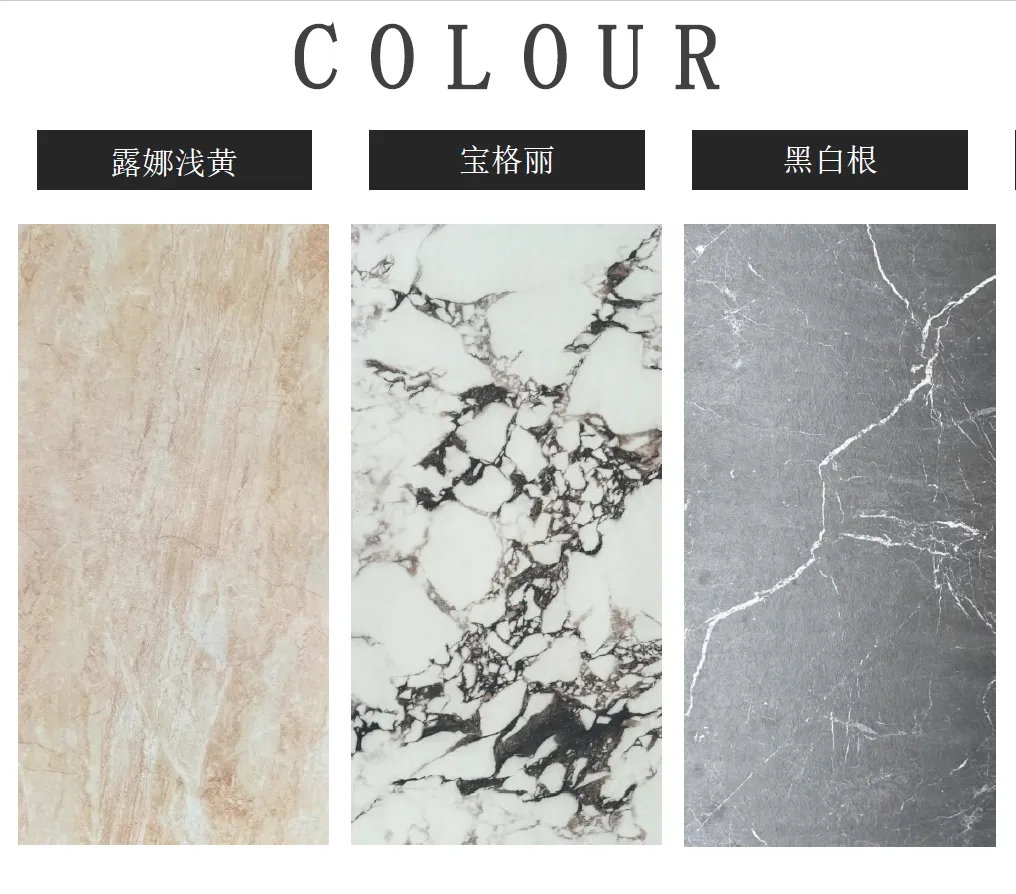
At COLORIA GROUP, the marble series is part of a wider range of MCM flexible stone panels. The marble series reproduces the look of natural marble — including popular finishes like marble veil white, marble stream stone, and marble interstellar gray — in a lightweight, flexible format that can be cut and installed like a standard panel.
The backing is chosen to match the application. Panels for interior feature walls and curved installations use a flexible reinforcement that lets the panel follow the surface, while large-format options are engineered to stay flat and stable on exterior walls. If you are planning a project and are not sure which backing is right for it, the COLORIA team can recommend a configuration based on your substrate, climate, and installation method.
Can marble series panels be installed on curved walls?
Yes, if the panel uses a flexible backing such as fiberglass mesh. The panel can be bent around columns and curved walls with a moderate radius. Panels with rigid backings like aluminum honeycomb are not designed for this.
Is the backing visible after installation?
No. The backing is on the rear face of the panel and is completely hidden once the panel is fixed to the substrate.
Does the backing affect the fire rating?
It can. The resin and reinforcement used in the backing influence how the panel behaves in a fire test. Always check the panel’s fire classification before specifying it for public or commercial buildings.
How do I know if the backing is good quality?
Look for even mesh distribution, a smooth and fully bonded resin layer, and consistent panel thickness. Ask for test reports on flexural strength, moisture resistance, and bond strength.
The backing material is the part of a marble series panel you never see, but it decides how the panel performs on site. Fiberglass mesh offers the best all-round balance of strength and flexibility, non-woven fabric suits light interior applications, and aluminum honeycomb delivers maximum flatness for large formats.
When you are sourcing marble series panels, do not judge them by the surface alone. Ask about the backing, check the bonding quality, and choose the reinforcement that matches your project. It is a small detail that makes the difference between a facade that looks great for years and one that needs repair within months.
Recommend Products












