
If you've ever walked into a room and noticed a wooden shelf that's started to bow in the middle, or a tabletop that's developed an uneven surface, you've encountered a common enemy of natural wood: warping. It's a problem that frustrates homeowners, contractors, and designers alike—turning beautiful, expensive wood boards into unsightly, unusable pieces. But why does this happen? And is there a way to enjoy the warmth and aesthetic of wood (or other natural materials) without the constant worry of warping? Enter MCM (Modified Composite Material) products, a line of innovative building materials designed to combine the beauty of natural elements with unmatched stability. In this article, we'll dive deep into the causes of warping in traditional sawing wood boards, then explore how MCM products like wood grain board, MCM flexible stone, and foamed aluminium alloy board (vintage silver) offer a game-changing solution.
Warping is more than just a cosmetic issue. For builders, a warped floorboard can lead to gaps that let in drafts or collect dust; for homeowners, a warped bookshelf might sag under the weight of books, risking damage to both the shelf and its contents; for designers, warped panels can throw off an entire room's symmetry, turning a carefully planned space into a disjointed mess. To understand why wood warps, let's start with a simple example: think about a wooden cutting board you've left out in the rain. By the next day, it's swollen, misshapen, and might never lie flat again. That's warping in action, and it's a result of wood's natural properties—and how those properties interact with the world around it.
Traditional wood boards are made from tree trunks, which are cut into planks and dried to remove moisture. But trees are organic materials, and their structure is far from uniform. Each plank has a unique grain pattern, density, and moisture content, even after drying. When exposed to changes in humidity, temperature, or even just the passage of time, these differences can cause the wood to expand, contract, or twist—resulting in warping. The problem is so widespread that the National Wood Flooring Association estimates that up to 80% of wood flooring complaints are related to moisture-induced warping. Clearly, this isn't just a minor annoyance; it's a fundamental flaw in relying solely on natural wood for structural or decorative applications.
Wood is a hygroscopic material, meaning it absorbs and releases moisture from the air to reach equilibrium with its environment. When the air is humid, wood absorbs moisture and swells; when the air is dry, it releases moisture and shrinks. The trouble is, wood doesn't absorb or release moisture evenly. The outer layers of a plank will react faster than the inner layers, creating uneven stress. For example, if a plank is stored in a damp basement and then moved to a dry living room, the outer wood will dry out and shrink before the inner wood, causing the plank to cup (curl upward at the edges) or bow (curve along its length). Even small changes in humidity—like a rainy season followed by a dry winter—can trigger this process. In fact, research shows that wood can change dimension by up to 2% with a 10% change in relative humidity, which is more than enough to cause noticeable warping in thin planks.
Manufacturers try to mitigate this by kiln-drying wood to a target moisture content (typically 6-8% for indoor use), but even the best drying processes can't eliminate all moisture differences. A plank might have a uniform moisture content on the surface, but hidden pockets of residual moisture in the core can cause warping months or years later. This is especially true for "green" wood—wood that hasn't been properly dried—which is prone to severe warping as it loses moisture over time.
Temperature is another major factor in wood warping. Like most materials, wood expands when heated and contracts when cooled. But again, the expansion and contraction aren't uniform. Dark-colored wood absorbs more heat than light-colored wood, so a plank in direct sunlight might expand faster on one side, causing it to twist. Similarly, a wood board near a radiator or air conditioning vent will experience frequent temperature swings, leading to repeated cycles of expansion and contraction. Over time, these cycles weaken the wood's fibers, making it more susceptible to warping. In outdoor applications—like decking or exterior cladding—temperature extremes are even more pronounced, with planks exposed to scorching sun in summer and freezing cold in winter. It's no wonder that outdoor wood structures often warp within a few years, despite being treated with sealants.
Wood's grain pattern isn't just a visual feature; it's a map of the tree's growth. Trees grow in rings, and when a plank is cut from the trunk, the direction of these rings (grain direction) determines its strength and stability. Planks cut parallel to the growth rings (flat-sawn) are more prone to warping than those cut perpendicular (quarter-sawn). Flat-sawn planks have a "cathedral" grain pattern, with wide arcs, and their edges tend to shrink more than their centers, leading to cupping. Quarter-sawn planks, with straight, vertical grains, are more stable, but they're also more expensive and less common. Even quarter-sawn planks, though, aren't immune to warping, as the grain density can vary across the plank. A knot in the wood, for example, is a dense area where a branch once grew, and it will expand and contract at a different rate than the surrounding wood, creating stress points that lead to warping.
Even if moisture, temperature, and grain direction are controlled, poor manufacturing practices can still lead to warping. For example, if a plank is cut too thin, it won't have the structural integrity to resist warping under its own weight. Or, if the drying process is rushed, the wood might develop "case hardening"—a condition where the outer layers dry too quickly and form a hard shell, trapping moisture inside. When the inner moisture eventually escapes, the plank will warp as the core shrinks. Similarly, uneven sanding or finishing can create weak spots: a plank sanded thinner on one side will absorb moisture faster there, leading to uneven expansion. In some cases, warping is even caused by the way the wood is stored after manufacturing. Stacking planks without proper spacing for air circulation can trap moisture, while leaning planks against a wall can cause them to bow over time.
So, if traditional wood boards are so prone to warping, what's the alternative? Enter MCM, or Modified Composite Material—a category of building materials that combines the aesthetic appeal of natural materials (wood, stone, concrete) with the durability and stability of engineered composites. MCM products are designed to address the root causes of warping, offering a solution that's both beautiful and reliable. Let's take a closer look at how MCM works, then explore some standout products that are revolutionizing the industry.
At its core, MCM is a blend of natural fibers, minerals, and polymers, processed using advanced technologies like 3D printing and compression molding. This combination creates a material that's lightweight, flexible, and resistant to the environmental factors that plague natural wood. Unlike wood, MCM products have a uniform structure, with no hidden moisture pockets or grain irregularities. They're also engineered to be dimensionally stable—meaning they expand and contract minimally, even with extreme changes in humidity or temperature. Best of all, MCM can mimic the look and texture of natural materials, so you don't have to sacrifice aesthetics for stability.
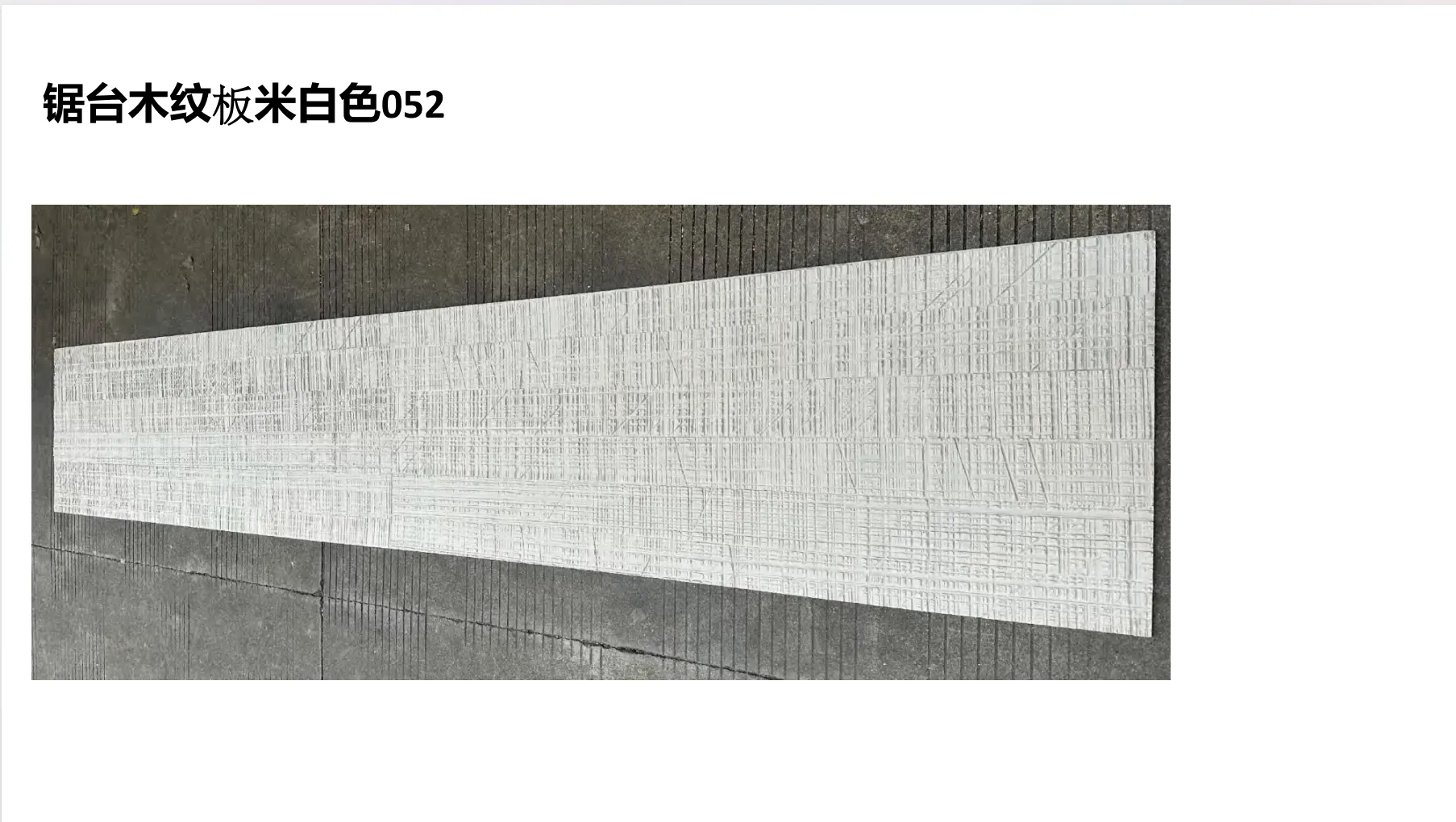
One of the most popular MCM products is wood grain board, which replicates the warm, organic look of natural wood grain but with none of the warping issues. Wood grain board is made by embedding real wood fibers into a polymer matrix, then pressing and curing the material to create a dense, uniform plank. The result? A board that looks and feels like wood, but resists moisture, temperature changes, and grain-related stress.
Take, for example, a kitchen backsplash made with MCM wood grain board. Unlike natural wood, it won't swell when exposed to steam from the stove or shrink during dry winter months. It's also resistant to scratches and stains, making it ideal for high-traffic areas. Contractors love it because it's easy to cut and install—no special tools required—and homeowners love it because it maintains its flat, even surface for decades. As one contractor put it: "I used to spend hours replacing warped wood trim in older homes. Now, with MCM wood grain board, I install it once and never hear about it again."
Another standout MCM product is MCM flexible stone, which combines the durability of natural stone with the flexibility to avoid cracking or warping. Natural stone like marble or granite is heavy and brittle, prone to chipping and warping under stress (yes, even stone can warp, though it's less common than wood). MCM flexible stone, by contrast, is made by grinding natural stone into a powder, mixing it with polymers, and forming it into thin, lightweight panels. These panels are flexible enough to bend without breaking, making them ideal for curved surfaces, while still retaining the look and texture of real stone.
Imagine a commercial lobby with a curved accent wall clad in MCM flexible stone. Traditional stone panels would require heavy structural support and would be at risk of cracking if the building settles. MCM flexible stone, though, is lightweight (up to 70% lighter than natural stone) and can flex with minor structural movements, avoiding cracks and warping. It's also moisture-resistant, so it won't absorb water and expand, making it suitable for bathrooms, pools, or outdoor applications. For designers, this means endless possibilities: stone-look walls that curve, stone-look floors that resist warping, and stone-look countertops that stay flat even in humid kitchens.
For a more modern, industrial look, foamed aluminium alloy board (vintage silver) is a top choice. Aluminium is naturally resistant to corrosion, but traditional aluminium panels can still warp under extreme heat. Foamed aluminium alloy board solves this by using a cellular structure—tiny air bubbles trapped within the metal—that reduces weight and improves thermal stability. The vintage silver finish adds a sleek, retro aesthetic, making it perfect for accent walls, ceilings, or furniture.
Unlike wood, which conducts heat unevenly, foamed aluminium alloy board has uniform thermal conductivity, meaning it expands and contracts evenly across its surface. This eliminates the stress that causes warping. It's also impervious to moisture, so it won't rust or swell in humid environments. A restaurant owner in Miami recently replaced their warped wooden ceiling panels with foamed aluminium alloy board (vintage silver), noting: "We used to have to replace the wood panels every two years because of the humidity. Now, the aluminium panels look brand new after five years—no warping, no rust, just that same sleek finish."
Concrete is known for its strength, but traditional poured concrete can still warp if not properly reinforced or cured. Fair-faced concrete, an MCM product, takes this a step further by using a precast, fiber-reinforced composite that's designed for dimensional stability. Unlike poured concrete, which can develop cracks and warping as it dries, fair-faced concrete panels are cured in controlled environments, ensuring uniform moisture content and minimal internal stress.
Fair-faced concrete has a raw, industrial look that's popular in modern design, but its real appeal is its stability. A fair-faced concrete countertop, for example, will stay flat even in a kitchen with fluctuating temperatures, while a fair-faced concrete accent wall won't bow or crack over time. It's also fire-resistant and low-maintenance, making it ideal for commercial spaces like offices or retail stores. As one architect put it: "I love using fair-faced concrete because it's a material that ages gracefully. Unlike wood, which warps and fades, fair-faced concrete develops a patina over time but stays structurally sound."
Bamboo is often touted as a sustainable alternative to wood, but natural bamboo boards can still warp due to their hollow, fibrous structure. MCM bamboo mat board addresses this by compressing bamboo fibers into a dense, resin-bonded panel. The result is a material that has the warm, natural look of bamboo but with the stability of engineered composites. Bamboo mat board is moisture-resistant, termite-proof, and dimensionally stable, making it a great choice for flooring, wall panels, or furniture.
A homeowner in Portland recently installed MCM bamboo mat board flooring in their basement, a space prone to dampness. "We'd tried natural bamboo flooring before, but it warped within a year from the moisture," they said. "The MCM version has been down for three years now, and it still looks perfect—no gaps, no cupping, just that beautiful bamboo pattern." Bamboo mat board is also eco-friendly, as bamboo grows faster than hardwood trees, making it a sustainable choice for environmentally conscious consumers.
| Feature | Traditional Wood Boards | MCM Wood Grain Board | MCM Flexible Stone | Foamed Aluminium Alloy Board (Vintage Silver) |
|---|---|---|---|---|
| Warping Resistance | Low (prone to cupping, bowing, twisting) | High (uniform structure, minimal moisture absorption) | High (flexible, dimensionally stable) | Very High (thermal stability, no moisture absorption) |
| Moisture Resistance | Low (hygroscopic, swells/shrinks with humidity) | High (polymer matrix resists moisture) | Very High (non-porous surface) | Very High (impervious to water, rust-resistant) |
| Durability | Moderate (scratches, dents, rot-prone) | High (scratch-resistant, impact-resistant) | High (resistant to chipping, cracking) | Very High (corrosion-resistant, lightweight yet strong) |
| Installation | Requires acclimation, careful spacing for expansion | Easy (no acclimation needed, lightweight) | Easy (flexible, can be cut with standard tools) | Easy (lightweight, can be mounted with adhesives or screws) |
| Aesthetic | Natural wood grain, warm appearance | Mimics natural wood grain accurately | Mimics natural stone texture and color | Sleek, industrial vintage silver finish |
To truly understand the impact of MCM products, let's look at a few real-world examples of how they've solved warping problems for homeowners, contractors, and businesses.
A family-owned Italian restaurant in Chicago had struggled for years with warped wooden booths. The restaurant's kitchen generated high humidity, causing the booth seats to cup and the backs to bow. "We were replacing the booths every 18 months," said the owner. "It was costing us thousands of dollars, not to mention the downtime when we had to close for repairs." After researching alternatives, they decided to install MCM wood grain board booths. Five years later, the booths still look brand new. "No warping, no splitting, no issues with moisture," the owner reported. "Our customers even comment on how nice the booths look—they can't believe it's not real wood."
A natural history museum in Denver wanted to create a curved accent wall in its dinosaur exhibit, designed to look like a stone cliff. Traditional stone panels were too heavy and brittle for the curved surface, and the museum worried about warping or cracking over time. The solution? MCM flexible stone panels. "The MCM panels were lightweight enough to install on our curved framework, and they flexed perfectly to follow the wall's shape," said the project manager. "Two years later, there's not a single crack or warp—even with thousands of visitors touching the wall daily." The panels also retained the realistic texture of stone, enhancing the exhibit's immersive feel.
A homeowner in Seattle transformed their damp basement into a home office using MCM bamboo mat board flooring. "We'd tried carpet, vinyl, and even natural bamboo before, but nothing worked—either it got moldy or warped," they said. "MCM bamboo mat board was the game-changer. It's waterproof, so we don't have to worry about leaks, and it hasn't warped at all, even during our rainy winters. Now, our basement feels like a bright, inviting space, not a damp storage room."
Warping in traditional sawing wood boards is a problem rooted in the material's organic nature: moisture absorption, temperature sensitivity, grain irregularities, and manufacturing defects all contribute to a tendency to twist, bow, or cup over time. For too long, homeowners and builders have accepted this as an unavoidable downside of using natural wood. But MCM products offer a better way—combining the beauty of natural materials with the stability of engineered composites.
Whether it's wood grain board that resists moisture, MCM flexible stone that bends without breaking, or foamed aluminium alloy board that stays flat in any temperature, MCM products address the root causes of warping. They're durable, easy to install, and available in a wide range of styles, making them suitable for everything from residential flooring to commercial accent walls. As more people discover the benefits of MCM, it's clear that the days of warped wood boards may soon be a thing of the past.
So, the next time you're planning a renovation or building project, ask yourself: Why settle for a material that warps when you can have one that lasts? MCM products aren't just a trend—they're a revolution in building materials, offering stability, beauty, and peace of mind. Say goodbye to warping, and hello to a future where your walls, floors, and furniture stay as perfect as the day they were installed.
Recommend Products












