
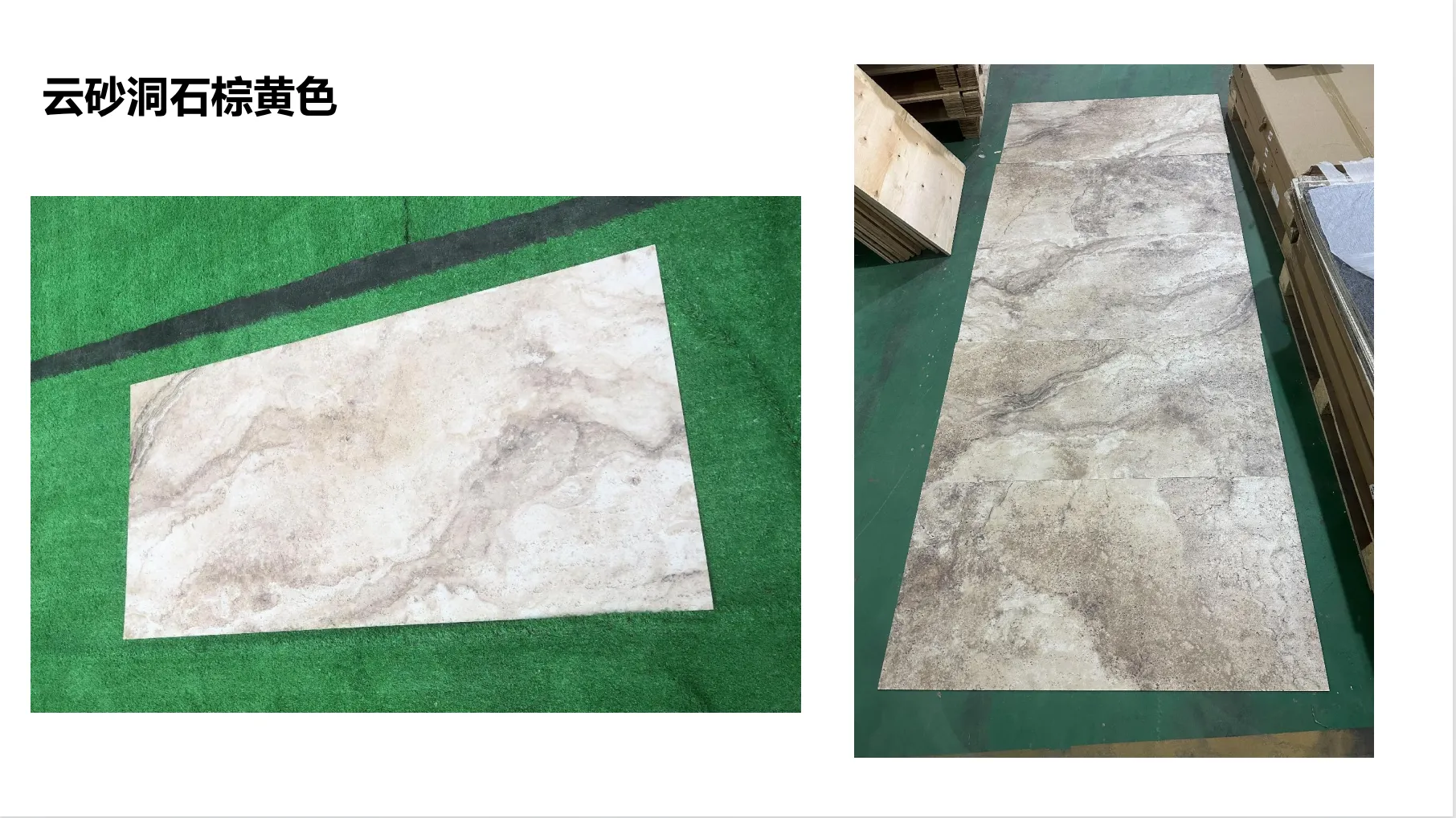
Step into a room where the walls seem to breathe with the warmth of sunbaked earth, where every surface tells a story written by time and water. That's the magic of Dolomitic Travertine (Claybank)—a natural stone that doesn't just decorate spaces, but transforms them into havens of texture and tranquility. In a world of sleek synthetics and cold minimalism, this stone stands out as a reminder of nature's artistry, blending durability with a softness that feels almost alive to the touch. Let's dive deep into what makes Dolomitic Travertine (Claybank) more than just a building material, but a bridge between the ancient earth and modern design.
First, let's break down the name. Travertine itself is a type of limestone formed in hot springs, where mineral-rich water cools and deposits layers of calcium carbonate over centuries. Think of it as nature's version of a slow-cooked stew—patient, layered, and full of character. Now, "dolomitic" adds a twist: this variant contains dolomite, a mineral rich in magnesium, which gives it unique properties compared to standard travertine. And "claybank"? That's the soul of its color—a warm, earthy hue that ranges from soft terracotta to muted sand, like the banks of a sunlit riverbed.
Unlike the sharp, uniform tones of man-made materials, Dolomitic Travertine (Claybank) wears its imperfections proudly. You'll find tiny pits (the result of gas bubbles trapped during formation), subtle veins of deeper clay or soft gray, and a surface that shifts in appearance depending on the light. Run your hand across it, and you'll feel a texture that's neither too rough nor too smooth—like sandstone kissed by rain, or the bark of an ancient tree softened by time. It's a stone that invites touch, that begs to be noticed not for its flash, but for its quiet complexity.
To truly appreciate this stone, we need to travel back in time—way back. Dolomitic Travertine (Claybank) is born in regions with active hot springs, where groundwater heated by the earth's core rises to the surface, carrying dissolved minerals like calcium carbonate and magnesium. As the water cools, these minerals precipitate out, building up layer by layer in shallow pools or along rocky edges. Over thousands of years, these layers harden into stone, capturing within them the patterns of the water's flow, the gases that bubbled up, and the sediments that drifted in.
Imagine a hot spring in a remote valley, its waters shimmering in the sun. Each drop that evaporates leaves behind a tiny mineral deposit, like a brushstroke on a canvas. Over decades, these strokes become layers; over centuries, they become stone. The dolomite in the mix adds density and resilience, making Dolomitic Travertine (Claybank) harder and less porous than some travertines, while the claybank color comes from trace elements in the water—iron oxides that paint the stone in those warm, sunset-like tones.
It's a process that can't be rushed, which is why each slab feels like a one-of-a-kind artwork. No two pieces are identical, and that's the beauty of it. When you install Dolomitic Travertine (Claybank), you're not just adding a surface—you're bringing a piece of the earth's history into your space.
Looks aside, what makes this stone practical for real-world use? Let's break down its core properties:
The claybank color is its calling card. It's a hue that complements both modern and traditional designs—pair it with crisp whites for a coastal vibe, or with deep woods for a rustic cabin feel. Unlike stark whites or bold grays, it doesn't overwhelm a room; instead, it softens light, making spaces feel larger and more inviting. In a kitchen, it adds warmth to stainless steel appliances; in a bathroom, it turns a functional space into a spa-like retreat.
The surface of Dolomitic Travertine (Claybank) is a study in contrast. Its natural pits and pores give it depth, while the dolomite content ensures it's not overly porous (a common concern with standard travertine). When sealed properly, these pits become part of its charm—tiny shadows that catch the light and add dimension. Run your finger over it, and you'll notice subtle variations: a smoother patch here, a slightly rougher ridge there, each telling a story of how the stone formed.
Thanks to its dolomite content, this stone is more durable than many travertines. It resists scratches, stains (when sealed), and weathering, making it suitable for both indoor and outdoor use. Think exterior facades that stand up to rain and sun, or kitchen backsplashes that laugh off splatters of tomato sauce. Of course, like all natural stone, it's not indestructible—heavy impacts can chip it, and acidic cleaners can etch the surface. But with basic care, it'll outlive most trends, becoming a legacy piece in your home.
In an era of fast fashion and disposable decor, Dolomitic Travertine (Claybank) is a sustainable standout. It's a natural material, quarried with minimal processing, and its long lifespan means less waste over time. Unlike synthetic materials that off-gas chemicals, it improves indoor air quality by regulating humidity and releasing negative ions. Plus, its neutral color palette means it never goes out of style—you won't need to replace it in a decade when trends shift. It's a stone that respects the planet while enhancing your space.
To truly understand Dolomitic Travertine (Claybank), it helps to see how it stacks up against other popular natural stones. Let's compare it to a few close relatives and contemporaries:
| Stone Type | Color Palette | Texture | Primary Use Case | Durability |
|---|---|---|---|---|
| Dolomitic Travertine (Claybank) | Warm clay, terracotta, soft sand | Pitted, slightly porous, tactile | Indoor walls, backsplashes, fireplaces, outdoor facades | High (resistant to weathering, moderate scratch resistance) |
| Dolomitic Travertine (Dark Grey) | Deep charcoal, slate-like with light veins | Smoother, denser, fewer pits | Modern floors, statement walls, commercial lobbies | Very High (more dolomite content, less porous) |
| Travertine (Starry Green) | Vibrant emerald, teal, with "starry" crystal flecks | Glassy in spots, more varied texture | Accent walls, luxury bathrooms, artistic installations | Moderate (softer than dolomitic variants, better for low-traffic areas) |
| Lunar Peak Silvery | Metallic silver, cool gray, iridescent hints | Sleek, polished, modern texture | Contemporary exteriors, high-end kitchens, tech-inspired spaces | Very High (engineered stone, scratch-resistant) |
| Fair-faced Concrete | Industrial gray, uniform, matte | Smooth, dense, minimal texture | Modern interiors, commercial buildings, minimalist designs | High (but prone to staining without sealant) |
What jumps out? Dolomitic Travertine (Claybank) bridges the gap between warmth and durability. It has the organic charm of Travertine (Starry Green) but with the resilience to handle high-traffic areas, unlike its more delicate, starry cousin. Compared to Dolomitic Travertine (Dark Grey), it's softer in tone, making it ideal for spaces where you want to create coziness rather than drama. And against Fair-faced Concrete? It adds life and texture, turning a cold industrial look into something that feels grounded and human.
The versatility of Dolomitic Travertine (Claybank) is one of its greatest strengths. Whether you're designing a rustic cottage, a mid-century modern home, or a sleek urban apartment, this stone finds a way to belong. Here are a few ideas to spark your creativity:
Imagine cooking in a kitchen where the backsplash isn't just a functional barrier, but a focal point. Dolomitic Travertine (Claybank) tiles, laid in a subway pattern or stacked vertically, add warmth to white cabinetry and stainless steel appliances. The claybank color softens the harshness of modern kitchen materials, making early mornings at the coffee pot feel a little more like a retreat.
Transform your bathroom into a mineral spring oasis by cladding the walls in Dolomitic Travertine (Claybank). Pair it with brass fixtures and potted greenery for a bohemian vibe, or with black accents and a rainfall showerhead for modern luxury. The stone's natural texture and moisture-resistant properties (when sealed) make it perfect for this high-humidity space.
There's nothing like gathering around a fireplace, and Dolomitic Travertine (Claybank) turns that hearth into a work of art. Whether you opt for a full wall of stone or a simple surround, the claybank color glows when the fire is lit, casting warm, amber tones across the room. It's a material that feels both ancient and comforting, like a hug from the earth itself.
For homes or commercial buildings, Dolomitic Travertine (Claybank) exteriors make a statement without shouting. The stone weathers gracefully, developing a patina over time that only enhances its beauty. Pair it with wooden accents and large windows for a craftsman-style home, or with clean lines and metal fixtures for a contemporary look. It's a facade that ages like fine wine—better with time.
Like any natural material, Dolomitic Travertine (Claybank) needs a little love to stay beautiful. Here's how to care for it:
Seal your stone immediately after installation and re-seal every 1–2 years (more often for high-traffic areas like floors). A good quality penetrating sealer will fill the pores and prevent stains without altering the stone's natural appearance. Avoid topical sealers, which can create a glossy film that hides the stone's texture.
Stick to mild, pH-neutral cleaners—think dish soap mixed with warm water, or specialized stone cleaners. Avoid vinegar, lemon juice, or abrasive scrubbers, which can etch or scratch the surface. For spills, blot immediately (don't wipe!) to prevent staining, especially with acidic liquids like wine or tomato sauce.
Minor chips can be repaired with stone epoxy or filler, colored to match the claybank hue. For larger damage, consult a professional stone restorer—they can often reattach broken pieces or fill gaps seamlessly. Remember, a few small chips are part of the stone's character; perfection isn't the goal here.
At the end of the day, choosing Dolomitic Travertine (Claybank) isn't just about picking a building material—it's about choosing a feeling. It's the warmth of a sunlit desert at dawn, the comfort of a well-loved home, the quiet confidence of a material that doesn't need to prove itself. In a world that's always chasing the next trend, this stone is a reminder that some things—like nature's artistry—are timeless.
Whether you're building a new home, renovating a space, or simply dreaming of a more beautiful environment, Dolomitic Travertine (Claybank) invites you to slow down, appreciate the details, and live in harmony with the earth. It's not just stone—it's a story, written in layers of time, waiting to become part of yours.
Recommend Products












