
Walk into any high-end boutique hotel, modern office lobby, or upscale residential project these days, and there's a good chance you'll encounter a wall or surface that stops you in your tracks. It might be the deep, moody hue of dark grey, swirled with lighter veins that look like brushstrokes of time. Or perhaps it's the way it bends gently around a curved archway, defying the rigid stereotype of natural stone. Run your hand over it, and you'll feel a texture that's equal parts earthy and refined—rough enough to evoke the outdoors, smooth enough to feel intentional. That material? More likely than not, it's Dolomitic Travertine (Dark Grey), a stone that's quietly revolutionizing architectural design. But what makes this stone so special, and why are designers and builders falling in love with it?
Let's start with the basics: travertine itself is a type of limestone, but not the kind you'd find in just any quarry. It forms in hot springs, where mineral-rich water (think calcium carbonate, magnesium, and other dissolved solids) cools and deposits layers of sediment over centuries. The result? A stone with a porous, layered structure that's full of character—think tiny holes, grooves, and natural patterns that tell the story of its formation. But Dolomitic Travertine (Dark Grey) isn't your average travertine. The "dolomitic" part is key: this stone has a higher dolomite content, a mineral composed of calcium magnesium carbonate. This isn't just a geological detail; it changes everything about the stone's behavior, from its durability to its appearance.
Then there's that striking dark grey color. Unlike the creamy beiges or soft whites of standard travertine, Dolomitic Travertine (Dark Grey) gets its depth from mineral impurities—think iron oxides, manganese, or even tiny organic particles trapped during formation. The result is a spectrum of greys, from charcoal to slate, often with veins of lighter grey or even hints of blue, depending on the quarry. It's a color that feels both timeless and modern: pair it with warm woods, and it adds industrial edge; mix it with brass fixtures, and it leans luxurious; set it against white walls, and it becomes a bold, moody focal point.
What truly sets Dolomitic Travertine (Dark Grey) apart, though, isn't just its looks—it's how it performs. Let's break down its most notable properties, and why they matter for real-world applications:
Durability with a Soft Side: Thanks to its dolomite content, this stone is denser and more resistant to wear than standard travertine. That means it holds up to foot traffic, harsh weather, and even the occasional scuff from furniture. But here's the twist: when processed into mcm flexible stone panels (a game-changing innovation in the industry), it gains a flexibility that's unheard of in traditional stone. Imagine a stone that can wrap around a curved wall, adhere to a sloped ceiling, or even be used as a backsplash in a kitchen with uneven surfaces. That's the magic of MCM technology—taking the natural beauty of Dolomitic Travertine (Dark Grey) and making it adaptable to the chaos of real-world construction.
Lightweight, but Not Light on Quality: Traditional natural stone slabs can weigh hundreds of pounds, making installation a logistical nightmare (not to mention the strain on building foundations). Dolomitic Travertine (Dark Grey), when transformed into MCM panels, cuts that weight dramatically—often as little as 3-5 kg per square meter. This isn't just about ease of installation (though contractors will tell you that's a huge win); it also opens up possibilities for high-rise buildings, where every pound counts, or for retrofitting older structures that can't support heavy materials.
Weather-Ready and Low-Maintenance: Exterior cladding takes a beating—rain, snow, UV rays, pollution. Dolomitic Travertine (Dark Grey) laughs it off. Its dense structure resists water absorption (no more worries about freeze-thaw damage in cold climates), and its dark color hides dust and grime better than lighter stones. Even better? It requires almost no upkeep. A quick hose-down now and then, maybe a gentle cleaning with mild soap if it gets particularly dirty, and it looks as good as the day it was installed. Compare that to marble, which stains easily, or concrete, which can crack and fade—suddenly, that initial investment starts to look like a no-brainer.
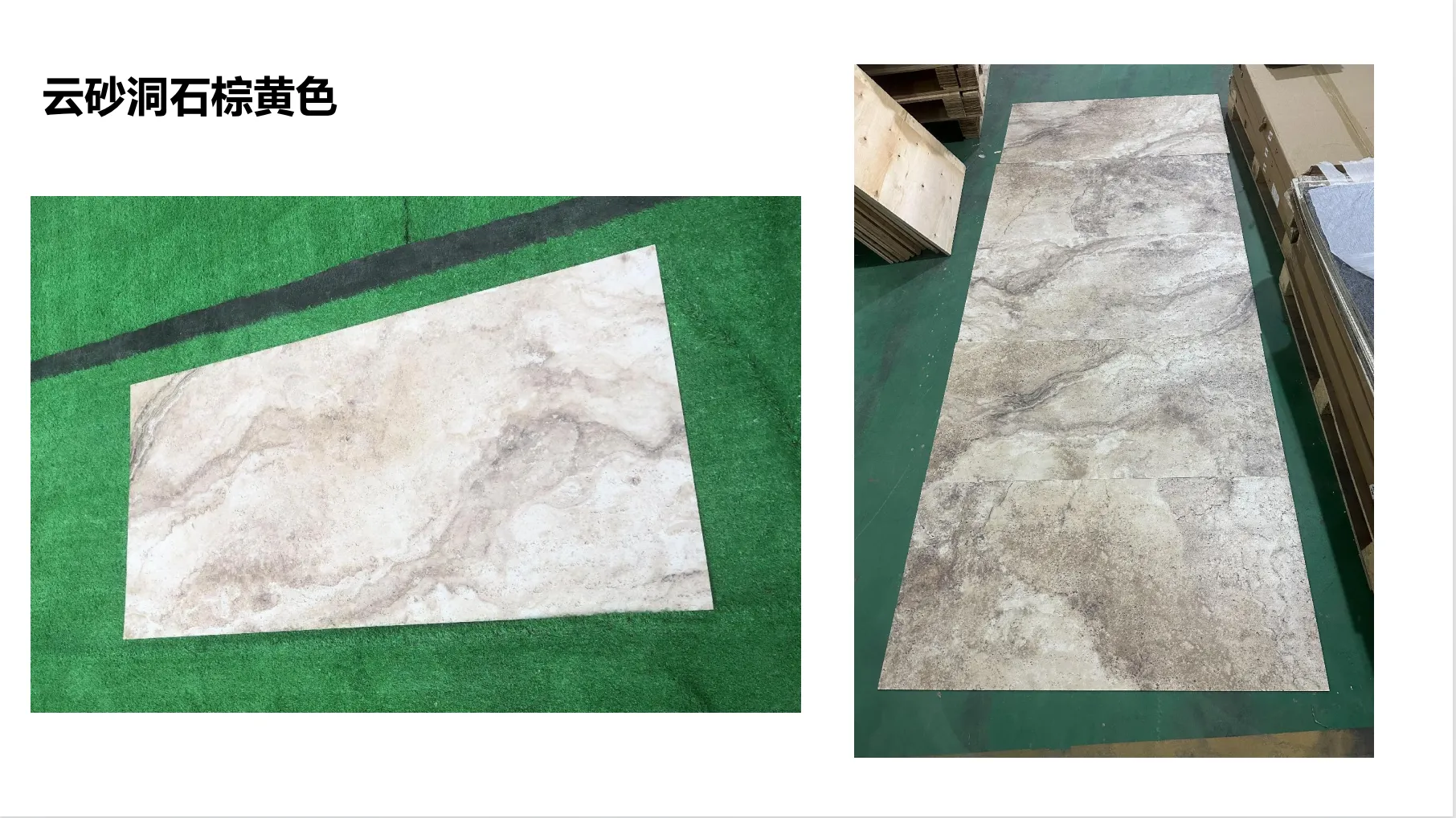
Texture That Tells a Story: Let's not overlook the sensory appeal. Dolomitic Travertine (Dark Grey) isn't smooth like polished granite or uniform like ceramic tile. Its surface is a map of its origins: tiny pits (called "vugs") left by gas bubbles trapped during formation, subtle ridges from mineral deposits, and veins that wind like rivers. Some slabs have a more "honed" finish—matte and soft—while others are slightly brushed for extra texture. Either way, it's a stone that invites touch, that feels alive. In a world of sterile, ultra-sleek surfaces, that tactile quality is pure gold.
| Property | Dolomitic Travertine (Dark Grey) (MCM Panel) | Standard Travertine (Natural Slab) | Fair-Faced Concrete |
|---|---|---|---|
| Weight (per sq.m) | 3-5 kg | 20-30 kg | 15-20 kg |
| Flexibility | Can bend up to 30° | Rigid (brittle when bent) | Low flexibility |
| Water Resistance | High (low absorption) | Moderate (porous, needs sealing) | Moderate (prone to staining) |
| Maintenance | Low (occasional cleaning) | High (regular sealing, stain removal) | Moderate (sealing needed) |
| Durability | High (resistant to chipping, UV damage) | Moderate (prone to scratching) | High (but prone to cracking) |
To understand Dolomitic Travertine (Dark Grey), you have to go back to its roots—literally, to the earth's crust. Travertine forms in areas with active hot springs, where groundwater heated by magma rises to the surface, carrying dissolved minerals like calcium carbonate. As the water cools and loses carbon dioxide, those minerals precipitate out, building up layer by layer over thousands of years. It's a slow process: some travertine deposits grow just a few millimeters per year, meaning a single slab can hold centuries of geological history.
Dolomitic Travertine (Dark Grey) takes this process a step further. In certain regions, the groundwater is rich in magnesium, which replaces some of the calcium in the stone's structure, forming dolomite (CaMg(CO₃)₂). This dolomite content is what gives the stone its extra density and durability. As for the dark grey color? That's usually a result of organic matter or mineral impurities—like iron sulfides or manganese oxides—trapped in the layers as the stone forms. The more impurities, the darker the stone; in some quarries, you'll even find slabs with hints of deep blue or green, depending on the local geology.
Historically, travertine has been a stone of empires. The ancient Romans used it to build the Colosseum and the Pantheon, prizing its strength and workability. But Dolomitic Travertine (Dark Grey) is a modern star. While traditional travertine quarries are found in Italy (think Tivoli), Turkey, and Iran, dolomitic varieties are often sourced from regions with magnesium-rich hot springs, like parts of Spain, Greece, or the American Southwest. Today, though, thanks to advancements in processing and MCM technology, this once-niche stone is available worldwide, bringing a touch of geological drama to projects from Tokyo to Toronto.
Here's the thing about Dolomitic Travertine (Dark Grey): it's not a one-trick pony. Its versatility is part of its appeal, making it suitable for everything from exterior cladding to interior accent walls, and even furniture. Let's break down the most popular applications, and why this stone excels in each:
Exterior Cladding: Making Buildings Stand Out (in the Best Way): In a world of glass and steel skyscrapers, a building wrapped in Dolomitic Travertine (Dark Grey) MCM panels is a breath of fresh air. The dark grey hue adds depth and sophistication, while the stone's natural texture softens the harsh lines of modern architecture. Imagine a mid-rise apartment building with floor-to-ceiling windows framed by dark grey stone panels—it's sleek, warm, and instantly memorable. And because MCM panels are lightweight and flexible, they're easy to install even on tall structures, cutting down on construction time and costs.
Interior Feature Walls: The "Wow" Factor at Home: For homeowners and interior designers, Dolomitic Travertine (Dark Grey) is a secret weapon for creating focal points. A living room accent wall clad in the stone instantly elevates the space, adding texture and mood without overwhelming it. Pair it with warm wood tones (think wood grain board floors or a oak bookshelf) for a cozy, cabin-like vibe, or with metallic fixtures and white walls for a modern, industrial feel. It's also a favorite for home theaters—its sound-absorbing texture helps improve acoustics, while its dark color enhances the movie-watching experience.
Commercial Spaces: From Cafés to Corporate Lobbies: Businesses are catching on, too. Coffee shops use Dolomitic Travertine (Dark Grey) for backsplashes or counter tops, adding a touch of luxury without feeling pretentious. Restaurants love it for feature walls in dining rooms, where the stone's natural variation creates a unique atmosphere at every table. Even corporate offices are getting in on the trend—imagine a reception desk wrapped in dark grey travertine, greeting clients with a message of stability and sophistication.
Outdoor Living: Patios, Pool Decks, and More: Thanks to its weather resistance, Dolomitic Travertine (Dark Grey) is a natural fit for outdoor spaces. A patio paved with MCM panels stays cool underfoot (unlike concrete, which can get scorching in the sun) and won't fade or crack in the rain. Pool decks? Even better—the stone's texture provides grip, reducing slips, while its dark color hides water spots and pool chemicals. It's durable enough to handle BBQs, kids' playtime, and winter snow, making it a long-lasting choice for busy families.
Furniture and Accents: Small Touches, Big Impact: Think beyond walls and floors. Designers are using Dolomitic Travertine (Dark Grey) for coffee tables, sideboards, and even fireplace surrounds. A travertine coffee table with a live edge (where the stone's natural perimeter is left intact) becomes a conversation piece, while a fireplace clad in dark grey panels turns a functional element into a work of art. The stone's weight (when used in solid slabs) gives furniture a sense of permanence, while its texture adds visual interest to even the simplest designs.
Let's be honest: the world of building materials is flooded with options. So why choose Dolomitic Travertine (Dark Grey) over, say, marble, concrete, or even other travertine variants like travertine (starry blue) ? Here's the case in a nutshell:
It balances beauty and brawn. Unlike marble, which is soft and prone to scratching, or concrete, which can feel cold and industrial, Dolomitic Travertine (Dark Grey) offers the best of both worlds: the natural elegance of stone and the durability of modern materials. It's also more sustainable than many alternatives. MCM panels use less raw stone and energy to produce than traditional slabs, and because they're lightweight, they reduce transportation emissions. Plus, the stone itself is a natural, renewable resource (though, of course, quarries must be managed responsibly).
Perhaps most importantly, it tells a story. Every slab of Dolomitic Travertine (Dark Grey) is unique—no two are exactly alike. The veins, the texture, the color variations—they're all reminders of the earth's slow, patient work. In a world of mass-produced, cookie-cutter design, that uniqueness is priceless. It's why designers love it: it adds soul to spaces. It's why homeowners love it: it makes their home feel one-of-a-kind. And it's why builders love it: it's reliable, easy to work with, and delivers on its promise of beauty and durability.
Dolomitic Travertine (Dark Grey) isn't just a building material—it's a design philosophy. It's about blending the old and the new: the ancient process of travertine formation with cutting-edge MCM technology. It's about choosing materials that are as functional as they are beautiful, as durable as they are distinctive. Whether you're building a skyscraper, renovating a home, or designing a café, this stone invites you to think differently about natural stone—less as a rigid, heavy slab, and more as a flexible, living element that can adapt to your vision.
So the next time you encounter that dark grey wall with the mesmerizing texture, take a moment to appreciate it. It's not just stone. It's centuries of geological history, wrapped in modern innovation, ready to transform spaces and inspire people for years to come. And that? That's the power of Dolomitic Travertine (Dark Grey).
Recommend Products












