
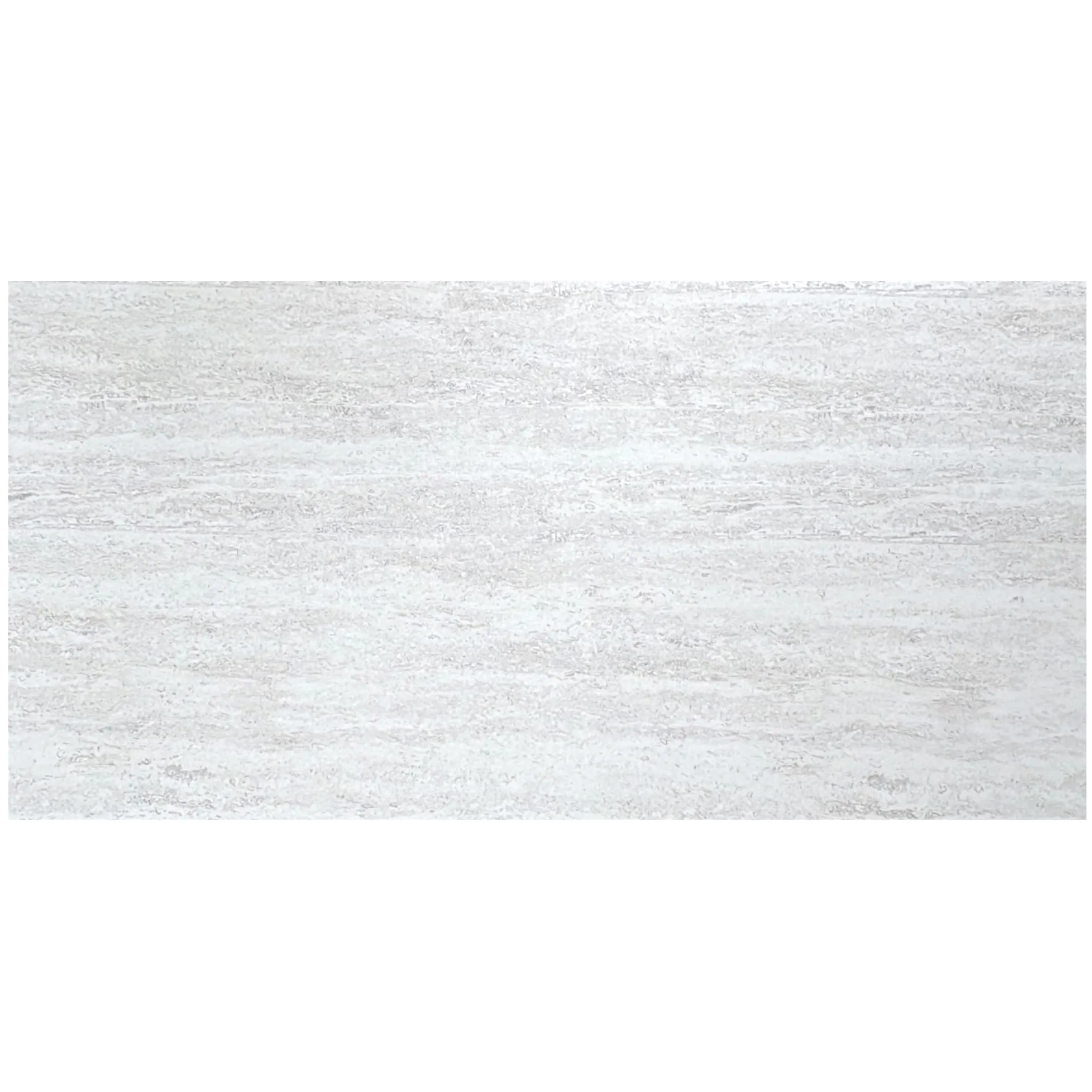
There's a stone that seems to carry the quiet drama of a moonlit night—soft, shadowy, and faintly luminous, as if it holds a secret between its layers. It's called Ethereal Shadow Travertine, and once you've seen it, it's hard to forget. Unlike the bold marbles that shout for attention or the rugged granites that demand respect, this travertine whispers. It invites you to lean in, to trace its veins with your eyes, and to wonder about the millions of years that shaped it. In this guide, we'll unpack everything that makes Ethereal Shadow Travertine so special: where it comes from, how it forms, what it feels like to the touch, and why designers and homeowners alike are falling for its understated charm.
To understand Ethereal Shadow, we first need to talk about travertine itself—a natural stone born from the earth's patient artistry. Travertine forms in hot springs and limestone caves, where mineral-rich water (loaded with calcium carbonate) cools and releases carbon dioxide, leaving behind layers of sediment that harden over time. Think of it like nature's version of building a cake, one thin, mineral-rich layer at a time, over thousands, even millions, of years.
Ethereal Shadow Travertine, in particular, hails from select quarries in regions known for producing some of the world's finest travertine—places like Tuscany, Italy, and parts of Turkey, where the geological conditions are just right. These quarries aren't just holes in the ground; they're like libraries of the earth's past. Miners here work carefully, not just to extract the stone, but to preserve the unique patterns that make each slab of Ethereal Shadow one of a kind. It's a slow process, and that slowness is part of the stone's magic. Unlike synthetic materials churned out in factories, Ethereal Shadow carries the marks of its journey: the way the water flowed, the minerals that seeped in, the tiny air bubbles that got trapped and became delicate pores. These "imperfections" are what make it perfect.
Let's rewind to the beginning—long before humans ever laid eyes on it. Ethereal Shadow Travertine starts as a solution: groundwater heated by the earth's core dissolves limestone, picking up calcium carbonate, magnesium, and other minerals along the way. When this supercharged water reaches the surface—say, in a hot spring or a cave—it hits cooler air, and the carbon dioxide in the water fizzes out, like opening a soda can. As the CO2 escapes, the minerals can't stay dissolved anymore, so they crystallize and settle, layer upon layer, like snowflakes piling up in a quiet forest.
What makes Ethereal Shadow different from other travertines? It's all in the details of this process. The water that forms it is slightly cooler than the water that creates, say, travertine (starry blue) (a vibrant cousin with bold, star-like flecks). This slower cooling allows for finer, more delicate crystallization. The mineral mix is also unique: a higher concentration of magnesium gives it those soft, shadowy gray tones, while trace amounts of iron oxide add subtle hints of taupe or silver, like the first light of dawn touching a shadow. Over time—we're talking tens of thousands of years—these layers compress, hardening into stone, but never losing the memory of how they were made. Run your hand over a slab, and you can almost feel the water flowing, the minerals settling, the earth breathing.
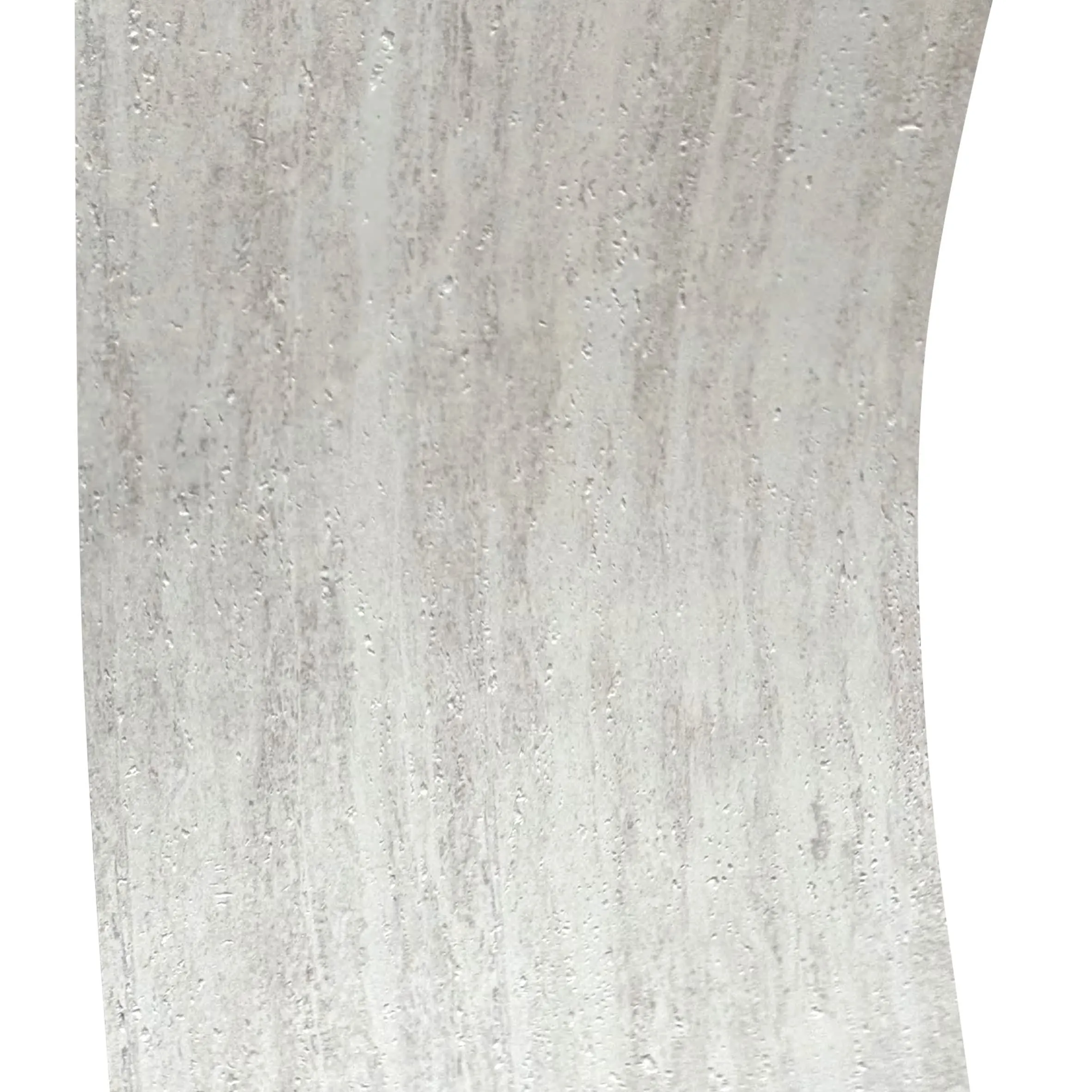
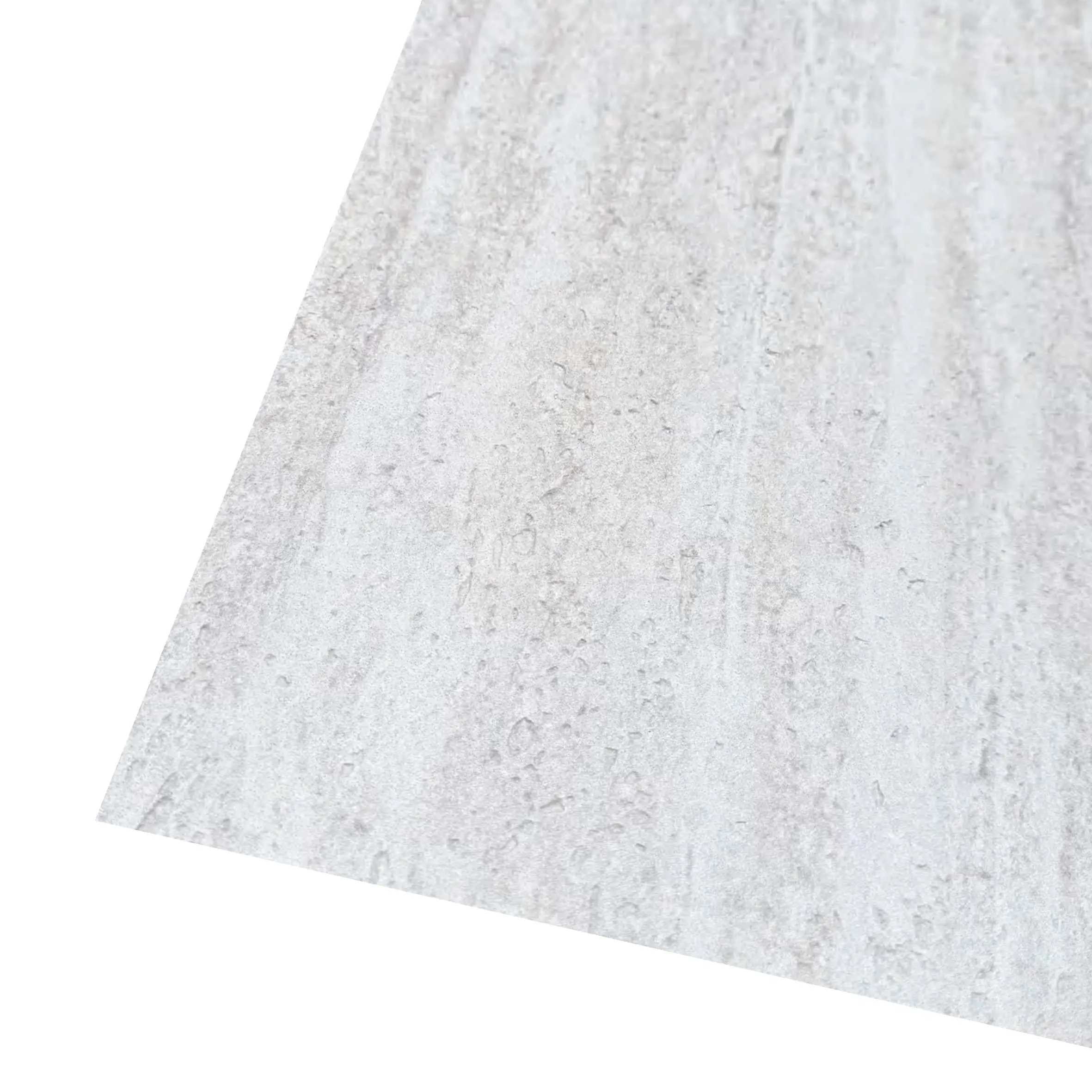
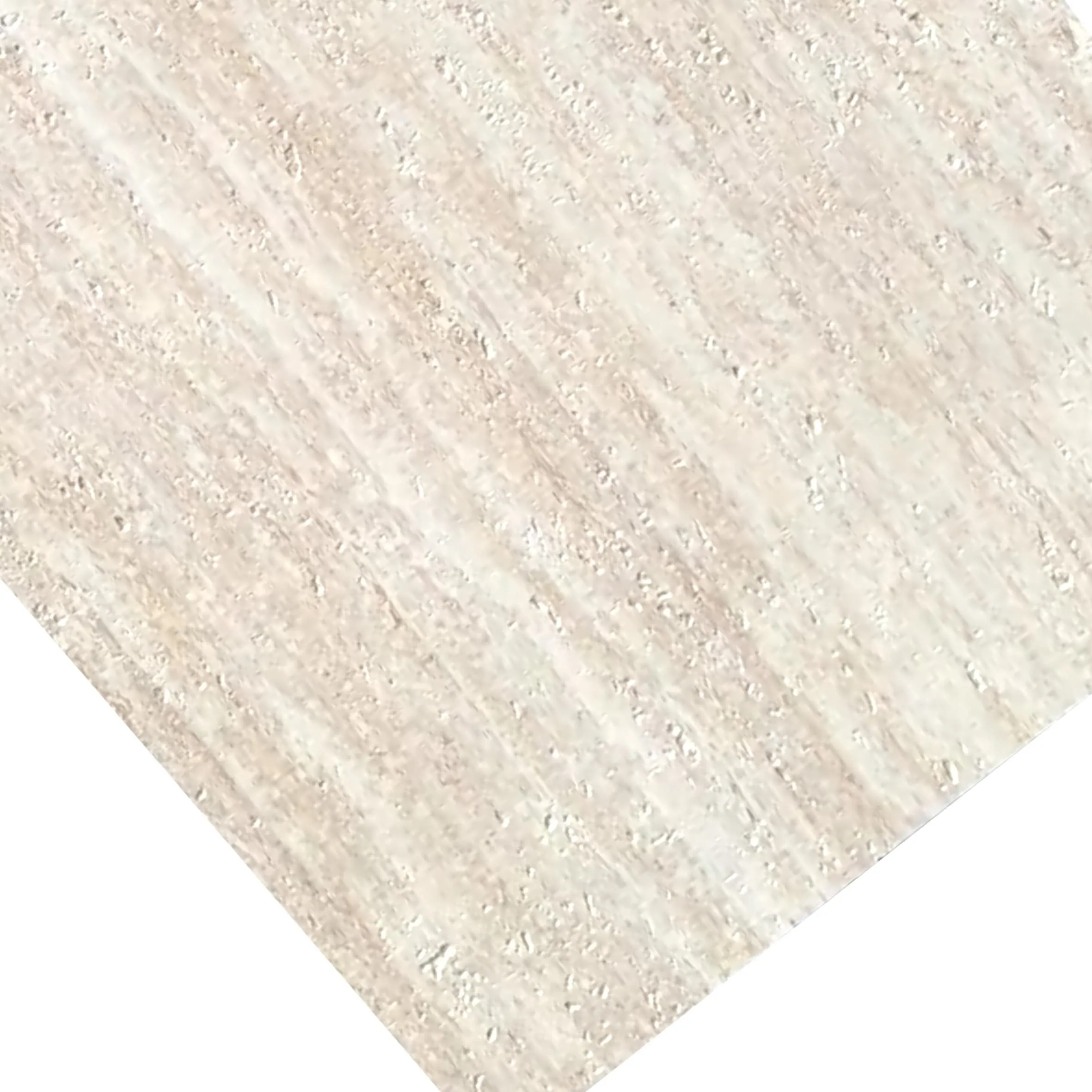
First, let's talk about touch. Pick up a piece of Ethereal Shadow Travertine, and you'll notice it's cooler than the air around it—a classic stone trait—but not icy. Its surface is slightly porous, with tiny indentations (called "vugs") that tell the story of those trapped air bubbles from its formation. Run your finger across it, and it's smooth, but not glassy; there's a gentle texture, like fine sandpaper that's been worn down by the ocean. It's not as dense as granite (which is great for high-traffic areas) but sturdier than many marbles, scoring a 4-5 on the Mohs hardness scale. That means it can handle daily use, but it's not invincible—more on that later.
Weight-wise, it's lighter than you might expect. A standard 2cm slab weighs about 13-15 kg per square meter, making it easier to install on walls or ceilings compared to heavier stones like marble interstellar gray (a dense marble with bold, cosmic veining). This lightness is a boon for designers working on projects where weight is a concern, like floating shelves or accent walls in older buildings.
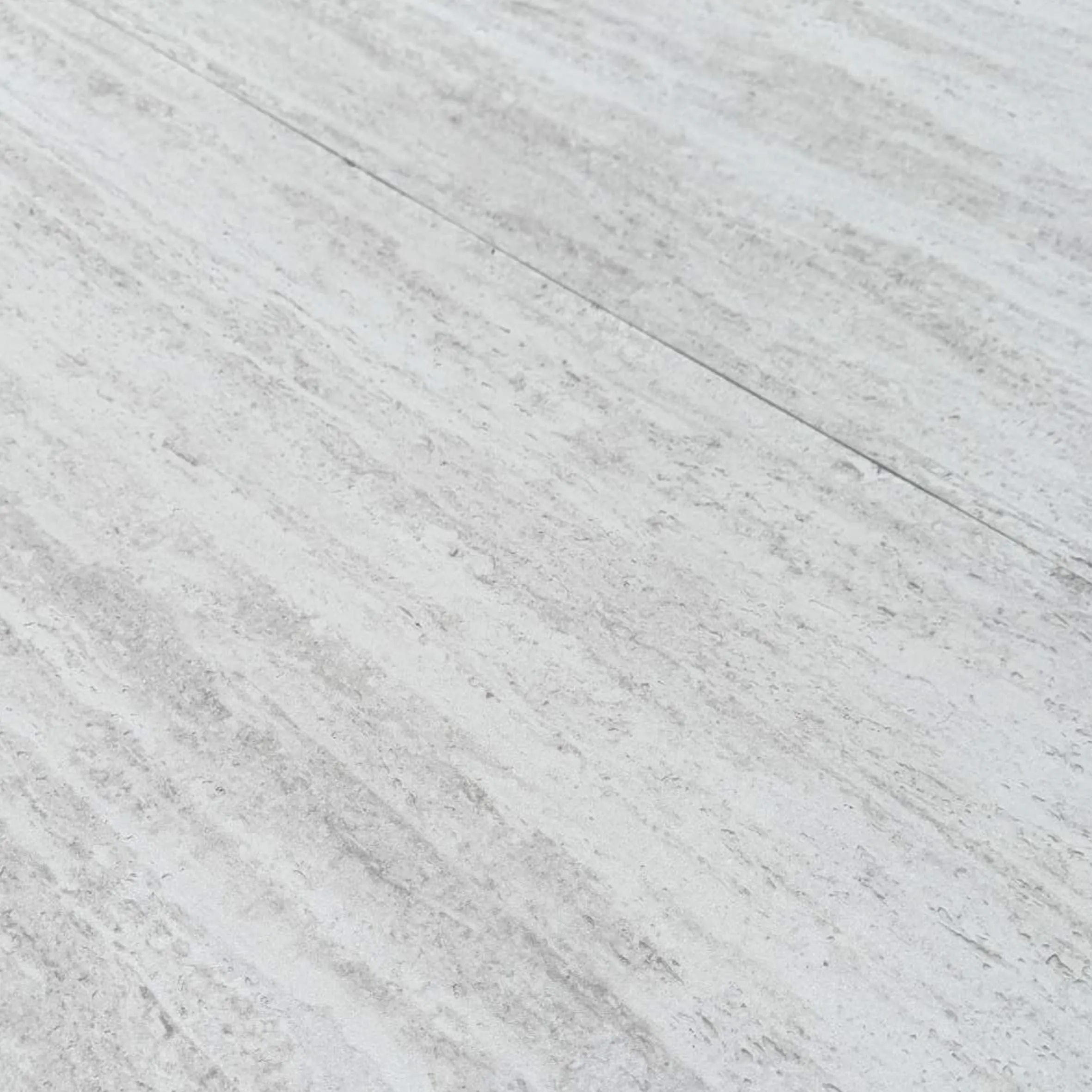
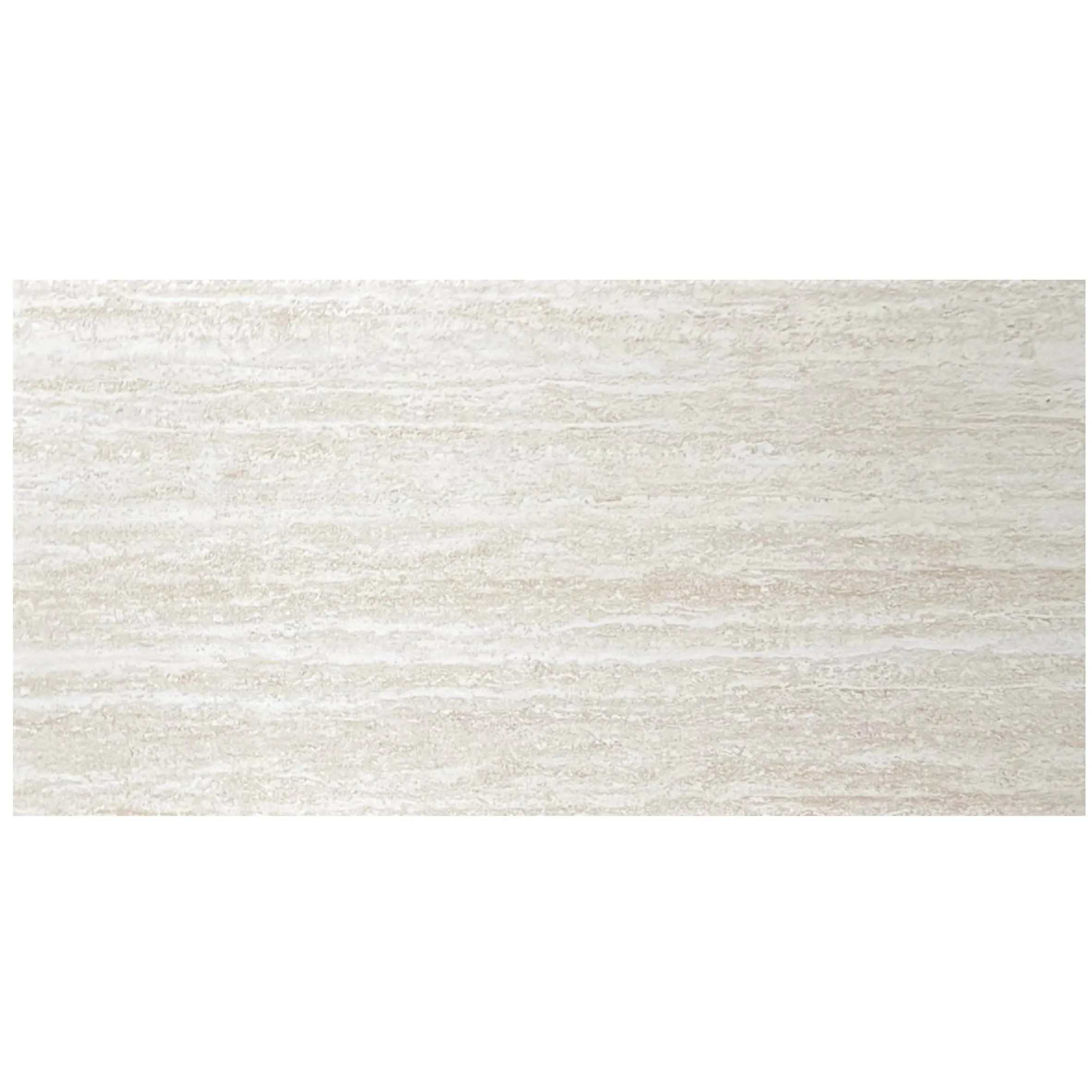
Now, the real star: its appearance. Ethereal Shadow Travertine is all about subtlety. Its base color is a soft, warm gray—think the color of storm clouds just before rain, or wet sand at low tide. But it's not a flat gray; it shimmers. The calcium carbonate crystals catch light, giving it a pearlescent quality, like moonlight on water. The veining is delicate, too: thin, wispy lines in slightly lighter or darker grays, sometimes with a hint of silver. These veins don't "pop" like they do in marble; they blend, creating a sense of movement, as if the shadow itself is shifting.
What really sets it apart is how it changes with light. In bright sunlight, it leans more silver, the veins glowing softly. In dim, warm light (like a cozy living room with floor lamps), it deepens into richer grays, the shadows becoming more pronounced. It's a stone that interacts with its environment, never looking exactly the same twice. Designers love this versatility—whether you want a space to feel calm and airy or moody and intimate, Ethereal Shadow adapts.
To truly appreciate Ethereal Shadow, it helps to see how it fits alongside other popular stones. Let's break it down with a quick comparison:
| Stone Type | Primary Color | Veining/Pattern | Best For | Key Vibe |
|---|---|---|---|---|
| Ethereal Shadow Travertine | Soft gray with silver/moonstone highlights | Delicate, wispy gray veins; subtle porosity | Accent walls, backsplashes, fireplace surrounds | Calm, ethereal, timeless |
| Travertine (starry blue) | Deep blue with white "star" flecks | Bold, scattered star-like pores; thicker veining | Statement floors, outdoor patios | Vibrant, cosmic, energetic |
| Marble Interstellar Gray | Charcoal gray with white/cream veins | Thick, dramatic veins; dense, polished surface | Countertops, luxury bathrooms | Luxurious, bold, high-contrast |
| Lunar Peak Silvery | Bright silver with white marbling | Swirling, cloud-like patterns; high sheen | Modern facades, minimalist interiors | Futuristic, sleek, reflective |
See the pattern? Ethereal Shadow sits in the sweet spot between bold and boring. It has enough personality to stand out but not so much that it overwhelms a space. It's the stone equivalent of a well-tailored gray suit: classic, versatile, and always in style.

So, where does Ethereal Shadow Travertine work best? Let's start indoors. Imagine walking into a bathroom with walls clad in it: the soft gray tones reflect the light from the window, making the space feel larger, while the slight porosity adds warmth, so it doesn't feel cold or clinical. It's perfect for shower walls (with proper sealing, of course) or a vanity top that feels both luxurious and approachable.
In living rooms, it makes a stunning accent wall behind a sofa or TV. Unlike busy patterns that clash with decor, its subtle veining complements everything from modern art to vintage rugs. Fireplace surrounds are another sweet spot—imagine flames dancing against those shadowy grays, the stone glowing softly as it absorbs the heat. It's also a favorite for kitchen backsplashes: durable enough to handle splatters, and its neutral color lets your cabinets or countertops (think warm wood or bold lunar peak silvery ) take center stage.
Outdoors, Ethereal Shadow holds its own, too—though it's best in covered areas or shaded patios. Its light color reflects the sun, keeping outdoor spaces cool, and its porosity gives it good traction, even when wet. Imagine a patio with Ethereal Shadow tiles, paired with potted plants and string lights: it feels like bringing a piece of the moonlit forest into your backyard.
Like any natural stone, Ethereal Shadow Travertine needs a little love to stay looking its best. Here's the good news: it's not high-maintenance, just mindful maintenance. First, seal it. Travertine is porous, so sealing it every 1-2 years (more often for high-moisture areas like bathrooms) will protect it from stains. Use a penetrating sealer (not a topical one, which can make it look plastic-y) to preserve that natural texture.
Cleaning is simple: warm water and a pH-neutral cleaner (skip the vinegar or bleach—acidic products can etch the surface). Wipe up spills quickly, especially acidic ones like wine or citrus juice, which can discolor the stone. For daily dusting, a microfiber cloth works best—no harsh scrubbing pads, which can scratch the surface.
And remember those pores we talked about? They're part of the stone's charm, but they can collect dirt over time. Every few months, gently brush them with a soft-bristled brush to keep them clear. Treat your Ethereal Shadow Travertine like you'd treat a favorite book: with care, and it will last for decades, maybe even centuries.
At the end of the day, Ethereal Shadow Travertine is more than a building material. It's a story—of the earth's patience, of water and minerals dancing together, of time itself. When you choose it for your home or project, you're not just adding a surface; you're adding a piece of the planet's history, a reminder that beauty often comes from slow, quiet processes. It's a stone that doesn't demand attention, but earns it—one shadow, one vein, one whispered secret at a time.
So, whether you're designing a minimalist apartment, a cozy cabin, or a grand commercial space, consider Ethereal Shadow Travertine. Let it wrap your walls in softness, let it ground your floors in history, let it remind you that even in the busiest world, there's beauty in the shadows.
After all, some of the most unforgettable things in life are the ones that don't shout—they just are . And Ethereal Shadow Travertine? It is unforgettable.
Recommend Products












