
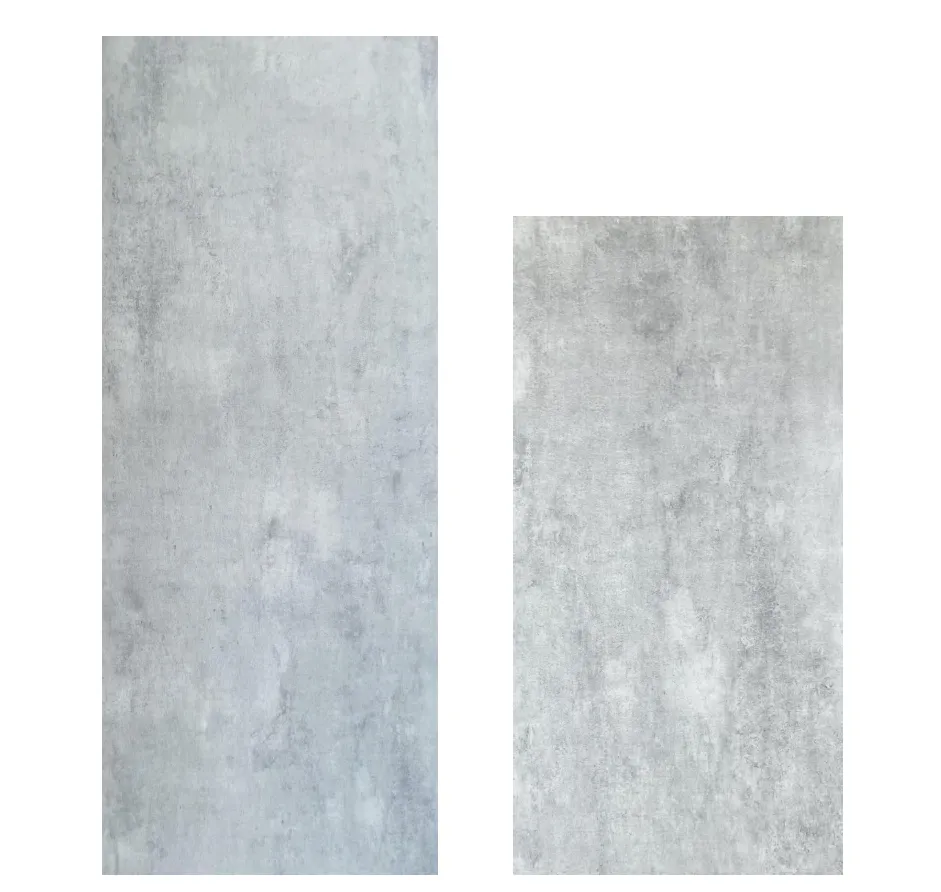
Walk into any space—whether it's a cozy home, a bustling office, or a grand public venue—and the first thing that quietly speaks to you is the material. The cool touch of marble, the rugged warmth of wood, the industrial edge of concrete—these surfaces don't just fill a room; they shape how we feel in it. For decades, architects and designers have danced with a familiar set of materials, each with its own personality but also its own limitations: marble is stunning but fragile, concrete is durable but cold, wood is warm but prone to wear. What if there was a way to capture the best of these worlds, to create materials that don't just exist, but elevate the spaces they inhabit? Enter MCM—Modified Composite Material—a revolution in building technology that's quietly rewriting the rules of what's possible. And at the heart of this revolution lies a standout star: Marble Concrete Board.
MCM isn't just a new material; it's a philosophy. It's about blending the timeless beauty of natural elements with the cutting-edge resilience of modern engineering. It's about giving designers the freedom to dream without being constrained by "what's always been done." In a world where we crave both authenticity and longevity, MCM products like Marble Concrete Board bridge the gap, offering surfaces that tell a story while standing up to the chaos of everyday life. Let's dive into this innovation, exploring what makes Marble Concrete Board so special, how it's changing the game for spaces big and small, and why it might just be the material you didn't know you'd been waiting for.
Imagine running your hand over a surface that feels like polished marble—smooth, luxurious, with depth and veining that seem to flow like a river frozen in time. Now, imagine that same surface being tough enough to withstand a coffee spill, a child's sticky fingers, or even the harsh elements of an outdoor patio. That's Marble Concrete Board in a nutshell: a masterful blend of marble's aesthetic allure and concrete's industrial strength, wrapped into a lightweight, versatile panel that defies traditional categorization.
But let's get specific. Marble Concrete Board is a composite material engineered using a proprietary process that combines marble powder (sourced from natural stone remnants, reducing waste) with high-performance polymers, fiberglass, and mineral reinforcements. The result? A panel that's not just a "copy" of marble or concrete, but a reinvention . It mimics the visual richness of natural marble—those subtle variations in color, the organic veining, the soft matte or glossy finishes—while borrowing concrete's structural integrity, fire resistance, and low maintenance needs. It's the material equivalent of a Swiss Army knife: adaptable, reliable, and surprisingly elegant.
Pro Tip: Don't let the name fool you—Marble Concrete Board isn't just for "marble lovers" or "concrete fans." It's for anyone who wants a surface that balances beauty and brawn. Whether you're designing a minimalist kitchen, a rustic outdoor lounge, or a sleek corporate lobby, this board adapts to your vision, not the other way around.
What truly sets it apart, though, is its flexibility—both literal and figurative. Unlike heavy natural marble slabs that require cranes to install and can crack under stress, Marble Concrete Board is lightweight (typically 3-5 kg per square meter, compared to marble's 20+ kg) and can be bent or curved to fit unique architectural shapes. Want a feature wall with a gentle arch? No problem. Dream of a kitchen backsplash that wraps around a corner seamlessly? Done. This flexibility opens up a world of design possibilities that were once either too expensive or too impractical with traditional materials.
Great materials aren't just created—they're crafted . The magic of Marble Concrete Board lies in its meticulous composition, where every ingredient plays a role in balancing form and function. Let's break it down:
The manufacturing process itself is a feat of precision. The ingredients are mixed under controlled conditions, then poured into molds that can replicate the look of natural marble veining, concrete's subtle pockmarks, or even custom textures. Once cured, the panels are cut to size, finished (polished, honed, or textured), and ready for installation. The result is a product that's consistent in quality but varied in appearance—just like nature intended, but with a reliability that nature can't always guarantee.
Let's cut to the chase: with so many building materials on the market, why should you care about Marble Concrete Board? The answer lies in its benefits —those tangible, real-world advantages that make it more than just a "nice-to-have" but a "must-have" for modern spaces. Let's break them down, one by one.
Life is messy. Coffee spills, kids' toys, pet claws, heavy furniture being dragged across floors—these are the realities of any lived-in space. Traditional marble? It stains easily, scratches if you look at it wrong, and can chip with a hard knock. Concrete, while tough, can crack over time and is prone to dusting. Marble Concrete Board? It laughs in the face of these challenges. Its polymer reinforcement makes it resistant to stains (wipe up that red wine in 10 minutes, and no one will ever know), scratches (no need to panic when the dog runs across the floor), and impacts (accidentally drop a pan? The board might scuff, but it won't shatter). It's also moisture-resistant, making it perfect for bathrooms, kitchens, and even outdoor areas where rain or humidity would wreak havoc on natural stone.
One of the biggest headaches with traditional marble or large concrete slabs is installation. They're heavy—we're talking hundreds of pounds per slab—requiring specialized equipment, multiple workers, and careful maneuvering (especially in tight spaces like stairwells or upper floors). Marble Concrete Board, by contrast, weighs in at just 3-5 kg per square meter. That means a single installer can carry and position panels, cutting down on labor costs and installation time. It can be mounted using simple adhesives or mechanical fasteners, and it's easy to cut on-site with standard tools, allowing for custom fits around windows, outlets, or unique architectural features. No more delays, no more backaches—just a smooth, efficient process from start to finish.
Here's where Marble Concrete Board truly shines: it doesn't box you into one design style. Love the timeless elegance of Carrara marble? There's a finish for that, with soft white backgrounds and gray veining. Crave the industrial vibe of raw concrete? Opt for a matte, gray-toned panel with subtle texture. Want something bold? Explore colors like Travertine (Starry Blue) —a deep, moody shade with flecks that mimic a night sky—or warm beige tones that evoke sunlit stone quarries. The possibilities are nearly endless, with options for polished, honed, brushed, or even "aged" finishes that look like they've been part of a space for decades. And because the color runs through the entire panel (not just a surface layer), minor scratches or chips are far less noticeable than they would be on a painted or laminated surface.
Let's be honest: no one wants to spend weekends sealing, polishing, or repairing surfaces. Traditional marble needs annual sealing to prevent staining; concrete often requires regular waxing to maintain its sheen; wood needs refinishing every few years. Marble Concrete Board? It's the low-maintenance friend we all need. A quick wipe with a damp cloth and mild soap is usually all it takes to keep it looking fresh. No sealing, no special cleaners, no expensive professional treatments. Even in high-traffic areas like restaurant floors or hotel lobbies, it retains its luster with minimal effort—freeing up time (and budget) for the things that actually matter, like enjoying the space.
Safety and longevity are non-negotiable, especially in commercial or public spaces. Marble Concrete Board checks both boxes. It's fire-resistant (rated Class A in most cases), meaning it won't contribute to the spread of flames in the event of a fire. Outdoors, it holds up to UV rays (no fading, even in direct sunlight), rain, snow, and temperature fluctuations—unlike wood, which warps, or natural stone, which can crack in freeze-thaw cycles. Whether you're cladding an outdoor kitchen, a poolside patio, or the facade of a building, this board stands strong, looking as good in 10 years as it did on day one.
The beauty of Marble Concrete Board isn't just in its specs—it's in how it fits into real life. This material isn't limited to one type of space or one design style; it's a chameleon, adapting to wherever it's placed. Let's explore some of the most popular applications, and maybe spark a few ideas for your own project.
Your home is your sanctuary, and the materials should reflect that. Marble Concrete Board adds a touch of luxury without the luxury price tag or upkeep. Imagine a kitchen backsplash in a soft Travertine (Beige) finish, complementing warm wood cabinets and stainless steel appliances—the veining adds visual interest, while the durability means you can sauté, spill, and scrub without worry. Or a feature wall in the living room, clad in a bold Marble Interstellar Gray panel, serving as the backdrop for family movie nights and weekend gatherings. Even bathrooms benefit: use it for shower walls (moisture-resistant!) or vanity tops, where it resists water spots and soap scum better than traditional marble.
Outdoors, too, it shines. A patio floor in Boulder Slab (Vintage Silver) adds industrial chic to al fresco dinners, while a garden wall in Stream Limestone (Claybank) blends seamlessly with greenery, creating a natural, organic feel. And because it's lightweight, it's perfect for second-story balconies or rooftop terraces, where heavy materials might be a structural concern.
First impressions matter in commercial spaces, and Marble Concrete Board knows how to make a statement. Retail stores can use it for checkout counters or wall panels, creating a high-end vibe that elevates the shopping experience—think a boutique clothing store with Marble Veil White walls that make the merchandise pop. Restaurants and cafes might opt for Rough Granite Stone (Medium Grey) tabletops, durable enough for busy dinner rushes but stylish enough to Instagram. Office lobbies? A grand reception desk in Granite Portoro exudes professionalism, while wall cladding in Fair-Faced Concrete (a close cousin in the MCM family) adds an on-trend, minimalist edge.
Even hospitality spaces like hotels and resorts are falling for its charm. Imagine a hotel lobby with a sweeping staircase clad in Golden Travertine (White Golden) , or guest room bathrooms with Polish Concrete shower walls that feel both modern and indulgent. It's a material that says "thoughtful design" without screaming for attention.
Public spaces—museums, airports, schools, community centers—see more foot traffic and wear than almost any other type of environment. That's where Marble Concrete Board's toughness really pays off. A museum corridor with Slate Veil White walls can withstand thousands of visitors' brushes and backpacks while providing a neutral backdrop that lets the art take center stage. An airport terminal might use Concrete Board (Light Grey) for flooring, resistant to scuffs from rolling suitcases and easy to clean between flights. Even schools benefit: cafeteria tables in Wood Grain Board (a warm, wood-like finish) stand up to sticky fingers and food spills, while classroom walls in Cut Stone (Beige) create a calm, focused atmosphere.
Curious how Marble Concrete Board compares to the materials you already know and love? Let's put it head-to-head with traditional marble, concrete, and even wood, so you can see exactly where it stands out.
| Feature | Traditional Marble | Traditional Concrete | Marble Concrete Board |
|---|---|---|---|
| Aesthetics | Timeless, natural veining; high-end look | Industrial, minimalist; limited color options | Mimics marble's veining + concrete's texture; wide color/finish range |
| Durability | Prone to scratches, stains, and chipping | Strong but can crack; prone to dusting | Stain, scratch, and impact-resistant; moisture-proof |
| Weight | Heavy (20-30 kg/sq.m); requires structural support | Very heavy (25-40 kg/sq.m); difficult to install | Lightweight (3-5 kg/sq.m); easy to handle |
| Installation | Needs professionals; specialized tools; time-consuming | Requires formwork; long curing time | DIY-friendly; adhesive or fasteners; cuts with standard tools |
| Maintenance | Annual sealing; special cleaners; prone to etching | Regular waxing; stains if not sealed | Wipe with soap and water; no sealing needed |
| Cost | High ($80-$200/sq.m) | Moderate ($40-$80/sq.m) but high installation costs | Moderate ($50-$100/sq.m) with low installation costs |
| Sustainability | Quarrying impacts ecosystems; high waste | High carbon footprint; energy-intensive production | Uses recycled stone powder; low energy production; long lifespan |
As the table shows, Marble Concrete Board isn't just "better" than traditional materials—it's smarter . It takes the best qualities of marble (beauty) and concrete (strength) and leaves behind the headaches (weight, maintenance, cost). And when compared to wood, it offers similar warmth (with finishes like Wood Grain Board ) but without the risk of rot, pests, or warping. It's the material equivalent of upgrading from a flip phone to a smartphone—once you experience the convenience and versatility, it's hard to go back.
One of the most exciting things about Marble Concrete Board is the sheer range of design options. This isn't a "one-size-fits-all" material; it's a canvas, waiting for your creativity. Let's dive into the colors, textures, and finishes that make every project unique.
Neutrals will always have their place—they're versatile, timeless, and easy to pair with other elements. Marble Concrete Board offers classics like Travertine (Beige) , a soft, warm tone that feels like sunlight on stone; Limestone (Beige) , with subtle undertones that complement both modern and traditional spaces; and Concrete Board (Light Grey) , a sleek, minimalist option that lets furniture and decor take center stage. But if you're feeling bold, the color palette expands into rich, eye-catching hues: Travertine (Starry Red) adds drama to a feature wall, Granite Nero Margiua (deep black with gold flecks) exudes luxury, and Rona Yellow brings a cheerful, sunny vibe to kitchens or playrooms.
What's truly impressive is how the colors interact with light. A Marble Interstellar Gray panel might look cool and moody in morning light, then warm up as the sun sets, thanks to subtle mineral flecks that catch and reflect rays. It's a dynamic quality that keeps spaces feeling alive, not static.
Texture is what turns a "surface" into an experience —the rough-hewn feel of stone, the smoothness of polished marble, the grain of wood. Marble Concrete Board offers textures that appeal to both sight and touch. For a natural, organic look, Boulder Slab mimics the rugged surface of stone pulled straight from a quarry, with uneven edges and deep grooves that add character. Linear Travertine (Claybank) features long, horizontal veining that creates a sense of movement, perfect for elongating a room. Weaving (Khaki) —a texture inspired by handwoven fabrics—adds softness and warmth, making it ideal for bedrooms or reading nooks.
Even within the same color, different textures can completely change the vibe. A Travertine (Vintage Silver) panel in a polished finish feels sleek and modern, while the same color in a brushed texture takes on a rustic, industrial edge. It's all about choosing the texture that tells your space's story.
The finish is the final touch that ties a design together. Polished finishes (like Polish Concrete ) are glossy and reflective, bouncing light around a room and making it feel larger—great for small spaces or areas with limited natural light. Honed finishes (matte) are soft and understated, with a velvety feel that's perfect for creating calm, spa-like bathrooms or cozy living rooms. Aged finishes (like Ancient Wood or Historical Pathfinders Stone ) have a weathered, timeworn look, adding character to spaces that aim for "collected over time" charm—think a farmhouse kitchen or a boutique hotel with a rustic vibe.
And for those who want something truly unique, custom finishes are available. Imagine a panel with a combination of polished and honed sections, creating a pattern that's one-of-a-kind. Or a texture that mimics the bark of a tree, paying homage to nature in a modern space. With Marble Concrete Board, the only limit is your imagination.
In today's world, "sustainable" isn't just a buzzword—it's a responsibility. We all want to make choices that protect the planet, and that includes the materials we use to build and design our spaces. Marble Concrete Board doesn't just excel in beauty and durability; it's also a leader in eco-friendly innovation. Let's explore how this material is doing its part for the environment.
Traditional marble quarrying and processing generate a lot of waste—up to 30% of a natural stone block is often discarded as "scrap" during cutting and shaping. Marble Concrete Board addresses this by using that waste. The marble powder in its composition is sourced from these remnants, diverting tons of material from landfills each year. It's a circular approach: what was once considered "trash" becomes a key ingredient in a high-performance material. This not only reduces waste but also lessens the demand for new quarrying, which can disrupt ecosystems and contribute to deforestation.
Manufacturing traditional concrete is energy-intensive, releasing significant amounts of CO2 into the atmosphere. Marble Concrete Board's production process, by contrast, uses far less energy. The composite materials require lower curing temperatures, and the lightweight panels reduce transportation emissions (since more panels can be shipped per truck, cutting down on fuel use). Additionally, MCM manufacturers often use renewable energy sources (like solar or wind) in their facilities, further minimizing the carbon footprint.
The most sustainable material is one that lasts. Marble Concrete Board's durability means it doesn't need to be replaced every few years, unlike wood (which rots), laminate (which peels), or even natural stone (which chips or stains). A single panel can last 20+ years with minimal maintenance, reducing the lifecycle impact of your space. And when it does eventually reach the end of its life, many MCM products are recyclable, closing the loop even further.
Fun Fact: Some MCM manufacturers offer a "green certification" for their products, verifying that they meet strict environmental standards for waste reduction, energy use, and recyclability. Look for this certification if sustainability is a top priority for your project!
Numbers and specs are great, but nothing brings a material to life like real-world stories. Let's meet a few people who chose Marble Concrete Board for their projects and hear how it exceeded their expectations.
Sarah, a busy mom of two in Chicago, had dreamed of a marble kitchen for years—but was terrified of the upkeep. "I loved the look of marble, but with two kids and a dog, I knew it would get destroyed," she says. "Then I discovered Marble Concrete Board. I went with Travertine (Starry Blue) for the backsplash and Wood Grain Board (Light Grey) for the countertops. It's been two years, and it still looks brand new. My oldest spilled grape juice on the counter last month—wiped it right up with a paper towel, no stain. And the backsplash? It's become the focal point of the room. Friends come over and can't believe it's not real marble!"
Miguel owns a small clothing boutique in downtown Austin, and he wanted to upgrade his space to attract a more style-conscious crowd. "I needed something that looked high-end but could handle daily foot traffic and the occasional clothing rack scrape," he explains. He chose Marble Stream Stone for his checkout counter and Fair-Faced Concrete for the walls. "The counter is stunning—customers always comment on it. And the concrete walls? They're the perfect backdrop for my clothes. Plus, installation was a breeze. The contractors had it done in a weekend, so I barely had to close the shop. Best decision I made for the business."
Lisa, an architect in Seattle, was tasked with designing a rooftop patio for a luxury apartment building. "Weight was a huge concern—rooftops have strict load limits," she says. "Traditional stone was out of the question because it was too heavy. Then I found Boulder Slab (Vintage Gold) and Foamed Aluminium Alloy Board (Vintage Silver) . The combination is incredible. The Boulder Slab adds texture and warmth, while the aluminium panels bring a modern edge. And because they're lightweight, we didn't have to reinforce the roof. Now the tenants love it—they're out there every weekend, grilling and hanging out. It's become the building's biggest selling point!"
As we look to the future, one thing is clear: the demand for materials that balance beauty, durability, and sustainability will only grow. We want spaces that feel authentic, that tell a story, but we also want them to keep up with our busy, messy, wonderful lives. Marble Concrete Board isn't just a trend—it's a glimpse into what building materials can be: innovative, adaptable, and human-centered.
Whether you're a homeowner dreaming of a kitchen upgrade, a designer pushing the boundaries of what's possible, or a builder looking for a material that makes projects easier and more profitable, Marble Concrete Board delivers. It's a reminder that innovation doesn't have to mean sacrificing soul—in fact, when done right, it can enhance it.
So the next time you walk into a space and find yourself drawn to the walls, the floors, the surfaces that surround you, take a closer look. Maybe it's marble. Maybe it's concrete. Or maybe, just maybe, it's Marble Concrete Board—quietly revolutionizing how we build, live, and experience the world around us.
Recommend Products












