
Every architect knows the struggle: finding a material that marries beauty with resilience, tradition with innovation, and artistry with practicality. In a world where buildings don't just house people but tell stories, the right cladding can turn a structure from ordinary to unforgettable. Enter MCM White Travertino—a material that's been quietly revolutionizing architectural design, one project at a time. But what exactly is it? Why are designers swapping traditional stone for this engineered alternative? Let's dive in, peeling back the layers of this modern marvel to see why it's becoming a staple in the toolkits of forward-thinking architects.
Before we get to the "White Travertino" part, let's start with the foundation: MCM. Short for Modified Composite Material, MCM is the result of decades of engineering aimed at solving a classic problem: natural stone is stunning, but it's heavy, porous, and prone to inconsistency. MCM flips the script by blending natural mineral aggregates with high-performance polymers, creating a material that's thin, lightweight, and remarkably durable. Think of it as nature's beauty, reimagined with science's precision.
At the heart of MCM's appeal is its flexibility—both literal and metaphorical. Unlike rigid natural stone slabs, MCM flexible stone can bend, curve, and adapt to complex architectural shapes without cracking. This isn't just a technical win; it's a creative liberation. Suddenly, curved facades, undulating accent walls, and custom geometries that once seemed impossible become achievable. And when you pair that flexibility with the aesthetic depth of travertine? You get MCM White Travertino—a material that feels both timeless and cutting-edge.
Travertine has been a favorite of architects for millennia, from the Colosseum's grand arches to the sleek lobbies of modern hotels. Its signature pitted surface, warm tones, and organic veining tell a story of slow formation—minerals deposited by mineral springs over centuries. But natural travertine has its flaws: it's porous, requiring constant sealing; it's heavy, driving up installation costs; and no two slabs are ever identical, making consistency a challenge for large projects.
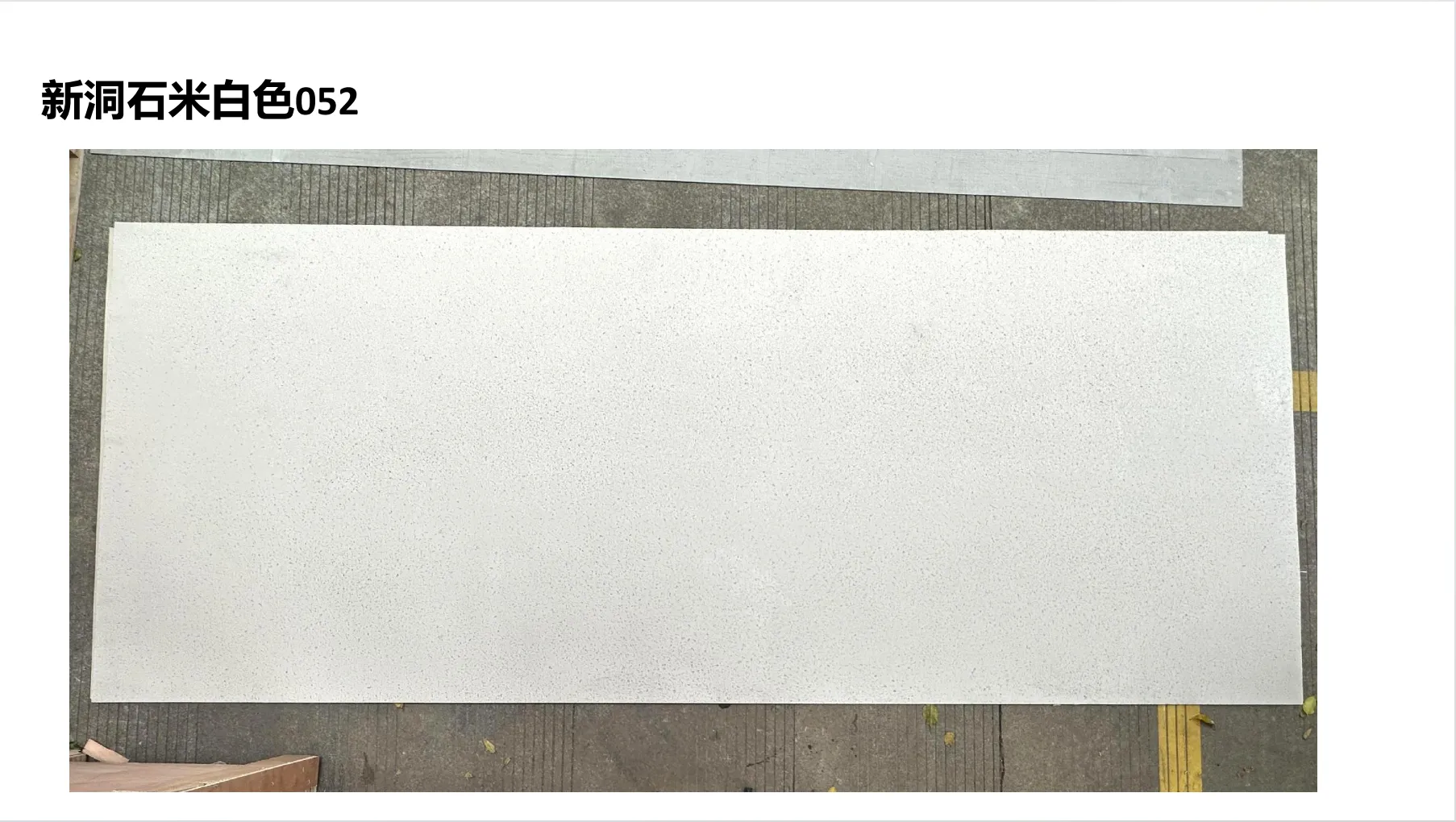
MCM White Travertino takes the best of natural travertine and leaves the rest behind. Visually, it's a love letter to the classic stone: soft white and cream hues, delicate gray veining that meanders like rivers on a map, and subtle pitting that adds texture without overwhelming. Run your hand over it, and you'll feel the cool, matte finish that evokes the tactile warmth of natural stone—without the worry of staining or chipping.
But here's where the engineering shines: unlike natural travertine, which can vary dramatically from slab to slab, MCM White Travertino offers uniformity. That means architects can design a 50-story facade or a sprawling commercial complex with the confidence that every panel will match, creating a cohesive visual narrative. And for projects that call for a warmer palette, there's even travertine (beige) —a cousin to White Travertino that adds a sunlit, earthy tone to spaces, proving MCM's versatility in color and character.
Imagine specifying a material for a curved rooftop bar or a spiral staircase cladding. With natural stone, you'd face weight issues, cracking risks, and sky-high fabrication costs. MCM flexible stone changes the game. At just 3-5mm thick and weighing a fraction of natural stone (typically 3-5 kg/m² vs. 20-30 kg/m² for marble or granite), MCM White Travertino can be bent to radii as tight as 30cm without losing structural integrity. This isn't just about aesthetics—it's about practicality. Lighter materials mean less structural support is needed, cutting down on construction time and costs. And for renovation projects where weight is a concern (think historic buildings with fragile foundations), it's a game-changer.
Architects don't just design for today—they design for decades. MCM White Travertino is built to stand the test of time. Unlike natural travertine, which absorbs water and stains easily, MCM's polymer core creates a barrier against moisture, making it ideal for rainy climates or poolside applications. It's also UV-resistant, so that soft white hue won't fade to yellow under harsh sunlight. And if a panel does get scratched? Unlike natural stone, which requires professional restoration, minor blemishes can often be buffed out with a simple cleaning. In coastal areas, where salt air eats away at traditional stone, MCM holds its own, resisting corrosion and maintaining its finish year after year.
Great architecture is about harmony—balancing materials to create a cohesive vision. MCM White Travertino plays well with others, making it a Swiss Army knife for designers. Pair it with wood grain board for a warm, organic feel in a residential interior. Contrast it with fair-faced concrete for an industrial-modern vibe in a commercial lobby. Or layer it with bold accents like epoch stone (a rich, earthy MCM variant) to add depth to a facade. The neutral palette of White Travertino acts as a blank canvas, letting other materials shine while grounding the design in timeless elegance.
And let's not forget customization. MCM panels can be cut to virtually any size, from large-format slabs that minimize grout lines to intricate shapes for decorative accents. Want a herringbone pattern on a feature wall? Done. Need custom edge profiles for a historic renovation? No problem. MCM White Travertino adapts to the architect's vision, not the other way around.
Today's clients don't just care about how a building looks—they care about how it's made. MCM White Travertino checks the sustainability box, too. Unlike natural stone quarrying, which disrupts ecosystems and generates massive waste, MCM production uses recycled mineral aggregates and consumes less energy. The material itself is low-VOC, meaning it doesn't off-gas harmful chemicals into indoor spaces. And because it's lightweight, transportation emissions are drastically reduced compared to hauling heavy stone slabs. For architects aiming for LEED or BREEAM certifications, MCM White Travertino isn't just a design choice—it's a sustainability statement.
Enough theory—let's talk real projects. MCM White Travertino isn't just a lab experiment; it's proven itself in some of the most demanding architectural settings. Here are a few ways architects are putting it to work:
In a recent project outside Barcelona, an architect used MCM White Travertino to clad a minimalist villa. The soft white panels catch the Mediterranean sun, glowing in the morning and softening into warm gold at sunset. Paired with large windows and wood grain board accents, the home feels both rooted in the region's stone-building tradition and utterly contemporary. And because MCM is lightweight, the design could include cantilevered overhangs that would have been impossible with natural stone—adding drama without compromising safety.
High-traffic spaces like hotel lobbies or office receptions need materials that look luxe but stand up to daily wear. A boutique hotel in Tokyo opted for MCM White Travertino on its main lobby walls, pairing it with polished brass fixtures and fair-faced concrete floors. The result? A space that feels opulent, with the travertine's veining adding organic texture, but one that's easy to maintain. Housekeeping staff rave about how spills wipe right off, and after three years, the panels still look brand-new—no staining, no fading, no cracks.
Restoring a 19th-century theater in Prague, an architect faced a dilemma: the original travertine facade was crumbling, but replacing it with new natural stone would have been cost-prohibitive and environmentally damaging. MCM White Travertino offered a solution. Using 3D scanning, the team matched the original stone's veining and texture, creating panels that are indistinguishable from the historic material at first glance. But unlike the original travertine, the MCM panels are waterproof, preventing the water damage that had plagued the building for decades. The result? A facade that honors the theater's heritage while ensuring it stands for another century.
Sometimes, less is more. In a Manhattan penthouse, an interior designer used MCM White Travertino to create a feature wall behind the living room fireplace. The panels' subtle pitting and veining add depth, while the neutral tone lets the room's art and furniture take center stage. Because MCM is so lightweight, the wall didn't require additional structural support—a must in a high-rise where every pound counts. And when the client wanted to add a pop of color, the designer simply incorporated epoch stone (a rich, terracotta-hued MCM variant) into the fireplace surround, creating a striking contrast that feels intentional, not forced.
Still on the fence? Let's put MCM White Travertino head-to-head with two common alternatives: natural travertine (beige) and fair-faced concrete. The table below breaks down how they stack up in key areas:
| Feature | MCM White Travertino | Natural Travertine (Beige) | Fair-Faced Concrete |
|---|---|---|---|
| Aesthetic | Consistent white/cream with soft veining; matte finish; mimics natural travertine's texture. | Warm beige with organic veining; porous surface; unique (but inconsistent) patterns. | Raw, industrial look; gray tones; uniform but can have air bubbles or color variations. |
| Weight | 3-5 kg/m² (lightweight, easy to install). | 20-30 kg/m² (heavy; requires structural support). | 15-25 kg/m² (moderate weight; thicker panels add heft). |
| Durability | Waterproof, UV-resistant, scratch-resistant; minimal maintenance. | Porous (stains easily); requires sealing every 1-2 years; prone to chipping. | Strong but can crack; stains if not sealed; susceptible to efflorescence. |
| Installation | Can be cut on-site; flexible for curves; adhesive application (no heavy machinery needed). | Requires professional cutting; rigid (no curves); needs mortar and structural anchors. | Prefabricated panels or poured on-site; rigid; heavy lifting equipment often required. |
| Sustainability | Recycled materials; low-VOC; minimal waste; lightweight (reduces transport emissions). | Quarrying disrupts ecosystems; high waste (30-40% of extracted stone is discarded). | Cement production emits CO2; can include recycled aggregates but still carbon-intensive. |
MCM White Travertino is a star, but it rarely shines alone. The beauty of MCM technology is that it comes in a range of series, each with its own personality, allowing architects to create layered, nuanced designs. For example:
The key here is cohesion. MCM series are designed to work together, so you don't have to worry about mismatched textures or finishes. Whether you're going for a monochromatic look or a bold mix, the MCM family has you covered.
At the end of the day, architecture is about storytelling. Buildings don't just serve functions; they evoke emotions, reflect cultures, and shape experiences. MCM White Travertino isn't just a cladding material—it's a storytelling tool. It lets architects honor tradition (channeling the timeless beauty of travertine) while embracing progress (using cutting-edge engineering to solve old problems). It lets them create spaces that feel warm and human, even in the most modern of designs.
So, the next time you're sketching a facade or choosing materials for a project, consider MCM White Travertino. It's not just about what it is—it's about what it lets you create: buildings that are as durable as they are beautiful, as innovative as they are timeless, and as practical as they are poetic. In a world where architecture is more than just construction, that's the kind of material that turns good designs into great ones.
Recommend Products












