
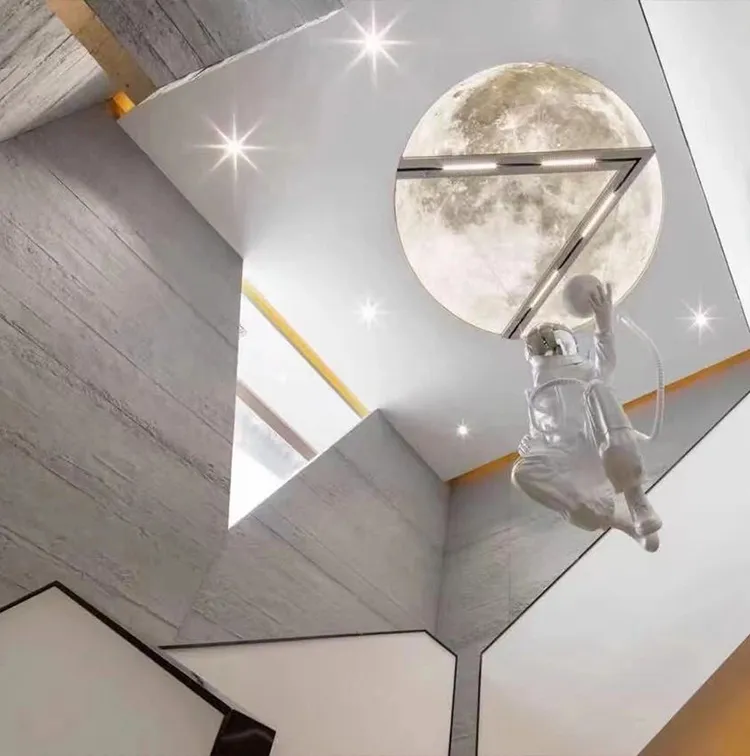
Walk through any old town, and you'll see it: the fingerprint of building materials on human history. Ancient civilizations stacked limestone blocks to build pyramids; medieval craftsmen carved marble into cathedrals; early 20th-century builders poured concrete to create skyscrapers. Each era's materials weren't just tools—they were statements. They said, "This is how we build, how we live, how we want to be remembered."
Today, the story continues. But now, the script has changed. We don't just need materials that "work"—we need ones that adapt. Homeowners want walls that resist moisture in bathrooms and look sleek in living rooms. Architects crave facades that can curve, climb, or mimic the texture of aged stone without the weight. Builders need products that install quickly, last decades, and leave a smaller carbon footprint. In short, we need materials that don't just build spaces—they elevate them.
Enter MS Cement Board. If traditional building materials are the "classics" of the construction world, MS Cement Board is the modern masterpiece—blending time-tested strength with cutting-edge flexibility. It's not just a "board" in the way plywood or drywall is a board. It's a reimagining of what a building material can be: tough yet tender, industrial yet artistic, durable yet design-forward. Let's dive into what makes it tick.
At its core, MS Cement Board is a modified composite material panel—think of it as cement's sophisticated cousin. Unlike plain cement, which is rigid and prone to cracking, MS Cement Board is engineered with a blend of high-performance cement, reinforced fibers (like fiberglass or cellulose), and polymers that add flexibility and strength. The result? A material that's as sturdy as traditional cement but far more versatile.
Let's start with the name: "MS" stands for "modified" and "strengthened," a nod to its enhanced formula. But don't let the "cement" part fool you—it's not the gray, utilitarian stuff you might picture in sidewalks. MS Cement Board comes in a spectrum of finishes, textures, and colors, from the smoothness of polished concrete to the rough-hewn charm of weathered stone. Some variants even mimic wood grain, marble veining, or the subtle sparkle of starry night skies (yes, really).
But here's the kicker: it's not just about looks. MS Cement Board is designed to solve real-world problems. Got a client who wants a fireplace surround that won't warp with heat? MS Cement Board handles it. Need an exterior facade that can withstand rain, snow, and UV rays without fading? It's up for the task. Want a backsplash that's resistant to grease, stains, and the occasional pot of boiling pasta? Done. In short, it's a material built for life's messes—and its beauty.
Ever wondered how something so strong can also be flexible? It all starts in the manufacturing process. MS Cement Board isn't mixed in a bucket and poured—it's engineered in a lab and crafted in controlled environments to ensure consistency.
First, the base: high-quality Portland cement is blended with fine aggregates (like sand or silica) to create a dense, strong matrix. Then, reinforcing fibers are added—usually fiberglass, which is lightweight, corrosion-resistant, and adds tensile strength (that's the "stretch" factor that prevents cracking). Polymers, like acrylic or latex, are mixed in next; these act as binders, making the mixture more flexible and improving its adhesion to other materials.
Once the mixture is ready, it's formed into sheets using a process called "pressing." The sheets are then cured under controlled temperature and humidity, allowing the cement to hydrate and harden slowly—this slow curing is key to its durability. Finally, the boards are treated with coatings or finishes to enhance their appearance and performance: some get a matte sealant for a modern look, others are embossed with textures to mimic natural stone or wood.
The result? A panel that's dense enough to resist impact, flexible enough to bend slightly without breaking (making it ideal for curved walls or uneven surfaces), and light enough to be installed without heavy machinery. It's a material that bridges the gap between the raw power of cement and the precision of modern engineering.
Let's talk about the basics: MS Cement Board is tough. Really tough. Unlike drywall, which sags with moisture, or plywood, which warps in humidity, MS Cement Board is water-resistant by nature. It won't rot, mold, or mildew—making it perfect for bathrooms, kitchens, or exterior walls. It's also fire-resistant; in tests, it can withstand temperatures up to 1,200°F (648°C) for hours, giving occupants precious time in case of a fire. And forget about pests: termites and rodents have no interest in munching on cement.
But durability isn't just about surviving disasters—it's about aging gracefully. MS Cement Board doesn't fade in sunlight, chip with minor impacts, or stain easily. A quick wipe with a damp cloth is usually all it takes to keep it looking new. In fact, many manufacturers back their boards with 10- or 15-year warranties, and in real-world use, they often last 50 years or more. That's not just a product—that's a legacy.
Here's where MS Cement Board truly shines: it's flexible. Not "bend-in-half" flexible, but enough to adapt to curved surfaces, uneven walls, or custom designs. Traditional cement boards are rigid, making them hard to install on anything but flat surfaces. MS Cement Board, thanks to its fiber reinforcement and polymer additives, can be bent to a radius as small as 24 inches (depending on thickness), opening up a world of design possibilities.
This flexibility makes it a favorite for architects working on projects with unique shapes—think curved facades, rounded fireplaces, or wavy accent walls. It also makes installation easier: if a wall is slightly uneven, the board can conform to the surface without cracking, reducing the need for extensive prep work. And when paired with flexible stone cladding panels (another innovation in modern building materials), MS Cement Board becomes part of a system that can transform any space into a work of art.
Let's be honest: in today's world, "functional" isn't enough. We want our homes and offices to feel like reflections of our style. MS Cement Board delivers here, too, with a range of finishes that can mimic almost any material you can imagine.
Craving the look of fair-faced concrete (that raw, industrial vibe with visible aggregates)? There's an MS Cement Board for that. Want the warmth of wood without the maintenance? Opt for a wood grain board finish. Love the elegance of marble but hate the weight and cost? Choose a marble veil white or marble interstellar gray MS Cement Board. There are even options that mimic the texture of ancient travertine (starry blue, starry red—yes, starry!) or the rugged charm of gobi panel stone.
And it's not just about color and texture. MS Cement Board comes in various sizes, from small tiles for backsplashes to large slabs for feature walls—making it a go-to for architectural big slab solutions. Some boards are thin enough to be used as ceiling panels, others thick enough for exterior cladding. The possibilities are limited only by the designer's imagination.
In an era where "green building" isn't a trend but a necessity, MS Cement Board holds its own. Many manufacturers use recycled materials in their mixes—like fly ash (a byproduct of coal power plants) or recycled aggregates—reducing the need for virgin resources. The slow curing process also reduces energy use compared to other materials, and because MS Cement Board is so durable, it needs to be replaced less often, cutting down on waste.
Plus, it's low-maintenance. Unlike wood, which needs staining or painting every few years, or natural stone, which requires sealing, MS Cement Board can go decades with just occasional cleaning. That means fewer chemicals, less water, and less hassle for homeowners and building managers.
MS Cement Board isn't a one-trick pony. It's versatile enough to be used in almost any space, from cozy homes to sprawling commercial complexes. Let's take a look at where it's making the biggest impact.
Homeowners are falling in love with MS Cement Board for its ability to blend durability and style. In kitchens, it's a star as a backsplash: heat-resistant, stain-proof, and available in finishes that complement everything from modern stainless steel appliances to rustic wooden cabinets. Imagine a kitchen with a linear travertine (claybank) MS Cement Board backsplash—it adds warmth without overwhelming the space, and you'll never have to worry about tomato sauce stains again.
Bathrooms are another sweet spot. MS Cement Board's water resistance makes it ideal for shower walls, vanity backsplashes, or even flooring. A slate veil white finish can give a bathroom a spa-like feel, while a rough granite stone (medium grey) adds texture and depth. And because it's mold-resistant, it's a healthier choice than drywall, especially in humid environments.
Living rooms and bedrooms are getting in on the action, too. Feature walls clad in marble stream stone or ethereal shadow travertine MS Cement Board can turn a plain room into a focal point. Even ceilings aren't off-limits—thin, lightweight MS Cement Board panels can add texture to a ceiling without weighing it down.
On the exterior, MS Cement Board is a workhorse. Its durability and weather resistance make it perfect for building facades, where it can withstand rain, wind, snow, and UV rays without fading or deteriorating. Architects love using large-format MS Cement Board slabs for modern facades—think a sleek, all-black boulder slab (vintage black) finish on a tech company's headquarters, or a warm lime stone (beige) for a boutique hotel.
Signage is another area where MS Cement Board excels. Its smooth surface takes paint and vinyl graphics well, and its durability ensures the sign will look sharp for years. Landscaping projects also benefit: MS Cement Board can be used to build retaining walls, garden paths, or outdoor kitchen countertops—all of which can stand up to the elements.
MS Cement Board is even finding its way into unique projects. In historic renovations, it's used to replicate the look of original materials without the weight or fragility. For example, a 19th-century townhouse with damaged limestone walls might be repaired with MS Cement Board panels that mimic the original stone's texture and color—preserving the building's character while adding modern strength.
Modern art installations are also using MS Cement Board for its flexibility and durability. Sculptors and installation artists are bending and shaping it into curved forms, painting it vibrant colors, or leaving it raw to play with light and shadow. It's a material that can be both a canvas and a structure—perfect for pushing the boundaries of what's possible in art and architecture.
To really understand why MS Cement Board is gaining traction, let's compare it to two traditional materials: fair-faced concrete and natural stone.
| Feature | MS Cement Board | Fair-Faced Concrete | Natural Stone (e.g., Marble, Travertine) |
|---|---|---|---|
| Weight | Lightweight (30-50 lbs per 4x8 sheet) | Heavy (80-100 lbs per 4x8 sheet) | Very Heavy (100-150 lbs per 4x8 sheet) |
| Flexibility | Flexible; can bend slightly without cracking | Rigid; prone to cracking under stress | Brittle; cracks easily if dropped or bent |
| Installation | Easy to cut with standard tools; lightweight for handling | Requires heavy machinery for installation; difficult to cut | Requires specialized tools; fragile during installation |
| Maintenance | Low; occasional cleaning only | Moderate; may require sealing to prevent staining | High; regular sealing, polishing, and repair |
| Aesthetic Versatility | Wide range of finishes (stone, wood, concrete, etc.) | Limited; typically gray with visible aggregates | Natural variation, but limited to stone's natural colors/textures |
| Cost | Mid-range; more than drywall, less than natural stone | Mid-to-high range; labor costs add up | High; expensive to quarry, transport, and install |
As the table shows, MS Cement Board offers the best of both worlds: the strength of concrete, the beauty of natural stone, and the flexibility and ease of installation that neither can match. It's no wonder architects and builders are making the switch.
They say a picture is worth a thousand words, and when it comes to MS Cement Board, that's especially true. MS cement board real photos don't just show a product—they show possibilities. Let's paint a picture of what these photos might reveal:
First, texture. A close-up shot of a travertine (starry blue) MS Cement Board would reveal tiny, glittering flecks embedded in the surface, mimicking the night sky. Run your hand over it (in your mind, of course), and you'd feel a slight roughness, like a smooth stone worn by water. Another photo might show a wood grain board finish, with subtle knots and grain lines that look so real, you'd swear it was oak—until you notice there's no splintering or warping.
Then, installation. A wide-angle shot of a commercial facade clad in boulder slab (vintage silver) MS Cement Board would show how the large panels create a seamless, modern look. The panels fit together with tight seams, and the silver finish catches the light, giving the building a sleek, metallic sheen. In contrast, a photo of a residential kitchen might feature a backsplash of linear travertine (claybank) MS Cement Board, paired with wooden cabinets and brass fixtures—the warm, earthy tone of the board tying the space together.
Finally, context. A photo of a bathroom with a shower wall made of ripple board (white) MS Cement Board would show water beading up and rolling off the surface—proof of its water resistance. Another might show a living room with a feature wall of marble interstellar gray MS Cement Board, with a TV mounted on it and a sofa in front—the board's subtle gray veining adding depth without competing with the room's decor.
These photos tell a story: MS Cement Board isn't just a material. It's a partner in design, helping turn ideas into spaces that are beautiful, functional, and built to last.
Architects love MS Cement Board for its design flexibility. It lets them experiment with shapes and textures without worrying about weight or durability. A curved facade that would be impossible with natural stone is easy with MS Cement Board. A feature wall that mimics the look of ancient gobi panel stone but weighs half as much? Done.
Builders appreciate its ease of installation. It cuts with standard tools (no diamond blades required, unlike natural stone), and its lightweight design means fewer workers are needed to handle it. Plus, because it's so durable, there's less waste during installation—no broken slabs or cracked corners to throw away.
Homeowners? They love the peace of mind. MS Cement Board doesn't rot, mold, or fade, so they can spend less time maintaining their homes and more time enjoying them. And with so many finishes to choose from, they can get the look they want without the high cost of natural materials.
Building materials have always told our story. MS Cement Board is writing the next chapter—a chapter about innovation, sustainability, and design without limits. It's a material that respects the past (by mimicking the beauty of natural stone and concrete) while embracing the future (with its flexibility, durability, and eco-friendly credentials).
Whether you're a homeowner renovating a bathroom, an architect designing a skyscraper, or a builder looking for a better way to work, MS Cement Board offers something for everyone. It's not just a board—it's a bridge between what was and what can be. And in a world that's always changing, that's a material worth building with.
So the next time you walk into a space that feels both timeless and modern, take a closer look. Chances are, you're looking at MS Cement Board—quietly, steadily, helping build a better future, one panel at a time.
Recommend Products












