
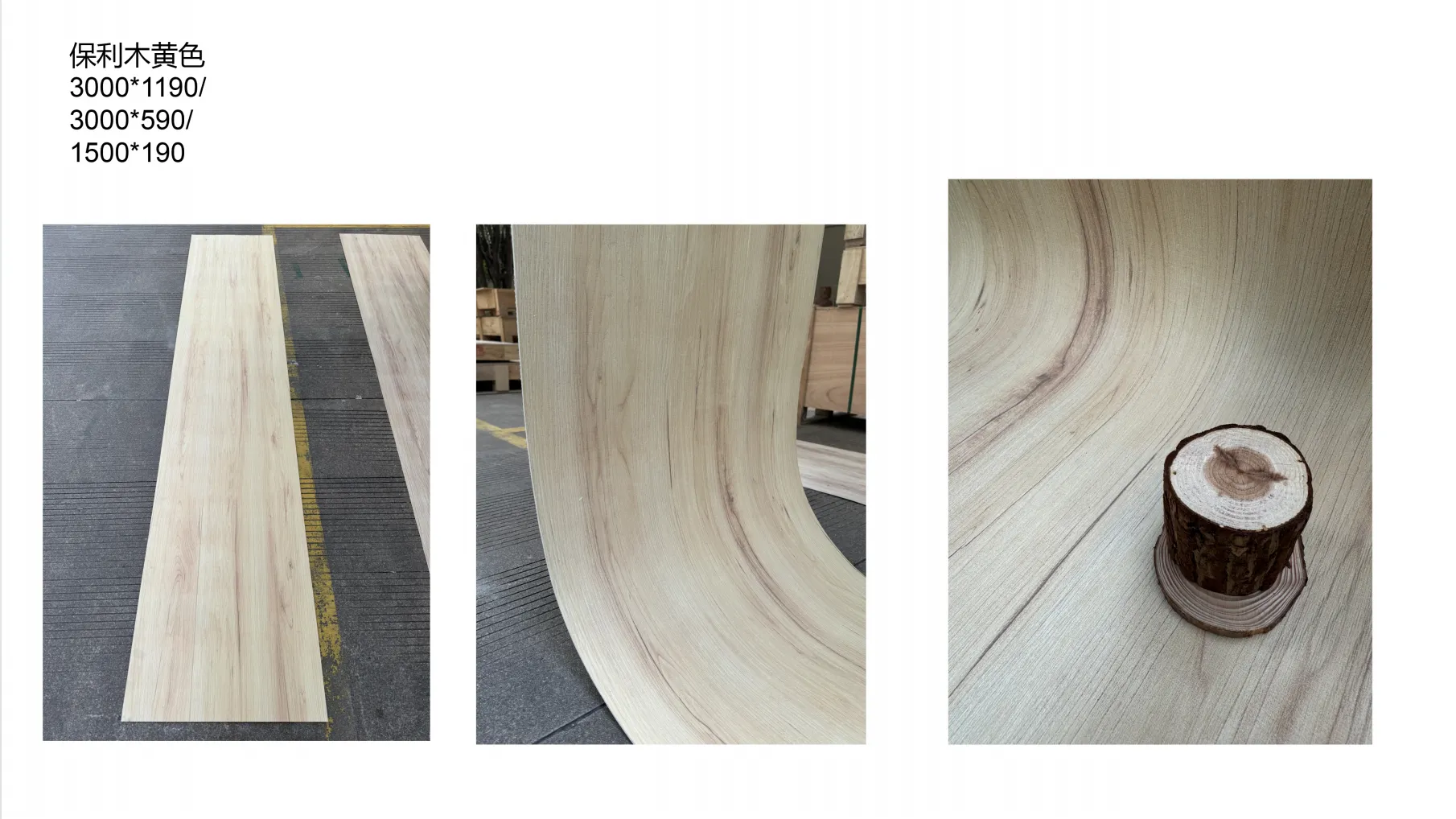
It's a crisp autumn morning, and interior designer Mia stands in a sunlit showroom, running her hand along a wall panel that feels warm, textured, and remarkably like aged oak. But as she presses her palm against it, there's no give—no splinters, no warping, no telltale signs of the high-maintenance upkeep that usually comes with real wood. "This isn't… real wood, is it?" she asks the sales representative, who smiles and shakes their head. "It's Poly Wood Board," they say. "And it's about to change how you think about material design."
In a world where homeowners and designers crave both beauty and practicality, where sustainability clashes with durability, and where "rustic charm" too often translates to "constant upkeep," materials like Poly Wood Board are stepping into the spotlight. But what exactly is it? And how does it fit into COLORIA's expansive lineup of innovative MCM (Modified Composite Material) solutions? Let's dive in.
At first glance, Poly Wood Board might trick you into thinking it's reclaimed barnwood or polished teak. Its surface carries the natural grain patterns—swirls, knots, and streaks—that make wood so beloved, right down to the subtle variations in tone that give it life. But scratch the surface (literally), and you'll realize it's something entirely different. Poly Wood Board is a engineered composite material, crafted from a blend of recycled wood fibers, high-performance polymer resins, and natural minerals. This fusion isn't just about mimicking wood; it's about improving on it.
"We started with a simple question," says Elena Torres, COLORIA's lead material scientist. "What if we could capture the soul of wood—the warmth, the nostalgia, the organic beauty—without any of its flaws? Wood warps in humidity, fades in sunlight, and requires annual sealing. Poly Wood Board? It laughs at those problems."
The benefits are clear. Unlike real wood, Poly Wood Board resists moisture, so it's perfect for bathrooms, kitchens, or outdoor patios where splashes and rain are daily realities. It's UV-stable, meaning that sunlit wall in your living room won't bleach into a pale shadow of its former self. And because it's made with recycled wood fibers, it's a sustainable choice—no trees cut down, no forests disrupted. For designers like Mia, it's a game-changer: "I can finally give clients that 'cozy cabin' vibe in their city apartment without warning them about water damage or termites."
Poly Wood Board is a standout, but it's just one star in COLORIA's constellation of MCM materials. The brand's lineup reads like a love letter to design diversity, offering everything from industrial-chic concrete to ethereal stone-inspired panels. Let's shine a light on some of the most compelling alternatives—and why they might just steal your heart (or your project).
Imagine a stone wall that curves. Not a rigid, heavy slab forced into a arc, but a material that flows like fabric, hugging corners and creating soft, organic shapes. That's MCM flexible stone. Made by compressing natural stone particles into a thin, lightweight sheet backed by a flexible polymer, it's stone reimagined. "Traditional stone is heavy—you need structural support just to hang it," explains Torres. "MCM flexible stone weighs a fraction of the cost, installs with basic tools, and can go places stone never could: curved facades, ceiling accents, even furniture wraps."
Take the "Travertine (Starry Green)" variant, for example. Its surface shimmers with tiny, iridescent flecks that catch light like stars in a forest canopy. Designers are using it in hotel lobbies, wrapping columns to create a sense of magic, or in home theaters to add texture without overwhelming the space. And because it's flexible, it's a favorite for renovation projects where tearing down walls to support heavy materials just isn't an option.
For purists who crave the essence of wood—the way light dances along its grain, the way it ages into a rich patina—Wood Grain Board is a revelation. Unlike Poly Wood Board, which leans into rustic or reclaimed aesthetics, Wood Grain Board is all about precision. Its patterns are crisp, consistent, and available in everything from oak and maple to exotic species like zebrawood and teak. But again, the "wood" here is a composite, meaning no two boards are identical (just like real wood), but every board is identical in performance.
"I used Wood Grain Board in a client's home office last year," Mia recalls. "They wanted the look of a mahogany bookshelf, but they have two kids and a golden retriever. Real mahogany would've been destroyed in months. Wood Grain Board? It's been through juice spills, tail wags, and even a rogue crayon incident, and it still looks brand new. The client calls it 'wood with a superhero cape.'"
If Poly Wood Board is the rugged adventurer of COLORIA's lineup, Bamboo Mat Board is its zen counterpart. Crafted from fast-growing bamboo fibers (one of the most sustainable resources on the planet—bamboo regrows in 3–5 years, compared to 20–30 for hardwoods) and natural binders, it carries the delicate, woven texture of traditional bamboo mats, but with a sleek, modern finish. It's warm to the touch, with a subtle sheen that softens a room, and it pairs beautifully with minimalist or Asian-inspired decor.
"Bamboo Mat Board isn't just eco-friendly—it's intentionally calming," says Torres. "We studied how textures affect mood, and bamboo's linear, repetitive pattern has been shown to reduce stress. It's why we're seeing it in yoga studios, meditation rooms, and even bedrooms. People don't just want materials that look good; they want materials that feel good to be around."
For those who lean into the "less is more" philosophy, Fair-Faced Concrete is COLORIA's love letter to minimalism. Unlike the cold, gray concrete of parking garages, this MCM version has a velvety matte finish, with subtle color variations (think soft beiges, warm grays, and even blush tones) that add depth without clutter. It's raw yet refined, making it perfect for loft apartments, modern offices, or restaurants going for that "urban warehouse" vibe.
"I recently used Fair-Faced Concrete panels on a restaurant's accent wall," says Mia. "The chef wanted something that felt 'honest'—no frills, just quality. The panels have this beautiful, almost tactile roughness, but they're surprisingly smooth to the touch. Paired with warm pendant lights, it turned a plain wall into the restaurant's focal point. Guests keep taking photos of it."
With so many options, choosing the right material can feel overwhelming. To help, we've broken down Poly Wood Board and three of its popular counterparts into a quick comparison. Whether you're designing a beach house or a corporate headquarters, this table will point you in the right direction:
| Material | Key Features | Best For | Sustainability | Installation Ease |
|---|---|---|---|---|
| Poly Wood Board | Rustic wood grain, high moisture resistance, recycled wood fibers | Outdoor patios, bathrooms, cabins | High (recycled materials, no deforestation) | Easy (lightweight, screws or adhesive) |
| MCM Flexible Stone | Thin, bendable, natural stone particles (e.g., Starry Green Travertine) | Curved walls, ceiling accents, renovation projects | Medium (minimal stone extraction, low waste production) | Very easy (peel-and-stick options available) |
| Wood Grain Board | Precision wood patterns (oak, teak, etc.), scratch-resistant | Home offices, libraries, high-traffic living rooms | Medium-High (recycled wood fibers, low VOCs) | Moderate (requires cutting tools for custom shapes) |
| Fair-Faced Concrete | Matte finish, industrial aesthetic, heat-resistant | Lofts, restaurants, commercial lobbies | Medium (low water usage in production) | Moderate (needs level surface for seamless look) |
Numbers and features tell part of the story, but nothing brings a material to life like seeing it in action. Let's take a virtual tour of three projects where COLORIA's solutions took center stage.
When architect Raj Patel was designing a beach house in Costa Rica, he faced a dilemma: his clients wanted a "tropical cabin" vibe, but the ocean air (salty, humid, unforgiving) would destroy real wood in years. Enter Poly Wood Board. Raj used it for the exterior siding, choosing a weathered "driftwood" finish that blends with the sand and surf. "The clients were worried it would look 'fake,'" Raj laughs. "Now, they brag about how their neighbors' real wood decks are rotting, and theirs still looks brand new—even after two hurricane seasons."
Inside, Raj paired the Poly Wood Board with MCM Flexible Stone in "Starry Blue Travertine" for the bathroom walls. "The bathroom has a large window overlooking the ocean," he explains. "The stone's iridescent flecks catch the sunlight and mimic the water's sparkle. It's like bathing in a starry sky."
In downtown Chicago, a 1920s warehouse was converted into luxury lofts, and designer Lila Chen turned to COLORIA for the interiors. "The space had exposed brick and high ceilings—industrial bones begging for warmth," she says. Lila used Fair-Faced Concrete panels for the kitchen backsplash and island, choosing a soft beige tone to balance the raw brick. "Concrete can feel cold, but this stuff has a warmth to it. It's not just gray; it has depth."
To add contrast, she lined the bedroom walls with Wood Grain Board in "Walnut" finish. "The client works from home, so the bedroom needed to feel cozy but professional. The wood grain adds that 'den' vibe, but since it's composite, they don't have to worry about dents from their rolling desk chair."
For "Roots & Beans," a vegan café in Portland, sustainability was non-negotiable. Owner Maya Gonzalez wanted materials that told a story of environmental responsibility. "We serve plant-based food; our walls should reflect that," she says. Maya chose Bamboo Mat Board for the ceiling panels—light, airy, and made from fast-growing bamboo. "It feels like sitting under a bamboo forest," she notes. "Customers say it's the most relaxing café they've ever visited."
For the counter tops, she went with Poly Wood Board in "Natural Oak." "We needed something durable—coffee spills, pastries, constant wiping. Poly Wood Board cleans easily, and it has that 'homemade' feel that matches our menu. Plus, knowing it's made from recycled wood? That aligns with our mission."
With so many stunning options, how do you narrow it down? Elena Torres offers this advice: "Start with the feeling you want to create. Do you want a space that feels like a mountain cabin? Poly Wood Board. A sleek, modern office? Fair-Faced Concrete. Then, think about the environment. Is it humid? Wet? Sunny? That will rule out materials that can't handle those conditions. Finally, don't forget your budget—COLORIA's range includes options for every price point, so you don't have to sacrifice quality for cost."
Mia adds, "I always tell clients to order samples. COLORIA sends these beautiful 8x8 inch swatches that you can hold up to your walls, your furniture, even your favorite mug. Lighting changes everything—what looks warm in a showroom might look cool in your kitchen. Samples take the guesswork out of it."
At the end of the day, Poly Wood Board and COLORIA's MCM solutions are more than just building materials. They're tools for storytelling. Whether you're a homeowner wanting to turn a house into a home, a designer chasing the perfect aesthetic, or a business owner looking to align your space with your values, these materials don't just fill a room—they define it.
"We don't just make panels," Elena Torres says. "We make memories. A family gathering around a Poly Wood Board dining table, a student studying in a library lined with Wood Grain Board, a couple taking wedding photos in front of a MCM Flexible Stone wall—those moments matter. That's why we pour so much heart into every material we create."
So, whether you're drawn to the rustic charm of Poly Wood Board, the flexibility of MCM Flexible Stone, or the industrial edge of Fair-Faced Concrete, COLORIA's lineup has something for every vision. It's not just about choosing a material—it's about choosing a story. And with COLORIA, your story is in good hands.
Recommend Products












