
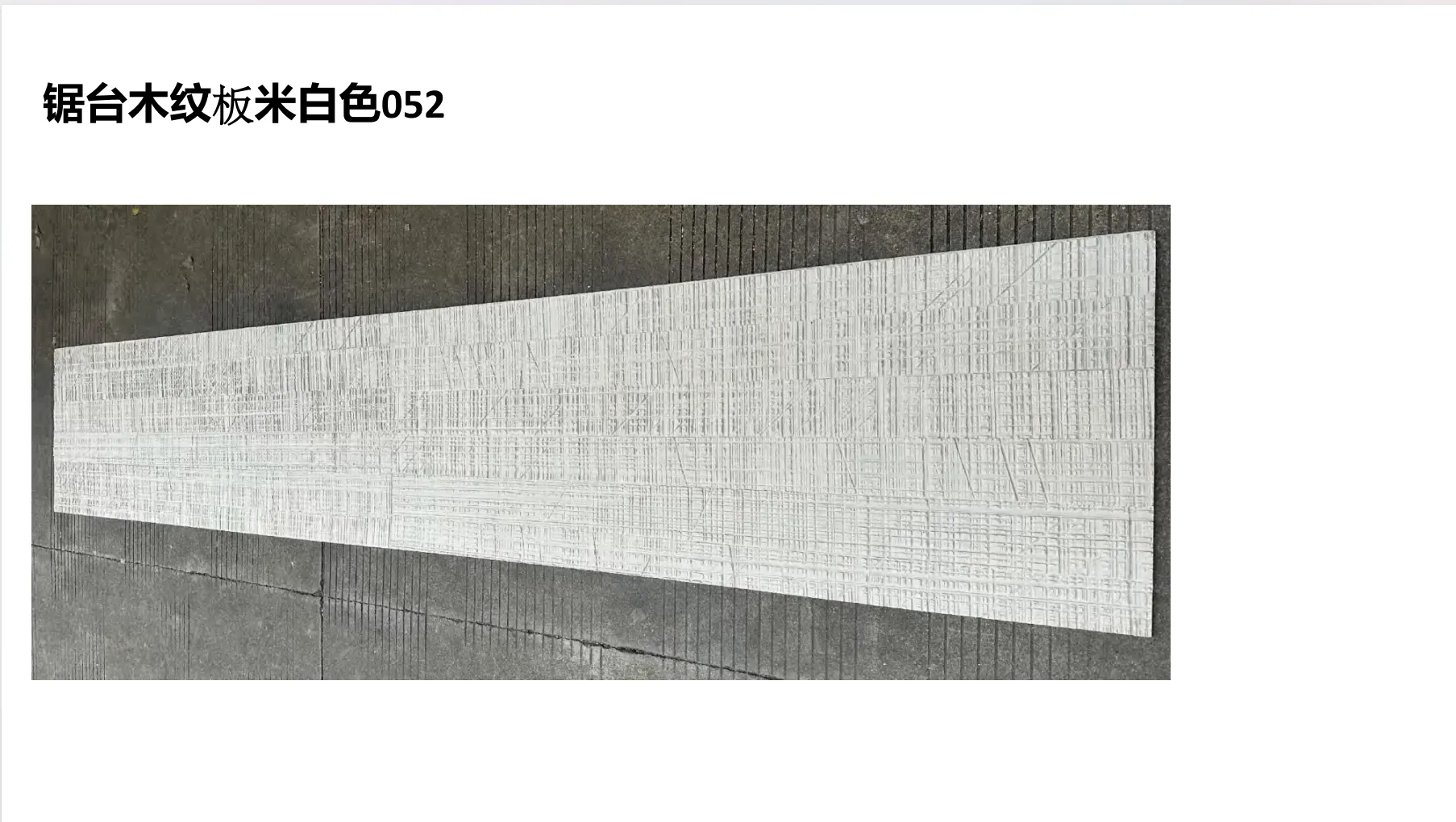
Walk into a modern home, a boutique hotel, or even a trendy coworking space today, and you'll likely notice a subtle shift in the materials that shape our environments. Gone are the days when "sustainable design" meant sacrificing style for eco-friendliness. Instead, there's a new star on the scene: reclaimed sawing wood board. It carries the warm, weathered charm of wood that's been loved for decades, with the kind of texture that makes you want to reach out and run your hand across it—yet it's not quite what it seems. This is the magic of MCM technology, a game-changer that's redefining how we build, design, and think about sustainability. Let's dive into what reclaimed sawing wood board really is, and why MCM's recyclable advantages are making it a favorite among architects, designers, and homeowners alike.
Before we get to the sawing wood board itself, let's talk about the technology that makes it possible: MCM, or Modified Composite Material. Think of MCM as the quiet innovator in the building materials world—taking what was once considered "waste" and turning it into something extraordinary. For years, the construction industry has grappled with a paradox: we want materials that are beautiful, durable, and affordable, but we also want to reduce our impact on the planet. Traditional options often fell short. Natural wood, while stunning, demands deforestation and can warp or rot over time. Stone, heavy and brittle, limits design flexibility and generates massive waste during quarrying. Then came MCM, and suddenly, the rules changed.
MCM is born from recycling. It starts with discarded materials: wood fibers from old pallets, stone dust from quarry scraps, even plastic waste from packaging. These are cleaned, processed, and bound together with eco-friendly polymers to create a material that's lightweight, strong, and surprisingly versatile. The result? Products that look and feel like natural materials but perform better, last longer, and leave a fraction of the environmental footprint. And when it comes to reclaimed sawing wood board, MCM doesn't just mimic the look of aged wood—it captures its soul.
So, what exactly is reclaimed sawing wood board? Let's break it down. "Reclaimed" here doesn't mean it's salvaged from old barns or warehouses (though the aesthetic certainly pays homage to that). Instead, it refers to the idea of reclaiming—taking materials that would otherwise end up in landfills and giving them new life. "Sawing wood" describes the texture: the distinct, tactile marks left by a saw blade, the kind you'd find on a piece of lumber that's been hand-cut, not machine-sanded to perfection. It's the kind of detail that adds character, telling a story of craftsmanship even if the wood itself isn't "real" in the traditional sense.
At its core, reclaimed sawing wood board is an MCM product designed to replicate the look and feel of reclaimed wood without the drawbacks. Traditional reclaimed wood, while charming, is often scarce, expensive, and prone to issues like splintering, insect damage, or uneven wear. MCM sawing wood board solves these problems by using recycled wood fibers—think sawdust from furniture factories, or shavings from demolished buildings—and blending them with stone particles and eco-resins. The result is a board that has the warm, organic grain of wood (complete with those signature saw marks) but is water-resistant, fire-retardant, and built to last for decades.
And it's not alone. MCM's family of sustainable materials includes gems like wood grain board, which takes the natural beauty of wood patterns and elevates it. Wood grain board uses MCM technology to mimic the intricate swirls of oak, the straight lines of pine, or the rich knots of walnut, all without cutting down a single tree. Together, sawing wood board and wood grain board are part of a larger movement: materials that honor nature's design while protecting it.
While we're on the topic of MCM's greatest hits, let's not overlook MCM flexible stone. If sawing wood board is the cozy, rustic member of the family, flexible stone is the elegant, adaptable sibling. It looks like real stone—think the smooth polish of marble, the rugged texture of slate, or the earthy tones of travertine—but with a twist: it bends. Imagine wrapping a stone-like material around a curved wall in a museum, or using it to create a seamless backsplash that flows from countertop to ceiling. Traditional stone, heavy and rigid, could never pull that off. MCM flexible stone, though? It's lightweight enough to be installed with minimal tools, flexible enough to follow any contour, and durable enough to stand up to high-traffic areas like hotel lobbies or restaurant facades.
What makes MCM flexible stone and sawing wood board such a powerful pair? They share the same eco-friendly DNA. Both are made from recycled materials, both reduce waste, and both are designed to be recyclable at the end of their lifecycle. It's a closed-loop system that aligns perfectly with the growing demand for green building materials—a term that's no longer just a marketing buzzword but a genuine commitment to reducing our carbon footprint.
Sustainability isn't just about using "green" materials—it's about rethinking the entire lifecycle of a product. From production to installation to disposal, every step should minimize harm to the planet. MCM excels here, and its recyclable advantages are a big reason why it's quickly becoming the gold standard for eco-conscious design. Let's break down the key benefits:
The construction industry is one of the world's biggest waste generators, responsible for an estimated 30% of global landfill waste. MCM flips this script by using waste as a resource. Take sawing wood board: its primary ingredients are recycled wood fibers and stone dust—materials that would otherwise be burned or dumped. For example, a single ton of sawing wood board can divert up to 800kg of waste from landfills, according to industry reports. That's not just recycling; that's reimagining what "waste" even means.
The process doesn't stop there. MCM manufacturing plants are designed to be energy-efficient, using solar power where possible and minimizing water usage. Even the packaging for MCM products is often made from recycled cardboard or biodegradable materials. It's a holistic approach that ensures sustainability isn't an afterthought, but the foundation of how things are made.
Sustainability isn't just about what a product is made of—it's about how long it lasts. A material that needs to be replaced every 5 years isn't truly sustainable, no matter how "green" it is. MCM products like sawing wood board and flexible stone are built to outlast traditional alternatives. Sawing wood board resists warping, rotting, and insect damage, even in humid environments like bathrooms or kitchens. MCM flexible stone, meanwhile, stands up to scratches, stains, and UV rays, making it ideal for both indoor and outdoor use.
Consider this: a natural wood deck might need to be replaced every 10–15 years, requiring new lumber and generating waste. An MCM sawing wood board deck? It can last 30+ years with minimal maintenance. That's fewer trees cut down, less waste sent to landfills, and lower long-term costs for homeowners. Durability, in this case, is sustainability in action.
Anyone who's worked with traditional stone or hardwood knows the hassle: heavy materials that crack easily, require specialized tools, and generate piles of offcuts during installation. MCM changes this. Sawing wood board is lightweight—about 70% lighter than solid wood—so it's easier to transport and install, reducing carbon emissions from delivery trucks. MCM flexible stone, as the name suggests, bends and curves, meaning it can be cut to fit even the most complex designs with minimal waste. A typical stone installation might generate 20–30% waste from cutting; with MCM flexible stone, that number drops to less than 5%.
This flexibility also opens up new design possibilities. Imagine a restaurant with a curved bar front clad in MCM flexible stone, or a home with a spiral staircase wrapped in sawing wood board. These aren't just beautiful—they're efficient, using materials in ways that traditional options never could.
Even when an MCM product reaches the end of its lifecycle—say, a sawing wood board wall that's being renovated—it doesn't have to end up in a landfill. MCM materials are designed to be recyclable: they can be ground down and reused as raw material for new MCM products, creating a closed loop that minimizes waste. This is a stark contrast to many traditional building materials, which are either non-recyclable (like certain plastics) or so degraded after use that they can't be repurposed.
It's one thing to talk about sustainability in abstract terms, but it's another to see how these materials transform spaces. Let's take a look at how reclaimed sawing wood board, MCM flexible stone, and wood grain board are being used in real-world projects:
Residential Design: A family in Portland, Oregon, recently renovated their kitchen with sawing wood board countertops. They wanted the warmth of wood but needed something durable enough for two kids and a busy cooking schedule. The result? Countertops that look like they were salvaged from an old farmhouse, but resist stains from tomato sauce and heat from hot pans. "We love that it tells a story without harming the planet," the homeowner said. "Plus, we don't have to worry about sealing it every year like we did with our old wood counters."
Commercial Spaces: A boutique hotel in Barcelona used MCM flexible stone to clad its lobby walls. The design called for a curved, cave-like entrance, and traditional stone was too heavy and rigid to pull it off. MCM flexible stone, in a warm travertine finish, wrapped around the curves seamlessly, creating a space that feels both grand and intimate. "Guests often ask if it's real stone," the hotel's designer noted. "When we tell them it's recycled and flexible, their minds are blown."
Outdoor Living: A restaurant in Sydney, Australia, wanted an outdoor dining area that could withstand the city's rainy winters and hot summers. They chose wood grain board for the decking, which mimics the look of teak but won't warp in the rain or fade in the sun. "We've had it for three years now, and it still looks brand new," the restaurant owner shared. "No splinters, no rot—just beautiful, low-maintenance wood-like decking that our customers love."
Still wondering how MCM stacks up against the materials you're used to? Let's put it all on the table. Here's a side-by-side look at reclaimed sawing wood board, MCM flexible stone, natural wood, and natural stone across key factors that matter most:
| Factor | Reclaimed Sawing Wood Board (MCM) | MCM Flexible Stone | Natural Wood | Natural Stone |
|---|---|---|---|---|
| Sustainability | High (made from 80%+ recycled materials) | High (uses recycled stone dust and eco-resins) | Low to Medium (requires deforestation; limited reclamation) | Low (quarrying causes habitat destruction and waste) |
| Durability | Excellent (resists water, fire, and pests; 30+ year lifespan) | Excellent (scratch-resistant, UV-stable; 50+ year lifespan) | Medium (prone to rot, warping, and insect damage; 10–15 year lifespan) | High (durable but brittle; prone to cracking; 50+ year lifespan) |
| Installation & Flexibility | Easy (lightweight, cuts with standard tools; fits curved surfaces) | Very Easy (flexible, can bend up to 90 degrees; lightweight) | Medium (heavy, requires specialized tools; limited to straight cuts) | Hard (extremely heavy, requires professional installation; rigid) |
| Maintenance | Low (no sealing, sanding, or staining needed) | Low (wipe clean with soap and water; no sealing) | High (requires annual sealing, sanding, and pest treatments) | Medium (needs periodic sealing; prone to staining) |
| Recyclability | High (can be ground down and reused in new MCM products) | High (recyclable at end of lifecycle) | Low (often ends up in landfills due to degradation) | Low (difficult to recycle; often dumped as construction waste) |
As we look ahead, one thing is clear: the demand for sustainable building materials isn't a passing trend—it's a fundamental shift in how we approach design and construction. Governments around the world are tightening regulations on carbon emissions and waste, and consumers are increasingly choosing brands and products that align with their values. MCM, with its focus on recycling, durability, and innovation, is perfectly positioned to lead this charge.
But MCM isn't resting on its laurels. Researchers are constantly finding new ways to improve the technology, from using even more recycled content to developing new finishes that mimic rare or endangered materials (like exotic woods or marble) without harming ecosystems. There's even talk of MCM products that can store carbon, further reducing their environmental impact.
At the end of the day, reclaimed sawing wood board and MCM flexible stone are more than just building materials—they're a statement. They say that we can have beautiful, functional spaces without sacrificing the planet. They prove that sustainability and style don't have to be enemies. And they remind us that sometimes, the most innovative solutions are the ones that work with nature, not against it.
So, what is reclaimed sawing wood board? It's a material that honors the past while building the future—a blend of recycled waste and cutting-edge technology that feels both familiar and new. And MCM's recyclable advantages? They're the reason it's not just a better choice for the planet, but a better choice for anyone who wants beautiful, durable, and low-maintenance materials.
Whether you're building a new home, renovating a space, or just curious about the future of design, keep an eye on MCM. From sawing wood board to flexible stone to wood grain board, these materials are changing the game—one recycled fiber, one curved wall, one sustainable space at a time. And in a world that's hungry for solutions that work for people and the planet, that's a revolution worth getting excited about.
Recommend Products












