
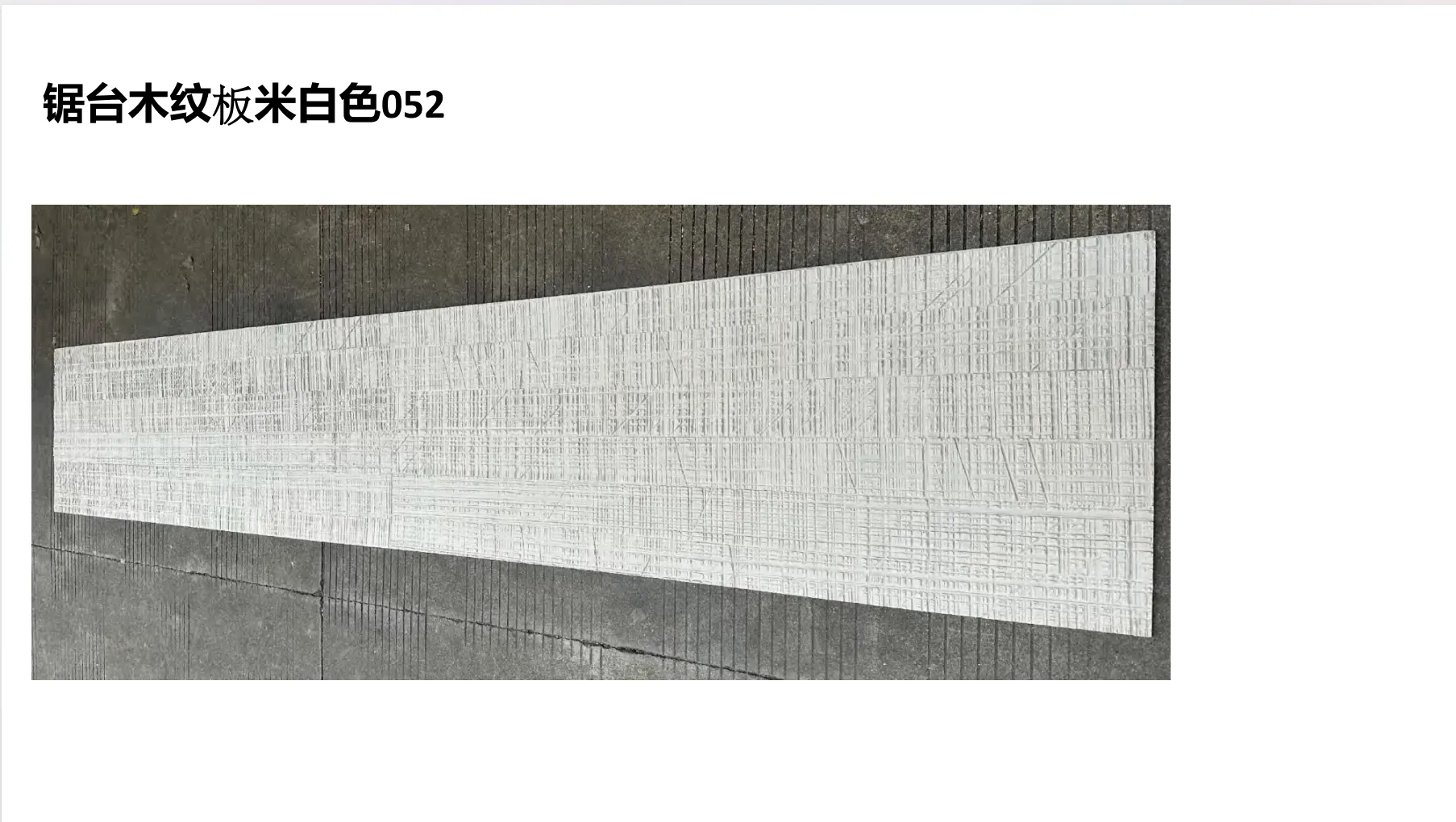
Walk into any thoughtfully designed space—a boutique hotel lobby, a cozy café, or even a friend's newly renovated home—and you'll notice something subtle but powerful: texture. It's the quiet force that shapes how we feel in a room, often more than color or furniture alone. Textures can make a space feel warm or cold, chaotic or calm, ancient or futuristic. And among all the textures out there, few are as universally beloved as wood. But not all wood textures are created equal. Have you ever run your hand over a wood surface and marveled at how smooth, how *consistent* the grain feels? Chances are, you were touching rift sawing wood board.
Wood has been a building block of human design for millennia, but it's the way we cut it that unlocks its true textural potential. Rift sawing isn't just a technique—it's a craft that turns raw logs into surfaces with a story to tell: one of precision, patience, and an unwavering commitment to consistency. In a world that often celebrates the bold and the busy, there's something deeply reassuring about a texture that doesn't shout—instead, it whispers, "I was made to last, and I was made to look good doing it."
Today, we're diving into the world of rift sawing wood board: what it is, how it's made, and why its consistent texture has become a cornerstone of modern design. We'll also explore how MCM (Modified Composite Material), a leader in innovative building materials, approaches texture—comparing rift sawing wood board to other standout textures in their lineup, from the organic weave of bamboo mat board to the earthy ruggedness of rammed earth board. Whether you're a designer, a homeowner, or just someone who appreciates the little details that make a space feel like home, this is your guide to understanding why texture matters—and why rift sawing wood board might just be the unsung hero of consistent, captivating design.
Let's start with the basics: rift sawing is a method of cutting wood logs that prioritizes one thing above all else: consistency. To understand it, you need to picture a tree trunk. Inside, you'll find growth rings—those concentric circles that tell the tree's age. When you cut a log, the angle at which you slice through these rings determines the grain pattern of the resulting boards.
Most of us are familiar with plain sawing (also called flat sawing), the most common method. With plain sawing, the log is cut parallel to the growth rings, producing boards with the classic "cathedral" grain pattern—arching curves that can look like waves or even bird's wings. It's beautiful, but it's also unpredictable: knots, swirls, and varying grain directions are par for the course. Then there's quarter sawing, where the log is first cut into quarters, and boards are sliced perpendicular to the rings. This produces a more vertical grain, often with flecks of color (called "ray fleck" in oak), but it can still have some variation.
Rift sawing takes precision a step further. Instead of cutting parallel or perpendicular to the rings, the saw is tilted at a steep angle—usually 30 to 60 degrees—to the growth rings. This angle "rift" cuts through the rings, resulting in boards with an incredibly straight, uniform grain. Imagine a sheet of paper with perfectly parallel lines drawn from edge to edge—that's the grain of rift sawing wood board. No wild curves, no sudden knots (though they can still appear, they're far less prominent), just a steady, unbroken rhythm.
But here's the catch: rift sawing is wasteful. Because of the steep angle, you get fewer boards per log compared to plain sawing. A sawyer might lose 10-15% more wood to "kerf" (the width of the saw blade) and offcuts. So why bother? Because the payoff is a texture that's unmatched in consistency. For designers and homeowners who crave order, who want a wood surface that feels intentional rather than random, rift sawing is worth every extra inch of log.
Rift sawing isn't just about flipping a switch on a machine. It's a craft that demands skill, patience, and a deep understanding of wood's natural structure. Let's walk through how a raw log becomes a rift sawing wood board—because the story of the texture starts long before the wood ever touches a wall or floor.
It begins with selecting the right log. Not all trees are suited for rift sawing. Species with tight, straight growth rings work best—think oak, maple, ash, or walnut. A log with irregular rings or too many knots will still produce rift-sawn boards, but the consistency will suffer. Experienced sawyers can "read" a log by its exterior: the straighter the trunk, the more uniform the rings inside.
Once the log is selected, it's mounted on a sawmill. In traditional mills, this might involve a team manually positioning the log, but modern mills use hydraulic lifts and computerized guides to ensure precision. The sawyer's goal? To align the saw blade at that critical 30-60 degree angle to the growth rings. This requires adjusting the log's rotation and tilt—often by just a few degrees—to hit the sweet spot. One wrong move, and the grain pattern shifts from straight to slightly diagonal, losing that coveted consistency.
As the saw cuts through the log, each board emerges with a face that reveals the rift-sawn grain. But the process doesn't end there. The boards are then dried—slowly, over weeks or months—to prevent warping. Even after drying, they're inspected for defects: a single knot or split can ruin the texture's uniformity, so only the best boards make the cut (pun intended) for high-end applications.
What's fascinating is how this craft has evolved. Centuries ago, rift sawing was done by hand with two-person saws, requiring immense physical strength and coordination. Today, CNC machines can automate the angle adjustments, but the human eye is still irreplaceable. A master sawyer will still inspect each board, running a hand over the grain to feel for inconsistencies that a machine might miss. It's a blend of old and new—technology streamlining the process, but craftsmanship ensuring the texture meets the highest standards.
The result? A board that feels almost engineered, but with the warmth of natural wood. Run your hand across it, and you'll notice how the grain doesn't catch on your fingertips; it's smooth, predictable, like running your hand over a well-worn book spine. That's the magic of rift sawing: it takes the chaos of nature and turns it into something calm, controlled, and deeply satisfying.
When it comes to materials that marry texture, durability, and design flexibility, MCM (Modified Composite Material) is a name that keeps popping up. MCM doesn't just create building materials—they curate textures. Their philosophy? Texture shouldn't be a byproduct of a material; it should be intentional, enhancing both form and function. And when it comes to wood-like textures, their wood grain board is a love letter to the consistency of rift sawing—with a modern, engineered twist.
MCM's wood grain board isn't solid wood. Instead, it's a composite material: a core of high-density fiberboard or mineral composite wrapped in a thin layer of real wood veneer (often rift-sawn) or a high-definition print that mimics the rift-sawn grain. This hybrid approach solves one of the biggest challenges of solid rift sawing wood board: durability. Solid wood is prone to warping, swelling, or shrinking with changes in humidity and temperature. MCM's wood grain board, by contrast, is stable. It resists moisture, scratches, and fading, making it suitable for spaces where solid wood would fail—like bathrooms, kitchens, or outdoor patios.
But here's the kicker: MCM doesn't sacrifice texture for durability. Their wood grain board replicates the look and feel of rift-sawn wood so accurately that even professionals sometimes struggle to tell the difference. The grain is printed or veneered with the same straight, uniform lines, and the surface is textured to mimic the slight variations in natural wood—just enough to feel authentic, not enough to break the consistency. It's the best of both worlds: the texture we love from rift sawing, with the performance modern spaces demand.
MCM's focus on texture extends beyond wood, too. They've built a reputation for creating materials that tell stories through touch and sight—from the woven warmth of bamboo mat board to the earthy ruggedness of rammed earth board. But wood grain board holds a special place in their lineup because it bridges tradition and innovation. It's a nod to the craftsmanship of rift sawing, reimagined for a world that needs materials to be as tough as they are beautiful.
Texture is subjective—what feels "right" in one space might feel out of place in another. That's why MCM offers a diverse range of textures, each with its own personality. To truly appreciate rift sawing wood board, let's compare it to four other standout textures in MCM's collection: sawing wood board (plain-sawn, for contrast), bamboo mat board, wood line, and rammed earth board (beige). We'll break down their texture, grain, best uses, and durability—so you can see why rift sawing wood board stands out for consistency.
| Material | Texture Characteristic | Grain/Pattern | Best For | Durability Notes |
|---|---|---|---|---|
| Rift Sawing Wood Board | Smooth, uniform, with minimal surface variation | Straight, parallel grain lines; tight, consistent spacing | Floors, walls, furniture in modern, minimalist spaces | Good (solid wood) to excellent (MCM wood grain board); MCM version resists moisture/warping |
| Sawing Wood Board (Plain-Sawn) | Varied, with occasional knots and surface irregularities | Cathedral patterns, swirls, and diagonal grain; highly organic | Rustic or traditional spaces; accent walls, ceiling beams | Moderate; solid wood prone to warping; MCM versions more durable |
| Bamboo Mat Board | Woven, tactile, with visible mat-like ridges | Horizontal and vertical bamboo strips; creates a grid-like, artisanal pattern | Bohemian or tropical-inspired interiors; accent walls, furniture panels | Excellent; bamboo is naturally moisture-resistant; MCM version adds scratch resistance |
| Wood Line | Linear, with raised or recessed grooves; creates rhythm through repetition | Thin, parallel lines (often 1-2cm wide); can be horizontal, vertical, or diagonal | Modern commercial spaces; reception desks, feature walls, cabinet fronts | Very good; MCM's composite core resists dents; grooves may collect dust (easily cleaned) |
| Rammed Earth Board (Beige) | Earthy, matte, with subtle color gradients and tiny stone particles | No grain; mimics hand-packed soil with natural variations in tone and texture | Sustainable or desert-inspired spaces; accent walls, fireplaces, outdoor cladding | Excellent; resistant to fire, moisture, and pests; MCM version is lightweight |
Looking at this table, it's clear why rift sawing wood board (and MCM's wood grain board) stands out for consistency. While plain-sawn wood offers organic charm and bamboo mat board brings artisanal warmth, neither can match the uniform texture of rift sawing. Wood line comes close with its linear pattern, but it's a man-made rhythm, not a natural grain. Rammed earth board, meanwhile, celebrates imperfection—subtle color shifts and tiny stone inclusions that make each board unique, but not consistent.
So when would you choose rift sawing wood board over these alternatives? If your design calls for calm, order, and a texture that recedes into the background to let other elements shine, rift sawing is the way to go. It's the "neutral" of wood textures—versatile, timeless, and endlessly adaptable.
Consistency is a superpower in design—and rift sawing wood board wields it masterfully. Its uniform texture makes it adaptable to almost any space, but there are certain applications where it truly shines. Let's explore how this texture transforms interiors, exteriors, and everything in between.
Floors are the largest surface in most rooms, so their texture sets the tone for the entire space. Rift sawing wood board floors do something magical: they make a room feel larger. The straight, parallel grain lines act like visual arrows, drawing the eye from one end of the room to the other, expanding the perceived space. In small apartments, this can be a game-changer—suddenly, a 500-square-foot living room feels airy and open.
But it's not just about size. Rift-sawn floors are also incredibly practical. Their smooth, consistent surface is easy to clean (no deep grooves to trap dust) and gentle on bare feet. In homes with kids or pets, MCM's wood grain board is a lifesaver: it resists scratches from toys and claws, and spills wipe up without staining. Imagine a family room where the kids can play on the floor, and the texture still looks brand-new years later—that's the durability of rift sawing wood board at work.
Accent walls are a popular way to add personality to a room, but they can easily become overwhelming if the texture is too busy. Rift sawing wood board solves this problem. Its uniform grain adds warmth and texture without competing with art, furniture, or other design elements. In a bedroom, a rift-sawn wood accent wall behind the bed creates a cozy, cocoon-like feel—calming, but not boring. In a home office, it adds natural texture that boosts focus (studies show natural materials can reduce stress, after all).
MCM's wood grain board takes this a step further with customizable finishes. Want a light oak tone for a Scandinavian vibe? Or a dark walnut for a moodier, mid-century modern look? The consistent grain ensures the color looks even across the entire wall, without blotches or streaks. It's texture with control—exactly what designers crave when creating a cohesive space.
Commercial design has its own set of challenges: high foot traffic, strict durability requirements, and the need to reflect a brand's identity. Rift sawing wood board (especially MCM's engineered version) checks all these boxes. In restaurants, it's perfect for wall cladding or banquette seating—warm enough to make diners feel welcome, but durable enough to withstand spills and daily cleaning. In offices, it adds a touch of sophistication to reception areas, making a great first impression on clients.
One standout example? Retail stores. Brands that want to convey quality and timelessness often use rift-sawn wood fixtures. Think of a luxury boutique with rift-sawn wood shelving: the consistent texture lets the clothes take center stage, while the wood adds a premium feel. It's a subtle way to say, "Our products are crafted with care—just like this texture."
Outdoor spaces are where solid wood often fails—moisture, UV rays, and temperature swings cause warping, rotting, and fading. But MCM's wood grain board is designed for the outdoors. Its composite core is impervious to water, and the surface resists fading even in direct sunlight. This makes rift sawing wood board ideal for outdoor kitchens, patio walls, or even poolside cabanas.
Imagine a backyard patio with rift-sawn wood grain board cladding. The texture adds warmth to the outdoor space, making it feel like an extension of the home. And because it's MCM, you don't have to worry about sanding, staining, or sealing it every year. It's low-maintenance luxury—perfect for homeowners who want to enjoy their outdoor space without the upkeep.
We've talked a lot about the "how" of rift sawing wood board—how it's made, how it compares to other textures, where it's used. But let's step back and ask: why does consistency in texture matter, anyway? Why not embrace the chaos of plain-sawn wood or the ruggedness of rammed earth board everywhere? The answer lies in how our brains process texture—and how that processing affects how we feel in a space.
Our brains are wired to seek patterns. When we encounter a consistent texture, like rift sawing wood board, our brains recognize the repetition and feel a sense of calm. It's why a room with uniform texture feels "put together"—our brains don't have to work hard to make sense of it. In contrast, a space with too many conflicting textures (think: a shag rug, a rough-hewn stone wall, and a busy floral wallpaper) can feel overwhelming. Our brains are bombarded with visual information, leading to sensory overload.
Consistent texture also creates harmony. In design, harmony is the principle that ties all elements together—and texture is a key player. Rift sawing wood board acts like a unifying thread: use it on the floors, and it ties together the walls, furniture, and decor. It's the reason why designers often choose a single dominant texture and use it throughout a space—consistency creates cohesion.
But there's another layer: predictability. In a world full of uncertainty, predictable textures feel safe. When you walk into a room with rift-sawn wood floors, you know what to expect—smooth, warm, consistent. This predictability reduces anxiety and makes the space feel welcoming. It's why healthcare facilities are increasingly using consistent textures (like MCM's wood grain board) to help patients feel more at ease. A hospital room with chaotic textures might increase stress, but a room with rift-sawn wood accents feels more like a home—calming, reassuring.
That's not to say consistency means boring. Rift sawing wood board can be paired with other textures to add interest—just in moderation. For example, a rift-sawn wood floor with a bamboo mat board accent wall creates a balance of order and organic warmth. The key is using consistent texture as a foundation, then layering in other textures sparingly. It's like a symphony: the rift-sawn wood is the steady rhythm section, while other textures are the melody—distinct, but not overpowering.
Rift sawing wood board and its engineered cousin, MCM's wood grain board, are stars in the texture universe—but they're not the only ones. MCM's lineup includes a wealth of textures, each with its own personality and purpose. Let's take a quick tour of a few standout options, and see how they complement (or contrast with) the consistency of rift sawing wood board.
If rift sawing wood board is the calm, steady friend, bamboo mat board is the free-spirited artist. Its woven texture—created by pressing thin bamboo strips into a mat-like pattern—adds an artisanal, handcrafted feel to any space. Unlike the straight lines of rift-sawn wood, bamboo mat board has a grid-like pattern with visible intersections where the strips overlap. It's tactile, too—run your hand over it, and you can feel the slight ridges of the bamboo strips.
Bamboo mat board shines in spaces that crave warmth and character. Think a bohemian living room with floor cushions and macramé wall hangings, or a tropical-inspired restaurant with palm leaf decor. It pairs beautifully with rift-sawn wood: use rift-sawn wood for the floors and bamboo mat board for an accent wall, and you've got a space that feels both grounded and lively.
Rammed earth board is texture with history. Mimicking the look of hand-packed soil, it has a raw, earthy texture with subtle color variations—think soft beiges, warm terracottas, or muted grays. Unlike rift sawing wood board, which is smooth and consistent, rammed earth board celebrates imperfection: tiny stone particles, slight color gradients, and the occasional "" (fingerprint) of the maker. It's texture that tells a story of tradition and connection to the land.
This texture is perfect for sustainable or desert-inspired spaces. Imagine a home in the American Southwest with rammed earth board walls and rift-sawn wood ceilings—the earthy texture of the walls grounds the space, while the wood adds warmth. It's a nod to the region's natural landscape, bringing the outdoors in.
Wood line is texture with a beat. It features thin, parallel grooves or slats that create rhythm through repetition. The lines can be horizontal, vertical, or even diagonal, adding movement to a space. Unlike rift sawing wood board, which has a solid, continuous texture, wood line is all about negative space—the gaps between the slats add depth and dimension.
Modern commercial spaces love wood line for its ability to create visual interest without clutter. A reception desk with vertical wood line panels feels sleek and professional, while a restaurant ceiling with horizontal wood line adds a sense of movement. Pair it with rift-sawn wood floors, and you've got a space with layered linear textures—straight grain on the floors, straight lines on the walls—creating a bold, modern statement.
Texture is the unsung hero of design—and rift sawing wood board is its quiet champion. From the precision of the sawmill to the warmth of a finished space, this texture embodies the perfect blend of craftsmanship and consistency. It's a reminder that sometimes, the most impactful design elements are the ones that don't shout—they simply *are*. Consistent, reliable, and endlessly adaptable.
MCM's role in this story is equally important. By reimagining rift sawing wood board as an engineered material (wood grain board), they've made this texture accessible to more spaces, more climates, and more people. No longer limited to solid wood's vulnerabilities, rift-sawn texture can now grace bathrooms, outdoor patios, and high-traffic commercial spaces—all without sacrificing its signature consistency.
As we've explored, consistency in texture matters because it creates calm, harmony, and predictability. It's the foundation upon which great design is built—a neutral canvas that elevates the rest of the space. And in a world that often values the bold and the new, there's something deeply reassuring about a texture that has stood the test of time—crafted with skill, refined with innovation, and loved for its quiet perfection.
So the next time you walk into a space and feel that subtle sense of calm, take a closer look. Chances are, there's rift sawing wood board somewhere in the mix—working silently, steadily, to make the space feel like home. And that, in the end, is the true power of texture: it doesn't just look good—it makes us feel good, too.
Recommend Products












