
Walk into any modern architectural space today, and you'll notice something different about the walls, the facades, the very bones of the building. They're not just structures—they're stories. They speak of craftsmanship, of nature, of the delicate balance between tradition and innovation. In this evolving landscape of building materials, one name has been quietly redefining what's possible: COLORIA GROUP. And among their impressive lineup of Modified Composite Materials (MCM), there's a standout that's been turning heads in design circles worldwide: Starmoon Stone. Let's take a deep dive into what makes this material so special, how it came to be, and why it might just be the missing piece in your next project.
Before we get to Starmoon Stone, let's ground ourselves in the basics: MCM, or Modified Composite Material. You might have heard the term thrown around in architecture forums or sustainability talks, but what does it really mean? At its core, MCM is a game-changer—a blend of natural minerals, polymers, and advanced binders that results in a material that's lightweight, incredibly durable, and surprisingly flexible. Think of it as nature and technology shaking hands: it borrows the raw beauty of stone, wood, or concrete but strips away the drawbacks (hello, heavy weight, high maintenance, and environmental strain of traditional materials).
COLORIA GROUP didn't just jump on the MCM bandwagon—they helped build it. For over a decade, their team of engineers, designers, and material scientists has been pushing the boundaries of what MCM can do. From the mcm 3d printing series that allows for mind-bending geometric patterns to the rustic charm of bamboo mat board, their portfolio reads like a love letter to both innovation and tradition. And Starmoon Stone? It's their magnum opus—a material that feels both timeless and futuristic, as if it was plucked from a starlit desert and polished with cutting-edge tech.
Every great material has a story, and Starmoon Stone's begins with a simple question: What if we could capture the quiet drama of the night sky in a wall panel? The team at COLORIA drew inspiration from two unlikely sources: the rugged, cratered surface of the moon (echoed in their lunar peak silvery line) and the vibrant, star-speckled travertine deposits found in remote mountain regions. If you've ever seen travertine (starry green) , you know that otherworldly quality—veins of color that look like constellations frozen in stone. Starmoon Stone takes that idea and elevates it, adding layers of texture and depth that make it feel alive.
Lead designer Maria Gonzalez recalls, "We spent months hiking through national parks, studying how light hits rock at different times of day. There's a moment at dusk, just before the sun sets, when the desert floor glows with this warm, golden hue, and the stars start to peek through—faint at first, then brighter. That's the feeling we wanted to bottle. Starmoon Stone isn't just about looking like the night sky; it's about making you feel small, in the best way—connected to something bigger than the room you're in."
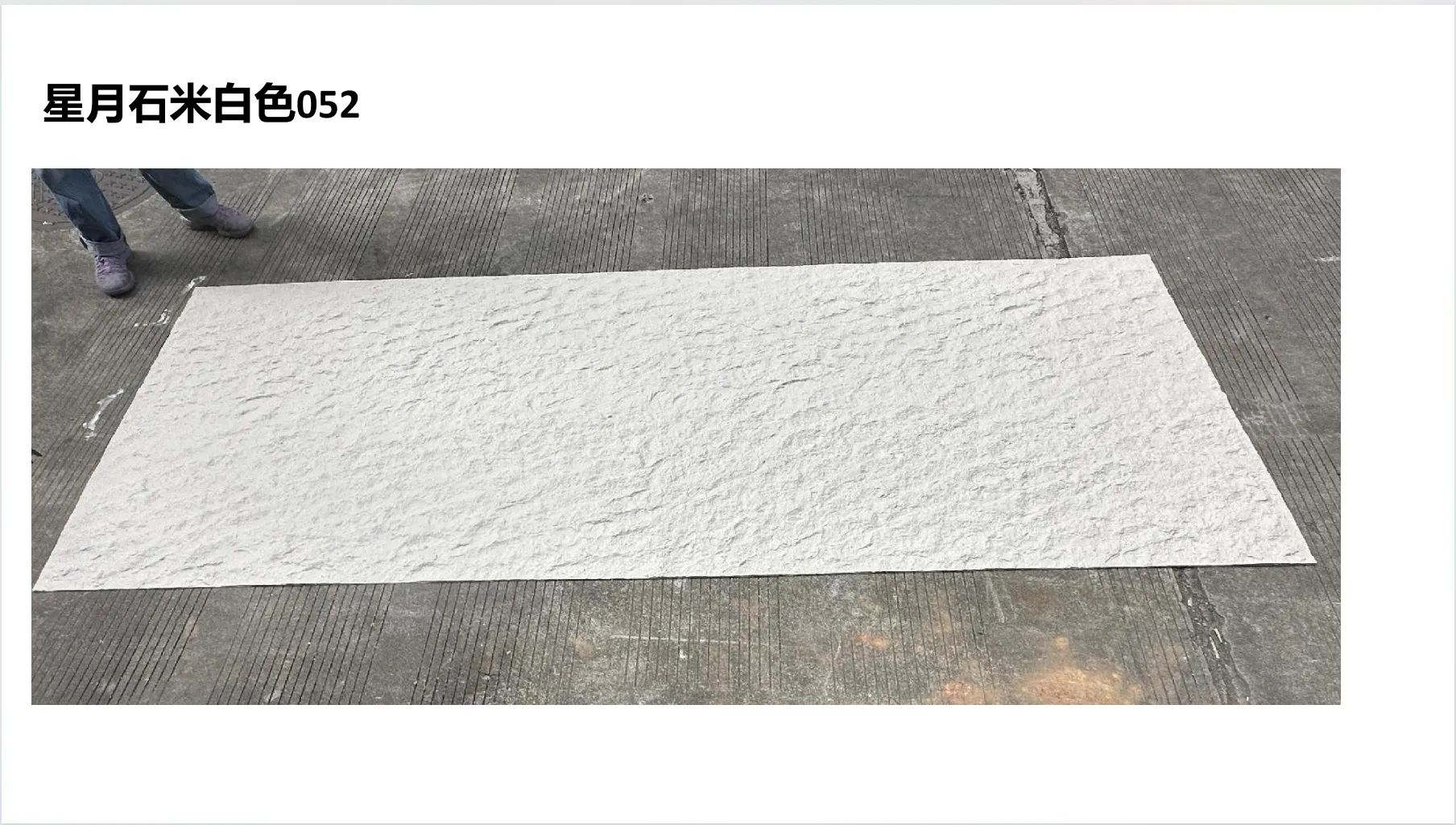
Let's talk about what Starmoon Stone actually looks and feels like. Imagine running your hand over a surface that's smooth but not slick, with a subtle grit that reminds you of riverbed stone. The base color shifts depending on the light: in bright daylight, it leans toward a soft, silvery-gray (not unlike lunar peak silvery), but as the sun dips, it warms into a gentle taupe, with flecks of gold and midnight blue that catch the light like distant stars. Unlike traditional travertine, which can feel heavy or uniform, Starmoon Stone has movement—it's as if each panel has its own unique constellation, no two exactly alike.
What sets it apart from, say, fair-faced concrete (a material beloved for its raw, industrial vibe) is its warmth. Fair-faced concrete is bold, unapologetic, but it can feel cold in intimate spaces. Starmoon Stone, by contrast, invites you in. It's the kind of material that makes a living room feel cozy, a restaurant feel sophisticated, and a hotel lobby feel like a sanctuary. The "star" effect is achieved through a proprietary mix of mineral aggregates and reflective particles, added during the 3D printing process—a technique borrowed from the mcm 3d printing series that ensures precision down to the millimeter.
And the color palette? It's intentionally versatile. While the classic Starmoon Stone leans into celestial grays and blues, COLORIA offers custom finishes for larger projects. Want a warmer tone? They can adjust the mineral blend to evoke a sunset over the desert. Prefer something moodier? A deeper, almost black base with silver stars (think lunar peak black, but with more sparkle) is an option. It's this flexibility that makes Starmoon Stone a favorite among interior designers who crave both consistency and uniqueness.
Creating Starmoon Stone is equal parts art and science. The process starts with sourcing high-quality raw materials: natural limestone aggregates, recycled polymers, and a secret binding agent that COLORIA guards closely. These ingredients are mixed in precise ratios, then fed into the mcm 3d printing series machines—a far cry from the manual labor of cutting natural stone. 3D printing allows the team to layer the material, building up texture and embedding those "star" particles exactly where they want them. It's like baking a cake with a 3D printer—each layer is controlled, intentional, and repeatable, but with room for subtle variations that keep things organic.
After printing, the panels undergo a curing process that strengthens the material without sacrificing flexibility. Traditional materials like natural travertine are prone to cracking under stress, but Starmoon Stone can bend slightly, making it ideal for curved walls or facades. Then comes the finishing touch: a gentle sanding that brings out the texture without making it rough. The result? A panel that's lightweight (about 70% lighter than natural stone), fire-resistant, and resistant to water, mold, and UV rays—no small feat for a material that looks this delicate.
To put it in perspective: A standard 4x8 foot Starmoon Stone panel weighs around 15 pounds, compared to 50+ pounds for a similar-sized slab of natural travertine. That lightness translates to easier installation, lower shipping costs, and less strain on building structures—music to the ears of architects and contractors alike. And because it's made with recycled materials (up to 30% of the polymer content is reclaimed), it's a more sustainable choice than quarried stone, which often requires heavy machinery and leaves large environmental footprints.
Starmoon Stone isn't just pretty—it's practical. Its versatility means it can shine in almost any setting, whether you're designing a commercial high-rise or a cozy home office. Let's break down some of the most popular applications:
To truly appreciate Starmoon Stone, it helps to see how it compares to other popular building materials. Let's break it down in a table:
| Feature | Starmoon Stone | Natural Travertine (e.g., starry green) | Fair-Faced Concrete | Bamboo Mat Board |
|---|---|---|---|---|
| Weight (per sq. ft) | 1.2 lbs | 4.5 lbs | 3.0 lbs | 0.8 lbs |
| Durability | High (resistant to cracks, UV, moisture) | Medium (prone to etching, staining) | High (but prone to surface damage) | Medium (susceptible to water damage) |
| Design Flexibility | Excellent (custom colors, 3D-printed textures) | Limited (natural variations can be unpredictable) | Moderate (smooth or textured, but limited color options) | Moderate (organic texture, limited color range) |
| Sustainability | High (recycled materials, low carbon footprint) | Low (quarrying, high transportation emissions) | Moderate (recyclable, but energy-intensive to produce) | High (renewable bamboo, low processing) |
| Cost (per sq. ft) | Mid-range ($15–$25) | High ($30–$50) | Low ($8–$12) | Mid-range ($12–$20) |
As you can see, Starmoon Stone hits that sweet spot between aesthetics, functionality, and sustainability. It's not the cheapest option, but its durability and design flexibility make it a cost-effective choice in the long run—no need for frequent replacements or expensive maintenance.
In an era where "green building" is more than just a buzzword, Starmoon Stone stands out for its commitment to sustainability. COLORIA GROUP sources 80% of its raw materials locally, reducing transportation emissions. The mcm 3d printing series minimizes waste, as the machines only use the exact amount of material needed for each panel (unlike traditional cutting, which often results in 30%+ waste). And because Starmoon Stone is lightweight, buildings require less structural support, which means fewer materials overall—another win for the planet.
But sustainability isn't just about the environment; it's about people, too. COLORIA's factories run on renewable energy, and the company invests in fair labor practices, ensuring workers are paid living wages and have safe conditions. For architects and builders aiming for LEED certification or other green building standards, Starmoon Stone is a no-brainer—it checks all the boxes for low-VOC emissions, recycled content, and energy efficiency.
At the end of the day, building materials are about more than just function—they're about feeling. They shape how we experience a space, how we connect with our surroundings, and even how we feel when we walk into a room. Starmoon Stone isn't just a material; it's a mood. It's the quiet awe of looking up at the stars, the comfort of being grounded in nature, and the excitement of standing at the intersection of tradition and innovation.
Whether you're designing a home, a commercial space, or a public building, Starmoon Stone offers something rare: beauty without compromise. It's durable enough for high-traffic areas, flexible enough for creative designs, and sustainable enough to feel good about. And with COLORIA GROUP's commitment to innovation—think mcm 3d printing series advancements and new colorways in the pipeline—this is just the beginning for Starmoon Stone.
So, the next time you're brainstorming materials for your project, ask yourself: Do I want something that just fills a space, or something that transforms it? If it's the latter, look no further than Starmoon Stone. After all, why build with ordinary when you can build with the stars?
Recommend Products












