
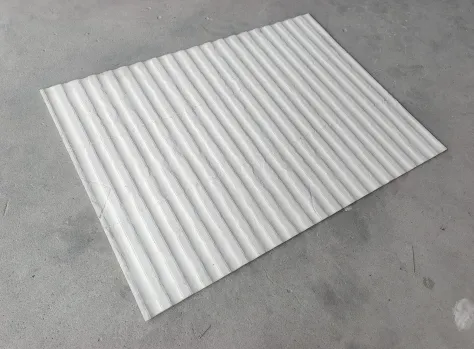
If you have spent any time choosing wall cladding for a facade, an accent wall, or a renovation project, you have almost certainly met the name travertine. It is one of the most beloved natural stones in the world, worn on everything from Roman amphitheaters to modern boutique hotels. Alongside it, a newer name keeps appearing in catalogs and project specs: Century Stone. On the surface both can look similar, carrying warm beige tones and subtle veining. But the two materials are actually very different, and the choice between them affects your budget, your timeline, and even your structural engineering. Here we break down the real differences so you can pick with confidence.
Travertine is a sedimentary rock that forms over hundreds of thousands of years. Hot mineral springs carry dissolved calcium carbonate to the surface, and as the water cools and evaporates, the mineral settles in layered bands. That slow geological process is what gives travertine its distinctive porous surface, pitted texture, and rich honey, cream, and rust tones that deepen as the stone ages.
Because it comes straight from the earth, every travertine slab is one of a kind. That uniqueness is part of its charm, but it also means the pattern and color can change noticeably from one batch to the next, and the stone can be difficult to match across a large project. It is also heavy. Natural travertine typically needs a reinforced or framed structure, a robust adhesive system, and careful sealing to protect its porous face from stains and moisture.
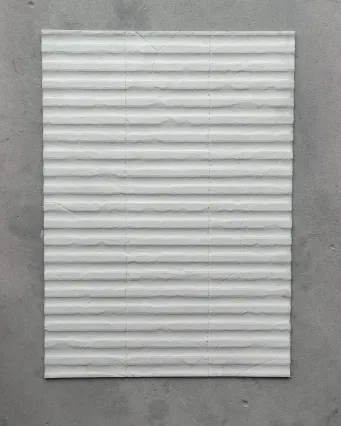
Century Stone is a good example of what modern material engineering can do. It belongs to the MCM flexible stone family, a modified clay material designed to copy the look of natural stone while removing its weaknesses. The surface is printed and textured to reproduce the warm, layered grain of classic travertine, complete with soft beige fields and fine veining, yet the board itself stays thin and flexible.
That flexibility is the key difference. Century Stone can bend around curved columns, arches, and rounded walls with ease, which natural stone simply cannot do without expensive cutting and shaping. It is dramatically lighter than a stone slab, so panels can be handled by fewer workers, moved faster, and fixed to surfaces that would never support a heavy natural stone cladding.
Two of these points deserve extra attention for any project manager. The first is weight. On high-rise facades or building renovations, every kilogram counts. Century Stone loads the structure far less than natural stone, which can open up options for cladding surfaces that would otherwise need expensive reinforcement. The second is installation speed. Because the panels are light and can be cut with ordinary tools, crews finish the job in a fraction of the time, which helps keep the overall project on schedule.
Pick natural travertine when authenticity is your top priority and the location can support its weight. A single feature wall, a showpiece lobby, or a project with strong structural backing are ideal settings for the real thing. Its tactile, uneven surface and natural variation are difficult to beat when you want a genuine stone story.
Choose Century Stone when you need the travertine look without the drawbacks. For exterior cladding, curved architecture, renovation work on existing buildings, or budget-conscious facilities, it delivers a consistent and warm finish at a far lower weight and cost. It is also a smart option where natural stone could not be fixed safely in the first place.
Rather than treating the two as rivals, it is often wiser to see them as tools for different jobs. If your drawings feature sweeping curves, tight timelines, or a wall that cannot bear heavy stone, Century Stone is the clear winner. If you have room in the budget for a heavy, one-of-a-kind natural material and are ready to maintain and seal it over the years, travertine keeps its appeal.
Whichever direction you lean, seeing samples in person is the best way to compare tones and textures. Talk to the team at COLORIA GROUP, share your project drawings, and they can help you match the right travertine finish or flexible stone panel to your requirements.
Recommend Products












