
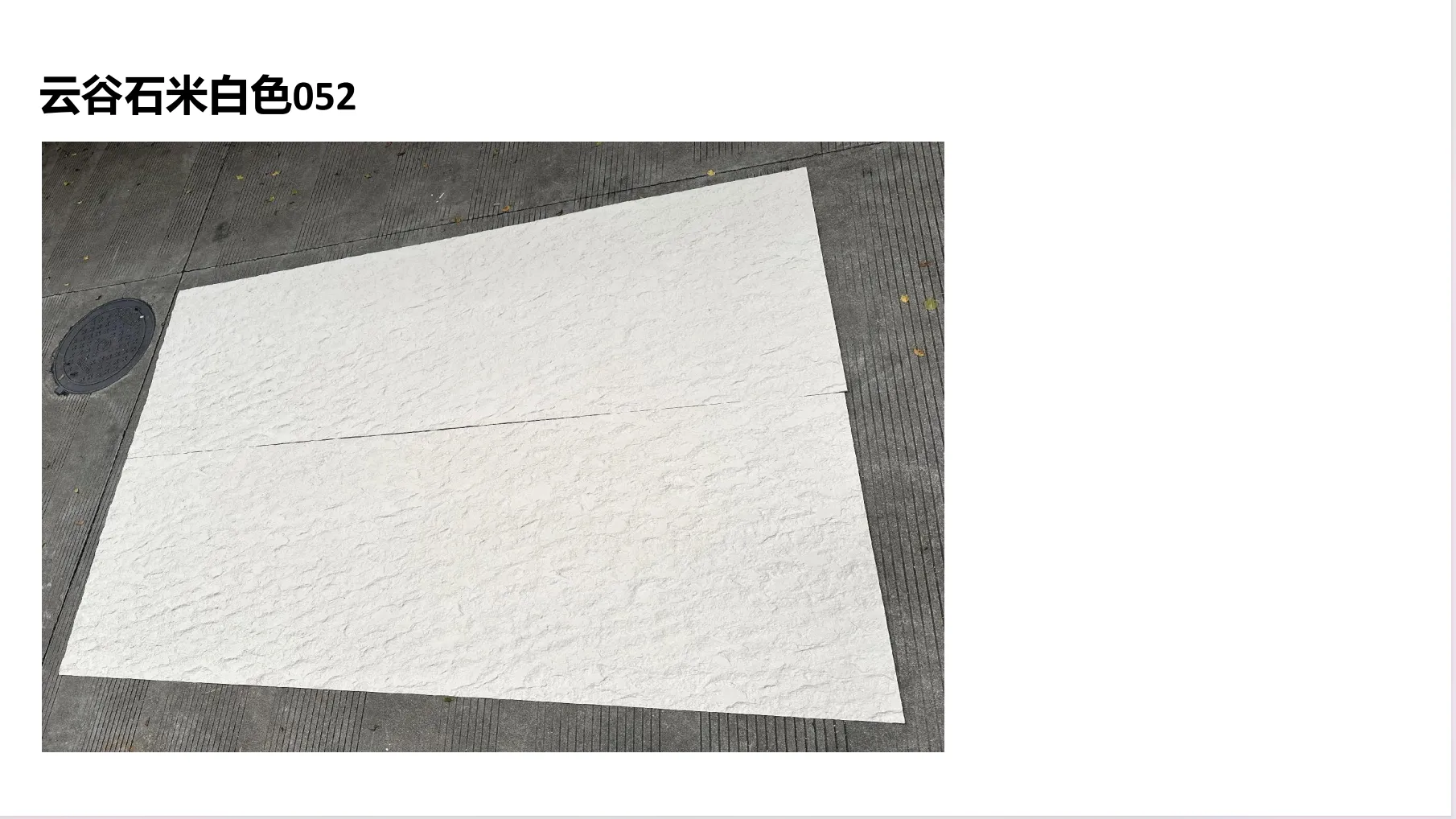
Walk down any street, and you'll notice buildings whispering stories through their walls. The rough-hewn stone of an old cottage, the sleek glass of a modern skyscraper, the weathered brick of a historic town hall—each material tells a tale of its time. For centuries, we've relied on traditional building materials like concrete, natural stone, and metal to shape our world. They've stood the test of time, but let's be honest: they've never been perfect. Concrete cracks under pressure, natural stone is heavy and hard to tame, and metal rusts when the rain comes. Enter Cloud Stone—a new kid on the block that's turning heads in architecture and design. But what exactly is it, and how does it stack up against the materials we've known for decades? Let's dive in.
Before we pit Cloud Stone against its predecessors, let's get to know it. Cloud Stone is part of a larger family of innovative building materials known as mcm flexible stone —short for Modified Composite Material. Unlike traditional materials born from nature or simple mixtures (think cement + water + aggregate), Cloud Stone is engineered. It's a blend of high-performance polymers, mineral aggregates, and proprietary additives, cooked up in labs to solve the very problems that make traditional materials a headache. The result? A material that feels like stone but bends like a sheet of plastic, weighs next to nothing, and comes in colors and textures that would make a rainbow jealous.
Imagine a material that can mimic the look of ancient travertine with starry flecks of blue (hello, travertine (starry blue) ) but doesn't require a crane to install. Or one that channels the silvery sheen of moonlight ( lunar peak silvery ) without the heft of metal. That's Cloud Stone in a nutshell: nature's beauty, reimagined with 21st-century smarts.
To appreciate Cloud Stone, let's first tip our hats to the classics. For years, these materials have been the backbone of construction:
Don't get me wrong: these materials built civilizations. But as we design smarter, greener, and more beautiful spaces, their limitations are harder to ignore. That's where Cloud Stone steps in.
So, what makes Cloud Stone more than just a "new material"? Let's break down the key differences that are making architects, builders, and homeowners rethink their go-to choices.
Traditional materials are rigid by nature. Concrete cracks when the ground shifts; natural stone shatters if you drop it; metal bends but stays bent. Cloud Stone? It's flexible. Thanks to its composite makeup, it can flex up to 30 degrees without snapping—making it ideal for curved walls, uneven surfaces, or buildings in earthquake-prone areas. Imagine installing a feature wall that follows the gentle curve of a staircase, or a facade that wraps around a rounded corner seamlessly. With traditional stone or concrete, that would mean custom-cutting every piece (and blowing your budget). With Cloud Stone, it's as easy as bending a sheet of thick paper.
This flexibility also makes it resistant to impact. A stray baseball? A heavy piece of furniture bumping against the wall? Cloud Stone bounces back, while traditional materials would chip or dent. It's like the material equivalent of a yoga instructor—strong, but adaptable.
Let's talk numbers: A standard 4x8-foot slab of natural travertine weighs around 150 pounds. A slab of Cloud Stone the same size? Just 15–20 pounds. That's a 90% weight reduction! Why does this matter? For starters, installation becomes a breeze. No need for cranes, forklifts, or a team of muscle-bound workers. A single person can carry a Cloud Stone panel up a ladder—saving time, labor costs, and the risk of back injuries.
Lightweight also means less stress on buildings. Traditional stone facades add massive weight to a structure, requiring reinforced foundations and extra structural support. Cloud Stone? It's so light that it can be installed on wood frames, drywall, or even existing surfaces without compromising safety. This opens up design possibilities in older buildings, where weight restrictions often limit renovation options.
You might think a lightweight, flexible material would be flimsy—but Cloud Stone is tough as nails. Let's compare it to traditional options:
In short, Cloud Stone isn't just a pretty face—it's built to outlast the buildings it adorns.
Traditional materials have beauty, but they're limited by nature. Cloud Stone? It takes aesthetics to a whole new level—without sacrificing realism.
Want the look of travertine with a cosmic twist? Travertine (starry blue) has tiny, iridescent flecks that catch the light like stars. Prefer something sleek and modern? Lunar peak silvery mimics the cool glow of moonlight on stone. There are options for every style: rustic ( historical pathfinders stone ), industrial ( fair-faced concrete lookalikes), even futuristic ( 3d art concrete board textures). And unlike natural stone, these patterns are consistent across every panel—no more "oops, this slab has a weird vein" surprises.
But Cloud Stone doesn't just copy nature—it improves on it. You can get panels with integrated texture, like wave panel (gentle, undulating surfaces) or thread (fine, linear patterns), that would be impossible to carve into natural stone. It's design freedom, delivered.
These days, building green isn't just a trend—it's a necessity. Traditional materials have a dirty secret: they're hard on the planet. Concrete production alone accounts for 8% of global carbon emissions. Quarrying natural stone destroys ecosystems and uses massive amounts of water. Cloud Stone, on the other hand, is engineered with sustainability in mind.
It's a material that looks good *and* does good—something traditional options can rarely claim.
Still not convinced? Let's put it all in black and white with a side-by-side comparison:
| Feature | Cloud Stone | Natural Stone (e.g., Travertine) | Concrete (Fair-Faced) | Metal (e.g., Foamed Aluminium) |
|---|---|---|---|---|
| Weight (4x8ft panel) | 15–20 lbs | 120–150 lbs | 80–100 lbs | 30–40 lbs |
| Flexibility | Bends up to 30° without breaking | Brittle; cracks under stress | Rigid; prone to cracking | Limited flexibility; dents permanently |
| Durability (Lifespan) | 50+ years (no fading, cracking, or corrosion) | 20–30 years (prone to staining, chipping) | 30–40 years (cracks, spalls over time) | 20–30 years (rusts, dents, fades) |
| Sustainability | Low carbon footprint; recycled materials; recyclable | High quarrying impact; water/energy intensive | High carbon emissions; non-recyclable | Energy-intensive production; limited recyclability |
| Aesthetic Options | Unlimited (starry patterns, textures, colors) | Limited by natural variation | Basic colors; limited texture | Metallic finishes; limited patterns |
| Installation Ease | Lightweight; can be cut with basic tools; DIY-friendly | Requires heavy machinery; professional installation | Heavy; requires formwork; messy | Requires specialized tools; risk of denting |
Cloud Stone isn't just a lab experiment—it's already transforming spaces around the world. Here are a few places where it's making a difference:
Basically, if a space needs to be beautiful, durable, and a little bit special, Cloud Stone fits the bill.
At the end of the day, building materials are about more than just holding up walls—they shape how we experience spaces. Traditional materials have served us well, but they're stuck in the past. Cloud Stone, with its flexibility, durability, beauty, and sustainability, is a glimpse into the future: a future where buildings are lighter, smarter, and more in tune with our needs.
Whether you're a homeowner dreaming of a unique feature wall, an architect pushing the boundaries of design, or a builder tired of wrestling with heavy materials, Cloud Stone offers something traditional options can't: a material that works *with* you, not against you.
So, the next time you walk into a building and think, "Wow, this feels different," take a closer look at the walls. Chances are, you're standing in front of Cloud Stone—proof that when we reimagine what's possible, even the most basic elements of construction can become works of art.
Recommend Products












