
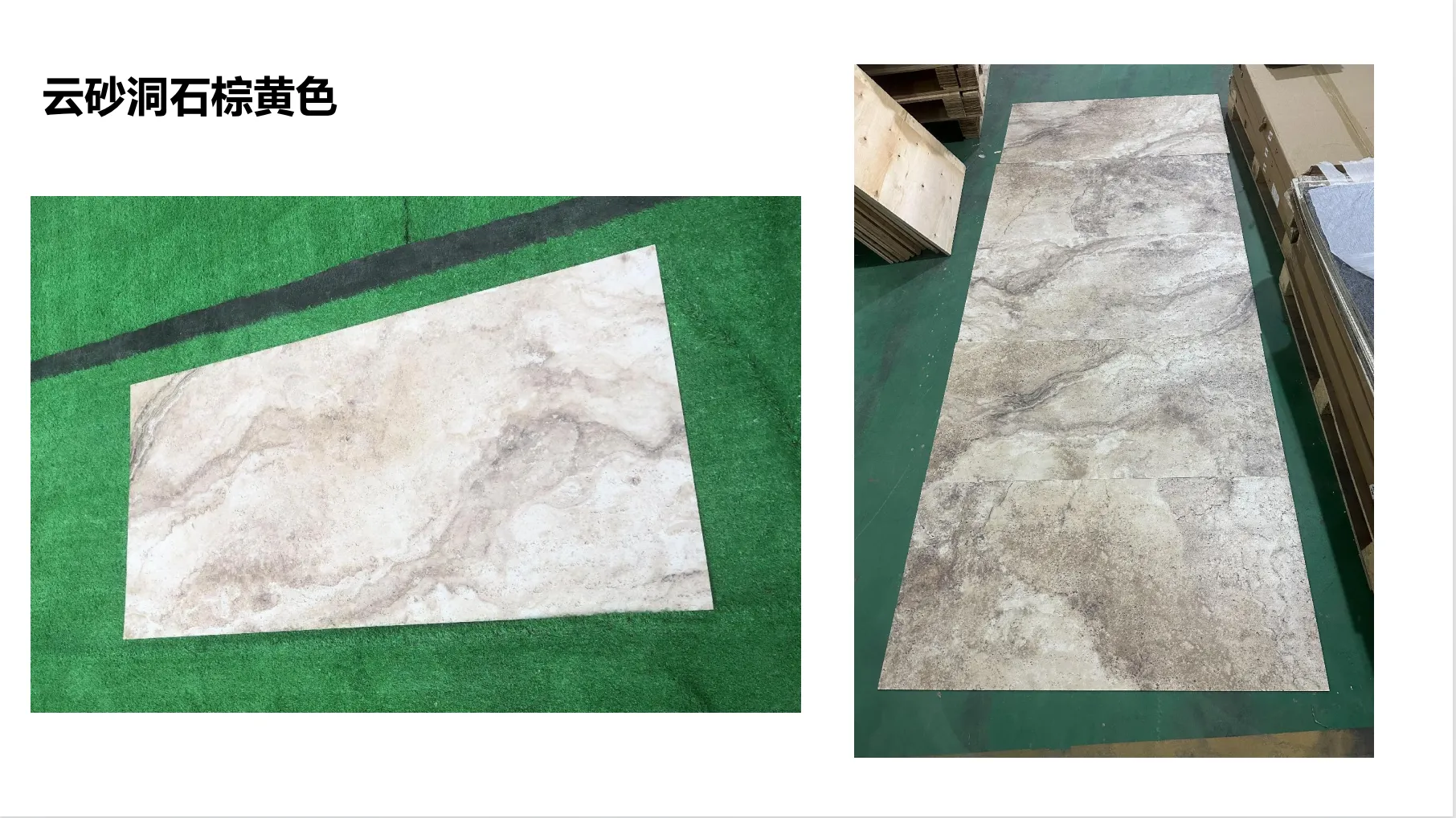
Travertine itself is a form of limestone, born from mineral-rich hot springs and rivers. Over centuries, calcium carbonate deposits build up, layer by layer, creating a stone that's as porous as it is beautiful. But dolomitic travertine? It's a special variant, infused with dolomite—a mineral rich in magnesium and calcium. This gives it a unique set of properties: more durability than standard travertine, a distinct crystalline structure, and color tones that range from deep, moody grays to warm, earthy claybanks. And while terms like "dolomitic travertine(dark grey)" and "dolomitic travertine(claybank)" might sound like just labels, they represent two sides of the same coin—natural beauty with personality. Let's break down its uniqueness, one feature at a time.
First, let's talk about porosity—the little holes, pits, and indentations that give dolomitic travertine its signature texture. If you've ever run your hand over a slab, you've felt them: small, irregular cavities that make the stone feel less like a cold surface and more like something organic, almost tactile. But why does this happen? It all starts underground, in the hot springs or mineral-rich waters where travertine forms. As water flows through rocks, it dissolves calcium carbonate and other minerals. When that water reaches the surface and evaporates, those minerals crystallize, building up into layers. But here's the catch: as the minerals solidify, tiny gas bubbles or pockets of water get trapped, leaving behind the pores we see. In dolomitic travertine, the presence of dolomite slows down this crystallization process slightly, creating pores that are smaller and more evenly distributed than in standard travertine. Think of it like a sponge that's been gently pressed—still porous, but with a structure that feels intentional.
Now, you might be wondering: aren't pores a problem? Won't they stain or harbor dirt? It's a fair question, but here's the surprising truth: porosity is part of what makes dolomitic travertine so special. For one, those pores make the stone "breathable." In humid climates, or in spaces like bathrooms or kitchens, this breathability helps prevent moisture buildup, reducing the risk of mold or mildew. It also gives the stone a natural, non-slip surface when sealed properly—perfect for high-traffic areas. But beyond functionality, porosity adds depth. Light doesn't bounce off dolomitic travertine like it does off polished marble; instead, it soaks into the pores, creating soft shadows and highlights that change with the time of day. A slab that looks cool and moody in the morning might warm up in the afternoon sun, as light catches the edges of those tiny pits. It's dynamic, alive, and totally unique to each piece.
Take dolomitic travertine(dark grey), for example. Its deep charcoal base makes the porosity even more noticeable—those small, lighter-colored pores stand out like stars against a night sky. Run your finger over it, and you'll feel a texture that's both rough and smooth, a contrast that's oddly satisfying. On the flip side, dolomitic travertine(claybank) has a warmer base—think terracotta or sandstone—and its pores are a slightly lighter shade, blending in more to create a softer, more uniform texture. In both cases, the porosity isn't a flaw; it's the stone's way of showing its age, its journey from mineral-rich water to the slab in your home. It's a reminder that nature isn't perfect—and that's exactly what makes it beautiful.
If porosity is dolomitic travertine's texture, then veining is its personality. Unlike marble, where veins are often bold, thick, and contrasting (think classic white marble with black streaks), dolomitic travertine's veins are more like whispers. They're thinner, more irregular, and sometimes so subtle they look like watercolor washes rather than lines. But don't mistake subtlety for simplicity—these veins tell a story of the stone's formation, and no two slabs have the same pattern. Let's unpack why that is.
Veins in travertine form when mineral-rich water flows through the stone as it's forming. As the water moves, it carries different minerals—iron oxides, manganese, even tiny bits of sediment—and deposits them in cracks or along layers. In dolomitic travertine, the magnesium in dolomite interacts with these minerals, creating veins that are often softer in color and more diffused. For example, in dolomitic travertine(dark grey), veins might be a lighter gray, almost silver, or even a faint blue-green, like shadows of water. In claybank dolomitic travertine, they could be a deeper brown, a burnt sienna, or even a hint of gold—think of sunlight filtering through soil. These aren't just random lines; they're records of how water moved, how minerals mixed, and how the stone grew over centuries. Geologists sometimes call them "growth rings," but for designers and homeowners, they're works of art.
What makes dolomitic travertine's veining so unique is its unpredictability. In a world of mass-produced materials, where everything from wallpaper to tile can be printed to look "natural," dolomitic travertine's veins are impossible to replicate. A single slab might have veins that start thick at one end, thin out, then branch into tiny tributaries—like a river delta frozen in stone. Another might have short, wispy veins that look like brushstrokes. This randomness is why designers love it: it adds visual interest without overwhelming a space. Imagine a kitchen backsplash in dolomitic travertine(claybank)—the soft, earthy veins would complement wooden cabinets and brass fixtures, adding warmth without competing. Or a bathroom wall in dark grey dolomitic travertine, where the silvery veins would echo the cool tones of chrome fixtures and mirrors. It's versatility rooted in nature's chaos.
And here's a fun fact: the way light hits these veins can completely change their appearance. In direct sunlight, the veins in claybank dolomitic travertine might glow, taking on a coppery hue. In soft, warm lighting (like a bedroom with dimmer switches), the dark grey variant's veins could fade into the background, letting the stone's deep color take center stage. It's a stone that adapts to its environment, making it perfect for spaces that change throughout the day. So next time you look at a slab of dolomitic travertine, take a moment to trace the veins with your eyes—you're following a path that water took hundreds of years ago. Cool, right?
Now, let's dive into color—the most visible way dolomitic travertine expresses its uniqueness. While travertine is often associated with beige or cream (thanks to classic varieties), dolomitic travertine breaks the mold with two standout shades: dark grey and claybank. These aren't just "colors," though—they're moods, each with its own personality and purpose. Let's compare them, side by side.
Picture a stormy sky just before dusk, or the color of wet stone after rain—that's dolomitic travertine(dark grey). Its base is a deep, charcoal hue, sometimes with hints of slate blue or even midnight. The pores, as we mentioned earlier, are a lighter gray, creating a subtle contrast that adds depth without being busy. What gives it this moody color? It all comes down to minerals. Dark grey dolomitic travertine forms in environments with higher levels of iron and magnesium, which react with oxygen to create those deeper tones. It's also often found in areas with more sediment, which adds to its rich, layered look.
This shade is a favorite for modern and minimalist spaces. It pairs beautifully with crisp whites, blacks, and metallics—think a dark grey dolomitic travertine floor in a living room with white walls, black leather sofas, and silver accent lamps. It's also surprisingly versatile: in a industrial-style loft, it would complement exposed brick and steel beams; in a contemporary bathroom, it would add drama alongside white marble countertops and black fixtures. And because of its darker color, it hides minor scratches and dust better than lighter stones—a practical bonus for busy households.
On the opposite end of the spectrum, we have dolomitic travertine(claybank)—warm, earthy, and full of character. Its base color is best described as "clay-like": think terracotta, sand, or the color of soil after a summer rain. Sometimes it has undertones of peach, amber, or even soft pink, depending on the iron oxide content in the minerals. The pores here are a lighter, almost cream color, blending in to create a softer, more uniform look than the dark grey variant. Claybank dolomitic travertine forms in environments with more calcium and less magnesium, and often in shallower waters where sunlight interacts more with the mineral deposits—hence the warmer hues.
This shade is all about comfort and nostalgia. It's the kind of stone that makes a space feel like a cozy cabin or a sunlit villa in Tuscany. Imagine it in a kitchen with wooden cabinets, a farmhouse sink, and copper hardware—the claybank tones would enhance the room's warmth, making every meal feel like a gathering. Or in a bedroom, used as a headboard wall, paired with linen bedding and woven rugs. It also works wonders in outdoor spaces: a claybank dolomitic travertine patio would blend seamlessly with garden greenery, looking like it's been part of the landscape for decades. And because of its light color, it reflects sunlight, making small spaces feel larger and brighter—perfect for apartments or rooms with limited windows.
Of course, dolomitic travertine isn't the only travertine in town. There's the starry series, like travertine (starry green)—a vibrant, almost otherworldly stone with flecks of green that look like stars in a night sky. But what sets dolomitic travertine apart from these more "dramatic" varieties is its understatement. It doesn't scream for attention; instead, it invites you to lean in, to notice the details. It's the kind of beauty that grows on you, revealing new nuances every time you look at it.
You might be thinking: there are so many natural stones out there—marble, granite, slate—what makes dolomitic travertine worth considering? Let's break it down. Marble is stunning, with its bold veins and high shine, but it's also soft and prone to scratching. Granite is durable, but it can feel cold and uniform, lacking the texture of travertine. Slate is earthy, but its flat, matte finish doesn't have the depth of dolomitic travertine's porosity. Dolomitic travertine, though? It's the sweet spot: durable (thanks to that dolomite content), textured (hello, pores), and full of character (those unique veins). It's also more affordable than marble, making it accessible for both high-end projects and everyday homes.
Another key difference is its sustainability. Travertine forms relatively quickly (geologically speaking)—some deposits grow just a few inches per year—compared to granite, which takes millions of years to form. And because dolomitic travertine is often quarried in smaller, more localized operations, it has a lower carbon footprint than stones that are shipped globally. Plus, its natural porosity means it doesn't require heavy processing or chemical treatments to look good—what you see is what you get, straight from the earth.
Real-Life Example: A boutique hotel in Barcelona recently used dolomitic travertine(dark grey) for its lobby floors and walls. The designers wanted a space that felt modern but not sterile, and the stone delivered. "The dark grey travertine adds depth, but the porosity keeps it from feeling cold," says lead designer Carlos Mendez. "Guests often comment on how the lobby changes with the light—moody in the morning, almost glowing at sunset. And because it's dolomitic, it's held up beautifully to foot traffic, even with luggage wheels and high heels. We sealed it once, and it's been low-maintenance ever since."
And let's not forget modern innovations like MCM flexible stone. MCM, or Modified Composite Material, is a thin, lightweight panel that combines natural stone (like dolomitic travertine) with a flexible backing. This means you can use dolomitic travertine in places traditional slabs can't go—curved walls, ceilings, even furniture. Imagine a restaurant with a curved bar front wrapped in MCM flexible stone made from dolomitic travertine(claybank)—it would add warmth and texture without the weight or cost of solid stone. It's a way to bring the beauty of dolomitic travertine into more spaces, making it accessible to designers and homeowners with creative visions.
To help you decide which shade is right for your space, let's put dolomitic travertine(dark grey) and dolomitic travertine(claybank) head-to-head. Here's a breakdown of their key features, best uses, and what makes each unique:
| Feature | Dolomitic Travertine (Dark Grey) | Dolomitic Travertine (Claybank) |
|---|---|---|
| Base Color | Deep charcoal with hints of slate blue or midnight | Warm clay/terracotta with undertones of peach or amber |
| Porosity Level | Medium; pores are lighter gray, creating subtle contrast | Medium; pores are cream-colored, blending into the base |
| Veining Pattern | Thin, silvery-gray veins; sometimes with blue-green hints | Soft, brown or gold veins; wispy, watercolor-like |
| Best Lighting | Soft, warm light (to avoid looking too harsh); works with dimmer switches | Bright, natural light (enhances warmth); pairs well with sunlight |
| Ideal Spaces | Modern interiors, minimalist homes, commercial lobbies, bathrooms | Rustic kitchens, bedrooms, outdoor patios, cozy living rooms |
| Complementary Colors | Whites, blacks, silvers, deep blues | Wood tones, beiges, coppers, soft greens |
| Maintenance Note | Hides dust/scratches well; seal every 2-3 years | Shows dust more easily; seal every 1-2 years (due to lighter color) |
At the end of the day, there's no "better" option—just what works for your space and style. Dark grey is for those who love modern drama; claybank is for those who crave warmth and nostalgia. And the best part? Both are 100% natural, with all the character and uniqueness that comes with being a product of the earth.
Like any natural stone, dolomitic travertine needs a little love to stay looking its best. But don't worry—it's not high-maintenance. Here's what you need to know:
Sealing: The first step is sealing. Because of its porosity, dolomitic travertine can absorb liquids, which can lead to staining. A good quality stone sealer (look for one labeled "impregnating" or "penetrating") will fill in the pores without changing the stone's appearance. For dark grey dolomitic travertine, seal once every 2-3 years; for claybank, every 1-2 years (since lighter colors show stains more easily). Always test the sealer on a small, hidden area first to ensure it doesn't alter the color.
Cleaning: Stick to mild, pH-neutral cleaners—avoid vinegar, bleach, or abrasive scrubbers, which can damage the stone or wear away the sealer. For everyday spills, blot (don't wipe!) with a soft cloth to prevent the liquid from seeping into pores. For deeper cleaning, mix warm water with a few drops of dish soap, gently wipe, then rinse with clean water and dry thoroughly.
Preventing Damage: Use coasters under glasses, especially for acidic drinks like wine or lemon juice. Place doormats at entrances to trap dirt and grit, which can scratch the stone. For outdoor use, choose a sealer designed for exterior stone to protect against rain and UV rays.
With these simple steps, your dolomitic travertine will age gracefully, developing a patina that only adds to its charm. Unlike synthetic materials that fade or wear out, natural stone gets better with time—those small scratches and subtle color changes tell the story of your life in the space, making it truly one-of-a-kind.
At the end of the day, dolomitic travertine is more than just a building material. It's a connection to the earth, a reminder of the natural processes that shape our planet. Each slab is a snapshot of time—centuries of mineral deposits, water flow, and geological activity, all condensed into something we can walk on, touch, and live with. Its porosity, veining, and color variations aren't flaws; they're proof of its authenticity. In a world where so much is mass-produced, standardized, and perfect, dolomitic travertine celebrates imperfection. It's a stone that doesn't try to be something it's not—and that's its greatest strength.
Whether you choose dark grey for a modern, moody space or claybank for a warm, inviting one, you're bringing a piece of nature into your home or project. And with innovations like MCM flexible stone, that piece can now go places it never could before—curved walls, custom furniture, even art installations. Dolomitic travertine isn't just unique; it's versatile, durable, and full of heart.
So the next time you encounter a space with dolomitic travertine, take a moment to appreciate it. Run your hand over its surface, trace the veins with your eyes, and think about the journey it took to get there. It's a stone with a story—and now, it can be part of yours, too.
Recommend Products












