
Walk into any thoughtfully designed space—a cozy café with sunlit corners, a sleek corporate lobby that exudes professionalism, or a home where every wall feels like a piece of art—and you'll notice something subtle but powerful: the walls. Wall cladding isn't just about covering surfaces; it's about setting a mood, telling a story, and turning ordinary rooms into memorable experiences. But for years, designers and builders have grappled with a trade-off: natural materials like stone or marble offer unmatched beauty but are heavy, fragile, and hard to install. Traditional synthetics, on the other hand, might be durable but lack that organic, soulful feel. Enter the MCM Marble Series—a line of cladding solutions that's quietly revolutionizing how we think about walls. Let's dive into why this series isn't just another product, but a genuine game-changer.
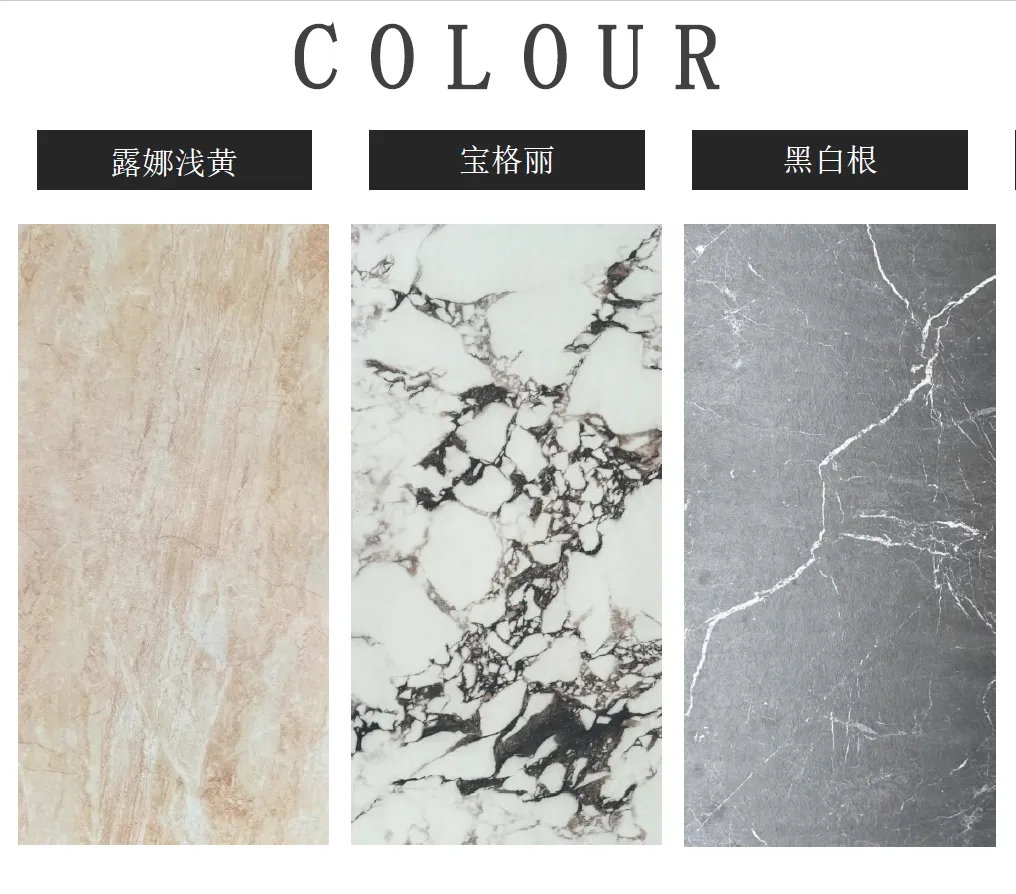
First things first: MCM stands for Modified Composite Material, but don't let the technical name fool you. At its core, MCM is about reimagining what wall cladding can be. Think of it as nature's best qualities— the texture of travertine, the sheen of marble, the ruggedness of stone—paired with modern engineering smarts. Unlike traditional cladding materials that are heavy, brittle, or one-note, MCM products are designed to be lightweight, flexible, and infinitely customizable. And the Marble Series? It's the crown jewel, blending the timeless elegance of marble and natural stone with innovations that solve the biggest headaches of architects, designers, and homeowners alike.
But what really sets it apart? Let's break it down into the qualities that make it a standout in a crowded market.
Ever tried installing natural stone on a curved wall? Spoiler: it's a nightmare. Traditional stone slabs are rigid, heavy, and unforgiving—they crack, they slip, and they rarely fit perfectly on anything that isn't a flat, straight surface. That's where MCM flexible stone comes in, and it's a total game-changer. These panels are thin (often just 3-5mm thick) and lightweight, but don't let their delicate appearance fool you. They're engineered to bend and flex without breaking, making them ideal for all kinds of surfaces: curved columns in a hotel atrium, undulating feature walls in a restaurant, even outdoor spaces with uneven facades.
Take, for example, a recent project I visited: a boutique yoga studio in downtown Portland. The owner wanted the main studio wall to curve gently, mimicking the flow of movement in a yoga class. With traditional stone, this would have meant custom-cutting expensive slabs, risking cracks, and blowing the budget. Instead, they used MCM flexible stone in a soft, neutral tone, and the result? The wall feels alive, like a natural extension of the practice space. Installers finished the job in half the time, and the owner saved enough to invest in better mats for her students. That's flexibility in action—for both the design and the bottom line.
Let's talk about the fun stuff: how these materials look. The MCM Marble Series isn't just about "mimicking" natural stone—it's about elevating it. Take travertine (starry green) , for example. Natural travertine is beloved for its porous, earthy texture, but MCM takes it a step further. The "starry" variant adds subtle, iridescent flecks that catch the light, turning a simple wall into something that feels almost magical. I saw this used in a rooftop bar in Barcelona, where the walls, clad in travertine (starry green), glowed softly as the sun set, making patrons feel like they were drinking under a forest canopy dotted with fireflies. It's the kind of detail that turns a space from "nice" to "unforgettable."
But the series doesn't stop at stone. For designers craving a more modern, industrial edge, there's foamed aluminium alloy board (vintage silver) . These panels have a sleek, metallic finish with a hint of retro charm—think 1920s Art Deco meets 21st-century minimalism. A tech startup in Tokyo used them in their office lobby, pairing the vintage silver panels with warm wooden accents. The result? A space that feels innovative but approachable, where the walls don't just separate rooms—they tell the company's story of blending heritage and progress.
And then there's lunar peak silvery , part of the Lunar Peak sub-series. This one's for the futurists. The surface has a smooth, almost otherworldly sheen, like polished moonstone, with subtle veining that adds depth without overwhelming. I visited a luxury watch store in Geneva that used lunar peak silvery on their feature wall, and it was genius. The panels reflected the soft spotlights highlighting the watches, creating a sense of luxury and precision that mirrored the products themselves. It's proof that cladding isn't just background—it's part of the brand's identity.
| Material | Best For | Design Vibe |
|---|---|---|
| MCM flexible stone | Curved walls, outdoor spaces, high-traffic areas | Organic, natural, versatile |
| Travertine (starry green) | Boutiques, cafés, wellness spaces | Ethereal, cozy, nature-inspired |
| Foamed aluminium alloy board (vintage silver) | Modern offices, retail, hospitality | Sleek, industrial, retro-modern |
| Lunar peak silvery | Luxury retail, high-end lobbies | Futuristic, elegant, precise |
Here's the thing about beautiful materials: they need to be tough enough to handle the chaos of daily life. A restaurant wall will get splashed with sauce, a hotel lobby will see thousands of hands brushing against it, and an outdoor facade has to withstand rain, snow, and UV rays. MCM Marble Series products are built for this. Take MCM flexible stone again—it's water-resistant, scratch-resistant, and fade-resistant, so that travertine (starry green) wall in the rooftop bar? It still looks as vibrant after three years of Barcelona sun and rain as it did on day one.
Compare that to something like fair-faced concrete , a traditional material loved for its raw, industrial look. Don't get me wrong—I appreciate fair-faced concrete, but it's porous. Spills stain it, moisture seeps in, and over time, it can crack or discolor. MCM products, by contrast, are sealed during manufacturing, creating a barrier that repels liquids and resists wear. A brewery in Berlin recently replaced their fair-faced concrete walls with MCM flexible stone, and the maintenance crew couldn't be happier. "We used to spend hours scrubbing beer stains," one manager told me. "Now? A quick wipe with a damp cloth, and it's good as new."
In 2025, we're all more conscious of the planet—and for good reason. Traditional cladding materials often come with a heavy environmental footprint: quarrying natural stone disrupts ecosystems, transporting heavy slabs burns fossil fuels, and excess waste ends up in landfills. MCM Marble Series products, though, are designed with sustainability in mind. The manufacturing process uses recycled materials where possible, and because the panels are lightweight, transporting them requires less fuel. Plus, their durability means they last longer, reducing the need for frequent replacements.
Take foamed aluminium alloy board (vintage silver), for example. Aluminium is one of the most recyclable materials on the planet, and MCM's process reuses scrap aluminium, cutting down on mining. And because the panels are so thin, they use less material overall. A recent green building project in Vancouver used MCM products throughout, and they qualified for LEED credits thanks to the reduced carbon footprint. "It's not just about looking good," the architect told me. "It's about proving that beauty and responsibility can go hand in hand."
At the end of the day, the MCM Marble Series isn't just a new product—it's a shift in how we approach wall design. For designers, it opens up possibilities they never had before: curved walls that look like they're carved from stone, feature walls with starry textures that don't break the bank, and materials that work indoors and out without compromise. For homeowners and business owners, it means spaces that reflect their personality, stand up to daily life, and don't require a fortune in maintenance.
I think back to that yoga studio in Portland. The owner, a former architect, told me she'd dreamed of that curved wall for years but thought it was impossible with her budget. MCM flexible stone made it possible. And that's the real game-changer: making extraordinary design accessible. It's not just about walls—it's about creating spaces that make people feel something. Whether it's the cozy glow of travertine (starry green) in a café, the sleek confidence of lunar peak silvery in a lobby, or the industrial charm of foamed aluminium alloy board (vintage silver) in an office, these materials don't just cover walls—they transform them into stories.
The MCM Marble Series is proof that innovation in building materials doesn't have to be cold or technical. It can be warm, creative, and deeply human. By blending the best of nature and technology, it's setting a new standard for what wall cladding can be: flexible, beautiful, durable, and responsible. So the next time you walk into a space that takes your breath away, take a closer look at the walls. Chances are, it's not just stone or concrete—it might just be MCM, quietly changing the game, one wall at a time.
Recommend Products












