
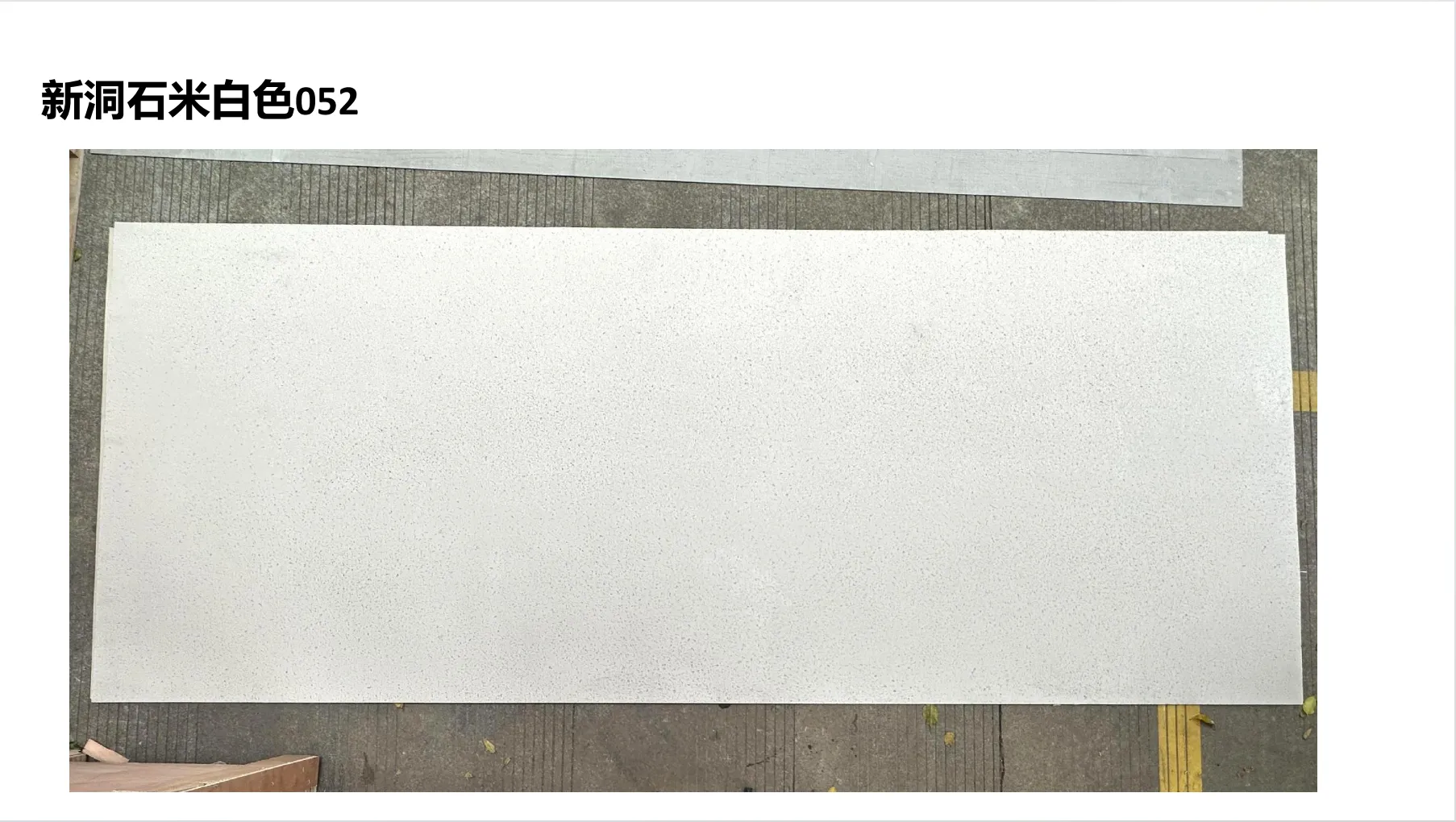
Last month, I visited a newly opened art gallery in downtown Portland, and something unexpected caught my eye—not the paintings on the walls, but the walls themselves. They had the warm, porous texture of natural travertine, the kind you'd find in ancient Roman baths, but there was a subtle shimmer to them, like someone had sprinkled stardust into the stone. When I asked the gallery manager about it, she smiled and said, "That's MS Travertino. It looks like natural stone, but it's actually a modern marvel of cementitious technology." Intrigued, I spent the next hour picking her brain, and what I learned changed how I think about building materials. Let's dive into what makes MS Travertino stand out, and why it's quickly becoming a favorite among architects, designers, and homeowners alike.
Let's start with the basics. MS Travertino isn't your grandma's marble or granite. It's a cutting-edge composite material part of the MCM (Modified Composite Material) family, specifically designed to mimic the look and feel of natural travertine—those beautiful, earthy stones formed from mineral-rich spring water—while fixing almost all of natural stone's biggest headaches. Think of it as nature's best traits, upgraded with 21st-century engineering.
At its core, MS Travertino is made using advanced cementitious technology: a blend of high-grade Portland cement, reinforcing fibers (like glass or carbon), mineral aggregates, and proprietary additives. This isn't just concrete with a fancy name; it's a carefully calibrated mix that results in a material that's lighter, stronger, and more versatile than most natural stones. And while it's part of the broader MCM flexible stone category, MS Travertino takes things a step further with its hyper-realistic travertine textures and a range of finishes that natural stone can't touch—like the travertine (starry green) variant I saw at the gallery, which has tiny, iridescent particles that glint like stars when hit by light.
So, what exactly sets MS Travertino apart? Let's break it down into the features that matter most when you're choosing materials for a space—whether it's your kitchen backsplash, a hotel lobby, or a public art installation.
Natural travertine is beloved for its unique texture—those pitted, honeycombed surfaces formed by gas bubbles escaping as the stone solidifies. But here's the catch: those pits are like tiny sponges, soaking up stains, moisture, and grime. MS Travertino that texture flawlessly—you can run your hand over it and feel the same organic, tactile quality—but the magic is in the finish. The surface is sealed at the molecular level during production, making it stain-resistant and easy to clean. No more panicking if you spill red wine on your travertine wall!
And the variety? It's mind-blowing. Beyond the starry (which includes travertine (starry red) , travertine (starry orange) , and travertine (starry blue) for those who want a pop of color), there are vintage finishes like travertine (vintage silver) , travertine (vintage gold) , and travertine (vintage black) that mimic the patina of aged metal. Imagine a restaurant with travertine (starry orange) walls—warm, inviting, and totally unique. It's texture with personality, minus the upkeep.
Here's where the "flexible" in MCM flexible stone really shines. Natural stone is heavy and rigid—you can't bend it, and installing it on curved surfaces is a nightmare (not to mention expensive). MS Travertino, though? It comes in thin, lightweight flexible stone cladding panels that can bend and conform to almost any shape. Want a curved accent wall in your living room? No problem. Dreaming of a spiral staircase wrapped in travertine? MS Travertino can do that.
I spoke to Carlos, a contractor who recently used MS Travertino on a home renovation project, and he laughed when I asked about installation. "Natural stone slabs weigh 80-100 pounds each—you need a team of guys just to carry them. MS Travertino panels? I can carry two with one hand. And because they're flexible, we could install them on the homeowner's curved fireplace surround without cutting a single piece to fit. Saved us two full days of work, easy."
Let's talk toughness. Natural travertine is soft—scratch it with a key, and you'll leave a mark. It's also porous, so if you live in a rainy climate, it can absorb water and crack in freezing temperatures. MS Travertino? It's built to withstand the worst. Thanks to those reinforcing fibers in its mix, it's scratch-resistant, impact-resistant, and impervious to water. It won't fade in sunlight, crack in frost, or get eaten away by salt (looking at you, coastal homes).
Take the lunar peak silvery variant, for example. A hotel in Colorado installed it on their outdoor pool deck three years ago, and when I checked in last summer, the panels still looked brand new—no fading, no cracks, even after harsh winters and sweltering summers. Compare that to natural stone, which would have needed sealing every 6 months and might have started chipping by year two.
These days, we all care about the planet, and building materials are a big part of that. Quarrying natural stone is resource-intensive—it requires heavy machinery, disrupts ecosystems, and generates tons of waste. MS Travertino, on the other hand, is eco-friendly by design. It uses recycled aggregates (like crushed glass or reclaimed concrete) in its mix, reduces waste during production (since it's made to order), and is 100% recyclable at the end of its life.
Plus, because it's lightweight, transporting MS Travertino uses less fuel than hauling natural stone. A study by the Green Building Council found that using MCM materials like MS Travertino can reduce a building's carbon footprint by up to 30% compared to traditional stone. That's a win for your space *and* the planet.
Pro Tip: If you're curious about how these textures look in real life, check out 3D art concrete board real photo galleries online. Many manufacturers share high-res images of MS Travertino installed in homes, offices, and public spaces—you'll be amazed at how indistinguishable it is from natural stone, until you notice the lack of stains or cracks!
Okay, so MS Travertino looks great and works hard—but how is it actually made? The secret is in the cementitious technology. Let's demystify that term: "cementitious" just means it uses cement as a binding agent, but the process is way more high-tech than mixing concrete in a wheelbarrow.
First, the raw materials are mixed in precise proportions—think of it like baking a cake, but with science. The cement provides strength, the aggregates (like sand or crushed stone) add bulk and texture, and the fibers act like rebar, preventing cracks. Then, the mix is poured into molds that replicate the exact texture of natural travertine—down to the tiniest pit and groove. Some manufacturers even use 3D scanning of real travertine blocks to capture every nuance.
Once molded, the panels go through a curing process that uses controlled heat and humidity to speed up the cement's hardening, resulting in a material that's stronger than traditional concrete but much lighter. Finally, they're sealed with a protective coating that enhances color, adds that subtle sheen, and makes them resistant to stains and water.
And here's where it gets really cool: because the process is so controlled, manufacturers can create textures and finishes that natural stone can't. Take the 3D art concrete board real photo trend, for example. These panels use 3D printing technology to create raised, sculptural designs—think geometric patterns, wave-like undulations, or even custom logos—all in MS Travertino. It's art you can build with.
MS Travertino isn't just for fancy galleries or hotels—it's versatile enough for almost any space. Let's run through some of the most popular applications:
Imagine your kitchen backsplash in travertine (beige) —warm, earthy, and resistant to tomato sauce splatters. Or a bathroom shower wall in travertine (starry blue) , where the starry particles catch the light and make every morning feel like a spa day. Homeowners love it for accent walls, fireplaces, and even outdoor patios (thanks to its weather resistance).
Restaurants, hotels, and retail stores are jumping on the MS Travertino bandwagon. A coffee shop in Seattle used lunar peak golden panels for their counter tops—they look like polished gold travertine but don't scratch when baristas set down mugs. A boutique hotel in Miami went bold with travertine (vintage black) walls in their lobby, creating a sleek, modern vibe that still feels organic.
Cities are starting to use MS Travertino in parks, museums, and transit hubs. Why? Because it's durable enough to handle heavy foot traffic, easy to clean (no more graffiti stains!), and can be customized to match a space's aesthetic. For example, a new library in Chicago used linear travertine (claybank) for its exterior cladding—it looks like weathered wood from a distance, blending in with the surrounding park, but it's tough enough to stand up to Chicago winters.
Still on the fence? Let's put MS Travertino head-to-head with natural travertine in the categories that matter most:
| Feature | Natural Travertine | MS Travertino |
|---|---|---|
| Weight | Heavy (80-100 lbs per slab) | Lightweight (5-8 lbs per panel) |
| Installation | Requires professional installers; hard to cut/fit | DIY-friendly (for small projects); flexible for curves |
| Durability | Porous; stains easily; prone to cracking | Sealed surface; stain/water-resistant; crack-resistant |
| Maintenance | Needs sealing every 6-12 months; regular cleaning | Wipe with a damp cloth; no sealing required |
| Sustainability | Quarrying disrupts ecosystems; high carbon footprint | Uses recycled materials; low waste production |
| Cost | Expensive ($15-30 per sq ft, plus installation) | More affordable ($8-15 per sq ft, lower installation costs) |
Here's the thing: building materials are evolving. We no longer have to choose between beauty and practicality, or between tradition and innovation. MS Travertino represents that shift—a material that honors the timeless appeal of natural stone while embracing the efficiency and sustainability of modern technology.
Architects love it because it gives them creative freedom—curved walls, custom textures, bold colors—without blowing budgets. Contractors love it because it's easy to install and saves time. Homeowners love it because it makes their spaces feel luxurious but lived-in, without the stress of high maintenance.
And as someone who's seen it in action, I can tell you: once you experience MS Travertino, it's hard to go back to regular stone or tile. It's not just a material—it's a way to make spaces feel intentional, unique, and full of character.
If you're planning a renovation, building a new home, or just dreaming of upgrading a space, ask yourself: Do I want something that looks like natural stone but works smarter? Do I value durability, sustainability, and flexibility? If the answer is yes, then MS Travertino is worth every penny.
And if you're still not sure, do what I did: visit a showroom or check out travertine real photos online. Look at the travertine (starry green) in different lights, imagine the lunar peak silvery on your accent wall, and picture how easy installation would be with those lightweight panels. I think you'll be as hooked as I am.
MS Travertino isn't just changing walls—it's changing how we build, design, and live. And that, to me, is the most unique thing of all.
Recommend Products












