

Natural stone has long been the heartbeat of design, infusing spaces with character, history, and an irreplaceable organic charm. From the grand facades of ancient temples to the cozy nooks of modern homes, these materials don't just decorate—they tell stories. Among the vast array of options, one stone stands out for its bold personality and timeless allure: Red Travertine. But what exactly sets it apart? Let's dive into the world of this striking stone, exploring its origins, unique features, and how it stacks up against other beloved natural stone varieties.
Red Travertine isn't just a stone—it's a masterpiece forged by time and nature. Formed in mineral-rich hot springs, this sedimentary rock is born from the slow accumulation of calcium carbonate deposits, layered over centuries like paint on a canvas. What gives it that signature red hue? Trace minerals like iron oxide, which tint the stone in shades ranging from soft terracotta to deep, wine-like crimson. Run your hand across its surface, and you'll notice a texture that's both smooth and subtly pitted—tiny pores that hint at its volcanic origins, adding depth without feeling rough.
Unlike uniform synthetic materials, every slab of Red Travertine is one-of-a-kind. Veins of cream, gold, or even hints of orange meander through the red base, creating patterns that feel alive. Some slabs mimic the look of a sunset over a desert, while others evoke the rich earthiness of ancient canyon walls. It's this unpredictability that makes Red Travertine a favorite among designers who crave spaces with soul—spaces that don't just look good, but feel like they have a history.
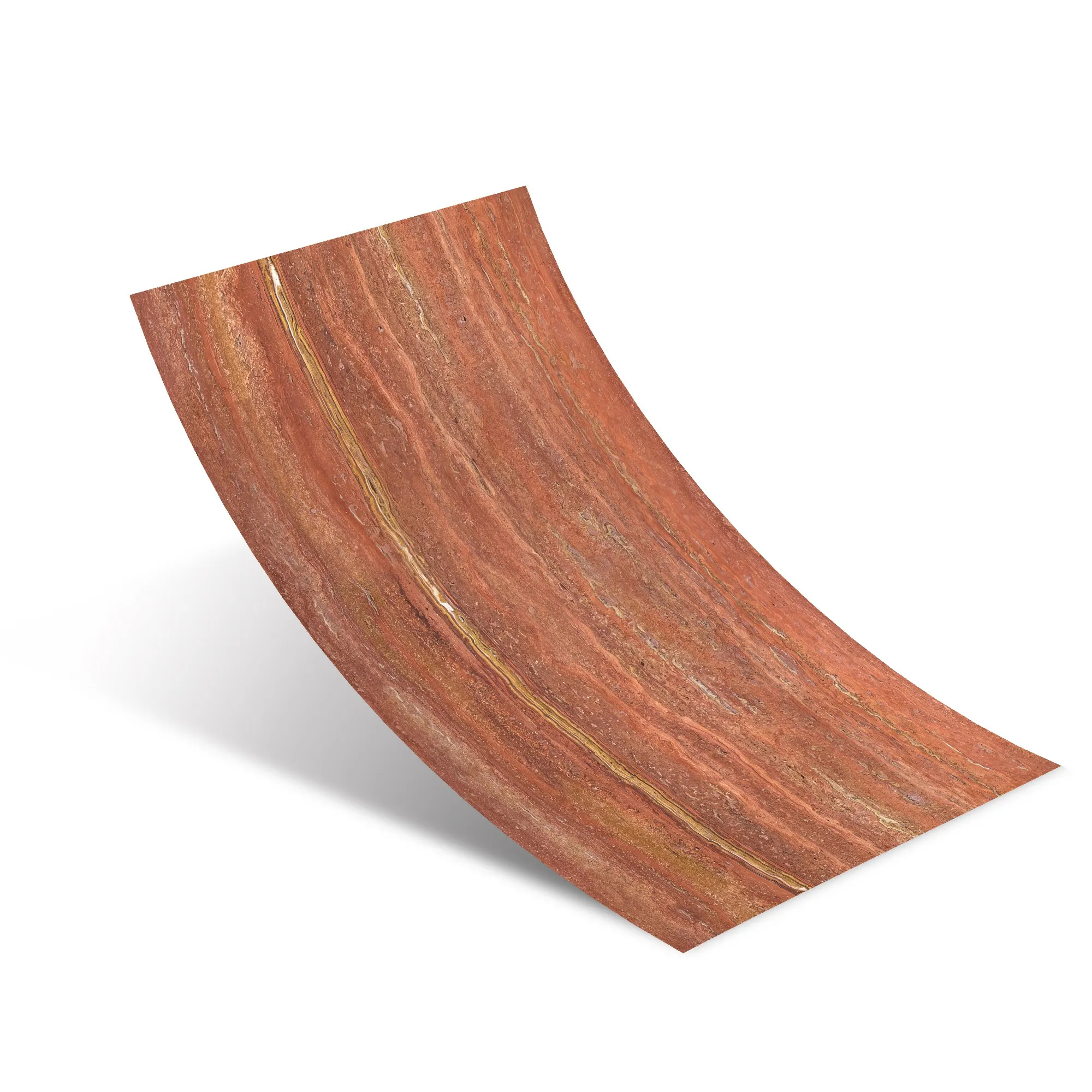
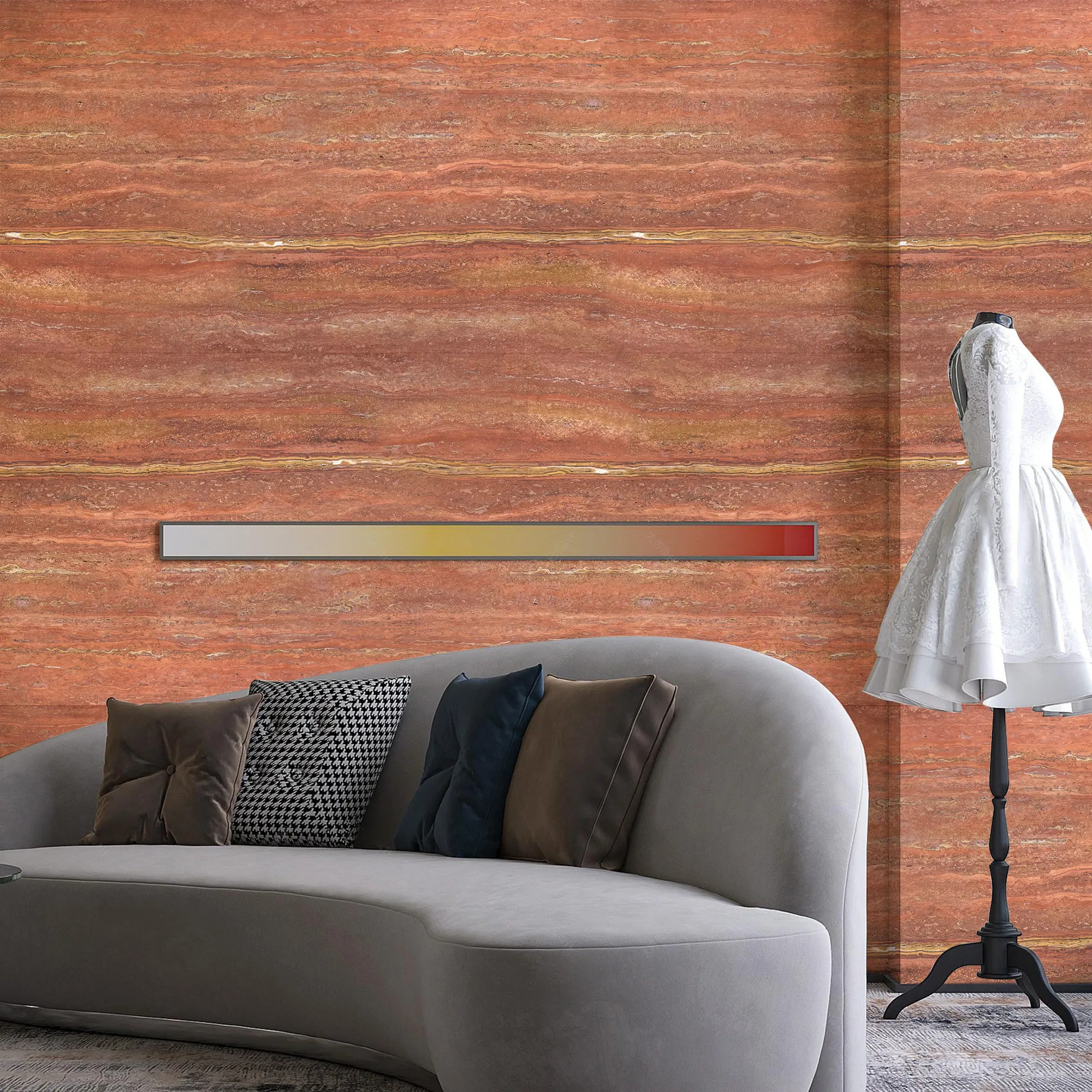
What truly makes Red Travertine unique isn't just its color—it's how it interacts with light, space, and emotion. Warm tones have a psychological effect, making rooms feel inviting and cozy. Imagine a living room with a Red Travertine fireplace surround: on a chilly evening, the stone seems to glow, casting a soft, amber light that turns a simple gathering into something intimate. In commercial spaces, like a boutique hotel lobby, it adds a touch of luxury without feeling cold or sterile—think of it as the design equivalent of a warm hug.
Versatility is another feather in its cap. Red Travertine works as well in rustic farmhouses as it does in sleek, modern apartments. Pair it with wood accents for a cabin-like vibe, or contrast it with black metal fixtures for an industrial-chic twist. It's equally stunning as flooring, backsplashes, or even outdoor patio tiles (when sealed properly, of course). Unlike some stones that demand a specific aesthetic, Red Travertine adapts, enhancing the existing style of a space rather than overpowering it.
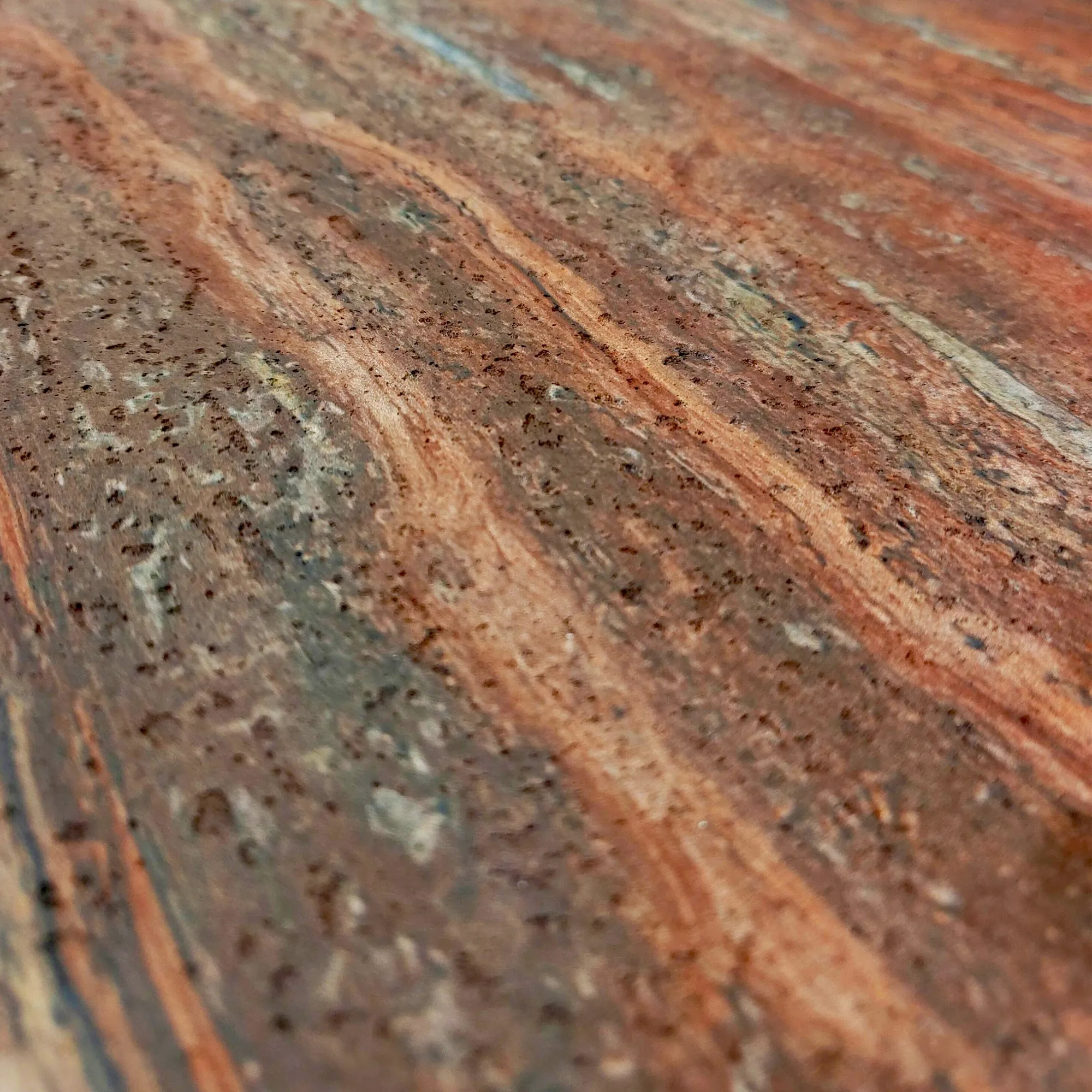
Travertine isn't a one-trick pony—its "Starry" series, in particular, offers a spectrum of colors that cater to different moods. Let's see how Red Travertine holds up against two of its most popular counterparts: Travertine (Starry Green) and Travertine (Starry Blue) .
| Feature | Red Travertine | Travertine (Starry Green) | Travertine (Starry Blue) |
|---|---|---|---|
| Color Palette | Deep reds, terracotta, with gold/cream veins | Mossy greens, sage, with white/gray undertones | Navy, sky blue, with silver/charcoal veining |
| Mood | Warm, earthy, inviting; evokes coziness and energy | Calm, organic, fresh; feels connected to nature | Serene, sophisticated, cool; reminiscent of water or night skies |
| Ideal Spaces | Kitchens, living rooms, fireplaces, rustic or Mediterranean designs | Bathrooms, bedrooms, spas, bohemian or tropical themes | Home offices, dining rooms, coastal or minimalist interiors |
| Unique Quirk | Veins often resemble "flames" or desert landscapes | Subtle shimmer from mineral deposits, like dewdrops on leaves | Veins can look like constellations, hence "Starry" |
While Starry Green and Blue Travertine excel in creating specific atmospheres—calm and serene, respectively—Red Travertine's trump card is its ability to infuse spaces with warmth and vitality. It's the stone you choose when you want a room to feel alive, not just decorated.
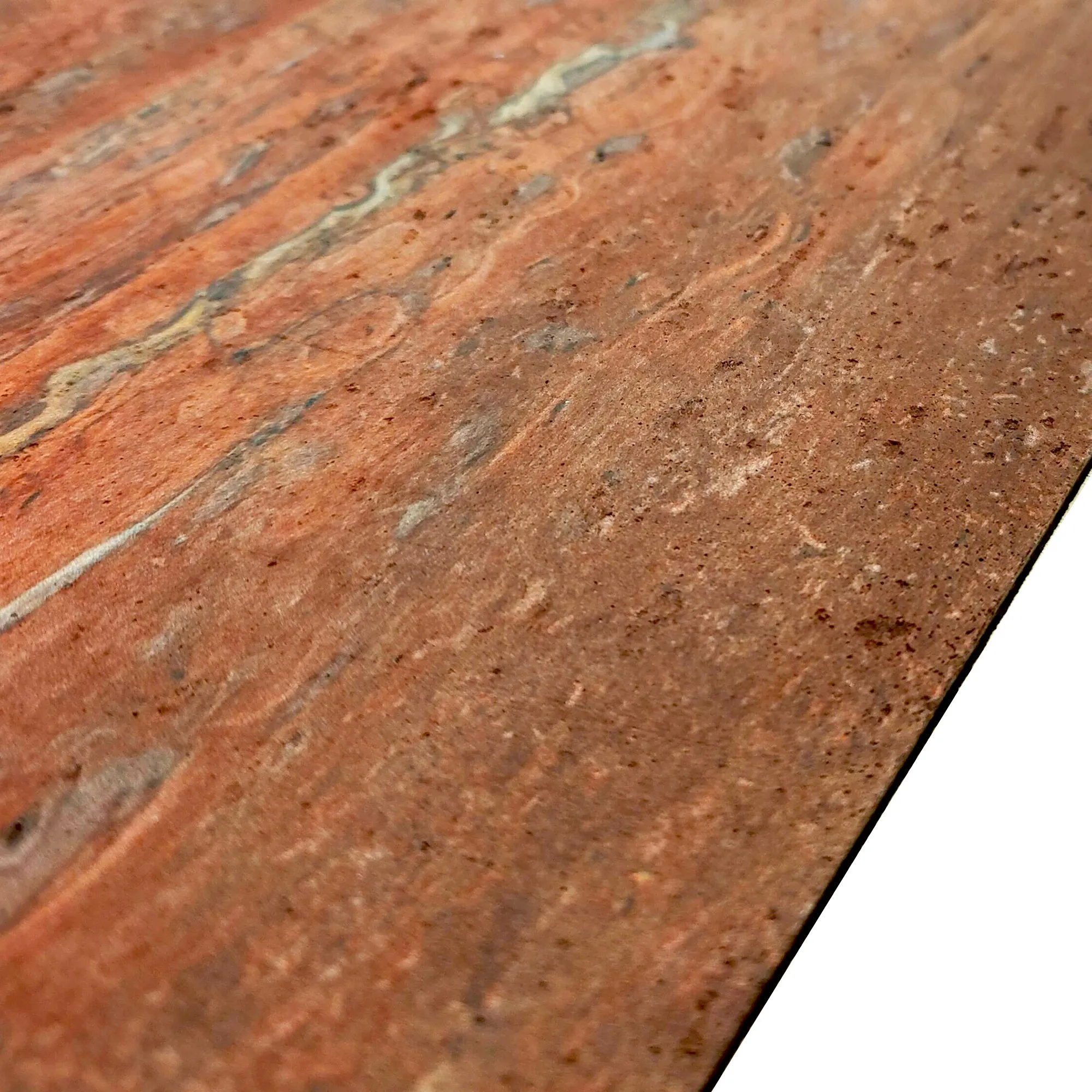
Beyond the Travertine family, other stone series offer distinct aesthetics that might compete with Red Travertine. Let's take Lunar Peak Black and Fair-Faced Concrete as examples—two popular choices for modern design—and see how they stack up.
Lunar Peak Black is the epitome of modern minimalism: sleek, dark, and almost futuristic. Its smooth, uniform surface and deep black color make it a favorite for high-end, contemporary spaces—think a penthouse with floor-to-ceiling windows and leather furniture. But where Lunar Peak Black feels "cool" and distant, Red Travertine feels "warm" and approachable. A bathroom with Lunar Peak Black walls might feel like a luxury spa, but one with Red Travertine feels like a retreat where you can unwind after a long day. Choose Lunar Peak Black for drama and edge; choose Red Travertine for heart and soul.
Fair-Faced Concrete is all about industrial chic—raw, unpolished, and full of texture. It's perfect for lofts, coffee shops, or spaces that embrace a "worn-in" aesthetic. But while Fair-Faced Concrete has an edgy charm, it can feel cold if not balanced with warm elements. Red Travertine, on the other hand, brings warmth inherently. Imagine a restaurant with Fair-Faced Concrete walls and Red Travertine tabletops: the concrete sets a modern, urban tone, while the travertine adds a touch of hospitality, making guests feel welcome. It's the difference between a space that looks "cool" and one that feels "homey."
Beyond aesthetics, practicality matters. Red Travertine is durable, but like all natural stones, it needs a little care. Its porous surface means it can stain if spills aren't wiped up quickly—so it's not ideal for high-traffic areas like entryways unless sealed regularly. However, in kitchens, bathrooms, or living rooms, a good sealant (applied every 1–2 years) keeps it looking fresh. It's also heat-resistant, making it a great choice for fireplace surrounds or kitchen backsplashes.
Cost-wise, Red Travertine falls in the mid-to-high range for natural stones, more affordable than marble but pricier than standard ceramic tiles. Think of it as an investment: a well-maintained Red Travertine feature can last decades, aging gracefully and adding value to your home. Plus, its uniqueness means your space will never feel generic—a priceless benefit in a world of cookie-cutter design.
Still unsure how to use Red Travertine? Here are a few ideas to spark your creativity:
In a world of synthetic materials and mass-produced designs, Red Travertine stands out as a stone with soul. Its warm hues, unique veining, and versatility make it more than just a building material—it's a storyteller, a mood enhancer, and a timeless addition to any space. Whether you're drawn to its earthy charm, its adaptability, or its ability to turn a house into a home, Red Travertine isn't just a choice—it's an investment in beauty that grows richer with time.
So, the next time you're planning a design project, ask yourself: Do I want a space that looks good, or one that feels alive? If it's the latter, let Red Travertine be your guide. After all, some stones are meant to be seen—Red Travertine is meant to be felt.
Recommend Products











