
Cities are reaching for the sky like never before. From Dubai's Burj Khalifa to Shanghai's Shanghai Tower, high-rises aren't just about height—they're statements of ambition, innovation, and identity. But here's the thing: a skyscraper's exterior is more than just a pretty face. It's the first impression, the shield against the elements, and a silent storyteller of what the building stands for. So when architects and developers set out to clothe these giants, they're faced with a tough question: What material can balance strength, beauty, and practicality? Enter Starmoon Stone—a material that's quietly redefining what high-rise exteriors can be.
Let's start with the basics: high-rise buildings don't just "stand" there. They fight. Every day, they battle gale-force winds that buffet their sides, rain that tries to seep into cracks, UV rays that fade colors, and the constant pull of gravity that strains every beam and bolt. And the exterior material? It's on the front lines of that fight. But that's not all—high-rises also have to "perform" aesthetically. In a skyline crowded with glass and steel, a building needs a little personality to stand out. Yet, for decades, the options have felt limited: heavy stone that weighs down structures, plain concrete that looks cold, or glass that's high-maintenance and energy-inefficient. Architects have been stuck choosing between "tough but boring" or "beautiful but fragile."
Add to that the logistical nightmare of maintaining a high-rise exterior. Imagine trying to clean or repair a material 50 stories up—you need something that resists stains, doesn't chip easily, and can handle the wear and tear of time without losing its charm. And let's not forget sustainability. Modern cities are leaning into eco-friendly design, so materials that require massive amounts of energy to produce or end up in landfills after a few decades? They're quickly falling out of favor. So, what if there was a material that checked all these boxes: lightweight enough to not strain the building, tough enough to weather the elements, beautiful enough to turn heads, and green enough to align with modern values? That's where Starmoon Stone comes in.
Starmoon Stone isn't just another cladding material—it's a blend of nature's best and human ingenuity. At its core, it's a modified composite material that borrows the timeless beauty of natural stone (think the warmth of travertine or the depth of granite) but strips away the downsides. Let's break down why it's a game-changer for high-rises:
One of the biggest headaches with traditional stone exteriors is weight. A single square meter of natural granite can weigh 25-30 kg—multiply that by the thousands of square meters on a high-rise, and you're adding massive stress to the building's structure. Starmoon Stone, though? It clocks in at a fraction of that weight, around 8-10 kg per square meter. That might not sound like a big deal, but for engineers, it's revolutionary. Less weight means less strain on the building's frame, which translates to lower construction costs, safer structures, and even the ability to add more floors without compromising stability. But here's the kicker: it doesn't sacrifice strength. Thanks to its composite structure, it's resistant to impact, cracking, and bending—so even in high winds, it stays put.
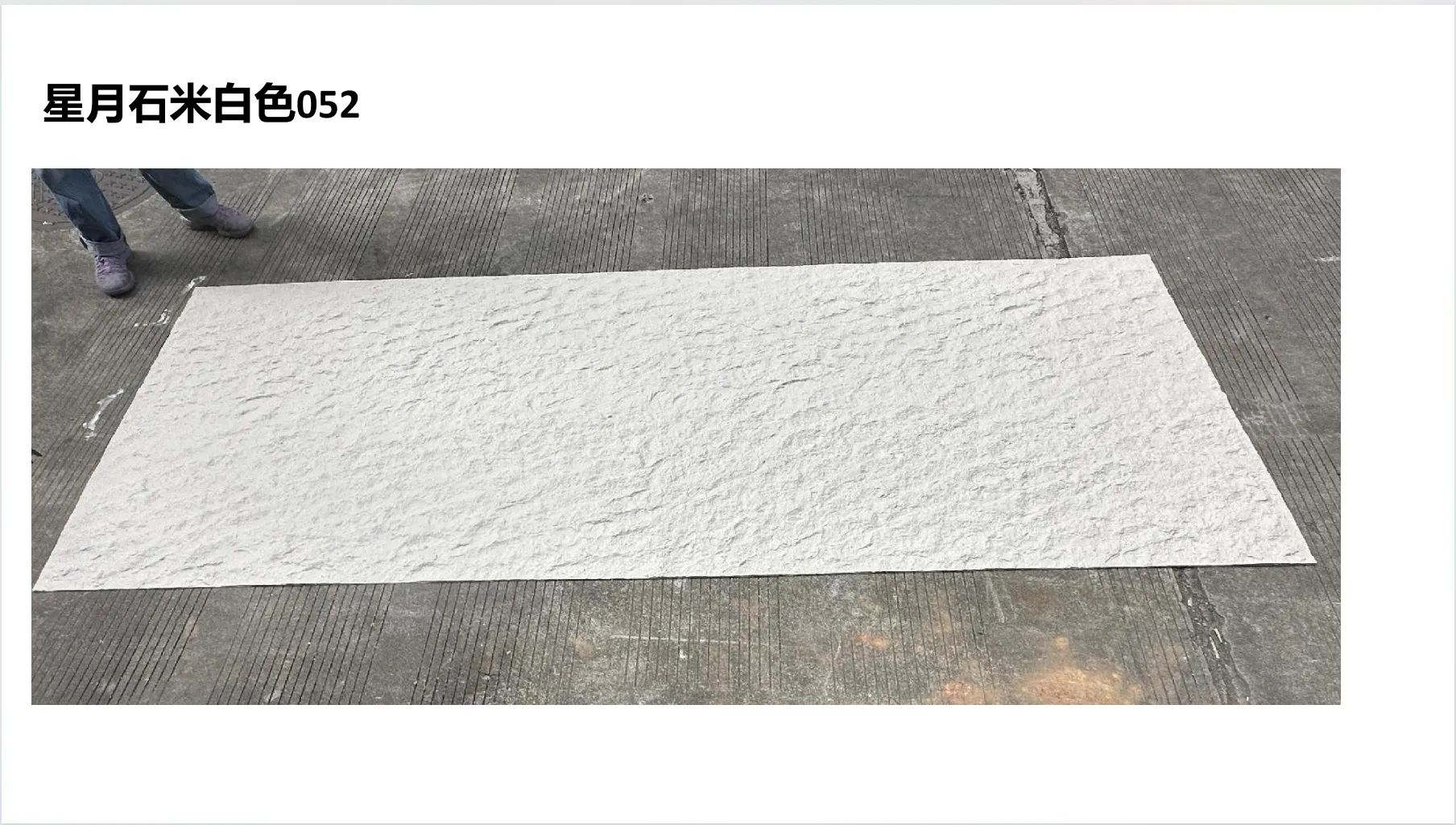
Let's talk about the "wow" factor. Starmoon Stone isn't just durable—it's drop-dead gorgeous. Its texture plays with light in ways that standard materials can't. Take the lunar peak series, for example: options like Lunar Peak Silvery, Golden, and Black mimic the moon's cratered surface, shifting from matte to shimmering as the sun moves across the sky. Then there are the starry variants—think Travertine (Starry Green) or Starmoon Stone's own starry patterns—that sprinkle tiny, iridescent flecks across the surface, making the building glow like a constellation at dusk. Unlike plain concrete or generic brick, Starmoon Stone has personality. It can lean into industrial chic with rough, hewn textures or soften a modern design with subtle, flowing patterns (hello, wave panel vibes). Architects aren't just choosing a color—they're choosing a mood.
Beauty means nothing if it fades after a few years. Starmoon Stone is built to last. Its surface is treated to resist UV damage, so that Lunar Peak Golden hue won't turn dull after a summer of sun. It's also water-resistant, so rain and humidity won't cause mold or staining. And here's a practical perk: it's low-maintenance. Unlike wood or some metals, it doesn't need to be repainted, sealed, or polished regularly. A quick rinse with water from a pressure washer (even 50 stories up) is enough to keep it looking fresh. For building managers, that's a huge win—fewer maintenance costs, fewer disruptions, and a building that looks just as good in year 20 as it did in year one.
Starmoon Stone isn't stuck in the past. It's evolving with the tech that's shaping modern architecture—like 3D printing series integration. Imagine being able to design a custom exterior panel with intricate, organic shapes that would be impossible to carve by hand. With 3D printing, Starmoon Stone can be molded into curves, waves, or even geometric patterns that make a building truly one-of-a-kind. This isn't just about aesthetics; it's about functionality. 3D-printed Starmoon Stone panels can be tailored to fit specific structural needs, reducing waste and ensuring a perfect fit. It's a marriage of art and engineering that's hard to beat.
And let's not overlook sustainability. Starmoon Stone is made with a focus on reducing environmental impact. Its production process uses recycled materials where possible, and its lightweight nature means less fuel is needed for transportation to construction sites. Plus, since it lasts decades without needing replacement, it cuts down on the waste generated by frequent material swaps. When compared to energy-heavy options like polished concrete or traditional marble, Starmoon Stone is a greener choice—something that matters more than ever to eco-conscious developers and cities aiming for LEED certifications.
Still not convinced? Let's put Starmoon Stone side-by-side with some common high-rise exterior materials. The table below breaks down how it compares to MCM flexible stone , fair-faced concrete, and even the innovative 3D printing series in key areas:
| Feature | Starmoon Stone | MCM Flexible Stone | Fair-Faced Concrete | 3D Printing Series (Generic) |
|---|---|---|---|---|
| Weight (kg/m²) | 8-10 | 7-9 | 22-25 | 10-12 |
| Weather Resistance | High (UV, rain, wind) | Medium-High | High (but prone to staining) | Depends on material; often medium |
| Aesthetic Versatility | Excellent (textures, colors, starry/lunar finishes) | Good (limited textures) | Low (plain, uniform look) | High (custom shapes, but limited material options) |
| Sustainability | High (recycled materials, long lifespan) | Medium | Medium (high embodied energy) | Medium-High (reduced waste, but energy use varies) |
| Maintenance Needs | Low (occasional rinsing) | Medium (may need resealing) | High (prone to cracks, hard to clean) | Medium (depends on material durability) |
As you can see, Starmoon Stone doesn't just excel in one area—it's a well-rounded champion. It matches MCM flexible stone's lightweight benefits but adds depth in aesthetics. It outperforms fair-faced concrete in beauty and maintenance. And while 3D printing offers customization, Starmoon Stone combines that tech with the natural warmth and durability that synthetic 3D-printed materials often lack.
Let's paint a picture. Imagine a 40-story mixed-use tower in downtown Chicago. The architect wants it to stand out from the glass-and-steel crowd but needs something that can handle harsh winters and summer humidity. They choose Starmoon Stone in Lunar Peak Silvery with starry accents. The result? A building that shimmers like moonlight on Lake Michigan by day and glows with subtle star-like flecks at night. Its lightweight panels mean the structure can support more residential units without compromising safety. Maintenance crews love it because a quick power wash in spring keeps it looking brand-new. And residents? They rave about how the building feels "warm" compared to the cold concrete towers next door. That's the Starmoon Stone difference—it doesn't just build buildings; it builds experiences.
At the end of the day, high-rises are more than steel and concrete. They're part of our urban narrative—symbols of progress, creativity, and human potential. The exterior material is the first chapter of that story. Starmoon Stone writes a story of balance: strength without sacrifice, beauty without fragility, innovation without forgetting nature. It's for architects who refuse to choose between "practical" and "inspiring," for developers who want buildings that last, and for cities that dream of skylines that feel both timeless and forward-thinking.
So the next time you look up at a high-rise and think, "That's beautiful," take a closer look. Maybe it's Starmoon Stone up there—quietly holding its own against the sky, turning a building into a landmark, and proving that when it comes to high-rise exteriors, the best materials don't just perform—they inspire.
Recommend Products












