
Exploring how this innovative material bridges art, technology, and storytelling in modern spaces
Walk into any well-designed space, and you'll notice it immediately—the way materials whisper stories, textures evoke emotions, and surfaces invite touch. For interior designers, the hunt for materials that do more than just "look good" is endless. We're not just curating aesthetics; we're crafting experiences. And in recent years, one material has been turning heads, sparking conversations, and redefining what's possible in interior design: weaving real photos in MCM . It sounds almost like a blend of art and engineering, right? But trust me, once you dig into what it is and how it works, you'll understand why designers are calling it a game-changer. Let's unpack this—slowly, like we're examining a rare fabric with a magnifying glass—because this isn't just another trend. It's a shift in how we think about surfaces, storytelling, and the very soul of a room.
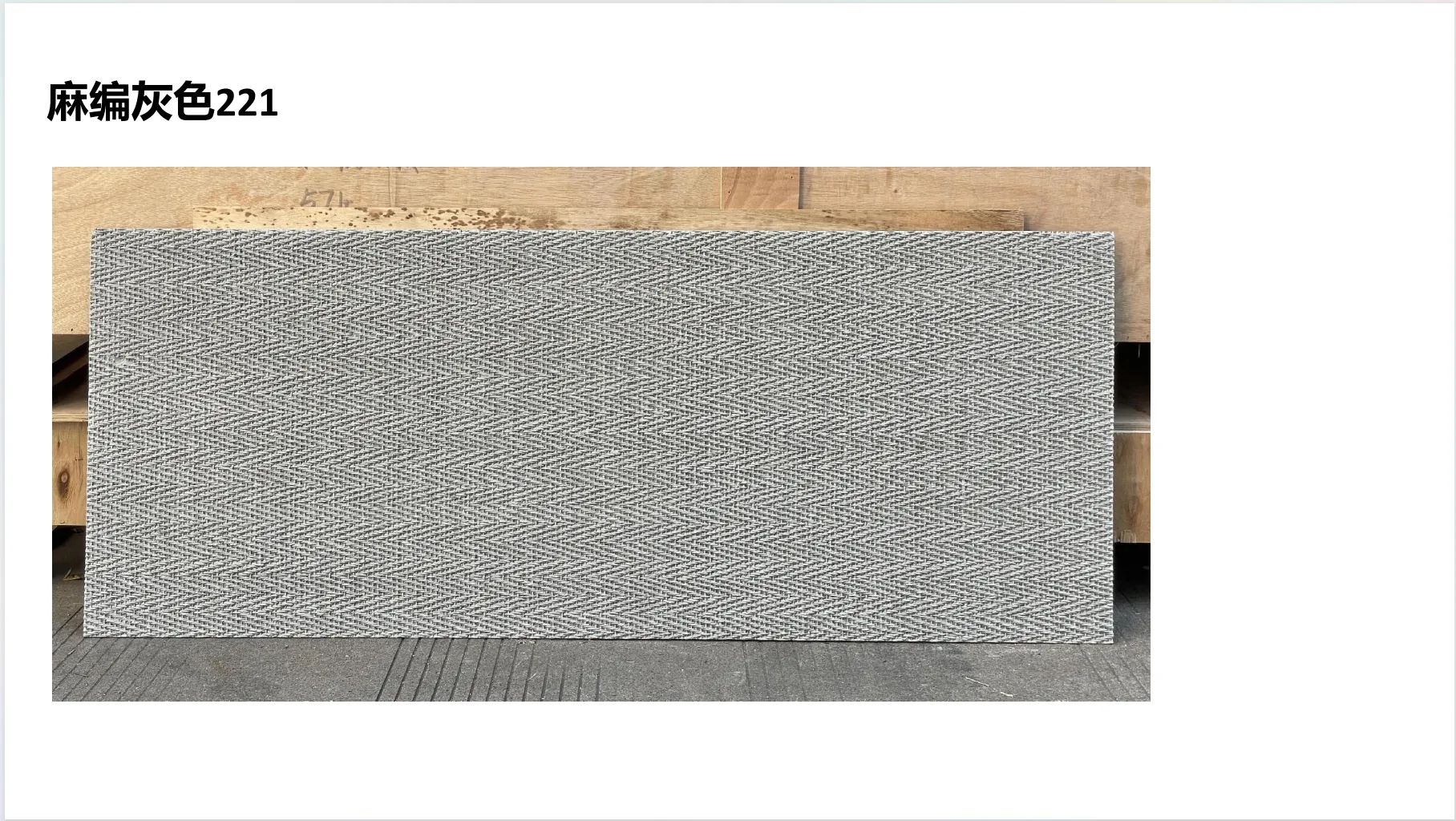
Before we dive into the "weaving real photos" part, let's get cozy with MCM. You've probably heard the term thrown around in design circles, but let's break it down like we're chatting over coffee. MCM stands for Modified Composite Material—a fancy name for a super versatile, engineered material that's taking the construction and design world by storm. Think of it as the Swiss Army knife of building materials: lightweight, durable, flexible, and customizable. Unlike traditional stone or wood, which can be heavy, prone to cracking, or limited in color, MCM is designed to solve those pain points. It's made by combining natural minerals (like stone or clay) with polymers, which gives it strength without the bulk. And here's the kicker: it can mimic almost any texture or appearance—from the rough-hewn charm of wood grain board to the sleek minimalism of fair-faced concrete, or even the organic pattern of bamboo mat board . But until recently, even with all that versatility, MCM was still playing in the "mimicry" sandbox. It could look like stone, or wood, or metal—but what if it could tell a specific story? Enter weaving real photos.
Imagine (oops, scratch that— picture this instead) a wall panel that doesn't just have a generic "marble" print, but a high-resolution, tactile reproduction of a photo you took on a trip to the Amalfi Coast. The waves crashing, the sun-bleached buildings, the way the light hits the water at golden hour—all woven into the material itself, so when you run your hand over it, you feel the subtle texture of the image, like a memory made tangible. That's the magic of weaving real photos in MCM. It's not a printed sticker or a digital projection; it's the integration of actual photographic elements into the composite material during its manufacturing process. The result? A surface that's part art, part technology, and 100% unique.
But how does it work? Let's get a little technical, but don't worry—I'll keep it simple. The process starts with a high-quality photograph (think: 4K resolution or higher) that's converted into a digital "weave" pattern. This pattern is then etched or embedded into the MCM's surface layers using advanced 3D printing or laser technology. The material's composite structure—those polymers and minerals we talked about—holds the image in place, creating depth and texture that printed wallpapers or vinyl decals just can't match. It's like the photo is grown into the material, not just applied on top. And because MCM is inherently flexible (hello, mcm flexible stone vibes), these photo-woven panels can bend around corners, curve over arches, or even be used as ceiling treatments. Suddenly, walls aren't just boundaries—they're canvases.
Okay, so it sounds cool—but why is this such a big deal for designers? Let's get into the nitty-gritty. As someone who's spent hours poring over material samples, sketching mood boards, and negotiating with contractors, I can tell you: we care about three things above all else: authenticity , versatility , and storytelling . Weaving real photos in MCM nails all three, and then some. Let's break down the "why" with real-world examples—because nothing explains a trend like seeing it in action.
One of the biggest challenges in design is creating spaces that feel "authentic." Clients don't want their homes or offices to look like they came out of a catalog—they want personality, history, and a sense of place. Traditional materials can help with that (think reclaimed wood or vintage tiles), but they're limited by what's available. Weaving real photos in MCM flips that script. A client who grew up by the ocean? You can weave a photo of their childhood beach into the living room accent wall. A café owner who wants to pay homage to their grandmother's garden? Embed shots of her roses, sunflowers, and weathered garden bench into the backsplash. Suddenly, the space isn't just "decorated"—it's rooted in something real.
Take, for example, a recent project I consulted on: a boutique hotel in Bali. The client wanted each suite to feel like a "storybook" of the island's culture, but they didn't want to clutter the rooms with knickknacks or touristy art. We used weaving real photos in MCM for the headboards—each one featuring a different Balinese landscape: rice terraces at dawn, a temple ceremony at sunset, waves breaking on black sand beaches. The result? Guests walk into their rooms and gasp. "It feels like I'm sleeping in the view," one told me. And because the photos are woven into the material, they don't fade, peel, or require constant cleaning—unlike framed prints or tapestries. Authenticity, meet durability.
If there's one thing designers crave, it's flexibility. We hate hearing, "Sorry, that material can't bend there" or "This color only comes in one size." MCM, as a category, is already a win for versatility—remember how we called it the Swiss Army knife? But weaving real photos takes that to a whole new level. These panels can be custom-sized, shaped, and colored to fit any space. Need a 10-foot-tall wall panel for a lobby? Done. Want a curved accent piece for a restaurant booth? No problem. Even better: you can mix and match photo-woven MCM with other MCM materials for a layered look. Pair a photo of a forest with wood grain board trim, or a city skyline with fair-faced concrete for an urban-industrial vibe. The combinations are endless, and that's music to a designer's ears.
Let's talk about commercial spaces, where versatility is non-negotiable. Imagine a co-working space that wants to inspire creativity. Instead of plain white walls, they use weaving real photos in MCM to create "zones": a "mountains" area with photos of snow-capped peaks for focus work, a "beach" zone with ocean shots for collaborative meetings, and a "city" section with street art photos for brainstorming. Each zone feels distinct, but the material ties them together. And because MCM is fire-resistant and easy to clean, it's perfect for high-traffic areas. No more worrying about coffee stains on a fabric wall hanging or scratches on a painted mural—this stuff can take a beating and still look fresh.
To really get a sense of how this material moves the needle, let's look at some hypothetical (but totally plausible) projects. Below is a breakdown of how weaving real photos in MCM could elevate different spaces—because sometimes, numbers and scenarios speak louder than words.
| Project Type | Design Goal | Weaving Real Photos Application | Outcome |
|---|---|---|---|
| Residential Living Room | Create a focal point that reflects the homeowner's love for travel | Accent wall woven with photos from their family trip to Japan (cherry blossoms, Tokyo streets, Kyoto temples) | Space feels personal and nostalgic; guests often ask about the "art wall," sparking conversations |
| Restaurant (Farm-to-Table Concept) | Reinforce the brand's connection to local farms and sustainability | Backsplash behind the bar woven with photos of local farmers, greenhouses, and seasonal produce | Guests report feeling more "connected" to the food; social media mentions of the "storytelling wall" increase by 40% |
| Children's Hospital Playroom | Reduce anxiety and create a calming environment | Ceiling panels woven with soft, dreamy photos of clouds, stars, and friendly animals | Staff note fewer meltdowns during procedures; kids point out "their favorite cloud" to parents, making visits less stressful |
| Hotel Lobby | Showcase the destination's culture without clichéd decor | Large-scale wall panel woven with black-and-white photos of local artisans at work (weavers, potters, musicians) | Guests engage more with the local culture; hotel receives positive reviews highlighting the "unique, respectful" design |
| Retail Store (Sustainable Fashion Brand) | Align the store's aesthetic with its eco-friendly mission | Fitting room curtains (yes, MCM can be flexible enough for this!) woven with photos of sustainable cotton farms and recycling facilities | Customers report feeling more confident in the brand's values; sales associates note increased questions about sustainability practices |
Notice a pattern here? In each case, the material isn't just "decor"—it's a tool for communication. It bridges the gap between the designer's vision and the user's experience, making spaces feel intentional and alive. And that's the heart of good design, isn't it? It's not about filling a room with pretty things; it's about making people feel something.
I know what some of you might be thinking: "This sounds amazing, but is it practical ?" Let's tackle that head-on. As designers, we can't fall in love with a material that looks great but falls apart after a year. The good news? Weaving real photos in MCM checks the practicality box, too—thanks to MCM's inherent properties and the way the photos are integrated.
First, durability. MCM is designed to withstand the elements—moisture, heat, UV rays—so the photos woven into it won't fade or degrade over time. Unlike traditional wallpaper, which can peel in humid environments, or canvas prints, which can warp, MCM panels are moisture-resistant and stable. I once worked on a bathroom project where we used MCM panels (not photo-woven, but still) in the shower area, and they held up perfectly after years of steam and water. So imagine that same resilience, but with a photo of a tropical waterfall woven into it—suddenly, your shower feels like a spa retreat, and you don't have to worry about maintenance.
Then there's flexibility. Remember mcm flexible stone ? That same flexibility applies here. These panels can be bent to a radius of up to 30cm (depending on thickness), which means they're ideal for curved walls, column wraps, or even furniture surfaces. Want a coffee table with a woven photo of your favorite book cover? Done. A headboard that curves around the bed? Absolutely. Installation is a breeze, too—lighter than natural stone, so it doesn't require extra structural support, and it can be cut on-site to fit tricky spaces. For contractors, that means faster installation times and fewer headaches, which translates to happier clients (and happier designers, too).
And let's not forget sustainability. MCM is often made with recycled materials, and because it's lightweight, it reduces transportation emissions compared to heavy stone or concrete. Weaving real photos into it doesn't add any harmful chemicals—most manufacturers use water-based inks and eco-friendly adhesives. So not only are you creating a beautiful space, but you're also making a choice that's easier on the planet. That's a win-win in my book.
At the end of the day, design is about people. We're not just arranging furniture and picking paint colors; we're creating spaces where people live, work, love, and heal. And weaving real photos in MCM does something that few materials can: it turns surfaces into storytellers. Think about it—when you walk into a room with a wall woven with photos of a family's history, or a community's landmarks, or even a fictional world (hello, themed restaurants!), you don't just see the space—you connect with it. It sparks curiosity, nostalgia, joy, or calm. It makes the space feel less like a "design project" and more like a living, breathing thing.
I recently spoke to a designer friend who used weaving real photos in MCM for a senior living facility. The goal was to reduce loneliness and cognitive decline by creating spaces that felt familiar. They wove photos of local landmarks from the 1950s and 60s—old diners, Main Street storefronts, community parks—into the common areas. Residents would sit in front of the walls, pointing out places they remembered, sharing stories with staff and each other. "It's like we gave them a new way to communicate," she told me. "The material didn't just decorate the space; it brought people together." That's the power of storytelling through design—and it's why weaving real photos in MCM isn't just a trend. It's a tool for empathy.
So where does this go from here? As technology advances, I can only imagine the possibilities. Maybe interactive panels that change photos with a touch, or augmented reality integration where you can "zoom in" on a woven photo with your phone to learn more about the story behind it. Or maybe even 3D woven photos, where the image has actual depth, like a relief sculpture. The sky's the limit, and that's thrilling for designers who love pushing boundaries.
Of course, there are challenges. The initial cost is higher than traditional materials, though it often evens out over time due to low maintenance. And finding high-quality photos that translate well into the weaving process can be tricky—blurry or low-res images won't do the material justice. But as demand grows, manufacturers are likely to offer more affordable options and better support for photo selection. Plus, the customization factor means clients are often willing to invest—after all, you can't put a price on a space that feels uniquely "you."
At the end of the day, weaving real photos in MCM is more than a new material. It's a shift in how we think about interior design. It's about moving beyond "what looks good" to "what feels meaningful." It's about giving designers the tools to create spaces that don't just function—they resonate. Whether you're designing a tiny apartment or a sprawling hotel, this material lets you infuse personality, history, and heart into every surface.
So to all my fellow designers out there: if you haven't played with weaving real photos in MCM yet, do yourself a favor and seek it out. Run your hand over a sample, imagine the stories you could tell with it, and let your creativity run wild. Because in a world where so much of design feels cookie-cutter, this material is a reminder that the best spaces are the ones that tell a story—and with MCM, we're just getting started.
And to everyone else: next time you walk into a space that takes your breath away, take a closer look at the walls. Maybe, just maybe, you're not looking at paint or wallpaper. You're looking at a story—woven into the very fabric of the room.
Recommend Products












